There’s something undeniably captivating about a cat sporting stripes reminiscent of a miniature tiger. It’s a visual that sparks curiosity and wonder – how do these patterns arise, and why are they so striking? This exploration dives deep into the world of cats with tiger stripes, uncovering the genetics, breeds, and cultural significance behind these stunning felines. We’ll unravel the science of their markings, discuss the unique care needs of different breeds, and even touch on the symbolism these magnificent creatures hold across various cultures.
From the meticulously bred Bengals to the surprising appearances of stripes in domestic shorthairs, we’ll examine the diverse ways these patterns manifest. Understanding the Agouti gene, tabby variations, and the influence of environmental factors will paint a complete picture of what makes these cats so special. Prepare to be amazed by the intricate details and fascinating stories behind these miniature wildcats.
The Allure of Tiger Stripes: Exploring Feline Markings
The sight of a cat with bold, tiger-like stripes is undeniably captivating. It evokes a sense of the wild, even in the comfort of our homes. But these striking patterns aren’t just a matter of aesthetics; they’re a fascinating blend of genetics, breed history, and environmental influences. This article delves into the science and stories behind these magnificent markings, exploring everything from the genes that dictate stripe development to the unique care considerations for these special felines.Striped patterns in cats, often referred to as tabby markings, are far more complex than they appear.
They’re not simply a matter of “striped” versus “not striped.” Instead, they represent a spectrum of patterns, each with its own genetic basis and visual characteristics. Understanding this complexity allows us to appreciate the incredible diversity within the feline world and the intricate mechanisms that shape their appearance.
Origins and Genetics of Striped Cats
The foundation of striped patterns lies within the feline genome. Several genes work in concert to determine a cat’s coat markings, with the Agouti gene playing a pivotal role. This gene essentially acts as a “switch,” controlling whether a cat’s fur will display bands of color (agouti) or a solid color. In cats with tabby patterns, the Agouti gene is partially active, allowing for the development of stripes, spots, or other markings.The Agouti gene’s influence is nuanced.
It doesn’tcreate* the stripes themselves, but rather allows the underlying pattern to be expressed. Different variations (alleles) of the Agouti gene can lead to different tabby patterns. Furthermore, other genes modify the expression of the Agouti gene, influencing stripe thickness, boldness, and overall distribution.Tabby patterns encompass a range of visual styles, including mackerel, classic, ticked, and spotted. While all are considered tabby patterns, they differ significantly in appearance.
Mackerel tabbies, often called “tiger stripes,” have narrow, parallel stripes running down the sides of the body. Classic tabbies feature swirling, marbled patterns. Ticked tabbies have a “agouti” effect, where each hair has bands of color, creating a salt-and-pepper appearance with subtle markings. Spotted tabbies, as the name suggests, have spots rather than stripes. All of these patterns are ultimately rooted in the Agouti gene’s influence.Inheritance of striped markings follows relatively straightforward Mendelian principles.
The Agouti gene exhibits dominant and recessive alleles. A cat needs at least one copy of the Agouti allele to display any tabby pattern. The specific pattern that emerges depends on the combination of alleles inherited from both parents. Predicting the exact coat pattern of a kitten can be complex, as other modifying genes also play a role.
| Pattern Name | Description | Genetic Basis |
|---|---|---|
| Mackerel | Narrow, parallel stripes resembling a fish skeleton. | Agouti gene (A) allele present; influenced by other modifying genes. |
| Classic | Swirling, marbled patterns with bold “bullseye” markings. | Agouti gene (A) allele present; specific allele combination. |
| Ticked | Each hair has bands of color, creating a salt-and-pepper appearance with subtle markings. | Agouti gene (A) allele present, but with a muted expression. |
| Spotted | Distinct spots rather than stripes. | Agouti gene (A) allele present; influenced by spotting gene (S). |
Breeds Commonly Exhibiting Tiger Stripes
Several cat breeds are renowned for their striking tiger-like stripes. Among the most popular are the Bengal, Egyptian Mau, and Savannah. Each breed boasts a unique history and breeding practices that contribute to their distinctive markings.The Bengal breed is perhaps the most widely recognized for its tiger-like appearance. Its history is rooted in a deliberate effort to create a domestic cat with the wild beauty of an Asian Leopard Cat.
In the 1960s, Jean Mill crossed an Asian Leopard Cat with domestic shorthair cats, initiating the Bengal breeding program. Early generations (F1-F4) exhibited a wide range of markings, but breeders selectively bred for bold, clear stripes and rosettes – markings that resemble rose petals and are a hallmark of the Bengal breed. The goal was to retain the wild appearance while ensuring a stable and predictable temperament.The Egyptian Mau is an ancient breed, revered in Egyptian art and mythology.
They are known for their unique “cheetah spots,” which are actually a form of tabby marking. While not strictly stripes, the elongated spots can sometimes resemble stripes, particularly when they run along the sides of the body. The Mau’s spots are believed to be genetically distinct from other tabby patterns, potentially linked to a unique mutation.The Savannah breed is a hybrid resulting from crosses between a domestic cat and a Serval, a medium-sized African wild cat.
The Serval’s genetics significantly influence the Savannah’s markings, often resulting in bold, dark stripes and spots. The degree of Serval influence varies depending on the generation (F1, F2, etc.), with earlier generations exhibiting more pronounced wild markings.
Visual Guide: Stripe Patterns by Breed* Bengal: Bengals typically display bold, dark brown or black stripes on a golden or tan background. Rosettes are common, often resembling miniature leopard spots.
Variations include glitter Bengals, which have a shimmering effect due to the structure of their fur.
Egyptian Mau
Maus have distinctive, elongated spots that can appear as stripes, especially along the sides. The spots are usually dark brown or black on a silver or brown background.
Savannah
Savannahs often have vertical stripes and spots, with a high contrast between the markings and the background color. The stripes tend to be bolder and more defined than in other tabby breeds.
Variations in Stripe Patterns
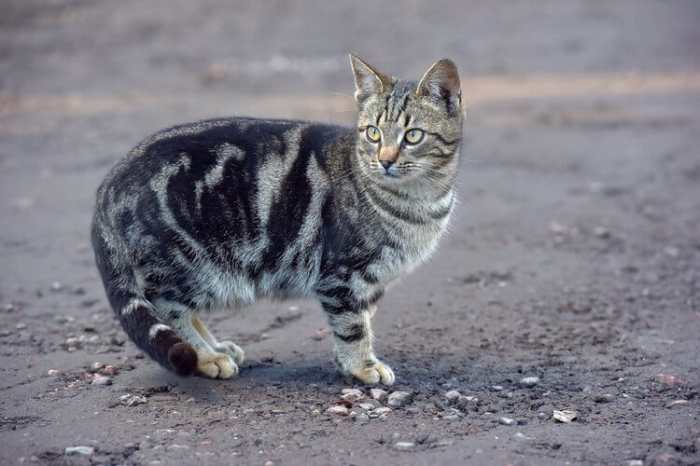
Source: catster.com
The world of striped cats is far from uniform. Stripe patterns exhibit a remarkable range of variations, from bold, sharply defined stripes to faint, almost imperceptible markings. The intensity of stripes can vary significantly within a breed, and even within the same litter.Environmental factors during development may subtly influence stripe intensity. Exposure to sunlight, temperature fluctuations, and even the mother’s diet during pregnancy could potentially affect melanin production and, consequently, stripe darkness.
However, genetics remain the primary determinant of stripe patterns.Horizontal and vertical stripes represent distinct patterns. Vertical stripes, characteristic of mackerel tabbies, run parallel along the body. Horizontal stripes are less common but can be observed in some breeds, particularly classic tabbies. The prevalence of each type varies depending on the breed and genetic background.Occasionally, cats display unusual stripe patterns that defy easy categorization.
For example, a cat might have broken stripes – stripes that are interrupted or fragmented. Or, a cat might exhibit a combination of stripes and spots. These unusual patterns are likely the result of rare genetic mutations or complex interactions between multiple genes.
“This magnificent male Bengal possessed stripes of exceptional boldness and definition. The dorsal stripe, a thick band of charcoal black, ran from his shoulders to his tail tip. Lateral stripes, equally prominent, extended down his flanks, punctuated by large, well-defined rosettes. The stripes were crisp and clean, with minimal fading or blurring, creating a striking visual contrast against his shimmering golden background.”
Caring for Striped Cats: Breed-Specific Considerations
Caring for a striped cat requires an understanding of the specific needs of their breed. Bengals, for instance, are highly energetic and intelligent cats that demand ample enrichment. They thrive on interactive play, puzzle toys, and opportunities to explore. Without sufficient stimulation, Bengals can become bored and destructive.Egyptian Maus, with their short, dense coat, require relatively low-maintenance grooming. Weekly brushing is usually sufficient to remove loose hair and maintain a healthy coat.
However, they are prone to hairballs, so regular hairball remedies may be necessary.Savannah cats, due to their hybrid nature, may be prone to certain health concerns. Responsible breeders screen their cats for genetic diseases, but potential issues can still arise. Early veterinary care and regular checkups are essential for maintaining their health.Regardless of breed, early socialization is crucial for all striped cats.
Exposing kittens to a variety of people, animals, and environments helps them develop into well-adjusted and confident adults. Essential Toys and Activities:* Interactive laser pointers
- Puzzle feeders
- Climbing trees and cat shelves
- Feather wands and other interactive toys
- Catnip toys
- Scratching posts
- Window perches for bird watching
The Appearance of Stripes in Domestic Shorthairs and Longhairs
Stripes aren’t exclusive to specific breeds. Domestic shorthair and longhair cats frequently exhibit tiger-like stripes, demonstrating that these markings are a common feature within the general cat population.Random genetic mutations can result in striped patterns in non-breed-specific cats. While most domestic cats inherit tabby genes from their ancestors, these genes may remain dormant until a mutation activates them.Tabby markings are surprisingly prevalent in the general cat population.
Estimates suggest that around 70% of domestic cats have some form of tabby pattern, although the expression of these patterns can vary greatly.Factors that might make a domestic cat’s stripes more or less noticeable include coat color, fur length, and the presence of other markings. A dark-colored cat with bold stripes will naturally display more prominent markings than a light-colored cat with faint stripes.
| Feature | Bengal Cat | Domestic Shorthair with Similar Markings |
|---|---|---|
| Stripe Boldness | Typically very bold and well-defined. | Can range from faint to bold, often less consistent. |
| Rosettes | Common, resembling miniature leopard spots. | Rarely present. |
| Genetic Predictability | Relatively predictable due to selective breeding. | Unpredictable, often a result of random genetic mutations. |
Cultural Significance and Symbolism of Striped Cats
Tigers and other striped animals hold profound cultural significance in many societies. They are often associated with strength, power, and majesty.Striped cats, particularly those resembling tigers, have been portrayed in art, literature, and folklore for centuries. In ancient Egypt, cats were revered as deities, and depictions of tabby cats are common in Egyptian art.Stripes themselves symbolize various concepts across different cultures.
In some cultures, stripes represent camouflage and stealth, reflecting the tiger’s hunting prowess. In others, they symbolize strength, courage, and protection.The appearance of a striped cat might be interpreted differently depending on the cultural context. In some cultures, it might be seen as a sign of good luck, while in others, it might be associated with mystery or the supernatural.
Symbolic Meanings Associated with Striped Cats:* Strength and Power: Reflecting the tiger’s reputation as a formidable predator.
Protection
Believed to ward off evil spirits or bring good fortune.
Mystery and Intrigue
Evoking a sense of the wild and unknown.
Camouflage and Stealth
Representing adaptability and resourcefulness.
Good Luck
In some cultures, a striped cat crossing your path is considered a sign of good luck.
Last Point
Ultimately, cats with tiger stripes represent a beautiful intersection of genetics, breeding, and natural variation. Whether it’s the bold stripes of a Bengal or the subtle markings of a domestic cat, these patterns evoke a sense of wildness and beauty. Learning about the science behind their appearance, the specific care they require, and the cultural significance they hold deepens our appreciation for these extraordinary animals.
So, the next time you encounter a cat with tiger stripes, take a moment to marvel at the complex and captivating story woven into its fur.
Commonly Asked Questions
Why do some cats have stripes and others don’t?
Stripes are primarily determined by genetics, specifically the Agouti gene. This gene controls whether a cat’s fur will display a banded pattern (stripes, spots, or ticking) or a solid color. Different variations of the Agouti gene lead to different tabby patterns.
What’s the difference between a mackerel and a classic tabby?
Mackerel tabbies have narrow, parallel stripes that run down the sides, resembling a fish skeleton. Classic tabbies have swirling, blotched patterns, often with a “bullseye” marking on their sides.
Are Savannah cats dangerous?
Savannah cats, due to their Serval ancestry, can be unpredictable. Early socialization and responsible breeding are crucial to ensure they are well-adjusted and safe. Their legal status also varies by location.
Do striped cats need special toys or enrichment?
Yes, especially breeds like Bengals! They are often very energetic and need plenty of interactive toys, climbing structures, and playtime to prevent boredom and destructive behaviors.
Can a domestic shorthair cat randomly develop stripes?
Yes, random genetic mutations can occur, leading to striped patterns in domestic shorthairs. While less common, it’s certainly possible!
What does a striped cat symbolize in different cultures?
Stripes, often associated with tigers, frequently symbolize strength, power, and courage. In some cultures, they can also represent camouflage and adaptability.
How can I tell the difference between stripes and rosettes?
Stripes are long, continuous lines. Rosettes are circular or oval markings that resemble miniature roses or bullseyes, often grouped together to create a spotted appearance.

