There’s something undeniably captivating about a domestic cat that embodies the sleek power and striking beauty of a cheetah. It’s a visual echo of the wild, a hint of untamed grace in a house pet. This exploration dives deep into what exactly defines a “cheetah looking cat,” from the specific physical traits that create the illusion to the breeds most often associated with this unique aesthetic.
We’ll uncover the genetics, the grooming tricks, and even the subtle behaviors that contribute to this fascinating feline phenomenon.
Beyond just spotting, we’ll examine how body structure, posture, and even facial expressions play a crucial role in creating the cheetah-like impression. We’ll also look at how owners can subtly enhance their cat’s natural features to amplify that wild, athletic vibe. Get ready to appreciate the artistry of nature and the cleverness of breeders who have cultivated these stunning feline resemblances.
The Allure of the Cheetah Look in Domestic Cats
The resemblance of certain domestic cats to their wild cheetah cousins is a fascinating phenomenon. It’s not just about spots; it’s a combination of physical traits, posture, and even behavior that creates this striking illusion. This article delves into what defines the “cheetah look” in cats, exploring the breeds that commonly exhibit it, the genetics at play, and how we can appreciate and even subtly enhance this captivating appearance.
Defining the “Cheetah Looking Cat” Aesthetic
The cheetah look isn’t a single, easily defined characteristic. It’s a confluence of several features that, when combined, evoke the image of the world’s fastest land animal. Primarily, we’re talking about a distinctive coat pattern, a lean and muscular body, and a certain alertness in the face. The key is the
impression* of speed and agility, even if the cat is lounging lazily on a windowsill.
Several breeds frequently display traits reminiscent of cheetahs. These include Bengals, Ocicats, Savannahs (though their wild ancestry contributes significantly), Abyssinian, and even some domestic shorthairs can occasionally exhibit the right combination of markings and build. It’s important to note that the degree of resemblance varies greatly within each breed.Genetically, the spotting patterns are complex and not fully understood. The Agouti gene plays a crucial role in determining whether a cat’s pigment is distributed evenly or in bands, leading to the creation of spots or rosettes.
Body build is influenced by multiple genes affecting muscle mass, bone structure, and overall size. The combination of these genetic factors, often influenced by selective breeding, results in the cheetah-like appearance we admire.
| Breed | Primary Cheetah-Like Trait | Common Color Variations | Average Size (Weight) |
|---|---|---|---|
| Bengal | Rosetted coat pattern | Brown, Silver, Charcoal, Snow | 8-15 lbs |
| Ocicat | Solid spots, often resembling jaguar markings | Chocolate, Cinnamon, Blue, Lavender | 6-15 lbs |
| Savannah | Spotted coat, tall and lean build | Brown Spotted, Silver Spotted, Black | 8-25 lbs (varies greatly with generation) |
| Abyssinian | “Ticked” coat with subtle spotting | Ruddy, Blue, Silver, Fawn | 6-12 lbs |
Coat Patterns and Markings
The spotted patterns observed in cats that evoke a cheetah resemblance are diverse. We see rosette patterns (like the Bengal), solid spots (common in Ocicats), and even broken patterns where spots are irregularly shaped and distributed. The density and distribution of these spots significantly impact the overall “cheetah look.” A cat with densely packed, well-defined spots will appear more cheetah-like than one with sparse, faded markings.Imagine a “perfect” cheetah-like coat pattern: Spots are roughly circular, ranging in size from a dime to a quarter.
They are evenly distributed across the body, with slightly larger rosettes along the flanks. The spots are a deep, rich brown or black, sharply contrasting with a lighter background color (beige, cream, or silver). The edges of the spots are crisp and well-defined, creating a striking visual impact.Lighting and fur texture also play a crucial role. Sunlight highlighting the spots can intensify their appearance, while a glossy, short coat will showcase the pattern more clearly than a long, fluffy one.
A cat with a slightly rougher coat texture can also appear more rugged and wild, further enhancing the cheetah illusion.
Body Structure and Posture
A cat’s body build is a significant contributor to the cheetah-like appearance. A lean, muscular physique, particularly with long legs, immediately suggests speed and agility. While domestic cats aren’t built for sustained sprinting like cheetahs, a well-muscled body conveys a sense of power and potential.Posture and gait are equally important. A cat that carries itself with confidence, with a straight back and a purposeful stride, will appear more cheetah-like than one that slouches or moves hesitantly.
The way a cat moves – its fluidity and grace – contributes to the overall impression.Certain feline behaviors, such as stalking and pouncing, mimic cheetah hunting techniques. The low-to-the-ground crouch, the intense focus, and the explosive burst of speed during a pounce all echo the hunting style of a cheetah.
A Savannah cat, poised low to the ground, muscles coiled beneath its sleek coat, surveyed the room with an unwavering gaze. Its tail twitched subtly, a silent signal of contained power, radiating an aura of focused intensity that mirrored the grace and strength of a wild predator.
Facial Features and Expressions
The face is the final piece of the puzzle in creating the cheetah look. Prominent noses, almond-shaped eyes, and distinctive whiskers all contribute to the overall impression. A cat’s facial expressions, particularly an intense gaze and a focused expression, can significantly enhance the cheetah resemblance.A cat’s eyes that capture the intensity and alertness of a cheetah’s eyes are characterized by a narrow, almond shape, a bright, piercing gaze, and a slight upward tilt at the outer corners.
The pupils are often dilated, conveying a sense of heightened awareness and readiness. The color can range from golden yellow to emerald green, adding to the captivating effect.Here are five distinct facial expressions that contribute to the “cheetah look”:
- The Intense Stare: Pupils dilated, ears forward, slight narrowing of the eyes. This involves contraction of the orbicularis oculi muscle and slight elevation of the eyebrows.
- The Focused Gaze: Head tilted slightly, eyes fixed on a target. This involves subtle adjustments of the facial muscles to maintain focus.
- The Alert Watch: Ears pricked forward, whiskers forward, a slight tension in the facial muscles. This is a combination of muscle contractions in the ears, nose, and cheeks.
- The Playful Pounce: A brief, intense expression with slightly widened eyes and a subtle baring of the teeth. This involves the zygomaticus major muscle.
- The Calm Observation: Eyes half-closed, relaxed facial muscles, a slow blink. This indicates relaxation and contentment, but still retains a sense of alertness.
Breed-Specific Examples: Bengal Cats
Bengal cats are arguably the most frequently associated with a cheetah-like appearance. Their striking rosetted coat patterns, combined with their athletic build, create a truly captivating resemblance. Selective breeding has amplified these traits, resulting in Bengals that often bear a strong visual similarity to cheetahs.The specific coat patterns and markings commonly found in Bengal cats that resemble a cheetah include randomly scattered rosettes, horizontal stripes, and a marbled pattern.
The rosettes are often donut-shaped, with a darker center and a lighter Artikel, mimicking the markings of a cheetah.While Bengals share a visual resemblance to cheetahs, there are key differences. Cheetahs have solid spots, while Bengals have rosettes. Cheetahs are significantly taller and leaner, with longer legs and a more streamlined body. Bengals are also generally more robust and muscular.
| Bengal Cat Trait | Cheetah Equivalent | Genetic Basis (if known) |
|---|---|---|
| Rosetted coat pattern | Solid spots | Agouti gene, spotting genes |
| Muscular build | Lean, athletic build | Multiple genes affecting muscle development |
| Relatively short tail | Long, slender tail | Breed-specific trait |
| Rounded head | More angular head | Breed-specific trait |
Breed-Specific Examples: Ocicat Cats
The Ocicat breed was intentionally developed to resemble a wild cat, drawing inspiration from various feline species, including the cheetah. The breed’s origins lie in the 1960s, when breeders experimented with crossing Abyssinian, Siamese, and American Shorthair cats to create a domestic cat with the appearance of a wild feline.The specific physical traits of Ocicats that contribute to their cheetah-like appearance include their spotted coat, muscular build, and confident posture.
Their large, almond-shaped eyes and prominent cheekbones further enhance the wildcat illusion.Ocicat coat patterns and markings often mimic cheetah spots, with solid, well-defined spots distributed across the body. The spots can range in color from brown and black to cinnamon and chocolate, creating a variety of striking patterns.The Ocicat’s muscular build and confident posture contribute significantly to the cheetah illusion.
They carry themselves with a sense of purpose and agility, further reinforcing the impression of a wild predator.
Creating a “Cheetah Look” in Non-Breed Specific Cats
Even if you don’t own a Bengal or Ocicat, you can subtly enhance your cat’s natural features to create a more cheetah-like appearance. Grooming techniques, diet, and exercise all play a role.Regular brushing helps maintain a healthy, glossy coat, which showcases the cat’s natural markings more effectively. Styling the fur to create a slightly tousled look can add to the wildcat aesthetic.A balanced diet and regular exercise contribute to a leaner, more athletic build.
Maintaining a healthy weight and muscle tone will enhance the cat’s overall physique and create a more streamlined appearance.Accessories, such as collars and harnesses, can also complement a cat’s cheetah-like appearance. Choose accessories in earthy tones (brown, beige, black) to enhance the wildcat vibe.Here’s a guide for owners on how to subtly accentuate their cat’s natural features:
- Grooming: Brush regularly to maintain a healthy coat. Consider a slightly longer trim to accentuate the fur texture.
- Diet: Feed a high-quality diet to support muscle development and maintain a healthy weight.
- Exercise: Provide plenty of opportunities for play and exercise to keep your cat active and agile.
- Accessories: Choose collars and harnesses in earthy tones that complement the cat’s coat color.
Illustrative Descriptions: Visualizing the “Cheetah Look”
Imagine a cat sitting in a sunbeam, its spotted coat shimmering in the light. The rosettes are clearly defined, creating a striking contrast against the warm beige background. The cat’s posture is relaxed, but its muscles are subtly flexed, hinting at the power beneath the surface. It exudes an air of quiet confidence, reminiscent of a cheetah basking in the African sun.Picture a cat stalking a toy, its body low to the ground, its eyes fixed intently on its target.
Its muscles ripple beneath its sleek coat as it prepares to pounce. The focused expression on its face conveys a sense of intense concentration and predatory instinct.Envision a cat leaping through the air, its body a blur of motion. Its paws extend gracefully, its tail providing balance and control. The moment captures its agility, speed, and grace, reminiscent of a cheetah in pursuit.Consider a cat’s face, focusing on the almond-shaped eyes, prominent nose, and distinctive whiskers.
The eyes gleam with intelligence and alertness, conveying an air of watchful awareness. The overall impression is one of a creature perfectly adapted to its environment.
Color Variations and Their Impact
Different coat colors significantly affect the perceived intensity of the spotted pattern. Brown and black spots tend to stand out more prominently against a lighter background, creating a bolder, more dramatic “cheetah look.” Silver spots, on the other hand, can create a more subtle and refined appearance.Variations in spot color and shading can create different “cheetah looks.” For example, a cat with dark brown spots and a lighter beige background will have a different appearance than a cat with black spots and a silver background.Cats with unique color combinations can further enhance their cheetah resemblance.
A cat with a combination of brown, black, and silver spots can create a truly striking and captivating appearance.Here are five color palettes that best complement a cheetah-like coat pattern:
- Brown spots on beige background
- Black spots on cream background
- Silver spots on charcoal background
- Chocolate spots on fawn background
- Cinnamon spots on silver background
The Perception of Speed and Agility
Certain physical traits and behaviors contribute to the perception of speed and agility in cats. A lean, muscular build, long legs, and a flexible spine all suggest athleticism.Body language and movement play a crucial role in conveying a sense of dynamism and power. A cat that moves with grace and fluidity will appear more agile than one that moves stiffly or awkwardly.A cat’s posture and gait influence the perception of its athleticism.
A cat that carries itself with confidence and moves with a purposeful stride will appear more athletic than one that slouches or moves hesitantly.A cat’s eyes and facial expressions convey a sense of alertness and readiness to pounce. Dilated pupils, a focused gaze, and a slight tension in the facial muscles all contribute to the perception of speed and agility.
End of Discussion
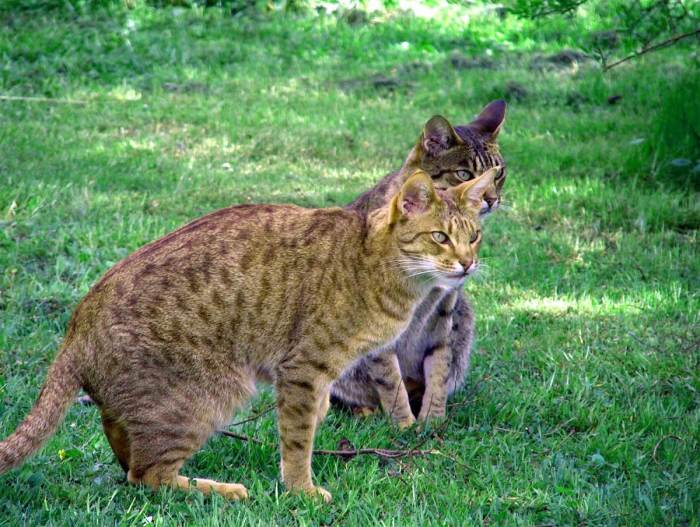
Source: saymedia-content.com
Ultimately, the “cheetah looking cat” is more than just a coat pattern; it’s a captivating combination of physical traits, behaviors, and a touch of imagination. Whether it’s the striking rosettes of a Bengal or the confident posture of an Ocicat, these felines remind us of the wild beauty that can exist within our homes. Understanding the nuances of this aesthetic allows us to truly appreciate the unique charm and undeniable appeal of these extraordinary cats.
So, next time you see a cat with a particularly striking spotted coat, take a moment to consider the fascinating blend of genetics, breeding, and natural grace that contributes to its cheetah-like allure. It’s a testament to the incredible diversity and beauty of the feline world.
FAQ Section
Why do some cats have spotted coats?
Spotted coats are primarily a result of the Agouti gene, which controls the distribution of pigment in the hair shaft. Variations in this gene can lead to different patterns, including spots and rosettes.
Are “cheetah looking cats” always a specific breed?
No! While certain breeds like Bengals and Ocicats are known for their cheetah-like appearance, a cat with a similar look can sometimes occur in mixed breeds due to genetic inheritance.
Can diet affect my cat’s muscle tone and appearance?
Absolutely! A high-quality diet with adequate protein supports muscle development, contributing to a leaner, more athletic physique that can enhance the cheetah-like look.
What’s the difference between rosettes and solid spots?
Rosettes are larger, more complex spots that resemble miniature cheetah rosettes, often with a lighter center. Solid spots are smaller, more uniform, and lack the intricate pattern of rosettes.
Do male or female cats tend to have more pronounced cheetah markings?
There’s no definitive evidence suggesting a gender-based difference in marking intensity. It’s primarily determined by genetics and individual variation within a breed.

