Dealing with a constipated cat can be worrying – those strained attempts to go, the hard little nuggets in the litter box… it’s not a pleasant sight for anyone. Feline digestion is quite different from ours, making them prone to constipation for various reasons, from a dry food diet to underlying medical issues. This guide dives deep into understanding constipation in cats, exploring Miralax (polyethylene glycol 3350) as a potential solution, and outlining everything you need to know to help your furry friend feel better.
We’ll cover the signs to watch for, how Miralax works, proper dosage, potential risks, and alternative approaches. It’s a comprehensive look at managing this common feline problem, empowering you to make informed decisions about your cat’s health and well-being. Remember, this isn’t a replacement for veterinary advice, but a resource to help you understand the situation and discuss it effectively with your vet.
Understanding Constipation in Cats
Constipation in cats is a surprisingly common issue, and while it can sometimes resolve on its own, it’s crucial to understand the underlying causes and potential complications. It’s not just about a missed litter box visit; it can significantly impact your cat’s comfort and overall health. This guide will break down everything you need to know about feline constipation, from recognizing the signs to exploring treatment options, including Miralax.
Common Signs and Symptoms of Constipation in Felines
Recognizing constipation early is key to providing timely relief. While a single missed bowel movement isn’t necessarily cause for alarm, persistent changes in your cat’s bathroom habits warrant attention. Look out for these signs: straining in the litter box, producing small, hard, dry stools (or no stools at all), spending an unusually long time trying to defecate, vocalizing (crying or meowing) while trying to go, a swollen or painful abdomen, loss of appetite, and lethargy.
Some cats may even try to squat repeatedly without producing anything. These behaviors indicate discomfort and difficulty passing waste.
Physiological Differences in Feline Digestion Compared to Humans
Cats have a relatively short digestive tract compared to humans, and their digestive system is designed for a high-protein, low-fiber diet. This means they don’t process fiber as efficiently as we do. Their digestive process is also much faster; food passes through their system relatively quickly. This rapid transit time, combined with a lack of efficient fiber processing, can make them more prone to constipation if their diet isn’t properly balanced or if other factors interfere with their bowel function.
Unlike humans, cats don’t naturally drink a lot of water, which can also contribute to dehydration and harder stools.
Potential Underlying Causes of Constipation
Constipation isn’t always a simple issue; it can stem from various factors. Dietary causes are common, including a diet too high in dry food and low in fiber. Environmental factors, like a dirty or inaccessible litter box, can also discourage regular bowel movements. Medical conditions, such as hairballs, megacolon (enlarged colon), inflammatory bowel disease (IBD), kidney disease, and hyperthyroidism, can significantly impact bowel function.
Pain, particularly from arthritis or dental issues, can also make it uncomfortable for a cat to squat and defecate. Finally, certain medications, like opioids, can have a constipating effect.
Comparing Constipation Severity Levels
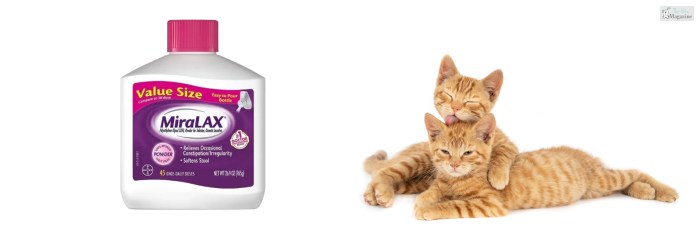
Source: thepetsmagazine.com
Understanding the severity of your cat’s constipation is important for determining the appropriate course of action. Here’s a table outlining different levels:
| Severity | Frequency of Defecation | Straining | Stool Consistency |
|---|---|---|---|
| Mild | Every 2-3 days | Occasional straining | Hard, but still somewhat formed |
| Moderate | Every 3-5 days | Frequent and noticeable straining | Very hard, dry, and small |
| Severe | Less than once a week or no defecation | Severe straining, crying, or discomfort | Dry, rock-hard, or no stool present |
Introducing Miralax (Polyethylene Glycol 3350) for Cats
What Miralax Is and How It Works to Relieve Constipation
Miralax, the brand name for polyethylene glycol 3350, is an osmotic laxative commonly used to treat constipation in both humans and animals. It doesn’t stimulate the bowel to contract like some other laxatives; instead, it draws water into the colon, softening the stool and making it easier to pass. This gentle action helps relieve constipation without causing harsh cramping or diarrhea.
Mechanism of Action in the Feline Digestive System
In cats, polyethylene glycol 3350 works similarly. When administered, it remains undigested as it travels through the digestive tract. The polymer attracts and holds water, increasing the volume and moisture content of the stool. This softens the stool, reducing the pressure needed to pass it and easing discomfort. It’s a relatively gentle approach compared to stimulant laxatives, which can sometimes cause dependency.
Forms of Miralax Available and Their Suitability for Cats
Miralax is typically available as a powder and a liquid. The powder is generally preferred for cats because it’s easier to measure accurately and mix into their food. The liquid form can be administered orally with a syringe, but precise dosing can be more challenging. Regardless of the form, always ensure the powder is thoroughly mixed into the food to prevent clumping and ensure your cat consumes the entire dose.
Important Note: Always consult with your veterinarian before administering any medication, including Miralax, to your cat. They can properly diagnose the cause of the constipation and determine the appropriate dosage and treatment plan. Self-treating can be dangerous and may mask underlying medical conditions.
Dosage and Administration of Miralax in Cats
Calculating the Appropriate Miralax Dosage for Cats Based on Weight
Determining the correct dosage is crucial for effectiveness and safety. A general guideline is 0.5 to 1.0 mL of Miralax powder (approximately 1.25 to 2.5 mg of polyethylene glycol 3350) per 5 pounds of body weight, once or twice daily. However, this is just a starting point, and your veterinarian may recommend a different dosage based on your cat’s individual needs and the severity of their constipation.
Accurately Measuring and Administering Miralax to Cats
The powder form is easiest to administer. Measure the appropriate amount of powder using a small spoon or measuring cup. Thoroughly mix the powder into a small portion of your cat’s wet food. Ensure your cat consumes the entire portion to receive the full dose. If your cat is a picky eater, you can try mixing it into multiple small meals throughout the day.
The liquid form can be administered orally using a syringe, but be cautious to avoid aspiration (inhaling the liquid into the lungs).
Potential Challenges and Solutions
Picky eaters can be a significant challenge. If your cat refuses to eat the food mixed with Miralax, try using a stronger-smelling wet food or adding a small amount of tuna juice or chicken broth to entice them. You can also try offering the mixture in a small dish or on a spoon. If oral administration is difficult, discuss alternative options with your veterinarian.
Dosage Recommendations for Different Weight Ranges
Here’s a table summarizing dosage recommendations:
| Cat Weight | Miralax Dosage (Powder) |
|---|---|
| 5-10 lbs | 0.5 – 1.0 mL (1.25 – 2.5 mg) |
| 11-15 lbs | 1.0 – 1.5 mL (2.5 – 3.75 mg) |
| 16-20 lbs | 1.5 – 2.0 mL (3.75 – 5 mg) |
| 21+ lbs | 2.0 – 2.5 mL (5 – 6.25 mg) |
Potential Benefits of Using Miralax for Constipated Cats
How Miralax Improves Stool Consistency and Eases Defecation
Miralax’s primary benefit is its ability to soften stools, making them easier to pass. By drawing water into the colon, it increases stool volume and reduces hardness, minimizing straining and discomfort during defecation. This can be particularly helpful for cats with chronic constipation or those experiencing pain when trying to go.
Improving Overall Comfort and Quality of Life
Relief from constipation can significantly improve a cat’s overall comfort and quality of life. Constipation can cause abdominal pain, discomfort, and even loss of appetite. Easing these symptoms can restore your cat’s energy levels, appetite, and overall happiness.
Anecdotal Evidence of Successful Miralax Use
Many cat owners have reported positive experiences using Miralax to relieve their cat’s constipation. While these are anecdotal accounts and not scientific evidence, they suggest that Miralax can be an effective tool for managing feline constipation when used under veterinary guidance. Owners often describe their cats becoming more comfortable, defecating more regularly, and exhibiting improved energy levels.
Managing Constipation Associated with Medical Conditions
Miralax can be particularly helpful in managing constipation associated with certain medical conditions, such as kidney disease or IBD. In these cases, constipation may be a side effect of the underlying condition or its treatment. Miralax can provide symptomatic relief while the underlying condition is being addressed.
Conclusive Thoughts
Navigating constipation in cats can feel overwhelming, but understanding the causes, treatment options, and potential risks is key. Miralax can be a helpful tool when used correctly and under veterinary guidance, but it’s just one piece of the puzzle. Focusing on diet, hydration, a stress-free environment, and regular vet checkups are all vital for long-term digestive health. By being proactive and observant, you can significantly improve your cat’s comfort and quality of life, ensuring those litter box visits are less of a struggle and more of a relief.
Ultimately, open communication with your veterinarian is paramount. They can accurately diagnose the underlying cause of your cat’s constipation and recommend the most appropriate treatment plan, ensuring your feline friend gets the care they deserve.
Questions Often Asked
Can I give Miralax to my kitten?
No, Miralax should only be administered to cats under the direct supervision and dosage instructions of a veterinarian. Kittens have different sensitivities and needs.
How quickly does Miralax work in cats?
It typically takes 24-72 hours to see a noticeable improvement in stool consistency. However, this can vary depending on the cat and the severity of the constipation.
Is Miralax safe for long-term use in cats?
Long-term use should always be discussed with your veterinarian. While generally considered safe, prolonged use can potentially disrupt the natural gut flora. Regular checkups are essential.
What if my cat vomits after taking Miralax?
Stop administering Miralax and contact your veterinarian immediately. Vomiting could indicate an adverse reaction or that the dosage is too high.
Can I use Miralax if my cat has kidney disease?
This is a crucial question to discuss with your vet. Kidney disease can affect how the body processes medications, and Miralax might not be appropriate.
What are some signs that my cat’s constipation is serious?
Signs like straining without producing stool, loss of appetite, lethargy, vomiting, or abdominal pain warrant an immediate vet visit.
Besides Miralax, what are some other ways to increase my cat’s water intake?
Try a cat water fountain, offer wet food, or add a little low-sodium chicken broth to their water.

