Depo Shot, or medroxyprogesterone acetate, is increasingly used as a contraceptive option for cats, particularly in shelters and feral cat programs. It offers a non-surgical alternative to spaying, providing long-term birth control while presenting unique considerations for feline health and behavior. This guide explores everything you need to know about Depo Shot for cats, from its history and administration to potential side effects and long-term implications.
Understanding the nuances of this injectable contraceptive is crucial for veterinarians, technicians, and cat owners alike. We’ll delve into the benefits, risks, and practical aspects of using Depo Shot, comparing it to other methods and addressing common concerns. Whether you’re managing a shelter population or considering it for your own cat, this information will help you make informed decisions.
Introduction to Depo Shot for Cats
Depo Shot, also known as medroxyprogesterone acetate (MPA), is a long-acting injectable contraceptive used in feline medicine. It offers a non-surgical alternative to spaying, providing a convenient and often preferred method for managing cat populations, particularly in shelters and feral cat programs. This article will delve into the details of Depo Shot, covering its history, benefits, administration, potential risks, and its role in various feline management strategies.The use of Depo Shot in cats began in the 1970s, initially as a means to suppress estrus cycles in female cats with behavioral problems.
Early research focused on its hormonal effects and potential for contraception. Over time, understanding of its long-term impacts and optimal administration protocols has evolved. While initially explored for managing aggression and roaming, its contraceptive properties quickly became a primary application.Depo Shot is available under various brand names, though availability can vary by region and veterinarian preference. Here’s a table outlining some common brand names and their active ingredient:
| Brand Name | Active Ingredient | Typical Dosage |
|---|---|---|
| Vetopal | Medroxyprogesterone Acetate | 25mg |
Depo-Provera (Human Formulation –
|
Medroxyprogesterone Acetate | 25mg (Adjusted based on weight and veterinary assessment) |
| Generic MPA Injection | Medroxyprogesterone Acetate | 25mg |
Benefits of Depo Shot in Feline Management
The most significant benefit of Depo Shot is its ability to provide long-term contraception in female cats. A single injection can suppress estrus cycles for approximately 6-12 months, significantly reducing the risk of unwanted pregnancies. This is particularly valuable in shelter settings where controlling population growth is crucial.In shelter environments, Depo Shot helps manage the influx of new cats, reducing overcrowding and the need for surgical spaying.
For feral cat management programs, it offers a less invasive alternative to trapping and surgical sterilization, which can be challenging and resource-intensive. It allows for temporary control of reproduction while resources are gathered for more permanent solutions.Depo Shot can also be beneficial in managing behavioral issues related to estrus. Cats in heat often exhibit behaviors like vocalization, restlessness, spraying, and attempts to escape.
Suppressing these cycles with Depo Shot can significantly reduce these behaviors, improving the cat’s quality of life and the owner’s peace of mind.Depo Shot is especially useful for cats who are unsuitable candidates for surgical sterilization. This might include cats with underlying health conditions that make anesthesia risky, or cats with physical limitations that prevent them from undergoing surgery.
Administration Procedures and Protocols
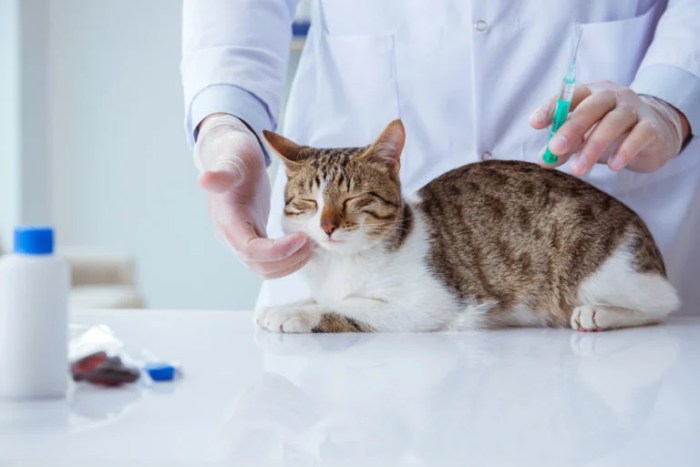
Administering Depo Shot requires careful technique to ensure proper placement and minimize discomfort for the cat. The injection should always be performed by a trained veterinarian or veterinary technician.The preferred injection sites are the quadriceps muscle (thigh) or the gluteal muscle (rump). The quadriceps muscle is generally preferred due to its accessibility and lower risk of complications. Proper site selection minimizes the risk of nerve damage or hematoma formation.Here’s a step-by-step guide:
- Preparation: Gather necessary supplies: Depo Shot vial, syringe, needle (typically 22-25 gauge, 1-inch needle), alcohol swabs.
- Restraint: Securely restrain the cat, ideally with assistance from another person.
- Site Preparation: Clean the injection site with an alcohol swab and allow it to dry.
- Injection: Aspirate to ensure the needle is not in a blood vessel. Slowly inject the Depo Shot intramuscularly.
- Post-Injection: Gently massage the injection site to help disperse the medication. Observe the cat for any immediate adverse reactions.
Here’s a flowchart illustrating the administration process:[Imagine a flowchart here. It would visually represent the steps above, starting with “Preparation,” moving to “Restraint,” “Site Selection,” “Injection,” “Post-Injection Monitoring,” and ending with “Documentation.”]
Dosage Guidelines and Considerations
The standard dosage for adult female cats is typically 25mg of medroxyprogesterone acetate. However, dosage adjustments may be necessary based on the cat’s weight and overall health.Cats with significantly lower or higher weights may require adjusted dosages to ensure effectiveness and minimize potential side effects. Cats with pre-existing medical conditions, such as kidney or liver disease, should be evaluated carefully before administering Depo Shot, and dosage adjustments may be warranted.The contraceptive effect of a single Depo Shot injection typically lasts for 6-12 months.
Re-injection timing should be based on individual cat response and desired level of contraception.Here’s a table outlining recommended dosages based on cat weight:
| Cat Weight (lbs) | Recommended Dosage (mg) | Injection Site | Re-injection Interval |
|---|---|---|---|
| 5-8 | 20mg | Quadriceps | 6-9 months |
| 8-12 | 25mg | Quadriceps | 6-12 months |
| 12-16 | 25mg | Quadriceps | 6-12 months |
| 16+ | 25-30mg | Quadriceps/Gluteal | 6-12 months |
Potential Side Effects and Risks
Source: kittentoob.com
While generally considered safe, Depo Shot can be associated with certain side effects. These can range from mild and temporary to more serious and persistent.Common side effects include temporary hair loss at the injection site, mild behavioral changes (e.g., increased irritability), and a slight increase in appetite. Less common side effects include vomiting, diarrhea, and lethargy.Weight gain is a frequently reported side effect of Depo Shot.
This is due to the hormonal effects of MPA, which can increase appetite and decrease metabolism. Management strategies include controlled feeding and increased exercise.Behavioral changes, such as increased aggression or lethargy, can occur in some cats. These changes are usually temporary but can be concerning for owners.Rare but serious risks include pyometra (uterine infection) and mammary gland tumors. While the link between Depo Shot and mammary tumors is still under investigation, some studies suggest a possible association with increased risk, particularly in cats not spayed before their first heat cycle.Here’s a categorization of side effects by severity:
- Mild: Temporary hair loss, mild behavioral changes, slight appetite increase.
- Moderate: Vomiting, diarrhea, lethargy, noticeable weight gain.
- Severe: Pyometra, mammary gland tumors (requires immediate veterinary attention).
Contraindications and Precautions
Depo Shot is contraindicated in cats that are pregnant or suspected to be pregnant. It is also contraindicated in cats with known mammary tumors.Before administering Depo Shot, a thorough physical examination is essential to rule out any underlying medical conditions. Bloodwork may be recommended to assess organ function, particularly in older cats or those with pre-existing health concerns.It’s crucial to rule out other medical conditions that could be causing behavioral changes or reproductive issues before attributing them to Depo Shot.Pre-existing conditions that warrant caution include:
- Mammary tumors
- Uterine infections (past or present)
- Liver or kidney disease
- Diabetes mellitus
Long-Term Effects and Research
The long-term effects of repeated Depo Shot injections are still being investigated. While many cats tolerate the injections well, concerns remain regarding the potential impact on mammary gland health.Ongoing research is focused on evaluating the long-term effects of Depo Shot on mammary gland tissue and assessing the risk of mammary tumors. Studies are also exploring the optimal re-injection intervals to minimize potential risks.Compared to surgical sterilization (ovariohysterectomy), Depo Shot offers a reversible form of contraception.
However, surgical sterilization provides permanent contraception and eliminates the risk of uterine infections. The choice between the two methods depends on individual circumstances and owner preferences.[Imagine a summary of relevant scientific studies here, referencing specific research findings on the long-term effects of Depo Shot.]
Alternatives to Depo Shot for Feline Contraception
Several alternatives to Depo Shot are available for feline contraception, each with its own advantages and disadvantages.Surgical sterilization (ovariohysterectomy) is the most common and effective method. It provides permanent contraception and eliminates the risk of uterine infections. However, it requires anesthesia and carries surgical risks.Oral contraceptives for cats are available, but they are generally less effective than surgical sterilization or Depo Shot and can have significant side effects.Here’s a table comparing different contraceptive methods:
| Method | Advantages | Disadvantages |
|---|---|---|
| Surgical Sterilization | Permanent, Highly Effective, Eliminates Uterine Infection Risk | Surgical Risks, Anesthesia Required, Cost |
| Depo Shot | Non-Surgical, Reversible, Convenient | Temporary, Potential Side Effects, Possible Increased Mammary Tumor Risk |
| Oral Contraceptives | Non-Surgical | Less Effective, Significant Side Effects, Requires Daily Administration |
Client Communication and Informed Consent
Effective communication with cat owners is crucial when discussing Depo Shot. Veterinarians should clearly explain the benefits, risks, and alternatives to the procedure.A sample script for veterinarians might include: “Depo Shot is a long-acting contraceptive injection for female cats. It can prevent pregnancy for approximately 6-12 months and can be helpful for managing behavioral issues related to heat cycles. However, it’s important to be aware of potential side effects, such as weight gain and a possible increased risk of mammary tumors.
We’ll discuss these risks in more detail and answer any questions you may have.”The informed consent process should include a detailed explanation of the procedure, potential risks and benefits, alternative options, and the expected duration of contraceptive effect.
“I, [Client Name], acknowledge that I have been informed of the risks and benefits of Depo Shot administration for my cat, [Cat Name]. I understand that Depo Shot is a temporary contraceptive and that there is a potential, albeit small, risk of adverse effects, including weight gain and mammary gland tumors. I consent to the administration of Depo Shot to my cat.”
Depo Shot and Feral Cat Programs
Depo Shot plays a significant role in managing feral cat populations through Trap-Neuter-Return (TNR) programs. It provides a non-surgical option for sterilizing feral cats, which can be particularly beneficial when surgical sterilization is not feasible.Administering Depo Shot to feral cats presents logistical challenges, including the need for skilled handling and restraint. Feral cats are often fearful and difficult to catch, making injection challenging.Depo Shot can effectively control feral cat reproduction when administered consistently.
However, it’s important to note that the contraceptive effect is temporary, requiring re-injection every 6-12 months.Numerous TNR programs have successfully utilized Depo Shot to stabilize feral cat populations and prevent further breeding. These programs often involve a combination of trapping, injection, and return to the cat’s original territory.
Closure
Ultimately, Depo Shot represents a valuable tool in feline population management and offers a viable alternative to surgical sterilization in certain situations. While it’s not without potential side effects, careful consideration of individual cat health, responsible administration, and ongoing monitoring can maximize its benefits. As research continues to refine our understanding of its long-term effects, Depo Shot is likely to remain a significant option for controlling feline reproduction and improving the well-being of cats in various settings.
Remember, a thorough discussion with your veterinarian is essential before considering Depo Shot for your cat. They can assess your cat’s individual needs and help you weigh the pros and cons to determine the best course of action.
FAQ Corner
How long does it take for Depo Shot to start working?
Depo Shot typically begins to prevent pregnancy within 2-4 weeks of administration. However, it’s crucial to prevent breeding during this period as ovulation may have already occurred.
Can Depo Shot be used in pregnant cats?
No, Depo Shot is absolutely contraindicated in pregnant cats. It can have detrimental effects on the developing fetus.
Will Depo Shot affect my cat’s personality?
Some cats may experience behavioral changes, such as increased aggression or lethargy, although this is not common. Monitor your cat closely for any unusual behavior after the injection.
Is Depo Shot a permanent solution for birth control?
No, Depo Shot is not permanent. The contraceptive effect lasts for approximately 6 months, requiring re-injection to maintain its effectiveness.
What if my cat gains weight after receiving Depo Shot?
Weight gain is a potential side effect. Increased exercise and a controlled diet can help manage this. Discuss any significant weight changes with your veterinarian.
Can Depo Shot cause mammary tumors?
There’s ongoing research regarding the potential link between Depo Shot and mammary gland tumors. While some studies suggest a possible increased risk with repeated injections, others show no significant association. Early spaying is still considered the gold standard for mammary cancer prevention.
What should I do if I suspect my cat is having an adverse reaction to Depo Shot?
Contact your veterinarian immediately. Signs of a serious reaction could include vomiting, diarrhea, difficulty breathing, or severe lethargy.

