Do Cats Eat Roaches? Exploring Instincts, Risks, and Prevention

It’s a question that might make your skin crawl: do cats eat roaches? The image of a feline casually munching on a cockroach isn’t exactly pleasant, but it’s surprisingly common. This exploration dives into the fascinating (and sometimes unsettling) world of cat behavior, examining the natural instincts that might lead them to consume these creepy crawlies, the potential health risks involved, and, most importantly, how to protect your furry friend and your home from unwanted roach encounters.
We’ll unpack everything from evolutionary drives to practical prevention strategies, all while keeping your cat’s well-being at the forefront.



Cats are natural predators, honed by millennia of evolution to hunt. Their keen senses, lightning-fast reflexes, and innate curiosity make them formidable insect hunters. But why would a cat, often well-fed and pampered, choose to snack on a roach? It’s a complex interplay of instinct, opportunity, and sometimes, just plain boredom. Understanding these factors is key to addressing the behavior and ensuring your cat remains healthy and happy.
Do Cats Eat Roaches? Unraveling the Mystery and Keeping Your Feline Friend Safe
It’s a question that many cat owners have pondered with a mix of fascination and concern: why would a cat eat a roach? While it might seem bizarre, it’s a surprisingly common behavior. This article dives deep into the reasons behind this peculiar habit, the potential health risks involved, and, most importantly, how to protect your beloved cat from any harm.
We’ll explore everything from your cat’s natural instincts to the environmental factors that might lead them to snack on these creepy crawlies. We’ll also provide practical advice on preventing roach infestations and what to do if your cat has already indulged in an unwelcome meal. Let’s get started!
1. The Natural Hunting Instinct of Cats
Cats are, at their core, predators. This isn’t just a cute quirk; it’s deeply ingrained in their DNA, shaped by millennia of evolution. Understanding this instinct is key to understanding why your cat might be eyeing those scurrying roaches.
How a Cat’s Predatory Instincts Influence Behavior Towards Insects
A cat’s hunting behavior isn’t just about finding food; it’s a complex sequence of actions driven by instinct. The sight of a moving insect triggers a cascade of responses: focused attention, stalking, a sudden pounce, and often, a playful batting session. Even well-fed indoor cats retain this drive. It’s a form of entertainment and a way to express their natural abilities.
Explain the Evolutionary Reasons Behind Cats’ Attraction to Moving Objects
Our feline friends descended from wild ancestors who relied on hunting small prey for survival. Moving objects, like rodents and birds, signaled potential meals. This evolutionary pressure led to the development of highly sensitive visual systems optimized for detecting movement, even in low light conditions. A roach’s erratic movements are practically irresistible to a cat’s visual system.
Discuss the Role of Scent and Sound in Triggering a Cat’s Hunting Response
While sight is primary, scent and sound also play crucial roles. Cats have an incredibly keen sense of smell, and the scent of a roach – even a faint one – can pique their interest. The rustling sounds they make as they move across surfaces further amplify the hunting trigger. It’s a multi-sensory experience that activates their predatory instincts.
Provide a Comparison of How Different Cat Breeds Might Exhibit Varying Hunting Behaviors
While all cats possess the hunting instinct, the intensity can vary by breed. Breeds like Siamese and Bengals, known for their high energy levels and intelligence, often display more pronounced hunting behaviors. They might be more persistent in stalking and capturing insects. Conversely, breeds like Persians, known for their calmer demeanor, might show less interest, though the instinct remains present.
Individual personality also plays a significant role; some cats are simply more playful and driven to hunt than others.
2. Why Cats Might Consume Roaches
So, your cat has caught a roach. But why did they
-eat* it? It’s not always about hunger. Let’s explore the possible motivations behind this behavior.
Elaborate on the Possibility of Roaches Being Perceived as Prey Due to Their Size and Movement
From a cat’s perspective, a roach isn’t a disgusting pest; it’s a small, moving target. Their size, particularly for kittens or smaller cats, makes them seem like a manageable prey item. The quick, unpredictable movements further enhance their appeal as a potential meal.
Share Instances Where Cats Might Consume Roaches Out of Curiosity Rather Than Hunger
Often, a cat’s consumption of a roach is driven by curiosity rather than a need for sustenance. They might bat it around, investigate it with their nose and mouth, and then swallow it as part of the exploration process. It’s a form of play and sensory investigation.
Identify Potential Nutritional Value (However Minimal) a Cat Might Derive from Eating a Roach
While roaches aren’t a particularly nutritious food source for cats, they do contain some protein and fat. However, the nutritional benefit is minimal and doesn’t justify the potential health risks (which we’ll discuss later). It’s unlikely a cat is seeking out roaches for their nutritional value.
Demonstrate How a Cat’s Environment (Indoor vs. Outdoor) Impacts Their Exposure to and Interaction with Roaches
Outdoor cats naturally have more opportunities to encounter roaches and other insects. Indoor cats, however, can still be exposed if there’s a roach infestation in the home. The presence of food crumbs, water sources, and shelter provides an ideal environment for roaches, increasing the likelihood of interaction with your cat.
3. Health Risks Associated with Roach Consumption
While a single roach might not cause serious harm, repeated consumption or exposure to roaches treated with pesticides can pose significant health risks to your cat. Let’s examine these dangers.
Detail the Potential Dangers of Roaches Carrying Parasites Like Worms
Roaches can carry various parasites, including roundworms and tapeworms. If a cat ingests a roach carrying these parasites, they can become infected. This can lead to digestive issues, weight loss, and other health problems.
Explain the Risks of Pesticide Exposure if the Roach Has Been Treated
Many roach control products contain pesticides that are toxic to cats. If a cat eats a roach that has been treated with pesticides, they can experience poisoning. Symptoms can range from vomiting and diarrhea to seizures and even death. Always read and follow the instructions on any pest control product carefully.
Discuss the Possibility of Bacterial Contamination from Roaches
Roaches thrive in unsanitary environments and can carry harmful bacteria, such as Salmonella and E. coli. Ingesting a roach contaminated with these bacteria can cause gastrointestinal illness in cats.
| Parasite | Potential Symptoms in Cats |
|---|---|
| Roundworms | Vomiting, diarrhea, weight loss, dull coat, pot-bellied appearance (especially in kittens) |
| Tapeworms | Visible segments (rice-like) in stool, weight loss, scooting along the ground |
4. Is it Common for Cats to Eat Roaches?
While it might seem like a rare occurrence, the truth is that many cat owners have witnessed their feline friends snacking on roaches. Let’s look at the data and anecdotal evidence.
Organize Data from Various Sources (Veterinary Reports, Anecdotal Evidence) to Determine the Prevalence of This Behavior
Veterinary reports and online forums consistently reveal that cats eating insects, including roaches, is a relatively common behavior. While precise statistics are difficult to obtain, anecdotal evidence suggests it’s more prevalent than many people realize. It’s particularly common in areas with high roach populations.
Provide a Breakdown of Geographic Locations Where Roach Infestations are More Common and the Potential Correlation with Cat Behavior
Regions with warm climates and high humidity, such as the Southeastern United States and parts of California, tend to have more prevalent roach infestations. In these areas, cat owners are more likely to report their cats eating roaches. The correlation is logical: more roaches mean more opportunities for cats to encounter and consume them.
Share Examples of Cat Owners Who Have Observed Their Cats Eating Roaches
Numerous cat owners share stories online of their cats proudly presenting them with a dead roach or even actively hunting and eating them. These accounts highlight the instinctive nature of this behavior and the often-amused reactions of their owners.
Design a Flowchart Illustrating the Decision-Making Process a Cat Might Go Through When Encountering a Roach
[Flowchart Description: Start with “Cat Sees Roach.” Branch 1: “Is Roach Moving?” Yes -> “Assess Size & Threat Level.” Small & Non-Threatening -> “Pounce & Play.” Large/Threatening -> “Stalk & Capture.” No -> “Ignore (Possibly).” Branch 2: “Cat Captures Roach.” -> “Investigate with Nose/Mouth.” -> “Decision Point: Eat or Abandon?” Eat -> “Consumption.” Abandon -> “Play with & Release (or Discard).” ]
5. Preventing Roach Infestations to Protect Your Cat
The best way to prevent your cat from eating roaches is to prevent roaches from entering your home in the first place. Here’s how.
Detail Effective Methods for Preventing Roaches in and Around the Home
Seal cracks and crevices in walls and floors, repair leaky pipes, and ensure proper ventilation. Regularly inspect incoming packages and grocery bags for signs of roaches.
Explain the Importance of Proper Sanitation and Food Storage
Roaches are attracted to food and water. Keep your kitchen clean, wipe up spills immediately, and store food in airtight containers. Don’t leave pet food out for extended periods.
Discuss the Use of Pet-Safe Pest Control Solutions
If you suspect a roach infestation, consider using pet-safe pest control solutions. Borax and diatomaceous earth are natural options that are generally considered safe for cats when used as directed. Always read the label carefully and keep products out of reach of pets.
- Bay Leaves: Roaches dislike the smell of bay leaves. Place them in areas where roaches are likely to hide.
- Peppermint Oil: Diluted peppermint oil can be sprayed around entry points.
- Citrus Peels: Roaches are repelled by citrus scents.
6. What to Do If Your Cat Eats a Roach
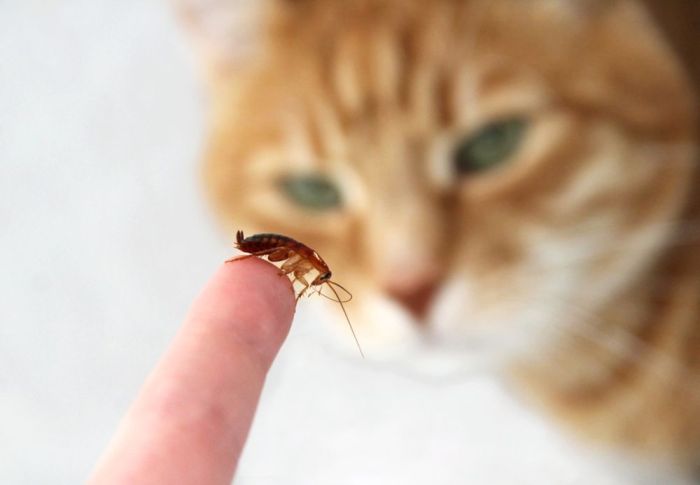
If you witness your cat consuming a roach, don’t panic, but do take action.
Elaborate on the Immediate Steps to Take After Observing Your Cat Consume a Roach
Source: cats.com
Observe your cat closely for any signs of illness. Try to determine if the roach was treated with pesticides. If possible, collect the roach (or a portion of it) for identification.
Explain the Importance of Monitoring Your Cat for Any Signs of Illness
Watch for symptoms such as vomiting, diarrhea, lethargy, loss of appetite, or unusual behavior. These could indicate a parasitic infection, pesticide poisoning, or bacterial contamination.
Discuss When It’s Necessary to Consult a Veterinarian
If your cat exhibits any concerning symptoms, or if you suspect the roach was treated with pesticides, consult a veterinarian immediately. Early intervention can significantly improve the outcome.
| Potential Symptoms of Illness | Possible Causes | Recommended Actions |
|---|---|---|
| Vomiting/Diarrhea | Parasites, Pesticide Poisoning, Bacterial Contamination | Contact Veterinarian Immediately |
| Lethargy/Loss of Appetite | Parasites, Pesticide Poisoning | Monitor Closely; Contact Veterinarian if Worsening |
7. Roaches and Cat Behavior
A Deeper Look
The presence of roaches can impact a cat’s well-being beyond just the risk of ingestion.
Discuss How the Presence of Roaches Might Affect a Cat’s Stress Levels
Roaches can be a source of stress for cats, especially those with heightened sensitivities. The constant scurrying and rustling sounds can be unsettling, leading to anxiety and restlessness.
Explain How a Cat’s Hunting Behavior Can Be Influenced by Boredom or Lack of Stimulation
Cats who lack adequate mental and physical stimulation may turn to hunting insects as a form of entertainment. This behavior can be exacerbated by a lack of interactive play and environmental enrichment.
Detail the Potential for Roaches to Trigger Obsessive-Compulsive Behaviors in Some Cats
In some cases, the constant pursuit of roaches can develop into an obsessive-compulsive behavior. The cat becomes fixated on hunting and may exhibit repetitive behaviors even when no roaches are present.
Demonstrate How to Enrich a Cat’s Environment to Reduce Their Reliance on Hunting Insects
Provide plenty of interactive toys, scratching posts, climbing structures, and opportunities for play. Rotate toys regularly to keep things interesting. Consider puzzle feeders to stimulate their minds and satisfy their hunting instincts in a safe and controlled way.
8. Different Types of Roaches and Their Attractiveness to Cats
Not all roaches are created equal. Some species are more likely to attract a cat’s attention than others.
Identify Common Roach Species Found in Homes (e.g., German Cockroach, American Cockroach)
The German cockroach is the most common indoor species, while the American cockroach is often found outdoors but can also infest homes.
Elaborate on the Physical Characteristics of Each Species and How They Might Influence a Cat’s Interest
German cockroaches are small and fast-moving, making them highly appealing to cats. American cockroaches are larger and slower, but their size can still attract a cat’s attention.
Compare the Potential Health Risks Associated with Different Roach Species
Both species can carry parasites and bacteria, but American cockroaches are more likely to carry Salmonella due to their outdoor habits.
The German cockroach is a prolific breeder, capable of establishing a large colony quickly. They are often found in kitchens and bathrooms, attracted to moisture and food sources. Their small size and rapid movements make them a challenging but enticing target for cats.
9. Alternative Hunting Outlets for Cats
Satisfying a cat’s hunting instincts doesn’t have to involve chasing roaches. Here are some safer and more enriching alternatives.
Detail the Benefits of Interactive Toys and Play Sessions for Cats
Interactive toys, such as feather wands and laser pointers, provide a stimulating and engaging way for cats to exercise their hunting skills without harming themselves or consuming pests.
Explain How Puzzle Feeders Can Satisfy a Cat’s Hunting Instincts
Puzzle feeders require cats to work for their food, mimicking the challenges of hunting in the wild. This provides mental stimulation and prevents boredom.
Discuss the Importance of Providing Scratching Posts and Climbing Structures
Scratching posts and climbing structures allow cats to express their natural behaviors and expend energy, reducing the likelihood of them seeking out alternative forms of entertainment, like hunting insects.
Design a Schedule for Daily Play and Enrichment Activities for a Cat
[Schedule Example: Morning (15 mins)
-Interactive Play with Feather Wand. Afternoon (30 mins)
-Puzzle Feeder. Evening (15 mins)
-Laser Pointer Chase. Throughout the Day – Access to Scratching Post and Climbing Structure.]
10. The Role of Diet in Reducing Roach Consumption
A well-balanced diet can help reduce a cat’s urge to hunt insects.
Elaborate on How a Balanced and Nutritious Diet Can Reduce a Cat’s Urge to Hunt Insects
When a cat’s nutritional needs are met, they are less likely to seek out alternative food sources, such as roaches.
Explain the Importance of Providing Adequate Protein and Essential Nutrients
Cats are obligate carnivores and require a diet rich in protein and essential nutrients. Ensure your cat’s food meets their specific nutritional requirements.
Discuss the Potential Benefits of Wet Food Versus Dry Food in Satisfying a Cat’s Nutritional Needs
Wet food generally has a higher moisture content, which can help keep cats hydrated and may be more palatable for some cats. Both wet and dry food can be part of a balanced diet, but it’s important to choose high-quality options.
| Brand | Protein Content (%) | Ingredient Quality | Overall Nutritional Value |
|---|---|---|---|
| Royal Canin | 35-45 | High-Quality Animal Protein | Excellent |
| Purina Pro Plan | 30-40 | Good Quality Animal Protein | Very Good |
Conclusion
Ultimately, while it’s not unheard of for cats to eat roaches, it’s a behavior we want to discourage. The potential health risks, from parasites to pesticides, are simply too significant to ignore. By understanding your cat’s hunting instincts, proactively preventing roach infestations, and providing enriching alternatives like interactive toys and a balanced diet, you can minimize the chances of your cat encountering – and consuming – these unwelcome guests.
A proactive approach to pest control and feline enrichment is the best way to keep your cat safe and your home roach-free.
Remember, observing your cat’s behavior and consulting with a veterinarian are crucial steps in ensuring their overall health and well-being. If you suspect your cat has ingested a roach and is exhibiting any concerning symptoms, don’t hesitate to seek professional advice. A little preventative care goes a long way in protecting your beloved companion.
Helpful Answers
Why do cats hunt even when they’re well-fed?
Hunting is deeply ingrained in a cat’s DNA. It’s a natural instinct, a form of enrichment, and a way for them to express their predatory behavior, even if they don’t need the food.
Are all roaches equally dangerous for cats?
No. Some roach species are more likely to carry harmful parasites or have been exposed to pesticides. German cockroaches are particularly common and can pose a risk.
What are the signs of pesticide poisoning in cats?
Symptoms can include vomiting, diarrhea, tremors, seizures, and difficulty breathing. Seek immediate veterinary attention if you suspect pesticide poisoning.
Can a cat get worms from eating a roach?
Yes, roaches can carry various types of worms, which can then infect your cat. Regular deworming is important.
How can I tell if my cat is stressed by the presence of roaches?
Signs of stress include excessive grooming, hiding, changes in appetite, and increased vocalization.
What’s the best way to deter roaches from my home?
Maintaining a clean home, sealing cracks and crevices, and storing food properly are essential. Consider pet-safe roach traps or baits.
Should I punish my cat for eating a roach?
No! Punishment is ineffective and can damage your relationship with your cat. Focus on preventing the situation from happening again and providing alternative enrichment.
