There’s something undeniably captivating about a domestic cat sporting impressively large ears – a look that blends elegance with an almost otherworldly charm. Beyond just aesthetics, those prominent ears play a crucial role in a cat’s sensory world, communication, and even their place in popular culture. This exploration delves into the fascinating world of domestic cats with big ears, covering everything from their unique anatomy and genetics to their hearing abilities and the care they require.
We’ll unpack the science behind those oversized ears, identifying breeds known for this trait and examining how ear size impacts a cat’s ability to perceive the world around them. Plus, we’ll offer practical advice on ear care and explore the cultural significance of these striking felines, comparing them to their wild cousins and uncovering the subtle nuances of their ear shapes and expressions.
The Allure of Large Ears: A Deep Dive into Domestic Cats
There’s something undeniably captivating about a domestic cat with particularly large ears. Beyond their aesthetic appeal, these prominent ears play a crucial role in a cat’s sensory perception, communication, and overall well-being. This article explores the fascinating world of large-eared cats, delving into their anatomy, genetics, behavior, and the unique care considerations they require. We’ll move beyond simple observation to understand the science and charm behind these striking feline features.
Physical Characteristics – Ear Morphology
A domestic cat’s ear is a marvel of biological engineering, far more complex than it appears. The external ear, or pinna, is composed of cartilage covered by skin and fur. Variations in ear size are directly linked to the size and shape of this cartilage structure. Cats with larger ears generally possess a greater surface area of cartilage, allowing for a wider range of sound collection.
The anatomical structure itself remains consistent across breeds, but the proportions differ significantly. High-set ears, positioned further back on the head, tend to create a more alert and refined appearance, while low-set ears, closer to the cheek, can contribute to a more rounded and endearing look, especially when combined with larger ear size.
Cartilage density and flexibility also play a role. Cats with prominent ears often exhibit slightly less dense cartilage, allowing for greater movement and directional sensitivity. Conversely, cats with smaller ears may have denser, more rigid cartilage, providing stability but potentially limiting their ability to precisely pinpoint sound sources. This isn’t a hard and fast rule, however, and individual variation exists within breeds.
| Ear Type (e.g., Folded, Pricked, Tipped) | Typical Size (cm) | Cartilage Density (Scale 1-5) | Common Breed Association |
|---|---|---|---|
| Pricked (Upright) | 6-10 | 2-4 | Abyssinian, Siamese, Oriental Shorthair |
| Folded | 5-8 | 3-5 | Scottish Fold |
| Tipped (Tipped Ears) | 4-7 | 2-3 | American Curl |
| Rounded | 5-9 | 3-4 | Persian, British Shorthair |
Breed Identification & Genetics
Several cat breeds are renowned for their noticeably large ears. The Abyssinian, originating from Ethiopia (though its lineage is complex), is known for its large, pricked ears that contribute to its alert and intelligent expression. The Siamese, with its ancient roots in Thailand, boasts large, pointed ears that are a defining characteristic of the breed. The American Curl, a relatively new breed developed in the 1980s, is famous for its uniquely curled ears, a result of a spontaneous genetic mutation.
The Oriental Shorthair, a close relative of the Siamese, also shares the breed’s large, upright ears. The Savannah, a hybrid breed resulting from crosses between domestic cats and servals, often displays exceptionally large ears, reflecting its wild ancestry.
Genetically, ear size is likely influenced by multiple genes, rather than a single dominant or recessive factor. Mutations in genes affecting cartilage development and growth are suspected to play a significant role. While the exact genes involved haven’t been definitively identified, research suggests that variations in these genes can lead to the observed differences in ear size across breeds. The curled ear trait in American Curls is a clear example of a dominant mutation, meaning only one copy of the mutated gene is needed for the trait to be expressed.
- Abyssinian: Large, pricked ears contribute to an alert expression. Approximately 70-80% of Abyssinians exhibit ears within the larger range for the breed.
- Siamese: Large, pointed ears are a breed standard. Nearly 100% of Siamese cats have ears considered large within their breed.
- American Curl: Distinctive curled ears are the defining feature. The degree of curl varies, but all American Curls possess this trait.
- Oriental Shorthair: Similar to Siamese, with large, upright ears. Around 90% exhibit large ears.
- Savannah: Large, often high-set ears, reflecting their serval heritage. Approximately 60-75% display prominent ears.
Sensory Perception & Hearing Abilities
Larger ears generally correlate with an enhanced ability to detect high-frequency sounds. The increased surface area allows for greater sound collection, particularly at higher frequencies that are often beyond the range of human hearing. This is crucial for cats, as they rely on these frequencies to detect the subtle movements of prey, such as mice and insects.
Cats possess exceptional accuracy in pinpointing the location of sounds, thanks to the independent movement of their ears. Each ear can rotate and tilt independently, allowing them to create a precise “sound map” of their surroundings. The size of the ear contributes to this ability by providing a larger surface to capture subtle differences in sound arrival time and intensity between the two ears.
This allows for incredibly precise localization, even in complex environments.
Large ears also enhance a cat’s sensitivity to subtle changes in environmental sounds. They can detect the faintest rustling of leaves, the quietest creak of a floorboard, or the almost imperceptible vibrations caused by a mouse scurrying through the undergrowth. This heightened sensitivity is a vital survival tool for both hunting and predator avoidance.
Imagine a cat with large, alert ears sitting patiently in a sunbeam. A tiny mouse rustles in the leaves just a few feet away. The cat’s ears immediately swivel towards the sound, pinpointing its location with remarkable accuracy. The large surface area of the ears captures the faint high-frequency sounds produced by the mouse’s movements, triggering an instinctive hunting response.
The cat’s body tenses, its eyes narrow, and it prepares to pounce, all thanks to the exceptional hearing capabilities afforded by its prominent ears.
Grooming & Ear Care Considerations
Cleaning the ears of a cat with large ears requires a gentle and methodical approach. Begin by examining the ear canal for any signs of redness, discharge, or inflammation. Gently lift the ear flap and use a cotton ball moistened with a veterinarian-approved ear cleaning solution to wipe away any visible debris. Avoid inserting anything deep into the ear canal, as this can damage the delicate tissues.
Always wipe in a downward motion, following the natural curve of the ear.
Cats with large ears are potentially more vulnerable to ear health issues, such as infections and ear mites. The larger ear canal provides a greater surface area for bacteria and parasites to thrive. Increased airflow can also lead to moisture buildup, creating a favorable environment for infections. Regular ear cleaning and monitoring are essential for preventing these problems.
To minimize the risk of infections, keep the ears dry after bathing or swimming. Avoid using cotton swabs, as they can push debris further into the ear canal. Consider using ear cleaning solutions with antibacterial or antifungal properties, as recommended by your veterinarian. Regular veterinary checkups are also crucial for early detection and treatment of any ear problems.
“As a veterinarian, I often advise cat owners with breeds like Abyssinians or American Curls to be particularly vigilant about ear care. Look out for signs of excessive scratching, head shaking, discharge, or a foul odor. If you notice any of these symptoms, schedule an appointment promptly. Early intervention is key to preventing serious complications.”
Dr. Emily Carter, DVM
Visual Aesthetics & Popular Culture
Cats with large ears possess a unique visual appeal. The prominent ears often convey an impression of alertness, intelligence, and even a touch of wildness. The size and shape of the ears can dramatically alter a cat’s overall appearance, adding character and charm. The contrast between the large ears and the cat’s face can create a striking and memorable image.
In popular culture, cats with large ears are frequently portrayed as intelligent, mischievous, or even heroic characters. Cartoons often exaggerate ear size to emphasize a cat’s personality. Internet memes frequently feature cats with large ears in humorous or endearing situations. Breeds like the Abyssinian and American Curl have gained popularity as companion animals, in part due to their distinctive and appealing ear features.
| Character Name (from media) | Cat Breed (if applicable) | Description of Ear Feature |
|---|---|---|
| Garfield | Domestic Shorthair (likely) | Large, rounded ears that contribute to his expressive face. |
| Tom (Tom and Jerry) | Domestic Shorthair | Large, upright ears that are often used for comedic effect. |
| Mittens (Over the Garden Wall) | Unknown (likely domestic) | Large, pointed ears that add to her mysterious and ethereal appearance. |
Comparative Anatomy – Wild Felines
Compared to domestic cats with large ears, wild felines exhibit a wider range of ear morphology. Lions and tigers generally have smaller, more rounded ears relative to their head size, while cheetahs possess exceptionally small, rounded ears. Servals, the wild ancestor of the Savannah cat, have significantly larger ears than most other wild felines, reflecting their adaptation to hunting in tall grasslands where sound localization is crucial.
Larger ear size in wild felines can offer both advantages and disadvantages. Enhanced hearing is advantageous for detecting prey and avoiding predators, particularly in environments with dense vegetation. However, larger ears can also increase heat loss in hot climates, potentially posing a disadvantage. The size and shape of a wild cat’s ears are ultimately shaped by a complex interplay of environmental factors, prey availability, and predator pressure.
Environmental factors, such as habitat type and prey density, have significantly influenced the evolution of ear size in different feline species. For example, servals, which inhabit tall grasslands, have evolved large ears to maximize their ability to detect the rustling of prey in the undergrowth. In contrast, cheetahs, which rely on speed and vision to hunt, have smaller ears to reduce drag and improve aerodynamic efficiency.
Imagine a domestic cat with large, pricked ears standing beside a cheetah. The domestic cat’s ears are proportionally larger and more upright, giving it a more alert and expressive appearance. The cheetah’s ears, on the other hand, are small, rounded, and tightly pressed against its head, minimizing wind resistance as it sprints across the savanna. While both cats possess excellent hearing, their ear morphology reflects their distinct hunting strategies and ecological niches.
Ear Shape Variations & Terminology
Beyond simply “large,” domestic cat ears come in a remarkable variety of shapes. Curled ears, as seen in American Curls, are a distinctive feature. Pointed ears, common in Siamese and Abyssinians, are tall and triangular. Rounded ears, characteristic of Persians and British Shorthairs, have a gentle curve and lack sharp points. Other variations include folded ears (Scottish Folds) and tipped ears (American Curls with a less pronounced curl).
Ear shape serves as a valuable distinguishing characteristic for different cat breeds and lineages. Breeders often select for specific ear shapes to maintain breed standards and preserve unique traits. Subtle differences in ear structure can also indicate a cat’s age or overall health. For example, flattened ears can be a sign of illness or injury.
- Rounded: Ears have a gentle curve and lack sharp points. Visual Characteristic: Soft, almost circular Artikel.
- Pointed: Ears are tall and triangular, tapering to a sharp point. Visual Characteristic: Distinct, angular shape.
- Curled: Ears curl backward, creating a distinctive crescent shape. Visual Characteristic: A noticeable bend or fold in the ear.
- Folded: Ears fold forward and downward, close to the head. Visual Characteristic: A flattened or drooping appearance.
- Tipped: Ears have a slight curl or fold at the tips. Visual Characteristic: A subtle bend or curve at the ear’s apex.
Impact on Communication & Behavior
Ear position is a crucial element of feline communication, conveying a wide range of emotions. Forward-pointing ears indicate alertness and interest, while flattened ears suggest fear or submission. Backward-pointing ears can signal relaxation or annoyance. Cats with large ears may exhibit these emotional cues more dramatically, as the larger surface area makes ear movements more visible.
Large ears can also enhance a cat’s ability to detect subtle cues from other cats or humans. They can pick up on faint vocalizations, body language signals, and even changes in breathing patterns. This heightened sensitivity can improve social interactions and strengthen bonds between cats and their human companions.
While definitive studies are lacking, anecdotal evidence suggests that cats with large ears may exhibit increased alertness and heightened sensitivity to their surroundings. They may be quicker to react to potential threats and more attuned to the emotional states of those around them.
A cat with large, expressive ears sits perched on a windowsill, observing the world outside. A sudden gust of wind rustles the leaves in the garden. The cat’s ears immediately swivel forward, its pupils dilate, and its body tenses. The large ears capture the subtle sound, instantly alerting the cat to a potential disturbance. A moment later, the wind subsides, and the cat relaxes, its ears returning to their normal position, demonstrating its constant vigilance and acute awareness of its environment.
Outcome Summary
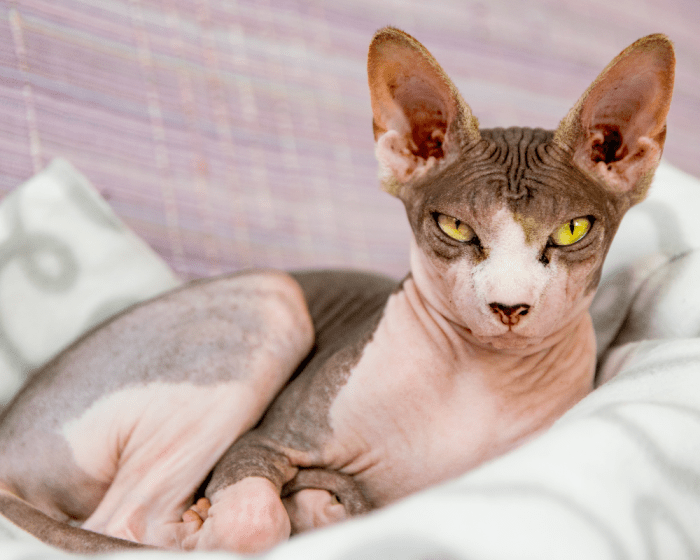
Source: sanity.io
From the intricate structure of their cartilage to the subtle shifts in their ear position that reveal their emotions, domestic cats with big ears offer a wealth of fascinating details. Understanding their unique needs, appreciating their aesthetic appeal, and recognizing their role in our lives – both real and imagined – allows us to better connect with these remarkable creatures.
Whether you’re a devoted cat owner, a curious animal lover, or simply intrigued by the wonders of the feline world, this guide provides a deeper appreciation for the beauty and complexity of the domestic cat with big ears.
Ultimately, these cats remind us that even the smallest details – like the size and shape of their ears – can hold a world of significance, contributing to their charm and enriching our lives.
FAQ Resource
Why do some domestic cats have bigger ears than others?
Ear size is largely determined by genetics, with certain breeds selectively bred for larger ears. Gene mutations can also play a role, leading to variations in ear size within a breed.
Are cats with big ears better at hearing?
Generally, yes. Larger ears can capture more sound waves and provide a wider range of hearing, particularly for high-frequency sounds. However, other factors like ear canal shape also contribute to hearing ability.
How often should I clean my cat’s ears?
It depends on the cat. Most cats don’t require frequent cleaning unless they have a build-up of wax or debris. Consult your veterinarian for personalized advice.
What are some signs of ear problems in cats with large ears?
Look out for excessive scratching, head shaking, redness, discharge, or a foul odor. Any of these signs warrant a visit to the vet.
Do cats with big ears have any behavioral differences?
Some anecdotal evidence suggests they might be more alert and sensitive to their surroundings, but this isn’t a universal trait. Individual personality plays a larger role.
Are folded ears a sign of a healthy cat?
No. Folded ears, as seen in Scottish Folds, are caused by a genetic mutation that can lead to cartilage defects and painful arthritis. It’s important to be aware of the potential health issues associated with this trait.

