Grey tabby cats are captivating creatures, blending the elegance of grey fur with the distinctive patterns of the tabby markings. From the subtle shimmer of a silver tabby to the deep blue hues of a blue tabby, these felines possess a unique charm that has captivated humans for centuries. This guide dives deep into the world of grey tabby cats, exploring their genetics, breeds, care, behavior, and the reasons behind their enduring appeal.
We’ll unravel the mysteries behind their coat colors and patterns, identify popular breeds that showcase these traits, and offer practical advice on caring for these wonderful companions. Whether you’re a seasoned cat lover or considering welcoming a grey tabby into your home, this exploration promises to enrich your understanding and appreciation for these beautiful animals.
Defining Grey Tabby Cats
Grey tabby cats are among the most beloved and recognizable feline varieties. Their distinctive markings and often-mysterious coloration make them captivating companions. But what exactlydefines* a grey tabby? It’s more than just a color; it’s a combination of genetics, pattern, and subtle variations that create a truly unique look. This section will delve into the science and aesthetics of these beautiful cats.
The Shades of Grey: Blue, Silver, and Smoke
The term “grey” encompasses a surprising range of hues in tabby cats. It’s not a single, uniform color. We often hear about “blue” cats, and it’s a common source of confusion. Let’s break down the most common shades:
- Blue: This isn’t actually blue! It’s a diluted black. The “blue” designation comes from the way the gene affects the pigment, resulting in a soft, greyish-blue appearance. Blue tabbies often have green or gold eyes.
- Silver: Silver tabbies have a white or very pale background color with black or dark grey markings. The effect is a shimmering, almost metallic look.
- Smoke: Smoke grey cats have a darker grey or black undercoat that is hidden by a lighter grey or white topcoat. When they move, you can catch glimpses of the darker undercoat, creating a smoky effect.
The Genetics of Grey Coloration
The grey coloration in cats is primarily determined by a dilution gene. This gene modifies the production of melanin, the pigment responsible for black and brown colors. A dominant “D” allele produces normal pigment (black or brown), while a recessive “d” allele dilutes the pigment, resulting in grey (blue), lilac, or cream. The tabby pattern itself is controlled by a separate set of genes, which we’ll discuss shortly.
The interaction between these genes creates the vast array of grey tabby variations we see.
Grey vs. Blue: Clearing Up the Confusion
The terms “grey” and “blue” are often used interchangeably, but technically, “blue” refers specifically to a diluted black color. A “grey” cat can encompass a wider range of shades, including silver and smoke. Think of it this way: all blue cats are grey cats, but not all grey cats are blue. The confusion arises from the historical use of “blue” as a descriptor for grey in the cat fancy.
Understanding the Tabby Pattern
The tabby pattern is a naturally occurring coat pattern found in many cat breeds. It’s characterized by stripes, swirls, or spots. There are four main tabby patterns:
- Mackerel: This is the most common tabby pattern, featuring narrow, parallel stripes that run vertically down the sides of the cat, resembling a fish skeleton.
- Classic: Classic tabbies have swirling patterns on their sides, often described as “bullseye” markings.
- Ticked: Ticked tabbies (also known as Abyssinian tabbies) have a unique pattern where each hair is banded with different colors, creating a shimmering, salt-and-pepper effect. They often lack prominent stripes or spots on their bodies, but have tabby markings on their face and legs.
- Spotted: As the name suggests, spotted tabbies have spots of varying sizes and shapes scattered across their bodies.
The grey coloration interacts with these patterns, creating stunning visual combinations. A silver mackerel tabby will have silver stripes, while a blue classic tabby will have swirling patterns in a soft blue-grey hue.
Popular Grey Tabby Breeds
Grey tabby patterns are found in a wide variety of cat breeds, each with its own unique charm and characteristics. Here are five popular breeds that frequently exhibit these beautiful coats:
Maine Coon
Maine Coons are known for their large size, gentle nature, and luxurious fur. Silver and blue tabby patterns are particularly common in this breed. They are often described as “gentle giants” and are known for their playful personalities.
British Shorthair
British Shorthairs are a sturdy, round-faced breed with a dense, plush coat. Blue tabbies are a hallmark of this breed, and they are known for their calm and easygoing temperament. They are often described as “teddy bears” due to their soft fur and sweet expressions.
American Shorthair
American Shorthairs are adaptable and affectionate cats with a history as working cats. They come in a wide range of colors and patterns, including various shades of grey tabby. They are known for their playful and energetic personalities.
Norwegian Forest Cat
The Norwegian Forest Cat is a large, semi-longhaired breed adapted to harsh climates. They often have silver or blue tabby patterns, and their thick, water-resistant coat is a defining feature. They are known for their independence and intelligence.
Ragdoll
Ragdolls are known for their docile and affectionate nature, often going limp when picked up (hence the name). While not exclusively grey tabbies, they can certainly exhibit this pattern, often in a beautiful blue-grey hue.
| Breed | Typical Grey Shade | Common Personality Traits | Average Size |
|---|---|---|---|
| Maine Coon | Silver, Blue | Gentle, Playful, Affectionate | 13-18 lbs (Male), 8-12 lbs (Female) |
| British Shorthair | Blue | Calm, Easygoing, Affectionate | 9-17 lbs (Male), 7-12 lbs (Female) |
| American Shorthair | Silver, Blue, Grey | Playful, Energetic, Adaptable | 11-15 lbs (Male), 8-11 lbs (Female) |
| Norwegian Forest Cat | Silver, Blue | Independent, Intelligent, Affectionate | 13-22 lbs (Male), 9-16 lbs (Female) |
| Ragdoll | Blue | Docile, Affectionate, Gentle | 15-20 lbs (Male), 10-15 lbs (Female) |
Caring for a Grey Tabby Cat
Caring for a grey tabby cat is similar to caring for any cat, but there are a few specific considerations related to their coat and potential health concerns.
Grooming Requirements
Grooming needs vary depending on the cat’s fur length and texture.
- Longhaired Grey Tabbies (e.g., Maine Coon, Norwegian Forest Cat): These cats require daily brushing to prevent mats and tangles. Regular bathing (every few months) is also recommended.
- Shorthaired Grey Tabbies (e.g., British Shorthair, American Shorthair): Weekly brushing is usually sufficient to remove loose hair and keep their coat healthy.
- Ticked Grey Tabbies (e.g., Abyssinian): Their unique coat texture requires gentle brushing to avoid damaging the banded hairs.
Regardless of fur length, regular nail trimming and ear cleaning are essential.
Potential Health Concerns
While grey coloration itself isn’t directly linked to specific health problems, some breeds commonly exhibiting grey tabby patterns are predisposed to certain conditions. For example, Maine Coons can be prone to hypertrophic cardiomyopathy (HCM), while British Shorthairs may be susceptible to polycystic kidney disease (PKD). Regular veterinary checkups are crucial for early detection and management of any health issues.
Ideal Diet
A high-quality diet is essential for a grey tabby cat’s overall health and well-being.
- Kittens: Need a diet formulated for growth, with higher levels of protein and calories.
- Adults: Should be fed a balanced diet appropriate for their activity level.
- Seniors: May benefit from a diet formulated for older cats, with added nutrients to support joint health and cognitive function.
Consider breed-specific dietary needs. For example, Maine Coons may benefit from a diet rich in omega-3 fatty acids to support their coat health.
Preventative Care Checklist
- Vaccinations: Follow your veterinarian’s recommended vaccination schedule (typically FVRCP and rabies).
- Parasite Control: Administer regular flea, tick, and worm prevention medication.
- Dental Care: Brush your cat’s teeth regularly or provide dental chews to prevent dental disease.
- Annual Veterinary Checkups: Essential for early detection of any health problems.
Grey Tabby Cat Behavior
Tabby cats, regardless of their coat color, share certain behavioral traits rooted in their ancestral hunting instincts.
Hunting Instincts and Common Behaviors
Source: alamy.com
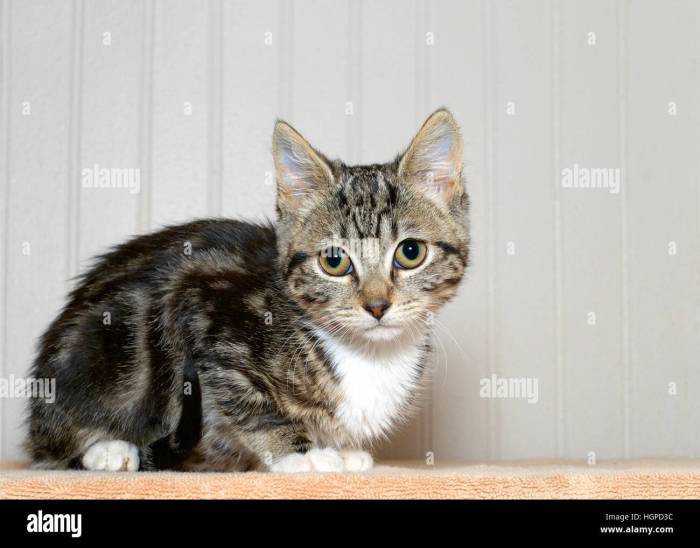
Tabby cats are natural hunters. Common behaviors like stalking, pouncing, and batting at toys are all manifestations of this instinct. They may also exhibit behaviors like scratching (to sharpen their claws and mark their territory) and kneading (a comforting behavior inherited from kittenhood).
Camouflage and Hunting Strategies
The grey coloration of grey tabby cats provides excellent camouflage, particularly in environments with shadows and muted tones. This allows them to blend seamlessly into their surroundings, making them more effective hunters. Silver tabbies, with their lighter markings, may be better suited for hunting in brighter environments, while blue tabbies may excel in dimmer conditions.
Tail Movements and Vocalizations
Tail movements and vocalizations are important forms of communication for grey tabby cats. A twitching tail can indicate excitement or agitation, while a tucked tail may signal fear or submission. Meows, purrs, and hisses all convey different messages, depending on the context.
A typical day for a grey tabby cat might begin with a leisurely stretch and a thorough grooming session. After a hearty breakfast, they’ll spend the morning exploring their territory, stalking imaginary prey, and basking in a sunbeam. The afternoon might involve a playful romp with a favorite toy, followed by a nap. As evening approaches, they’ll greet their human companions with affectionate head-butts and purrs, settling down for a cozy night’s sleep.
Closure
From their fascinating genetic makeup to their playful antics and symbolic significance across cultures, grey tabby cats offer a wealth of intrigue. Understanding their needs, appreciating their unique personalities, and recognizing their beauty in all its variations allows us to forge even stronger bonds with these remarkable felines. Hopefully, this journey into the world of grey tabby cats has left you with a deeper appreciation for these stunning and beloved companions.
So, whether you’re admiring a silver tabby lounging in a sunbeam or sharing a playful moment with a blue tabby kitten, remember the rich history and captivating qualities that make grey tabby cats so special.
Question Bank
Why are some grey tabby cats called “blue”?
The term “blue” in cat genetics refers to a dilution of the black pigment, resulting in a grey or slate-blue color. It’s a historical naming convention and doesn’t necessarily mean the cat is actually blue!
What’s the difference between a mackerel and a classic tabby pattern?
Mackerel tabbies have narrow, parallel stripes resembling a fish skeleton. Classic tabbies have swirling, blotched patterns often described as “marble” or “bullseye” markings.
Are grey tabby cats prone to any specific health problems?
While grey coloration itself isn’t directly linked to health issues, certain breeds known for grey tabby patterns (like Maine Coons) can be predisposed to specific genetic conditions. Regular vet checkups are crucial.
What’s the best type of food for a grey tabby kitten?
Kittens need food specifically formulated for their growth, high in protein and essential nutrients. Consult with your veterinarian for recommendations tailored to your kitten’s breed and activity level.
How often should I groom a long-haired grey tabby cat?
Long-haired grey tabbies, like Maine Coons, require daily brushing to prevent mats and tangles. Shorter-haired varieties need brushing a few times a week.
What are some good signs of a healthy grey tabby kitten when purchasing from a breeder?
Look for bright, clear eyes, a clean coat, good body condition (not too thin or overweight), and a playful, energetic demeanor. A reputable breeder will also be happy to answer your questions and provide health records.
Do grey tabby cats have any special symbolic meaning?
In some cultures, grey cats are associated with good luck, intuition, and mystery. Their camouflage abilities have also led to them being linked to stealth and independence.

