There’s something undeniably captivating about a grey tiger striped cat – the subtle shimmer of silver fur, the bold stripes reminiscent of their wild namesake, and the intelligent glint in their eyes. These beautiful felines are more than just a pretty face; they’re a fascinating blend of genetics, breed history, and unique personalities. This guide dives deep into everything you need to know about these stunning cats, from their physical characteristics and genetic makeup to their care, temperament, and potential health concerns.
We’ll explore the breeds most commonly associated with this striking coat pattern, unravel the science behind their coloration, and offer practical advice on keeping your grey tiger striped companion happy and healthy. Whether you’re a seasoned cat owner or considering welcoming one of these beauties into your home, you’ll find a wealth of information here to deepen your appreciation for these remarkable animals.
The Allure of the Grey Tiger Striped Cat
The grey tiger striped cat, a captivating blend of wild beauty and domestic charm, holds a special place in the hearts of cat lovers. Their distinctive markings, combined with a range of personalities, make them truly unique companions. This article delves into the fascinating world of these felines, exploring their appearance, genetics, care, and more. We’ll uncover the secrets behind their stunning coats and the traits that make them so beloved.
Appearance & Physical Characteristics
The grey tiger striped cat, often called a “blue tabby,” presents a striking visual. Their size can vary, but generally, they weigh between 8 and 15 pounds, with a body length ranging from 18 to 25 inches. Males tend to be larger than females. The most defining feature, of course, is their tiger-like stripes. These aren’t uniform; they exhibit a remarkable range of variations.
Some cats have bold, thick stripes, while others display a more subtle, ghost-like pattern. The density of the stripes also differs – some cats have closely packed stripes, while others have wider gaps between them. Placement is equally variable; stripes can run along the sides, across the shoulders, and down the legs, sometimes forming a “butterfly” pattern on the face.The shade of grey observed in these cats is equally diverse.
It ranges from a shimmering silver, often referred to as “blue,” to a deeper charcoal grey. This variation is largely determined by genetics, specifically the dilution gene (more on that later). Eye color also plays a role in the overall appearance. Common eye colors include gold, green, and copper, with gold eyes often associated with lighter grey coats and green or copper eyes frequently seen in darker grey individuals.
| Feature | Description | Variation | Example |
|---|---|---|---|
| Coat Length | The length of the fur. | Short, Medium, Long | A British Shorthair has short fur, a Maine Coon has long fur. |
| Body Build | The overall physique of the cat. | Slender, Muscular | A Bengal often has a muscular build, while an Abyssinian tends to be more slender. |
| Ear Shape | The shape and size of the ears. | Rounded, Pointed | Scottish Folds have rounded ears, while Siamese have pointed ears. |
| Tail Length | The length of the tail. | Short, Medium, Long | Manx cats have a short or absent tail, while Ragdolls have long, fluffy tails. |
Breed Associations & Origins
Several cat breeds are commonly associated with the grey tiger striped coat pattern. The Bengal is perhaps the most well-known, thanks to its striking resemblance to a wild leopard. Maine Coons, with their large size and gentle nature, frequently display this pattern. American Shorthairs, known for their robust health and adaptable personalities, also often exhibit grey tiger stripes. Other breeds, such as British Shorthairs and Russian Blues (though Russian Blues typically have a more uniform grey coat), can occasionally display this coloration.Historically, the development of the striped pattern within these breeds is linked to their origins.
Bengals, for example, were created by crossing domestic cats with Asian Leopard Cats, introducing the wild tabby markings. Maine Coons, originating in Maine, likely developed their thick, striped coats as an adaptation to the harsh winter climate. American Shorthairs, descended from working cats brought to North America by early settlers, developed a variety of coat patterns through natural selection.While less common, breeds like Norwegian Forest Cats and Siberian cats can also exhibit grey tiger stripes, adding to the diversity of this captivating pattern.
- Bengal: Active, intelligent, playful, requires lots of interaction and enrichment.
- Maine Coon: Gentle giant, affectionate, playful, adaptable, enjoys being around people.
- American Shorthair: Easygoing, affectionate, playful, good with children and other pets.
Genetics & Coloration
The grey coloration in cats is primarily determined by the dilution gene. This gene modifies the intensity of the base coat color, turning black into grey (or brown into a lighter shade of brown). However, the tiger stripe pattern is largely controlled by the agouti gene. The agouti gene determines whether a cat has a tabby pattern (stripes, swirls, or spots) or a solid color.
In tabby cats, the agouti gene allows for bands of pigment to be deposited along each hair shaft, creating the striped effect.The interaction of different genes is complex. For example, the intensity of the grey can be influenced by other genes that affect pigment production. A cat with a strong dilution gene will have a lighter grey coat, while a cat with a weaker dilution gene will have a darker grey coat.
The tabby pattern itself can also be modified by other genes, affecting the thickness and density of the stripes.Here’s a simplified flowchart illustrating these relationships:
- Base Coat Color: Black (or Brown)
- Agouti Gene: Determines Tabby Pattern (Stripes)
- Dilution Gene: Modifies Black to Grey (or Brown to Light Brown)
- Modifier Genes: Influence Intensity of Grey and Stripe Pattern
Care & Grooming
Grooming requirements for grey tiger striped cats vary depending on their coat length. Short-haired cats generally require less frequent brushing, while medium and long-haired cats need more attention to prevent matting. Regardless of coat length, regular brushing is essential to remove loose hair and distribute natural oils, keeping the coat healthy and shiny.Bathing is typically only necessary a few times a year, unless the cat gets particularly dirty.
When bathing, use a cat-specific shampoo and rinse thoroughly to avoid skin irritation.A high-quality diet rich in protein and essential fatty acids is crucial for maintaining a healthy coat. Look for cat food that lists meat as the primary ingredient and contains omega-3 and omega-6 fatty acids.
| Grooming Task | Frequency | Method |
|---|---|---|
| Brushing | Short-haired: 1-2 times/week; Medium/Long-haired: 3-4 times/week | Use a brush appropriate for coat length (e.g., slicker brush, undercoat rake). |
| Nail Trimming | Every 2-3 weeks | Use cat nail clippers and trim only the tips of the nails. |
| Ear Cleaning | As needed (usually every 1-2 weeks) | Use a cat ear cleaning solution and cotton balls to gently clean the ears. |
| Dental Care | Daily brushing (ideal); otherwise, 2-3 times/week | Use cat toothpaste and a cat toothbrush. |
Temperament & Behavior
Grey tiger striped cats are often described as intelligent, playful, and affectionate. They tend to be curious and enjoy exploring their surroundings. Their activity levels vary depending on the breed, but most enjoy interactive play sessions with toys like feather wands and laser pointers. They are generally social animals and enjoy being around humans and other pets, though introductions should be done gradually.
Breed-specific tendencies also play a role; Bengals are known for their high energy levels, while Maine Coons are known for their gentle and laid-back personalities.
Grey tiger striped cats are generally affectionate and playful companions, but their intelligence and curiosity can sometimes lead to mischief. Providing plenty of enrichment and interaction is key to keeping them happy and well-behaved. Early socialization is also important to ensure they are comfortable around other people and animals.
Health Considerations
Certain health conditions are more prevalent in breeds commonly exhibiting grey tiger stripes. Bengals are prone to hypertrophic cardiomyopathy (HCM), a heart condition. Maine Coons are susceptible to hip dysplasia and spinal muscular atrophy (SMA). American Shorthairs can be prone to hypertrophic cardiomyopathy and polycystic kidney disease (PKD).Preventative care measures, such as regular veterinary checkups and vaccinations, are essential for minimizing health risks.
Early detection of any health problems is crucial for successful treatment. Signs of illness or discomfort can include changes in appetite, lethargy, vomiting, diarrhea, or difficulty breathing.
| Potential Health Issue | Symptoms | Recommended Action |
|---|---|---|
| Hypertrophic Cardiomyopathy (HCM) | Difficulty breathing, lethargy, sudden death | Veterinary examination, echocardiogram. |
| Hip Dysplasia | Lameness, stiffness, pain | Veterinary examination, X-rays, pain management. |
| Polycystic Kidney Disease (PKD) | Increased thirst and urination, weight loss | Veterinary examination, blood tests, ultrasound. |
Visual Representations & Descriptions
Imagine a grey tiger striped cat lounging in a sunbeam. The light catches the silver-grey fur, highlighting the subtle variations in tone and creating a mesmerizing interplay of light and shadow. The stripes appear almost to shimmer as the light dances across them. The cat’s eyes, a vibrant gold, are half-closed in contentment, and its paws are tucked neatly beneath its chest.Picture a grey tiger striped cat playfully stalking a toy mouse.
Its body is low to the ground, muscles coiled and ready to spring. The stripes accentuate its sleek, athletic form as it creeps forward with silent grace. A twitch of the tail and a focused gaze reveal its intense concentration.Envision a portrait of a grey tiger striped cat with piercing green eyes. The eyes are intelligent and curious, conveying a sense of quiet confidence.
The stripes are clearly defined, creating a striking contrast against the grey fur. The cat’s expression is one of calm observation, as if it’s assessing the world around it.A kitten with faint grey tiger stripes is a picture of softness and vulnerability. The stripes are barely visible, like whispers of the pattern to come. The fur is incredibly soft and fluffy, and the kitten’s eyes are wide and innocent.
It curls up in a ball, seeking warmth and comfort.Finally, picture a grey tiger striped cat sleeping curled up in a cozy bed. The fur is soft and plush, and the stripes are subtly visible even in sleep. The cat’s breathing is slow and even, and its expression is one of complete contentment.
Naming Conventions
Here’s a list of potential names for a grey tiger striped cat: Male:
- Shadow
- Jasper
- Rocco
- Finn
- Zeus
- Asher
- Silas
- Koda
- Ryker
- Sterling
- Hunter
- Bandit
- Ghost
- Slate
- Smokey
- Grey
- Ash
- Nimbus
- Storm
- Ranger
Female:
- Luna
- Willow
- Raven
- Stella
- Piper
- Hazel
- Skye
- Echo
- Sage
- Misty
- Silver
- Ashlyn
- Shadow
- Stormy
- Pearl
- Dusty
- Luna
- Seraphina
- Willow
- Nova
Names inspired by tigers or other feline predators evoke the cat’s wild beauty and strength. Creative names based on the cat’s personality or appearance can also be a great way to capture its unique charm.
| Name | Inspiration |
|---|---|
| Ranger | Wilderness, exploration |
| Shadow | The cat’s dark grey coat |
| Luna | The moon, a silvery glow |
| Zeus | Greek mythology, power and strength |
Distinguishing Features from Similar Cats
Distinguishing a grey tiger striped cat from a grey tabby cat lies in the boldness and definition of the stripes. Tiger stripes are typically more pronounced and distinct than the more subtle, swirling patterns often seen in grey tabby cats.Differentiating a grey tiger striped cat from a smoke-colored cat is also straightforward. Smoke-colored cats have a solid-colored undercoat that is visible at the tips of the hairs, creating a “smoky” effect.
Grey tiger striped cats have distinct stripes throughout their coat, with no visible undercoat.Finally, distinguishing a grey tiger striped cat from a diluted tabby cat involves recognizing the intensity of the stripes. Diluted tabby cats have paler, less defined stripes compared to the bolder stripes of a grey tiger striped cat.
Conclusive Thoughts
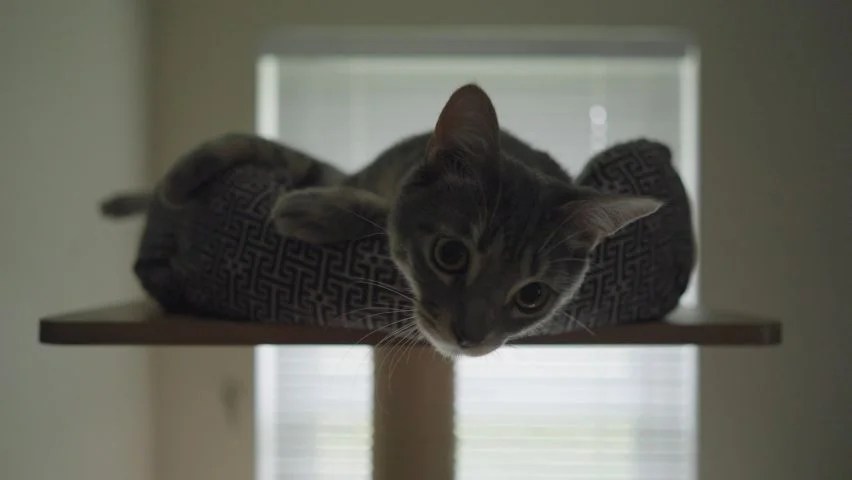
Source: shutterstock.com
From the subtle variations in stripe patterns to the fascinating interplay of genetics that create their unique appearance, the grey tiger striped cat is a testament to the beauty and complexity of the feline world. Understanding their needs, appreciating their individual personalities, and providing them with proper care will ensure a long and fulfilling life together. So, whether you’re charmed by their playful antics or mesmerized by their regal presence, the grey tiger striped cat is a truly special companion.
Hopefully, this guide has provided you with a comprehensive understanding of these gorgeous cats and inspired you to learn even more about them. Enjoy the journey of discovering the wonders of the grey tiger striped cat!
FAQ Explained
Why do some grey tiger striped cats have different shades of grey?
The shade of grey is largely determined by genetics. Different genes interact to influence the intensity of the color, ranging from a silvery hue to a deeper charcoal. The agouti gene plays a key role in stripe development, while dilution genes can lighten the overall color.
What’s the best diet for a grey tiger striped cat with a long coat?
A high-quality diet rich in omega-3 and omega-6 fatty acids is crucial for maintaining a healthy, shiny coat. Look for cat food specifically formulated for long-haired breeds, as these often contain ingredients that promote coat health and reduce shedding.
Are grey tiger striped cats generally active?
Activity levels vary depending on the breed, but many grey tiger striped cats are quite energetic and playful. Providing them with plenty of toys, scratching posts, and interactive playtime is essential to keep them stimulated and prevent boredom.
What are some common health issues to watch out for?
Depending on the breed, potential health concerns can include hypertrophic cardiomyopathy (HCM), polycystic kidney disease (PKD), and hip dysplasia. Regular veterinary checkups are vital for early detection and management of any health issues.
How often should I bathe my grey tiger striped cat?
Bathing frequency depends on coat length. Short-haired cats may only need occasional baths, while long-haired cats may benefit from bathing every few months. Always use a cat-specific shampoo to avoid irritating their skin.
What are some good names for a male grey tiger striped cat?
Consider names like Shadow, Jasper, Steele, Ranger, or Finn.
What are some good names for a female grey tiger striped cat?
Try Luna, Willow, Misty, Skye, or Raven.
What’s the difference between a grey tiger striped cat and a grey tabby cat?
While both have stripes, tiger stripes are bolder and more defined than the classic swirling patterns of a tabby. Tiger stripes are typically more vertical and distinct.
What does it mean if my grey tiger striped cat has “ghost” stripes?
Ghost stripes are faint, barely visible markings that suggest the cat carries the genes for the tiger stripe pattern but doesn’t fully express it. They’re often more noticeable in certain lighting conditions.

