More and more cat owners are turning to the kitchen to prepare meals for their beloved felines, and for good reason! Concerns about commercial cat food ingredients, a desire for greater control over what our cats eat, and even the potential for cost savings are driving this trend. This guide dives deep into the world of home-cooked meals for cats, covering everything from essential nutrients and safe recipes to food safety and troubleshooting common issues.
We’ll equip you with the knowledge to confidently create nutritious and delicious meals your cat will adore.
We’ll explore the specific nutritional needs of cats as obligate carnivores, detailing the vital components like protein, taurine, and fatty acids. You’ll learn about safe and exciting ingredients to incorporate, as well as those to absolutely avoid. Plus, we’ll provide step-by-step recipes, discuss supplementation, and offer practical advice on ensuring your cat thrives on a homemade diet.
The Rise of Homemade Cat Food
More and more cat owners are rolling up their sleeves and preparing meals for their feline companions. It’s a noticeable shift in how we care for our pets, moving beyond the convenience of commercial cat food to a more hands-on approach. This trend isn’t just a fad; it’s driven by a genuine desire to provide cats with the best possible nutrition and address specific concerns about their health and well-being.
The motivations behind this culinary shift are varied. Some owners are worried about the quality of ingredients in commercial food, seeking greater control over what their cats consume. Others are looking for ways to manage allergies or sensitivities, believing that homemade meals offer a more tailored solution. And, let’s be honest, for some, it’s about saving money in the long run, especially when dealing with picky eaters or cats with specific dietary needs.
This article will explore the essentials of creating nutritious and safe homemade cat food, covering everything from understanding your cat’s nutritional needs to crafting simple, delicious recipes. We’ll also delve into food safety, supplementation, and how to monitor your cat’s health while on a homemade diet.
Nutritional Needs of Cats: A Foundation for Homemade Recipes
Creating a balanced homemade diet for your cat requires a solid understanding of their unique nutritional requirements. Cats aren’t like dogs; they have very specific needs that must be met to ensure their health and longevity. Ignoring these needs can lead to serious health problems down the line.
Essential Nutrients for Cats
Cats are obligate carnivores, meaning their bodies are designed to thrive on a diet primarily composed of animal protein. While they can technically digest some plant matter, they lack the enzymes necessary to efficiently process it. Key nutrients for cats include protein, taurine, essential fatty acids, vitamins, and minerals. Protein provides the building blocks for tissues and enzymes, taurine is crucial for heart and eye health, fatty acids support healthy skin and coat, and vitamins and minerals play vital roles in various bodily functions.
| Nutrient | Animal-Based Source | Deficiency Symptoms |
|---|---|---|
| Protein | Chicken, turkey, fish, rabbit | Muscle loss, poor growth, weakened immune system |
| Taurine | Fish, poultry hearts, meat | Blindness, heart problems (dilated cardiomyopathy), reproductive issues |
| Arachidonic Acid (Fatty Acid) | Animal fats | Skin problems, poor coat condition |
| Vitamin A | Liver, fish oil | Night blindness, dry skin |
| Vitamin D | Fish oil, egg yolks | Bone problems, muscle weakness |
| Calcium | Bone meal (use cautiously and with vet guidance), fish bones (ground finely) | Bone deformities, muscle weakness |
Essential Ingredients for Cat Food Recipes
Choosing the right ingredients is paramount when preparing homemade cat food. Not all proteins are created equal, and some seemingly harmless foods can be toxic to cats. Careful selection ensures your cat receives the nutrients they need while avoiding potential health risks.
Safe and Nutritious Protein Sources
Protein should form the cornerstone of any homemade cat food recipe. Excellent choices include chicken (boneless, skinless), turkey (boneless, skinless), fish (salmon, tuna – see cautions below), and rabbit. These provide high-quality protein and essential amino acids. When using fish, be mindful of mercury levels and potential thiamine deficiency (cooking fish can destroy thiamine, so supplementation may be necessary). Limit tuna to occasional treats due to mercury concerns.
Appropriate Carbohydrate Sources (in Moderation)
While cats don’t require carbohydrates in their diet, small amounts can provide fiber and additional nutrients. Sweet potatoes, pumpkin (plain, not pie filling), and quinoa are good options. Remember, moderation is key; carbohydrates should make up a small percentage of the overall meal.
Safe Vegetable Options
Certain vegetables can add vitamins and minerals to your cat’s diet. Carrots (cooked), green beans (cooked), and peas (cooked) are generally safe and well-tolerated. Avoid adding large quantities, as cats are not efficient at digesting plant matter.
Ingredients to Absolutely Avoid
Certain foods are highly toxic to cats and should
-never* be included in homemade recipes. These include onions, garlic, grapes, chocolate, xylitol (artificial sweetener), and alcohol. Even small amounts of these ingredients can cause serious health problems.
Basic Homemade Cat Food Recipes: Step-by-Step Guides
Let’s put theory into practice with a few simple recipes. These recipes are starting points; adjust ingredients and portion sizes based on your cat’s individual needs and preferences. Always consult with your veterinarian before making significant changes to your cat’s diet.
Simple Chicken and Sweet Potato Recipe
This recipe provides a good balance of protein and carbohydrates. You’ll need 1 lb boneless, skinless chicken breast, 1 medium sweet potato, 1/4 cup cooked green beans, and 1 tbsp fish oil. Preheat oven to 375°F (190°C). Peel and dice the sweet potato into small pieces. Mix the diced sweet potato and chicken in a baking dish.
Bake for 25-30 minutes, or until the chicken is cooked through and the sweet potato is tender. Let cool completely, then chop into small, manageable pieces. Mix in the cooked green beans and fish oil.
Fish-Based Recipe (Salmon or Tuna)
This recipe is rich in omega-3 fatty acids. You’ll need 6 oz cooked salmon or tuna (canned in water, drained), 1/4 cup cooked quinoa, and a taurine supplement (dosage as directed by your veterinarian). Combine the fish and quinoa. Thoroughly mix in the taurine supplement. Ensure the fish is deboned completely.
Due to the potential for thiamine deficiency with fish, supplementation is often recommended.
Turkey and Pumpkin Recipe
This recipe is gentle on the digestive system and can be beneficial for cats with sensitive stomachs. You’ll need 1 lb ground turkey, 1/2 cup plain pumpkin puree (not pie filling), and 1 tbsp bone broth. Brown the ground turkey in a skillet over medium heat. Drain off any excess fat. Stir in the pumpkin puree and bone broth.
Simmer for 5-10 minutes, or until the mixture is well combined. Let cool completely.
Portion Sizes
Portion sizes vary depending on your cat’s weight and activity level. A general guideline is 4-6 ounces of food per day for an average-sized adult cat (8-12 lbs). Kittens and highly active cats will require more, while older or less active cats may need less. Observe your cat’s weight and adjust portion sizes accordingly.
Supplementation: Filling Nutritional Gaps
While homemade cat food can be incredibly nutritious, it’s often difficult to replicate the precise balance of nutrients found in commercial diets. Supplementation can help bridge these gaps and ensure your cat receives everything they need.
Taurine Supplementation
Taurine is an essential amino acid that cats cannot produce on their own. Deficiency can lead to serious health problems. Supplementation is particularly important in homemade diets, especially those with limited fish content.
Omega-3 Fatty Acids (EPA and DHA)
Omega-3 fatty acids are crucial for healthy skin and coat, as well as supporting brain and eye function. Fish oil is a good source, but supplementation may be necessary to ensure adequate intake.
Other Potential Supplements
Calcium, vitamin D, and B vitamins are other nutrients that may require supplementation, depending on the ingredients used in your recipes. Always consult with your veterinarian before adding any supplements to your cat’s diet.
- PetAg Vita-Lyte
- Now Foods Cat Health
- Nutramax Soliquin
Food Safety and Handling
Preparing homemade cat food comes with a responsibility to ensure food safety. Proper handling and storage are essential to prevent bacterial growth and contamination, protecting your cat from illness.
Proper Food Storage Techniques
Store homemade cat food in airtight containers in the refrigerator for up to 3 days. For longer storage, freeze in individual portions. Properly labeled and dated containers are crucial.
Safe Handling Practices
Wash your hands thoroughly before and after handling raw meat and fish. Use separate cutting boards and utensils for cat food preparation to avoid cross-contamination. Clean and sanitize all surfaces that come into contact with raw ingredients.
Thoroughly Cooking Meat and Fish
Cook meat and fish to a safe internal temperature to kill any harmful bacteria. Chicken and turkey should reach an internal temperature of 165°F (74°C), while fish should be cooked until opaque and flaky.
Freezing Homemade Cat Food
Freezing is an excellent way to extend the shelf life of homemade cat food. Portion the food into freezer-safe containers or bags and freeze for up to 3 months. Thaw in the refrigerator overnight before serving.
Texture and Palatability: Making Meals Appealing
Cats can be notoriously picky eaters. Ensuring your homemade food is both nutritious and appealing is key to success. Texture and flavor play a significant role in a cat’s enjoyment of their meals.
Different Texture Preferences
Some cats prefer pate, while others enjoy chunks or gravy. Experiment with different textures to find what your cat likes best.
Enhancing Palatability
Adding a small amount of low-sodium chicken or fish broth can enhance the flavor of homemade food. Warming the food slightly can also make it more appealing, as cats often prefer food that is closer to body temperature.
Creating a “Cat-Friendly” Gravy
Simmer bone broth with a small amount of cooked meat or vegetables to create a flavorful gravy. Strain the gravy to remove any solids before adding it to your cat’s food.
Catnip as a Flavor Enhancer
A sprinkle of catnip can entice even the pickiest eaters. Use it sparingly, as excessive amounts can cause digestive upset.
Addressing Common Concerns & Potential Issues
Transitioning to a homemade diet can sometimes present challenges. Being prepared for potential issues and knowing how to address them is crucial for a smooth transition.
Digestive Upset During Transition
Introducing a new diet too quickly can cause digestive upset, such as diarrhea or vomiting. Gradually transition to the homemade diet over 7-10 days, mixing increasing amounts of homemade food with your cat’s current food.
Food Allergies or Sensitivities
If your cat develops signs of food allergies or sensitivities, such as itching, skin problems, or digestive issues, consult with your veterinarian. Elimination diets can help identify the offending ingredient.
Importance of Veterinary Consultation
Always consult with your veterinarian or a veterinary nutritionist before making significant changes to your cat’s diet. They can help you create a balanced and appropriate diet based on your cat’s individual needs.
If your cat refuses to eat homemade food:
- Step 1: Reintroduce a small amount of their previous food.
- Step 2: If they eat, gradually mix in a tiny amount of the homemade food.
- Step 3: If they refuse, try warming the homemade food slightly.
- Step 4: If still refusing, consult your veterinarian to rule out any underlying medical conditions.
Recipe Variations & Advanced Techniques
Once you’ve mastered the basics, you can start experimenting with different ingredients and techniques to create even more nutritious and appealing meals for your cat.
Incorporating Different Protein Sources
Rabbit and duck are excellent alternative protein sources that are often well-tolerated by cats. These can be prepared similarly to chicken or turkey.
Benefits of Organ Meats
Organ meats, such as liver and heart, are incredibly nutrient-rich. However, they should be fed in moderation (no more than 10% of the diet) due to their high vitamin A content.
“Raw” Homemade Cat Food Recipes
Raw feeding is a controversial topic. If you’re considering a raw diet, it’s
-essential* to consult with a veterinary nutritionist to ensure it’s balanced and safe. Raw food carries a higher risk of bacterial contamination and requires meticulous handling practices. Strong safety warnings and veterinary consultation are absolutely required.
Bone Broth Recipe
Bone broth is packed with nutrients and can be added to homemade cat food for extra flavor and health benefits. Simmer bones (chicken or beef) in water for 12-24 hours, then strain the broth.
Monitoring Your Cat’s Health on a Homemade Diet
Source: cats-magazine.com
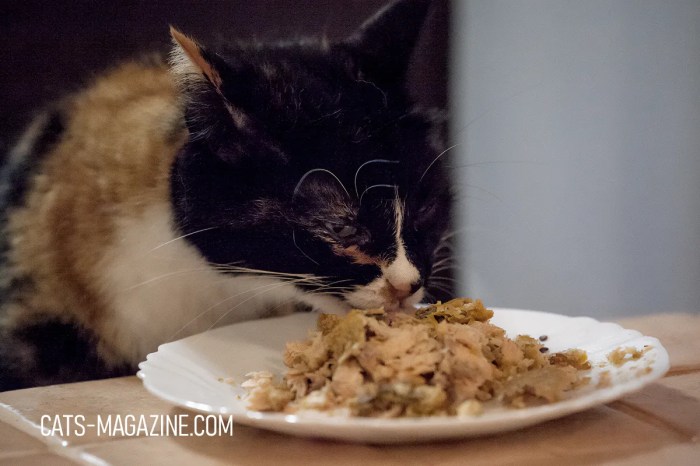
Regular monitoring is essential to ensure your cat is thriving on a homemade diet. Pay close attention to their weight, energy levels, and coat condition, and be aware of any potential signs of nutritional deficiencies or imbalances.
Key Health Indicators
Weight, energy levels, and coat condition are all important indicators of your cat’s overall health. A healthy cat should maintain a stable weight, have plenty of energy, and have a shiny, healthy coat.
Signs of Potential Deficiencies
Signs of nutritional deficiencies can include weight loss, lethargy, poor coat condition, skin problems, and digestive issues. If you notice any of these signs, consult with your veterinarian.
Regular Veterinary Checkups and Blood Work
Regular veterinary checkups and blood work are essential for monitoring your cat’s health and identifying any potential problems early on.
| Health Indicator | What to Look For | Potential Actions |
|---|---|---|
| Weight | Sudden weight loss or gain | Adjust portion sizes, consult veterinarian |
| Coat Condition | Dull, dry, or brittle coat | Supplement with omega-3 fatty acids, check for allergies |
| Energy Levels | Lethargy or decreased activity | Check for underlying medical conditions, adjust diet |
End of Discussion
Creating home cooked meals for your cat is a rewarding journey that allows you to tailor their diet to their individual needs and preferences. By understanding their nutritional requirements, prioritizing food safety, and paying close attention to your cat’s health, you can provide them with a truly exceptional diet. Remember to always consult with your veterinarian or a veterinary nutritionist to ensure your recipes are balanced and appropriate for your cat’s specific health status.
With a little planning and effort, you can unlock a world of delicious and nutritious possibilities for your feline friend!
Ultimately, the goal is to provide your cat with the best possible nutrition, fostering a long, healthy, and happy life. Embrace the process, experiment with flavors, and enjoy the satisfaction of knowing you’re contributing to your cat’s well-being through the power of homemade goodness.
Quick FAQs
Can I feed my cat only homemade food?
Yes, but it requires careful planning and supplementation to ensure all nutritional needs are met. Consulting with a veterinary nutritionist is highly recommended to formulate a complete and balanced diet.
How much homemade food should I feed my cat?
Portion sizes depend on your cat’s weight, activity level, and the specific recipe. Start with the guidelines provided in the recipes and adjust based on your cat’s body condition. Monitor their weight regularly.
What if my cat refuses to eat the homemade food?
Try warming the food slightly, adding a small amount of low-sodium broth, or mixing it with a tiny bit of their old food. If they still refuse, consult your vet to rule out any underlying medical issues.
Do I need to cook all homemade cat food?
While cooking is generally safer, some raw recipes can be prepared with proper precautions and veterinary guidance. Raw feeding carries a higher risk of bacterial contamination and requires meticulous hygiene practices.
How long can I store homemade cat food?
Cooked cat food can be stored in the refrigerator for 2-3 days or frozen for up to 2-3 months. Always thaw frozen food in the refrigerator and never at room temperature.
Is it okay to add bones to homemade cat food?
While cats benefit from bone minerals, adding whole bones poses a choking hazard. Ground bone meal or finely ground bone broth are safer alternatives, but always consult with a vet or nutritionist about appropriate amounts.
What are the signs of a nutritional deficiency in my cat?
Signs can include dull coat, weight loss, lethargy, muscle weakness, and changes in appetite. Regular veterinary checkups and blood work are crucial for early detection.