How Much Does a Russian Blue Cat Cost? A Complete Guide

The sleek, silvery beauty of a Russian Blue cat is undeniably captivating. But beyond their stunning looks, many potential owners wonder: how much does a Russian Blue cat cost? It’s a question with a surprisingly complex answer, influenced by everything from breeder reputation to geographic location. This guide breaks down all the costs involved, from the initial purchase to ongoing care, so you can make an informed decision about bringing this elegant feline into your life.
We’ll explore the price differences between breeders and shelters, regional variations, the impact of health testing, and even the distinction between show-quality and pet-quality kittens. Understanding these factors will help you budget effectively and ensure you’re getting a healthy, well-socialized companion.
How Much Does a Russian Blue Cat Cost? A Comprehensive Guide
Bringing a Russian Blue into your life is a wonderful decision! These elegant, intelligent cats are known for their striking silver-blue coats and playful personalities. But before you welcome one home, it’s essential to understand the financial commitment involved. This guide breaks down all the costs associated with owning a Russian Blue, from the initial purchase to ongoing expenses, so you can plan accordingly.
We’ll cover everything from breeder prices to potential health issues and beyond.
Initial Purchase Price – Breeder vs. Shelter/Rescue
The price of a Russian Blue kitten can vary significantly depending on where you acquire it. Reputable breeders typically charge more than shelters or rescue organizations, but they also offer kittens with known health histories and often, a better socialization foundation.A Russian Blue kitten from a reputable breeder can range from $800 to $2500, and sometimes even higher. Several factors influence this price: pedigree (kittens from champion lines command higher prices), show quality (those meeting breed standards perfectly are the most expensive), and location (breeders in areas with higher demand often charge more).
Expect to pay a premium for a kitten with a documented lineage and health testing.Adopting a Russian Blue from a shelter or rescue is considerably more affordable. Adoption fees typically range from $75 to $200. The price can vary based on the cat’s age; kittens are often more expensive than adult cats due to higher demand. While you might not know the kitten’s exact lineage, shelters often provide basic veterinary care, including vaccinations and spaying/neutering, which can save you money upfront.
| Source (Breeder/Shelter) | Price Range | Pros & Cons |
|---|---|---|
| Reputable Breeder | $800 – $2500+ | Pros: Known lineage, health testing, socialization, breeder support. Cons: Higher cost, waiting lists. |
| Animal Shelter/Rescue | $75 – $200 | Pros: Lower cost, saving a life, often vaccinated/spayed/neutered. Cons: Unknown history, potential for behavioral issues, may not be a purebred. |
Geographic Price Variations
The cost of a Russian Blue cat isn’t uniform across the country. Significant price variations exist depending on the region. This is primarily due to differences in supply and demand, as well as the density of reputable breeders. Areas with higher demand and fewer breeders tend to have higher prices. Transportation costs also play a role if you’re willing to travel to pick up a kitten.Here’s a general idea of average prices in three distinct regions:* Northeast US: $1200 – $3000 (High demand, fewer breeders in some areas)
Midwest US
$900 – $2200 (More moderate demand, a decent number of breeders)
Pacific Northwest US
$1000 – $2800 (Strong demand, particularly in urban areas)
Describe a map showing the average Russian Blue kitten price by US state. Use color gradients to represent price ranges, with darker shades indicating higher costs. Include a legend explaining the color scale.
- Imagine a map of the United States. States like New York, California, and Massachusetts are shaded in darker blues and purples, indicating prices above $
- States in the Midwest, like Illinois and Ohio, are shaded in lighter blues, representing prices between $1000 and $
- States in the South and Southwest are often shaded in greens or yellows, indicating prices below $
- The legend would clearly show the color scale, for example: Green = $700-$1000, Yellow = $1001-$1500, Light Blue = $1501-$2000, Dark Blue = $2001-$2500, Purple = $2500+.*
Breeder Reputation and Quality
The breeder you choose significantly impacts the price and, more importantly, the health and temperament of your Russian Blue kitten. A reputable breeder invests heavily in health testing, socialization, and providing a stimulating environment for their cats. They’re knowledgeable about the breed and committed to preserving its health and characteristics.Look for breeders who:* Provide health guarantees.
- Allow you to visit their cattery and meet the kitten’s parents.
- Are transparent about health testing results.
- Socialize kittens from a young age.
- Are knowledgeable about Russian Blue genetics and breed standards.
Reputable breeders often hold affiliations with organizations like The International Cat Association (TICA) or the Cat Fanciers’ Association (CFA). These affiliations indicate adherence to certain standards of breeding and ethical practices.Distinguishing between a hobby breeder and a commercial breeder is crucial. Hobby breeders typically breed a few litters a year and are passionate about the breed. Commercial breeders may breed multiple litters frequently, potentially prioritizing profit over the health and well-being of the cats.
Kittens from commercial breeders are often less socialized and may have a higher risk of health problems.
Kitten Age and Development Stage
The age of a Russian Blue kitten influences its price. Generally, younger kittens (8-10 weeks) are more expensive due to higher demand. As kittens mature, their price may decrease slightly.* 8-Week-Old Kittens: $1000 – $2800. These kittens are typically very playful and curious, starting to explore their surroundings and interact with people.
12-Week-Old Kittens
$900 – $2500. At this age, kittens are more independent and have a stronger personality. They’ve received initial vaccinations and are often litter-trained.
Older Kittens (6+ Months)
$700 – $2000. Older kittens may be adopted from shelters or rescues, or from breeders who have kittens that didn’t sell. They often have established personalities and may be already trained.
| Age (Weeks) | Typical Behavior | Vaccination Status | Price Range |
|---|---|---|---|
| 8 | Playful, curious, exploring | First vaccinations started | $1000 – $2800 |
| 12 | More independent, developing personality | Initial vaccinations complete | $900 – $2500 |
| 26+ | Established personality, potentially litter-trained | Fully vaccinated | $700 – $2000 |
Health Testing and Genetic Screening
Responsible breeders prioritize the health of their Russian Blues. Standard health tests include screening for Progressive Retinal Atrophy (PRA) and Polycystic Kidney Disease (PKD). Genetic screening is an investment that can prevent serious health problems down the line.Genetic screening impacts the price of a kitten because it involves additional testing costs for the breeder. However, it’s a worthwhile investment, as it provides peace of mind knowing that your kitten is less likely to develop certain genetic diseases.Common genetic diseases affecting Russian Blues and associated testing costs (approximate):* Polycystic Kidney Disease (PKD): $150 – $300 (DNA test)
Progressive Retinal Atrophy (PRA)
$100 – $200 (DNA test)
Hypertrophic Cardiomyopathy (HCM)
$200 – $400 (Echocardiogram – a heart ultrasound)
Ongoing Costs – Beyond the Initial Purchase
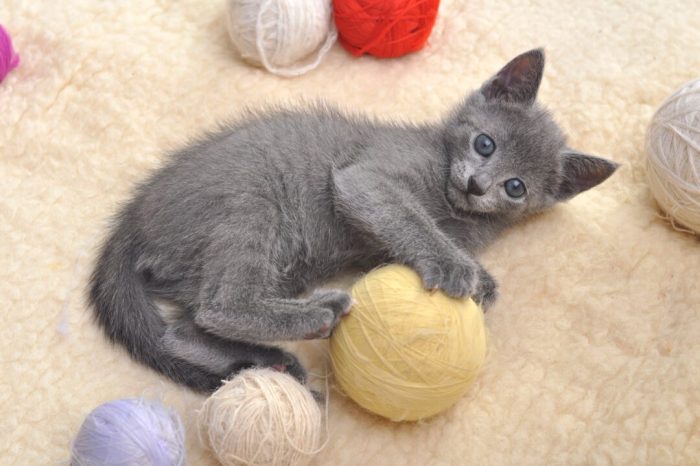
Source: bubblypet.com
Owning a Russian Blue isn’t just about the initial purchase price. There are ongoing expenses to consider.
| Expense Category | Estimated Monthly Cost | Notes (e.g., brand recommendations) |
|---|---|---|
| Food | $40 – $80 | High-quality dry and wet food is essential. Consider brands like Royal Canin or Purina Pro Plan. |
| Litter | $20 – $40 | Clay, clumping, or alternative litters. Experiment to find what your cat prefers. |
| Vet Care | $20 – $50 | Routine checkups, vaccinations, and preventative medications. |
| Toys & Enrichment | $10 – $30 | Russian Blues are intelligent and need plenty of stimulation. Puzzle toys and interactive games are great. |
| Grooming | $0 – $20 | Regular brushing helps minimize shedding. |
Unexpected veterinary expenses can arise, so pet insurance is a worthwhile consideration.
Show Quality vs. Pet Quality
Russian Blue kittens are often categorized as either show quality or pet quality. Show-quality kittens closely adhere to the breed standard, exhibiting a perfect silver-blue coat, emerald-green eyes, and a refined physique. They are intended for competition in cat shows.Show-quality kittens command significantly higher prices, often exceeding $2500, due to their exceptional conformation and the breeder’s investment in producing them.
Pet-quality kittens are still wonderful companions but may have minor deviations from the breed standard.
“When evaluating Russian Blue kittens for show potential, we look for a dense, plush coat with a distinct silver tipping, a well-proportioned body, and a head that is wedge-shaped with large, expressive eyes. The overall impression should be one of elegance and refinement.”
Sarah Miller, Reputable Russian Blue Breeder.
Comparing to Similar Breeds
Russian Blues share similarities with other breeds like the Korat and Chartreux. Understanding these differences can help you make an informed decision.
| Breed | Average Price | Personality Traits | Grooming Needs |
|---|---|---|---|
| Russian Blue | $800 – $3000 | Intelligent, playful, affectionate, quiet | Low |
| Korat | $600 – $2000 | Gentle, affectionate, playful, loyal | Low |
| Chartreux | $800 – $2500 | Quiet, gentle, affectionate, independent | Low |
Price differences often reflect rarity, breeder demand, and the specific characteristics of each breed.
Hidden Costs and Considerations
Beyond the obvious expenses, there are potential hidden costs to owning a Russian Blue. They can be sensitive to certain foods, requiring specialized diets. Providing a stimulating environment is crucial to prevent boredom and behavioral issues.Essential items to purchase before bringing a Russian Blue kitten home:* Carrier
- Litter box and litter
- Food and water bowls
- Scratching post
- Toys (puzzle toys, feather wands, etc.)
- Bed
Financing Options and Payment Plans
Some breeders offer payment plans or financing options to help make the purchase more manageable. However, carefully consider the terms and interest rates before committing to financing. Using financing to purchase a pet can lead to higher overall costs. Research reputable pet financing companies if needed, but prioritize responsible budgeting and saving whenever possible.
Ultimate Conclusion
Ultimately, the cost of a Russian Blue cat is an investment – an investment in a loyal, intelligent, and affectionate companion. While the initial price tag can seem significant, factoring in the ongoing expenses and the joy these cats bring makes it a worthwhile commitment. By understanding the various costs involved and prioritizing a reputable breeder or a loving shelter, you can confidently welcome a Russian Blue into your home and enjoy years of feline friendship.
Remember to consider the hidden costs and the importance of providing a stimulating environment for your new furry friend. With careful planning and a little research, you’ll be well-prepared to provide the best possible life for your Russian Blue.
FAQ Explained
What’s the average adoption fee for a Russian Blue?
Adoption fees typically range from $50 to $200, depending on the shelter or rescue organization. This often includes initial vaccinations and spaying/neutering.
Why are breeder-bought kittens so expensive?
Breeders invest in health testing, socialization, and often have pedigree lines. Show-quality kittens with exceptional lineage command higher prices.
Do Russian Blues require special food?
While not strictly
-required*, a high-quality, protein-rich diet is recommended to support their sleek coat and overall health. Expect to spend $30-$50 per month on food.
What’s the cost of health testing for a Russian Blue breeder?
Health testing can range from $100 to $500, depending on the tests performed (PRA, PKD, etc.).
Is pet insurance worth it for a Russian Blue?
Given their predisposition to certain genetic conditions, pet insurance can be a worthwhile investment to help cover unexpected veterinary bills. Premiums typically range from $30-$60 per month.
What’s the difference between a hobby breeder and a commercial breeder?
Hobby breeders typically raise a small number of kittens and prioritize socialization and health. Commercial breeders may raise larger litters and focus more on profit.
How much does it cost to groom a Russian Blue?
Russian Blues are low-maintenance groomers, but professional grooming (bathing, nail trims) can cost $40-$80 per session, though most owners can handle this at home.
