Managing litter boxes in a multi-cat household can feel like a constant battle against odor, territorial disputes, and picky felines. It’s more than just scooping; it’s about understanding your cats’ individual needs and creating an environment where everyone feels comfortable and safe. This guide dives deep into the world of kitty litter for multi-cat homes, covering everything from choosing the right litter and box types to tackling common behavioral issues and minimizing your environmental impact.
We’ll explore practical solutions and expert advice to help you create a harmonious and clean living space for you and your furry companions.

From understanding feline territoriality and its impact on litter box preferences to navigating the vast array of litter materials available, we’ll break down the complexities of multi-cat litter management. We’ll also look at how to optimize litter box placement, cleaning schedules, and even address potential medical concerns that might be contributing to litter box avoidance. Ultimately, our goal is to empower you with the knowledge and tools to create a stress-free litter experience for both you and your cats.
Understanding Multi-Cat Household Litter Needs
Managing litter boxes in a home with multiple cats can feel like a constant battle against odors, territorial disputes, and messy floors. It’s not just about having more than one box; it’s about understanding the unique behavioral and physiological needs of your feline companions. This article will delve into the specifics of creating a harmonious litter box environment for your multi-cat household, covering everything from box placement to litter type and maintenance.Feline territoriality plays a significant role in litter box usage.
Cats are naturally inclined to mark their territory, and the litter box is a key component of this behavior. If a cat feels threatened or stressed, they may avoid the litter box altogether, leading to accidents outside the designated area. Understanding this instinct is crucial for preventing behavioral issues.
Factors Influencing Litter Box Choice
Choosing the right litter box setup for a multi-cat home involves considering several factors. Size is paramount – larger cats need ample space to maneuver comfortably, and multiple cats sharing a box can lead to stress and avoidance. Location is equally important; boxes should be placed in quiet, accessible areas away from high-traffic zones and food/water bowls. Finally, the type of litter box (covered vs.
uncovered, automatic vs. manual) can influence a cat’s willingness to use it.The general rule of thumb is to have one litter box per cat, plus one extra. So, if you have two cats, you should ideally have three litter boxes. This ensures that each cat has a safe and private space to relieve themselves, minimizing competition and stress.
| Strategy Name | Description | Potential Benefits |
|---|---|---|
| Multiple Locations | Distribute litter boxes throughout the house, especially in areas where cats spend a lot of time. | Reduces territorial disputes, provides options for cats who don’t want to travel far. |
| Separate Rooms | Place litter boxes in completely separate rooms to minimize interaction and potential conflict. | Offers maximum privacy, ideal for cats with strong territorial instincts. |
| Strategic Placement | Position boxes in quiet, low-traffic areas, away from food and water. | Creates a sense of safety and security, encourages cats to use the boxes. |
Types of Kitty Litter Suitable for Multi-Cat Homes
Selecting the right kitty litter is just as important as choosing the right litter box. Different litter types have varying levels of absorbency, odor control, and dust, all of which can impact your cats’ comfort and your own cleaning routine. For multi-cat households, these factors are amplified.Clay litter, particularly clumping varieties, is a popular choice due to its ease of scooping.
However, non-clumping clay litter can quickly become saturated and smelly in a multi-cat environment. Silica gel litter offers excellent odor control and absorbency but can be more expensive. Wood, paper, corn, wheat, and walnut litters are all eco-friendly alternatives with varying pros and cons.
| Material | Absorbency Rating (1-5) | Odor Control Rating (1-5) | Dust Level (1-5) | Cost per Month (estimate) |
|---|---|---|---|---|
| Clay (Clumping) | 4 | 3 | 2 | $20 – $35 |
| Clay (Non-Clumping) | 2 | 1 | 3 | $15 – $25 |
| Silica Gel | 5 | 5 | 1 | $30 – $50 |
| Wood | 3 | 4 | 2 | $15 – $25 |
| Paper | 2 | 2 | 1 | $10 – $20 |
| Corn | 4 | 3 | 3 | $20 – $30 |
| Wheat | 4 | 3 | 2 | $25 – $35 |
| Walnut | 4 | 4 | 2 | $25 – $35 |
Low-dust litters are particularly beneficial for multi-cat households, as prolonged exposure to dust can irritate respiratory systems and exacerbate allergies. Litters specifically formulated for odor control, often containing activated charcoal or baking soda, are essential for managing the increased waste volume in a multi-cat home.
Litter Box Features & Design for Multiple Cats
The size and design of your litter boxes can significantly impact their usability and your cats’ overall comfort. A litter box that’s too small can feel cramped and stressful, especially for larger cats or multiple cats sharing the space.Top-entry litter boxes offer a significant advantage in reducing litter tracking. Cats must jump in and out, which helps contain litter within the box.
Standard litter boxes are more accessible but can result in more litter scattered around the house.Consider these features when selecting litter boxes for your multi-cat home:
- Covered vs. Uncovered: Covered boxes offer privacy but can trap odors. Uncovered boxes provide better ventilation but may not offer as much seclusion.
- Self-Cleaning Options: These can reduce the frequency of manual cleaning but may be noisy or intimidating for some cats.
- Corner Units: These maximize space utilization, especially in smaller homes.
 Covered Box, No -> Standard Box). Bold Cat leads to ‘Litter Tracking Concern?’ (Yes -> Top-Entry Box, No -> Standard Box). A final branch asks ‘Prefers Open or Enclosed Space?’ leading to the final box selection.” >
A flowchart illustrating the decision-making process for choosing litter box features based on cat personalities and preferences.Offering a variety of litter box types can cater to individual cat preferences. Some cats may prefer the privacy of a covered box, while others may prefer the openness of a standard box. Providing options allows each cat to choose the box that best suits their needs.
Litter Box Maintenance & Cleaning in Multi-Cat Environments
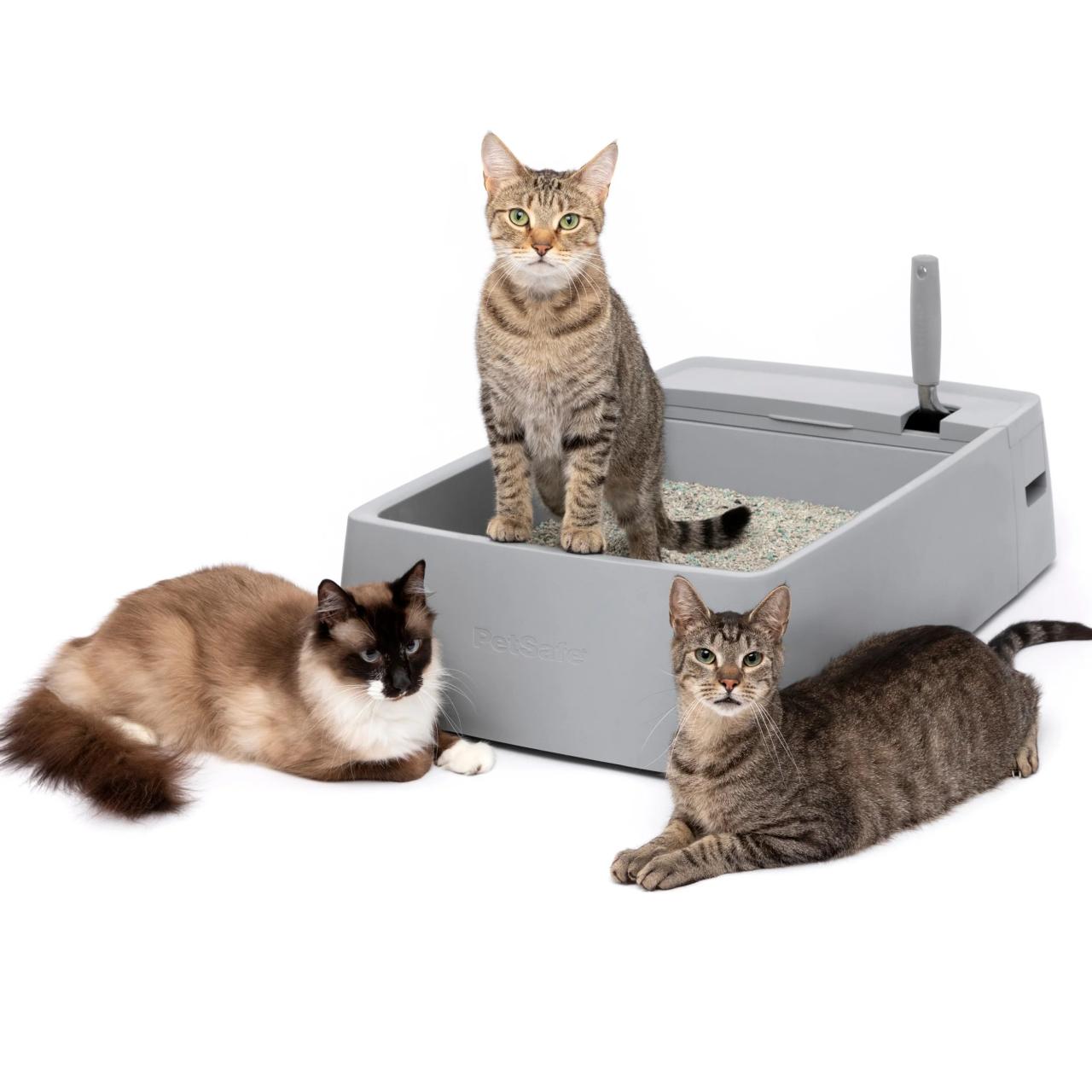
Source: shopify.com
Maintaining a clean litter box is crucial for preventing odor buildup and ensuring your cats continue to use the boxes. A comprehensive cleaning schedule is essential in a multi-cat household.
- Daily: Scoop solid waste and clumps.
- Weekly: Empty the entire litter box, wash with mild soap and water, and refill with fresh litter.
- Monthly: Deep clean the litter box with a disinfectant solution.
Scooping frequency directly impacts odor control and cat behavior. Infrequent scooping can lead to unpleasant odors and may cause cats to avoid the litter box.For thorough cleaning, use warm water, mild dish soap, and a scrub brush. Rinse thoroughly and allow the box to dry completely before refilling with fresh litter.Enzymatic cleaners are highly effective at eliminating lingering odors caused by urine and feces.
These cleaners break down the organic compounds that cause odors, rather than simply masking them. Deep Cleaning Steps:
- Materials: Rubber gloves, warm water, mild dish soap, scrub brush, enzymatic cleaner, paper towels.
- Safety Precautions: Wear gloves to protect your skin. Ensure adequate ventilation.
- Steps: Empty the litter box completely. Wash with soap and water. Rinse thoroughly. Apply enzymatic cleaner according to instructions. Rinse again.
Allow to dry completely. Refill with fresh litter.
Addressing Litter Box Issues in Multi-Cat Households
Litter box problems are common in multi-cat homes, ranging from spraying and avoiding the box to litter aversion. These issues can be caused by a variety of factors, including stress, medical conditions, and territorial disputes.Potential causes of litter box avoidance include:
- Stress: Changes in the environment, new pets, or loud noises can trigger stress and lead to litter box avoidance.
- Medical Conditions: Urinary tract infections, bladder stones, and other medical issues can cause pain or discomfort when urinating, leading cats to avoid the litter box.
- Territorial Disputes: Competition for resources, including litter boxes, can lead to aggression and litter box avoidance.
Strategies for resolving litter box conflicts include:
- Separate Boxes: Provide each cat with their own litter box, placed in different locations.
- Strategic Placement: Ensure litter boxes are accessible and located in quiet, safe areas.
- Pheromone Diffusers: Feliway diffusers release synthetic feline pheromones that can help reduce stress and promote relaxation.
Signs of urinary tract infections or other medical issues include:
- Frequent urination
- Straining to urinate
- Blood in urine
- Litter box avoidance
| Problem | Solution |
|---|---|
| Spraying | Increase the number of litter boxes, provide more vertical space, use Feliway diffusers. |
| Avoiding the Box | Rule out medical issues, reduce stress, try different litter types. |
| Litter Aversion | Identify the cause of aversion (e.g., unpleasant odor, texture), switch to a different litter. |
Litter Additives & Scent Considerations
Litter additives are often used to enhance odor control or clumping ability. However, it’s important to be cautious when using additives, as some cats may be sensitive to certain ingredients.Scented litters can be particularly problematic for cats with sensitivities or respiratory issues. The strong fragrances can irritate their airways and cause discomfort.Natural odor-absorbing substances, such as baking soda and activated charcoal, can be added to litter to help control odors without the use of artificial fragrances.When introducing new litters or additives, do so gradually.
Mix a small amount of the new product with the existing litter and gradually increase the proportion over several days.
Observing your cat’s behavior when introducing new litter products is paramount. Any signs of aversion, such as sniffing, pawing, or avoiding the box, should prompt you to discontinue use and revert to the previous litter.
Managing Litter Waste & Environmental Impact
Responsible disposal of used kitty litter is essential for protecting the environment. Avoid flushing litter down the toilet, as it can clog plumbing systems and contaminate waterways.Different litter materials have varying environmental impacts. Clay litter mining can disrupt ecosystems, while deforestation is a concern with wood-based litters.Biodegradable and sustainable litter options, such as corn, wheat, and walnut litters, offer a more eco-friendly alternative.Composting kitty litter is possible, but it requires careful management to ensure proper decomposition and prevent the spread of pathogens.
Check local regulations regarding composting pet waste.
| Litter Type | Sustainability Rating (1-5) | Biodegradability (Yes/No) | Resource Usage |
|---|---|---|---|
| Clay | 1 | No | High (mining) |
| Silica Gel | 2 | No | Moderate (manufacturing) |
| Wood | 3 | Yes | Moderate (deforestation potential) |
| Paper | 4 | Yes | Moderate (paper production) |
| Corn | 4 | Yes | Low (renewable resource) |
| Wheat | 4 | Yes | Low (renewable resource) |
| Walnut | 5 | Yes | Low (renewable resource) |
Budgeting for Kitty Litter in a Multi-Cat Home
The cost of kitty litter in a multi-cat home can quickly add up. Several factors influence the overall expense, including the type of litter, quantity purchased, and frequency of replacement.A cost breakdown for different litter types over a monthly or yearly period can help you make informed purchasing decisions. For example, while silica gel litter may be more expensive upfront, its longer lifespan can make it more cost-effective in the long run.Tips for saving money on kitty litter include:
- Buy in Bulk: Purchasing larger bags of litter can often reduce the cost per pound.
- Look for Sales: Keep an eye out for sales and discounts at pet stores and online retailers.
- Use a Litter Mat: A litter mat can help contain litter tracked outside the box, reducing the amount of litter that needs to be replaced.
- Scoop Regularly: Frequent scooping can extend the lifespan of the litter, reducing the need for frequent replacements.
Investing in higher-quality, longer-lasting litters can potentially save you money in the long run, despite the higher initial cost.
Closing Summary
Navigating the world of kitty litter in a multi-cat home can be overwhelming, but with a little knowledge and effort, you can create a clean, comfortable, and harmonious environment for your feline family. By understanding your cats’ individual preferences, choosing the right litter and box setup, and maintaining a consistent cleaning routine, you can minimize conflicts, control odors, and ensure your cats feel safe and secure.
Remember to observe your cats’ behavior closely and adapt your approach as needed – a happy cat is a happy home!
Investing in quality litter, implementing smart placement strategies, and being mindful of the environmental impact are all key components of successful multi-cat litter management. So, take what you’ve learned here and put it into practice – your cats (and your nose!) will thank you for it.
Q&A
How many litter boxes do I really need for multiple cats?
The general rule is one litter box per cat, plus one extra. So, if you have three cats, you should have four litter boxes.
What’s the best type of litter for odor control in a multi-cat home?
Silica gel litter is often praised for its excellent odor control, but clay litter with added odor-absorbing ingredients can also be effective. Consider your cats’ preferences and dust sensitivities when choosing.
My cats are fighting over the litter box – what can I do?
Ensure you have enough litter boxes in separate locations. Consider using multiple box types to cater to different preferences. Pheromone diffusers can also help reduce stress and territorial behavior.
Can I compost used kitty litter?
It depends on the litter type and local regulations. Clay litter is generally not compostable, but paper, wood, corn, and wheat litters can be composted if they don’t contain added chemicals and are properly managed.
Why is my cat suddenly avoiding the litter box?
This could be due to stress, a medical condition (like a urinary tract infection), or a dislike of the litter or box. Consult a veterinarian to rule out any medical issues.
Are scented litters safe for cats?
Scented litters can irritate cats’ respiratory systems and cause allergic reactions. It’s generally best to avoid them, especially in multi-cat homes.
How often should I be deep cleaning the litter boxes?
A thorough deep cleaning should be done at least once a month, or more frequently if needed. This involves washing the boxes with soap and water and disinfecting them.

