Have you ever considered giving your feline friend a name that’s a little different, a little more meaningful? Korean names for cats are gaining popularity, offering a beautiful blend of cultural richness, aesthetic appeal, and a touch of uniqueness. The global fascination with Korean culture – from K-dramas to K-pop – has naturally extended to pet naming, and Korean names provide a wonderful way to honor that appreciation while giving your cat a truly special identity.
Beyond just sounding lovely, Korean names often carry deep significance, rooted in nature, virtues, and familial connections. Understanding the nuances of Korean naming conventions can unlock a treasure trove of options, allowing you to choose a name that perfectly reflects your cat’s personality and your own connection to Korean culture. Let’s dive into the world of Korean names and discover the perfect moniker for your beloved companion!
Korean Names for Cats: A Unique and Meaningful Choice
The world is becoming increasingly interconnected, and that influence is rippling through every aspect of our lives, including how we name our beloved pets. Choosing a name for a cat is a special moment, and many pet owners are now looking beyond traditional English names for something a little different. Korean names are gaining popularity, offering a blend of beautiful sounds, rich cultural significance, and a touch of uniqueness.
This trend reflects a broader appreciation for Korean culture, from K-dramas and music to food and traditions. Selecting a Korean name for your cat isn’t just about finding a pretty sound; it’s about connecting with a vibrant culture and potentially imbuing your feline friend with a meaningful identity.The rising global interest in Korean culture has undeniably impacted pet naming trends.
The aesthetic appeal of the Korean language, combined with the desire for something distinctive, makes Korean names an attractive option. Furthermore, the inherent beauty and symbolism embedded within Korean names offer a deeper connection than a simple label. A well-chosen Korean name can reflect a cat’s personality, appearance, or even your own aspirations.
Understanding Korean Naming Conventions
Korean names, like those in many East Asian cultures, are more than just labels; they’re carefully considered expressions of hope and meaning. The basic structure typically involves a given name (이름, ireum) which is often composed of two syllables. These syllables are frequently derived fromhanja* (한자), which are Chinese characters adopted into the Korean language. Understanding this foundation is key to appreciating the depth of Korean names.Common elements found in Korean names include references to nature, desirable virtues, and familial connections.
Names often evoke images of serene landscapes, powerful animals, or qualities like wisdom and kindness. The choice of
- hanja* is particularly important, as each character carries a specific meaning that contributes to the overall significance of the name. Parents (and now, pet owners!) carefully select
- hanja* to bestow positive attributes upon the individual.
The influence ofhanja* is central to Korean name creation. Each character holds a distinct meaning, and combining them thoughtfully creates names with layered significance. For example, a name might combine characters representing “bright” and “wisdom,” signifying intelligence and clarity.
| Hanja | Romanization | Meaning |
|---|---|---|
| 智 | Ji | Wisdom, Intelligence |
| 星 | Byeol | Star |
| 月 | Wol | Moon |
| 花 | Hwa | Flower |
| 善 | Seon | Goodness, Virtue |
Korean Names Inspired by Nature
Nature plays a profound role in Korean culture and aesthetics, and this reverence is beautifully reflected in naming traditions. The natural world is seen as a source of beauty, strength, and harmony, making it a rich wellspring of inspiration for names. From majestic mountains to delicate flowers, Korean names often draw upon the imagery of the natural world to convey a sense of grace and wonder.Here’s a list of 10 Korean words related to nature, along with their romanizations:
- Flower: Hwa (화)
- Mountain: San (산)
- River: Gang (강)
- Moon: Wol (월)
- Star: Byeol (별)
- Forest: Geom (검)
- Rain: U (우)
- Wind: Baram (바람)
- Sun: Tae Yang (태양)
- Cloud: Kumul (구름)
Based on these words, here are 5 cat names with explanations:
- Byeol (별): Meaning “star,” this name is perfect for a cat with a bright, sparkling personality or striking eyes.
- Hwa-ra (화라): Combining “Hwa” (flower) with a soft suffix, this name evokes a sense of beauty and elegance, ideal for a graceful feline.
- San-bae (산배): “San” (mountain) paired with a playful suffix, suggesting a cat with a strong, adventurous spirit.
- Wol-rim (월림): “Wol” (moon) and “rim” (light) create a name that suggests a calm, serene presence.
- Baram-i (바람이): “Baram” (wind) with the possessive particle “i,” implying a free-spirited and energetic cat.
Combining syllables from different nature words allows for even more unique and personalized names. For instance, “Geom-wol” (forest-moon) could represent a mysterious and enchanting cat.
Korean Names Reflecting Positive Traits
Korean naming practices place significant emphasis on virtues and positive qualities. Parents traditionally choose names that embody desirable traits, hoping to instill those characteristics in the individual. This tradition extends to pet names, where owners often seek to reflect their cat’s personality or the qualities they admire.Here are 8 Korean words representing desirable traits:
- Wisdom: Ji (지)
- Courage: Gam (감)
- Kindness: Yeol (열)
- Joy: Hyeong (형)
- Peace: Heo (허)
- Loyalty: Chung (충)
- Grace: Ae (애)
- Hope: Soo (수)
Here are 5 cat names that embody these traits:
- Ji-woo (지우): Combining “Ji” (wisdom) with a common suffix, this name suggests an intelligent and perceptive cat.
- Gam-sa (감사): “Gam” (courage) and “sa” (strength) create a name for a brave and resilient feline.
- Yeol-bam (열밤): “Yeol” (kindness) and “bam” (night) evoke a gentle and comforting presence.
- Hyeong-seok (형석): “Hyeong” (joy) and “seok” (rock) suggest a cat that brings happiness and stability.
- Heo-rin (허린): “Heo” (peace) and “rin” (dew) create a name for a calm and serene cat.
| Trait (Korean & Romanized) | Example Cat Name |
|---|---|
| Wisdom (지 / Ji) | Ji-min |
| Courage (감 / Gam) | Gam-ja |
| Kindness (열 / Yeol) | Yeol-hee |
| Joy (형 / Hyeong) | Hyeong-jun |
Gender-Specific Korean Cat Names
While many Korean names are gender-neutral, certain sounds and meanings are more commonly associated with male or female cats. Generally, names ending in softer consonants or incorporating feminine suffixes tend to be favored for female cats, while names with stronger consonants or more assertive sounds are often chosen for males. Male Cat Names:
- Min-jun (민준): Meaning “clever and talented.”
- Ji-hoon (지훈): Signifying “wisdom and learning.”
- -jun (서준): Evoking “outstanding and talented.”
- Do-hyun (도현): Representing “virtue and brightness.”
- Ha-jun (하준): Meaning “summer and talent.”
- Gun-woo (건우): Signifying “strong and brave.”
- Hyun-woo (현우): Evoking “bright and brave.”
- Jin-woo (진우): Representing “precious and brave.”
- -woo (서우): Meaning “outstanding and gentle.”
- Lee-jun (이준): Signifying “reason and talent.”
Female Cat Names:
- Soo-ah (수아): Meaning “elegant and beautiful.”
- Ji-yeon (지연): Signifying “wisdom and grace.”
- Ha-na (하나): Representing “one and beautiful.”
- -yeon (서연): Evoking “outstanding and grace.”
- Yu-na (유나): Meaning “gentle and beautiful.”
- Bo-ram (보람): Signifying “reward and beauty.”
- Eun-ji (은지): Evoking “silver and wisdom.”
- Hae-won (해원): Representing “sun and harmony.”
- Mi-so (미소): Meaning “beauty and smile.”
- Da-hye (다혜): Signifying “abundance and kindness.”
Names like “Woo” or “Jun” can work for either gender, depending on the overall impression you want to create.
Popular & Trendy Korean Cat Names
Several Korean names have recently gained traction as popular choices for pets. Names like “Bada” (바다
- ocean), “Sua” (수아), and “Mochi” (모찌
- a popular Japanese rice cake, adopted into Korean) are frequently heard.
The popularity of these names often stems from their appealing sounds, association with Korean celebrities, or simply their overall aesthetic charm. “Bada” evokes a sense of vastness and tranquility, while “Sua” is simply melodic and pleasant to say. “Mochi” is cute and playful, reflecting the endearing nature of many cats.Alternatives with a similar vibe include “Haneul” (하늘
- sky), “Areum” (아름
- beauty), and “Dalgona” (달고나
- a traditional Korean candy).
“I just named my cat ‘Byeol’! It means ‘star,’ and she’s got these incredible green eyes that sparkle. What about you?”
“Oh, that’s lovely! I went with ‘Hana’ – it’s simple, sweet, and means ‘one.’ It just felt right for my little girl.”
Combining Korean and English Elements
Creating hybrid names by blending Korean syllables with English words can result in unique and memorable names for your cat. This approach allows you to incorporate both cultural influences and personal preferences.Here are 5 examples of hybrid names:
- Soo-Leo: Combining “Soo” (a common Korean syllable) with “Leo,” suggesting a regal and confident cat.
- Min-Max: Blending “Min” with “Max,” creating a playful and energetic name.
- Hwa-Belle: Combining “Hwa” (flower) with “Belle,” evoking a beautiful and graceful feline.
- Byeol-Finn: Pairing “Byeol” (star) with “Finn,” suggesting a bright and adventurous cat.
- Gang-Kit: Combining “Gang” (river) with “Kit,” creating a flowing and playful name.
When choosing a hybrid name, prioritize pronounceability and aesthetic appeal. Ensure the combination flows smoothly and doesn’t create an awkward or confusing sound.[Flowchart: Start with a Korean syllable. Add an English word or syllable. Check for pronounceability. Check for aesthetic appeal.
If both are positive, finalize the name! If not, adjust and repeat.]
Names Inspired by Korean Mythology & Folklore
Korean mythology and folklore are rich with captivating stories and legendary figures, offering a unique source of inspiration for cat names. These tales often feature powerful creatures, benevolent spirits, and symbolic representations of nature and virtue.Three notable figures include:
- Dokkaebi (도깨비): Goblin-like creatures known for their mischievousness and magical abilities.
- Haetae (해태): Mythical lion-like creatures believed to protect against fire and disasters.
- Imoogi (이무기): A wingless, legless dragon in its larval stage, destined to become a full-fledged dragon.
Here are 3 cat names inspired by these figures:
- Dokkae: A playful nod to the mischievous Dokkaebi, perfect for a cat with a quirky personality.
- Hae: A shortened version of Haetae, suggesting a protective and watchful feline.
- Mugi: Derived from Imoogi, representing a cat with potential and a touch of mystery.
Imagine a cat named “Mugi,” a sleek black feline with piercing amber eyes. She possesses an air of quiet confidence, observing her surroundings with an ancient wisdom. Though small now, there’s a sense that she holds a hidden power, a promise of something extraordinary to come.
Pronunciation and Cultural Sensitivity
Korean pronunciation can be nuanced, and it’s important to be mindful of these subtleties when selecting a name for your cat. Certain sounds and combinations can be challenging for English speakers, so practice is key.Common Korean syllables and sounds to be aware of include:
- “eo” (어)
-a sound similar to the “u” in “fur” - “eu” (으)
-a more subtle sound, often difficult for non-native speakers - “ae” (애)
-a sound between “a” and “e” - Consonant clusters can be tricky, so listen to native speakers pronounce the name.
Respecting Korean culture is paramount when choosing a name. Avoid names with potentially offensive meanings or those that are deeply associated with sensitive cultural events.Names like “Kimchi” or “Bulgogi,” while representing Korean cuisine, might be considered inappropriate as pet names due to their cultural significance. Similarly, names associated with historical figures or religious symbols should be avoided.
Resources for Further Exploration
If you’re eager to delve deeper into Korean names and language, here are some valuable resources:
| Resource Name | Description | Link (Placeholder) |
|---|---|---|
| Naver Dictionary | Comprehensive Korean-English dictionary. | [https://www.naver.com/](https://www.naver.com/) |
| Talk To Me In Korean | Website and podcast for learning Korean. | [https://talktomeinkorean.com/](https://talktomeinkorean.com/) |
| Memrise | Language learning platform with Korean courses. | [https://www.memrise.com/](https://www.memrise.com/) |
Closing Notes
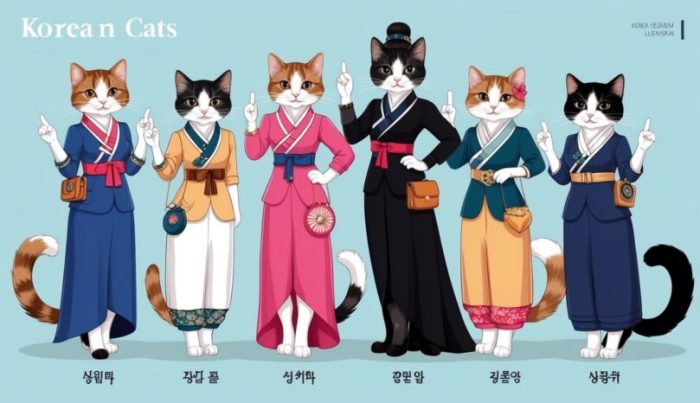
Source: upgradeyourcat.com
From nature-inspired names like “Bora” (meaning “dawn”) to those reflecting positive traits like “Seung” (meaning “victory”), the possibilities are truly endless. Whether you opt for a traditional Korean name, a modern twist, or even a hybrid blend with English, the key is to choose a name that resonates with you and celebrates the unique bond you share with your cat.
Exploring Korean names is more than just finding a label; it’s a journey into a rich culture and a chance to give your furry friend a name filled with meaning and beauty.
So, embrace the charm of Korean culture and consider gifting your cat a name that’s as special and captivating as they are. With a little research and creativity, you’re sure to find the purrfect Korean name to suit your feline friend!
FAQs
Why choose a Korean name for my cat?
Korean names offer a unique and culturally rich alternative to traditional pet names, adding a touch of elegance and meaning to your cat’s identity.
Are there gender-specific Korean names?
Yes, while some names are versatile, many Korean names have distinct sounds and meanings that are more commonly associated with male or female cats.
How do I pronounce Korean names correctly?
Korean pronunciation can be tricky! Pay attention to the romanization and listen to audio examples online to get a feel for the sounds.
Can I combine Korean and English names?
Absolutely! Creating hybrid names can be a fun way to personalize your cat’s name while still incorporating Korean elements.
Is it okay to use a name from Korean mythology?
Yes, but be mindful of the figure’s symbolism and ensure the name is appropriate for a pet. Research the meaning and connotations thoroughly.
Where can I find more Korean words and names?
Several online dictionaries, language learning sites, and pet forums offer resources for exploring Korean vocabulary and names.
Should I worry about cultural appropriation?
Respectful appreciation is key. Research the meaning and significance of a name before using it, and avoid names with potentially offensive connotations.
What if I can’t find a name I like?
Don’t be afraid to get creative! Combine syllables, adapt existing names, or even create a completely new name inspired by Korean sounds and meanings.
Are there any names I should avoid?
Avoid names that are directly associated with sensitive topics or have negative connotations in Korean culture. When in doubt, research the name’s meaning and usage.

