For decades, cat owners have been fascinated by the majestic beauty of long-haired breeds, with their flowing manes and slender builds. However, the allure of these remarkable felines extends far beyond their aesthetic appeal, as their remarkable physiques come with a host of unique characteristics and needs that set them apart from their shorter, more compact counterparts.
From the towering Maine Coon to the sleek and agile British Longhair, each of the longest cat breeds boasts a distinctive personality, temperament, and set of physical traits that are shaped by their rich ancestry and centuries-long domestication. In this article, we will delve into the fascinating world of these magnificent felines, exploring their history, physical characteristics, and the special requirements that come with their remarkable size.
Introduction to Longest Cat Breeds
Cats have been domesticated for thousands of years, and their unique characteristics have evolved over time. One of the most striking features of some cat breeds is their exceptional length. Let’s explore the history of cat domestication and its connection to long body lengths.The domestication of cats is believed to have originated in ancient Egypt around 4,000 years ago. Initially, domestic cats were valued for their hunting skills, which helped control the rodent population.
Over time, humans began to breed cats for specific traits, including coat color, pattern, and body shape. The selective breeding process led to the development of different cat breeds, each with its unique characteristics.Some non-domestic cat species, such as the serval and the caracal, are known for their remarkable length. For example, the serval is a wild cat native to Africa, characterized by its striking coat patterns and long legs.
The caracal, also found in Africa and Asia, possesses a distinctive tuft of hair on its ears and a long, slender body.
Physical Characteristics and Features
Source: marthastewart.com
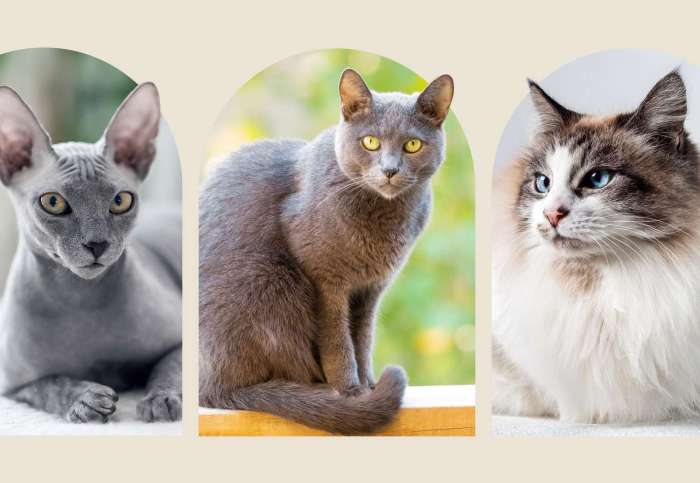
One of the defining features of long domesticated cat breeds is their average and extreme body lengths. For instance, the Maine Coon and the Ragdoll are two popular breeds known for their exceptional length. A comparison of these breeds reveals that the Maine Coon typically reaches a length of 40-48 inches (102-122 cm), while the Ragdoll averages 35-43 inches (89-109 cm).Genetics, nutrition, and lifestyle all play a significant role in determining a cat’s overall length.
Breeding programs can accentuate desirable traits, such as longer legs or a more elongated body shape. Diet and nutrition also influence growth and development, with a balanced diet providing essential nutrients for optimal growth.
Longest Domesticated Cat Breeds
Here are the top 10 longest domesticated cat breeds, listed in order of their average length:
- Maine Coon (40-48 inches / 102-122 cm)
- Ragdoll (35-43 inches / 89-109 cm)
- Savannah (35-40 inches / 89-102 cm)
- Norwegian Forest Cat (35-40 inches / 89-102 cm)
- Siberian (35-39 inches / 89-99 cm)
- Russian Blue (35-37 inches / 89-94 cm)
- Bengal (35-37 inches / 89-94 cm)
- Oriental Longhair (35-36 inches / 89-91 cm)
- Turkish Van (35-36 inches / 89-91 cm)
- Turkish Angora (34-36 inches / 86-91 cm)
[ Gambar: Maine Coon dengan tubuh yang panjang dan kuat ][h3>Weight, Health, and Living Needs
As with any cat breed, length affects weight management in long domesticated breeds. The following table illustrates the average weights of these breeds, based on their length:
| Length (inches) | Average Weight (lbs) |
|---|---|
| 40-48 | 15-22 pounds |
| 35-43 | 12-18 pounds |
| 35-40 | 10-16 pounds |
[h3>Grooming and Nutrition
To maintain the coats of long domestic cat breeds, regular grooming is essential. Here’s a step-by-step guide:
- Brush your cat weekly, using a slicker brush or a rubber brush, to remove loose hair and prevent matting.
- Use a pin brush or a bristle brush to distribute natural oils and keep the coat healthy.
- Bathe your cat every 2-3 months, or as needed, using a gentle shampoo and warm water.
- Dry your cat thoroughly after bathing to prevent skin irritation and infection.
Organizing essential nutrients and providing a balanced diet is crucial for maintaining the health and well-being of long domestic cat breeds. Here’s a sample diet plan:* Protein sources: fresh meat, fish, eggs, and dairy
Fat sources
fish oil, flaxseed oil, and coconut oil
Carbohydrate sources
whole grains, fruits, and vegetables
Supplement sources
omega-3 fatty acids, vitamin E, and probiotics
Cat Training and Socialization
Effectively training long domestic cat breeds requires patience, consistency, and positive reinforcement. Here are some tips:
- Use positive reinforcement techniques, such as treats and praise, to encourage desired behavior.
- Establish a routine and stick to it to help your cat learn and remember.
- Provide mental and physical stimulation through play, puzzle toys, and scratching posts.
- Socialize your cat from an early age to prevent behavioral problems and ensure a happy, healthy relationship with humans.
Longest Cat Breeds and Family Life
When introducing longest domestic cat breeds to a multi-person household, it’s essential to consider compatibility with children and other pets. Here are some guidelines:* Research the breed’s temperament and energy level to ensure compatibility with your family’s lifestyle.
- Supervise interactions between children and cats to prevent accidents and ensure a safe environment.
- Introduce other pets gradually, allowing them to become familiar with each other’s presence and scents.
Outdoor Life and Safety
Providing a safe outdoor enclosure for longest domestic cat breeds is crucial to prevent injuries and exposure to potential dangers. Here are some tips:* Create a secure, escape-proof enclosure with adequate ventilation and shelter from the elements.
- Provide a safe and stimulating environment, including scratching posts, climbing structures, and toys.
- Supervise your cat’s outdoor activities to ensure their safety and prevent any potential risks.
Conclusion
As we’ve seen, the longest cat breeds are truly remarkable creatures that demand our respect, care, and attention. By understanding their unique needs and personalities, we can provide them with the happy, healthy lives they deserve, and enjoy the rewards of sharing our homes and hearts with these magnificent felines.
Commonly Asked Questions
Are long cat breeds generally more prone to health problems?
While longer body length can increase the risk of certain joint and skeletal issues, responsible breeding and regular veterinary care can help mitigate these risks.
Can long cat breeds adapt to apartment living?
Yes, many long cat breeds are surprisingly adaptable to apartment living, as long as they receive regular exercise and mental stimulation.
How can I ensure my long cat breed gets enough nutrients?
Feeding a high-quality, nutrient-rich diet that’s tailored to your cat’s age, size, and lifestyle is essential for promoting overall health and well-being.

