There’s something undeniably captivating about a cat sporting the classic “tiger stripes” of a mackerel tabby. These aren’t just random markings; they’re a fascinating blend of genetics, embryonic development, and selective breeding that has shaped the appearance of countless feline companions. From the subtle “M” on their forehead to the swirling patterns across their bodies, mackerel tabbies offer a visual feast and a unique personality to boot.
This guide dives deep into the world of mackerel tabby cats, exploring their genetic origins, the stunning variety of colors they come in, and how this pattern manifests across different breeds. We’ll also touch on their temperament, care requirements, and a bit of their history, giving you a comprehensive understanding of these striped beauties.
The Alluring World of Mackerel Tabby Cats
Mackerel tabbies – with their striking “tiger stripes” – are among the most recognizable and beloved cat patterns. But there’s a lot more to them than just a pretty face. This article dives deep into the genetics, colors, breed variations, and fascinating history of these captivating felines. We’ll explore everything from the science behind their stripes to the unique personalities often associated with them.The beauty of a mackerel tabby lies in the intricate interplay of genes and development.
Understanding this allows us to appreciate the diversity within this pattern and the unique charm each cat possesses. Let’s unravel the mysteries of the mackerel tabby!
Defining the Mackerel Tabby Pattern
The mackerel tabby pattern isn’t just a random arrangement of stripes; it’s a result of complex genetic interactions. At the heart of it all is the agouti gene. This gene dictates whether a cat will express its base color uniformly or display a banded pattern. In mackerel tabbies, the agouti gene is “on,” meaning it allows for the banding effect that creates the stripes.
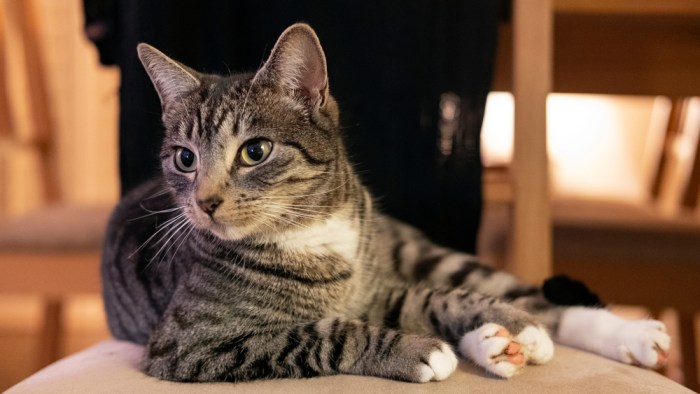
The agouti gene essentially controls the distribution of pigment within each hair shaft, resulting in alternating bands of light and dark color.The characteristic “tiger stripe” appearance is defined by narrow, parallel stripes running vertically down the cat’s sides. These stripes are typically darker than the background color, creating a visually striking contrast. The pattern resembles the markings of a mackerel fish, hence the name.
The intensity and width of these stripes can vary significantly depending on the cat’s genetics and breed.During feline embryonic growth, the development of the tabby pattern begins very early. Melanocytes (pigment-producing cells) migrate throughout the developing skin. The agouti gene influences how these melanocytes distribute pigment, establishing the banded pattern. Environmental factors, such as temperature, can also subtly influence the expression of the pattern, though the underlying genetic blueprint remains the same.Here’s a table comparing mackerel tabby patterns across different breeds:
| Breed | Pattern Description | Common Color Variations |
|---|---|---|
| American Shorthair | Classic, well-defined vertical stripes. | Brown, silver, blue, orange |
| Bengal | Bold, often rosetted mackerel tabby pattern (see more below). | Brown, silver, blue, charcoal |
| Maine Coon | Longer, softer stripes with a more blended appearance. | Brown, silver, blue, red |
Color Variations within Mackerel Tabby Cats
The world of mackerel tabby colors is surprisingly diverse. While the classic image might be a brown tabby, the pattern appears in a wide range of hues. Brown (or seal) tabbies display rich, dark brown stripes against a lighter brown background. Silver tabbies have silver or gray stripes on a silver background, often with a shimmering quality. Blue tabbies feature gray-blue stripes on a lighter gray-blue base.
Orange (or red) tabbies showcase orange or reddish-brown stripes on a lighter orange background.The concept of “dilution genes” plays a significant role in these color variations. Dilution genes affect the intensity of the pigment produced. A dilute gene can soften the color, turning brown into lilac (a pale gray-purple), black into blue (gray), and orange into cream. These genes don’t change the underlying pattern; they simply alter the color’s depth.Rare or unusual color combinations do exist within the mackerel tabby pattern.
Chocolate mackerel tabbies display warm, milk chocolate-colored stripes, while lilac mackerel tabbies exhibit a soft, lavender-gray coloration. These colors are less common because they are often the result of multiple recessive genes.Imagine a spectrum of mackerel tabby colors. At one end, you have the deep, rich tones of a seal brown mackerel tabby, with dark, almost black stripes against a warm brown base.
Moving along the spectrum, you encounter the shimmering silver of a silver tabby, with its cool, metallic stripes. Then comes the muted elegance of a blue tabby, with its soft gray-blue stripes. Finally, you reach the warm glow of an orange tabby, with its vibrant reddish-brown stripes. Within each of these broad categories, there are countless variations in tone and shade, creating a truly remarkable range of appearances.
Mackerel Tabby Patterns in Different Breeds
Several cat breeds are known for their prevalence of the mackerel tabby pattern. These include the American Shorthair, Bengal, Maine Coon, Abyssinian, and Egyptian Mau. Each breed showcases the pattern in a slightly different way, reflecting their unique genetic makeup and physical characteristics.The Bengal breed is particularly renowned for its striking mackerel tabby pattern, often featuring “rosettes” instead of simple stripes.
Rosettes are larger, more complex markings that resemble miniature roses or bulls-eyes. These rosettes are a result of a modified agouti gene, giving the Bengal a wild, exotic appearance. The background color of Bengals can range from golden to brown, with the rosettes appearing in darker shades.Comparing Maine Coons and Abyssinian cats reveals interesting differences in the mackerel tabby pattern.
Maine Coons typically have longer, softer stripes that are more blended into the coat, reflecting their long, flowing fur. Abyssinian cats, on the other hand, have shorter, more defined stripes that are often accompanied by ticked markings (where each hair has bands of different colors). This gives the Abyssinian a shimmering, almost luminous appearance.Here’s a table showcasing four breeds with mackerel tabby patterns:
| Breed | Typical Pattern Intensity | Coat Length | Distinctive Features |
|---|---|---|---|
| American Shorthair | Moderate to strong | Short | Well-defined stripes, robust build |
| Bengal | Strong, often rosetted | Short | Rosettes, wild appearance, muscular build |
| Maine Coon | Moderate, blended | Long | Long, flowing fur, large size, gentle temperament |
| Abyssinian | Moderate, ticked | Short | Ticked coat, graceful build, active personality |
Distinguishing Mackerel from Classic Tabby Patterns
The mackerel and classic tabby patterns are often confused, but there are key visual differences. Mackerel tabbies have narrow, vertical stripes running parallel down the sides, resembling a fish skeleton. Classic tabbies, on the other hand, exhibit swirling, marbled patterns that resemble a bullseye or a vortex.To identify a cat’s tabby pattern, start by examining the markings on the sides.
Mackerel tabbies will have distinct, parallel stripes, while classic tabbies will have broader, swirling patterns. Next, look at the forehead. Mackerel tabbies typically have a clear “M” marking on their forehead, while classic tabbies may have a more diffuse or blended marking.The “blotched” gene is responsible for the classic tabby pattern. This gene disrupts the regular banding pattern created by the agouti gene, resulting in the swirling, marbled appearance.
Unlike the mackerel pattern, which is primarily determined by the agouti gene, the classic pattern involves a more complex interplay of genes.A mackerel tabby’s stripes are narrow and sharply defined, creating a linear effect. In contrast, a classic tabby’s patterns are broader and more fluid, with swirling lines that blend into each other. The overall impression is one of movement and dynamism in the classic tabby, while the mackerel tabby appears more structured and linear.
Health and Temperament Considerations
While the mackerel tabby pattern itself isn’t directly linked to specific health problems, certain breeds that commonly exhibit this pattern may have predispositions. For example, Bengals can be prone to hypertrophic cardiomyopathy (HCM), a heart condition. Maine Coons are sometimes susceptible to hip dysplasia and spinal muscular atrophy (SMA). It’s crucial to research the specific health concerns associated with any breed you’re considering.Generally, mackerel tabby cats are known for their playful and energetic personalities.
They are often described as intelligent, curious, and affectionate. Many owners report that their mackerel tabby cats are highly interactive and enjoy playing games and exploring their surroundings.Anecdotally, many owners of mackerel tabby cats describe them as being particularly vocal and communicative. They often use a variety of meows and chirps to express themselves. Some also report that mackerel tabbies are more independent than some other breeds, but still enjoy spending time with their human companions.
Please note
This is based on observations and should not be considered medical or behavioral advice.*Here’s a list of common behaviors exhibited by mackerel tabby cats, categorized by activity level:
- High Activity: Chasing toys, climbing cat trees, pouncing on objects, exploring new areas, engaging in interactive play with humans.
- Medium Activity: Grooming, napping in sunny spots, watching birds or other animals, investigating household items, short bursts of playful energy.
- Low Activity: Sleeping for extended periods, quietly observing surroundings, seeking affection from humans, enjoying gentle petting.
Caring for a Mackerel Tabby Cat
Providing appropriate diet and nutrition is essential for a healthy mackerel tabby cat. Given their often energetic nature, they typically require a diet that is high in protein and moderate in fat. High-quality cat food that meets their nutritional needs will help support their activity level and overall health.Grooming requirements vary depending on the coat length. Mackerel tabby cats with short coats, like Bengals and Abyssinians, require minimal grooming – a weekly brushing is usually sufficient.
Mackerel tabby cats with long coats, like Maine Coons, need more frequent brushing (several times a week) to prevent mats and tangles.Environmental enrichment is crucial for keeping a mackerel tabby cat stimulated and happy. Provide plenty of toys, scratching posts, and climbing opportunities. Rotate toys regularly to keep them interesting. Consider interactive feeders to challenge their minds and prevent boredom.
A daily routine for a healthy and happy mackerel tabby cat might look like this: Wake up, enjoy a nutritious breakfast, engage in 15-20 minutes of interactive play, spend time exploring and napping, enjoy a mid-day snack, engage in another play session, enjoy dinner, and settle in for a cozy evening of cuddles and relaxation.
The History and Origins of the Pattern
Tabby patterns have a long and fascinating history in domestic cats. They are considered to be one of the oldest and most widespread coat patterns in felines, appearing in cats across various cultures and continents. Ancient Egyptian art frequently depicts tabby cats, highlighting their significance in ancient society.The origins of the mackerel tabby pattern likely lie in wild cat populations.
The striped markings provide camouflage in tall grasses and dense vegetation, offering protection from predators and aiding in hunting. The pattern is found in various wild cat species, including the African wildcat and the European wildcat.Selective breeding has played a significant role in shaping the mackerel tabby pattern in domestic cats. Breeders have intentionally selected for cats with desirable tabby markings, leading to the development of distinct breed characteristics.Here’s a timeline illustrating the evolution of tabby patterns in domestic cats:
- Ancient Egypt (c. 4000 BCE): Tabby cats are depicted in art, suggesting their prevalence and cultural significance.
- Medieval Europe: Tabby cats are associated with folklore and superstition.
- 19th Century: Early cat fancy begins, with breeders starting to selectively breed for specific tabby patterns.
- 20th Century: The development of modern cat breeds, with the mackerel tabby pattern becoming a defining characteristic of several breeds, such as the Bengal and Abyssinian.
- 21st Century: Continued research into the genetics of tabby patterns, leading to a deeper understanding of the underlying mechanisms.
Visual Descriptions of Mackerel Tabby Markings
The “M” marking on a mackerel tabby’s forehead is a distinctive feature. It’s a dark, clearly defined marking that resembles the letter “M.” This marking is a result of the agouti gene’s influence on pigment distribution. The “M” is typically centered on the forehead and is surrounded by lighter-colored fur.The stripes on a mackerel tabby’s body are typically vertical and parallel, running from the shoulders to the tail.
The stripes are generally narrow and sharply defined, creating a linear effect. The spacing between the stripes can vary, but they are typically evenly spaced.The markings on the legs and paws of a mackerel tabby cat often mirror the markings on the body. The legs typically have vertical stripes, while the paws may have darker markings around the toes.Here’s a table detailing mackerel tabby markings:
| Marking Location | Description | Color Variation Examples |
|---|---|---|
| Forehead | Dark “M” marking, centered on the forehead. | Seal brown, silver, blue |
| Body | Narrow, vertical, parallel stripes. | Brown, orange, charcoal |
| Legs | Vertical stripes, often extending to the paws. | Silver, blue, cream |
Mackerel Tabby and Genetics – Deeper Dive
The inheritance of tabby patterns follows the principles of dominant and recessive genes. The agouti gene, which determines whether a cat will express a tabby pattern, is dominant. This means that if a cat inherits even one copy of the agouti gene, it will exhibit a tabby pattern. The absence of the agouti gene results in a solid-colored cat.Multiple genes interact to produce the variety of mackerel tabby appearances.
The agouti gene is the primary determinant of the tabby pattern, but other genes influence the intensity of the stripes, the background color, and the presence of other markings, such as rosettes.It’s possible for a cat to carry a hidden tabby gene. This means that the cat may not exhibit a tabby pattern itself, but it can pass the gene on to its offspring.
This is because the tabby gene can be recessive in some cases.Imagine a simplified diagram: A cat inherits one gene from each parent. If both parents carry the dominant agouti gene (even if they don’t visibly express the tabby pattern), there’s a high probability that their offspring will inherit at least one copy of the agouti gene and display a tabby pattern.
If one parent has the agouti gene and the other doesn’t, half of the offspring will be tabbies. If neither parent has the agouti gene, none of the offspring will be tabbies.
Unique Characteristics of Mackerel Tabby Kittens
Mackerel tabby kittens are born with faint tabby markings, which become more defined as they mature. Initially, the stripes may be barely visible, appearing as subtle shading or patterns in the fur.As the kitten grows, the pattern becomes more pronounced. The stripes become darker and more distinct, and the “M” marking on the forehead becomes clearer. This process is influenced by the continued development of melanocytes and the expression of the agouti gene.Young mackerel tabby cats are often playful and curious.
They exhibit a strong desire to explore their surroundings and engage in interactive play. Their energetic nature and inquisitive minds make them delightful companions.Here’s a list of developmental milestones for mackerel tabby kittens:
- Birth – 2 Weeks: Eyes closed, relying on mother for warmth and nourishment. Faint tabby markings begin to appear.
- 2 – 4 Weeks: Eyes open, begin to explore surroundings. Tabby markings become slightly more defined.
- 4 – 8 Weeks: Increased activity and playfulness. Tabby markings become more visible.
- 8 – 12 Weeks: Continued development of motor skills and social interaction. Tabby pattern is clearly established.
- 3 – 6 Months: Reaching full maturity. The mackerel tabby pattern is fully developed and distinct.
Last Recap
Source: catster.com
From the intricate dance of genes that create their distinctive stripes to the anecdotal evidence of their playful and engaging personalities, the mackerel tabby cat is a testament to the beauty and complexity of the feline world. Whether you’re a seasoned cat owner or simply curious about these striking felines, we hope this exploration has deepened your appreciation for the mackerel tabby pattern and the wonderful cats who wear it with pride.
So, next time you encounter a cat with those bold, parallel stripes, take a moment to appreciate the fascinating story behind their appearance – a story written in their genes and etched onto their fur.
Essential FAQs
Why are some mackerel tabbies called “tiger cats”?
The term “tiger cat” comes from the striking resemblance of their stripes to those of a tiger, hence the nickname.
Can a cat be both a mackerel and a classic tabby?
While rare, it’s possible for a cat to display characteristics of both patterns, often resulting in a more complex and unique appearance. This usually involves a combination of genes.
Do mackerel tabby cats have any specific health concerns?
Generally, mackerel tabbies don’t have breed-specific health issues directly related to their pattern. However, health concerns are more often linked to the specific breed they belong to (e.g., Maine Coons can be prone to hip dysplasia).
What does the “M” marking on a mackerel tabby’s forehead signify?
The “M” marking is a hallmark of the tabby pattern and is present on nearly all tabby cats, including mackerel tabbies. It’s a genetic identifier, a visual clue that confirms the cat’s tabby heritage.
Are mackerel tabby kittens born with their stripes?
Yes, kittens are born with the potential for the tabby pattern, but the stripes become more defined and pronounced as they mature, typically around 2-3 weeks of age.
What’s the difference between a silver and a blue mackerel tabby?
Both are variations of the mackerel tabby pattern, but “silver” refers to a cat with a white or silver-colored undercoat and dark stripes, while “blue” indicates a diluted black color, resulting in a grayish-blue hue.

