There’s something undeniably captivating about a male tuxedo cat – that classic black and white (or gray and white!) coat resembling a miniature formal suit. These dapper felines aren’t just visually striking; they often possess unique personalities and intriguing genetic backgrounds. This guide dives deep into everything you need to know about male tuxedo cats, from their distinctive markings and potential health concerns to their history and how to best care for these charming companions.
We’ll explore the science behind the tuxedo pattern, discuss common personality traits, and offer practical advice on everything from diet and grooming to introducing a new tuxedo cat into your home. Whether you’re a seasoned cat lover or considering welcoming a tuxedo cat into your life, this resource will provide valuable insights and help you appreciate the special qualities of these elegant felines.
The Enigmatic Male Tuxedo Cat: A Comprehensive Guide
The tuxedo cat, with its striking black and white markings resembling a formal evening suit, holds a special place in the hearts of cat lovers. More than just a pretty face, these felines possess unique personalities and intriguing genetic backgrounds. This guide delves into everything you need to know about male tuxedo cats, from their defining characteristics to their care and cultural significance.
Let’s unravel the mysteries of this dapper breed.
Defining the Male Tuxedo Cat
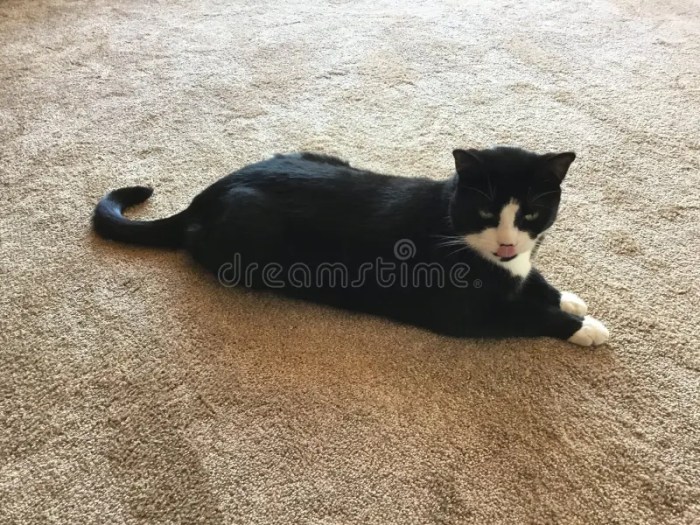
The tuxedo pattern isn’t a breed itself, but rather a coat pattern found across various breeds. It’s characterized by a predominantly black coat with white markings typically on the chest, throat, paws, and sometimes the belly. The defining feature is the “bib” of white fur that resembles a bow tie, hence the name “tuxedo.” Variations exist, with the extent and placement of white markings differing significantly.The tuxedo pattern is a result of the piebald gene, which inhibits the production of pigment (melanin) in certain areas of the cat’s body.
This gene is dominant, meaning only one copy is needed for the pattern to appear. The specific areas where pigment is suppressed are determined by other genes, leading to the diverse range of tuxedo markings we see.Tuxedo cats come in several color variations, primarily black and white being the most common. However, gray (blue) and white, brown and white, and even tabby patterns combined with white are also possible.
The underlying color dictates the shade of the black or brown markings.
| Color Variation | Description | Rarity (estimated) | Associated Personality Traits (anecdotal) |
|---|---|---|---|
| Black and White | Classic tuxedo pattern with black fur and white markings on the chest, paws, and belly. | Most Common | Often described as intelligent, playful, and affectionate. |
| Gray and White (Blue and White) | Similar to black and white, but with gray (blue) fur instead of black. | Less Common | Reportedly calm, gentle, and observant. |
| Brown and White | Features brown fur with white markings, creating a warm and inviting appearance. | Rare | Anecdotally known for being loyal, friendly, and sometimes a bit mischievous. |
| Tabby Tuxedo | Combines the tuxedo pattern with tabby markings (stripes or swirls) on the black areas. | Very Rare | Often described as energetic, curious, and independent. |
Personality and Temperament
Tuxedo cats are often described as having distinct personalities, though it’s important to remember that individual cats vary greatly. A common observation is that they tend to be intelligent and enjoy interactive play. Many owners report their tuxedo cats being vocal, often “chatting” with them throughout the day. They also seem to possess a certain level of confidence and can be quite charming.While there’s no definitive breed-specific behavioral tendency solely attributed to the tuxedo pattern, anecdotal evidence suggests a predisposition towards certain traits.
Many tuxedo cat owners describe their pets as being particularly affectionate and enjoy cuddling. However, they also maintain a degree of independence and aren’t overly clingy.Stories abound of tuxedo cats exhibiting unique personalities. One owner recounted how her tuxedo cat, “Mr. Darcy,” would “help” her work from home by sitting on her keyboard and demanding attention. Another shared a story of a tuxedo cat who would greet visitors at the door with a dignified meow and a polite head-butt.
These stories, while subjective, contribute to the mystique surrounding tuxedo cats.
- Playful: Enjoys chasing toys, batting at dangling objects, engaging in interactive games, and exploring new environments. Often exhibits a hunting instinct, even indoors. May enjoy puzzle toys and games that stimulate their mind.
- Affectionate: Seeks out physical contact, enjoys cuddling and petting, often follows their owners around the house, and may purr loudly when content. May show affection through head-butting or rubbing against legs.
- Independent: Content to entertain themselves, enjoys exploring independently, may prefer short bursts of interaction rather than constant attention, and can be left alone for reasonable periods.
- Vocal: Frequently meows to communicate needs and desires, engages in “conversations” with their owners, and may use different meows for different purposes.
- Curious: Investigates new objects and environments, enjoys exploring hidden spaces, and may be drawn to anything that moves or makes noise.
Health Considerations
Like all cats, male tuxedo cats are susceptible to a range of health issues. While the tuxedo pattern itself doesn’t directly cause specific diseases, certain breeds that commonly exhibit the tuxedo pattern (like American Shorthairs) may have predispositions to particular conditions. It’s crucial to be aware of potential health concerns and take preventative measures.Preventative care is paramount for all cats, but those with tuxedo markings may require extra attention to their skin.
Some tuxedo cats have sensitive skin and may be prone to allergies or dermatitis. Regular grooming and a high-quality diet can help maintain healthy skin and coat.Common feline diseases and their symptoms can manifest similarly in tuxedo cats as in any other cat. However, visual cues can sometimes aid in early detection. For example, a rash might be more noticeable on a tuxedo cat’s white fur.
Here’s a brief overview:
| Health Concern | Symptoms | Preventative Measures |
|---|---|---|
| Feline Upper Respiratory Infection (URI) | Sneezing, coughing, nasal discharge, watery eyes, loss of appetite. | Vaccination, good hygiene, avoiding contact with sick cats. |
| Kidney Disease | Increased thirst and urination, weight loss, lethargy, vomiting. | Regular vet checkups, high-quality diet, monitoring water intake. |
| Dental Disease | Bad breath, red or swollen gums, difficulty eating, drooling. | Regular teeth brushing, dental chews, professional dental cleanings. |
Tuxedo Cats Across Breeds
The tuxedo pattern appears in numerous cat breeds, each contributing a unique element to the overall appearance and temperament. American Shorthairs are a common carrier of the tuxedo pattern, known for their robust build and friendly nature. British Shorthairs, with their round faces and plush coats, also frequently display the tuxedo pattern, often exhibiting a calm and dignified demeanor. Maine Coons, the gentle giants of the cat world, can also sport the tuxedo pattern, adding to their already impressive size and fluffy appearance.Breed significantly influences the overall size, build, and temperament of a tuxedo cat.
A tuxedo American Shorthair will be more muscular and active than a tuxedo British Shorthair, which tends to be more laid-back. The breed’s inherent personality traits often blend with the perceived characteristics associated with the tuxedo pattern.
| Breed | Typical Size (lbs) | Coat Length | Distinctive Features (beyond tuxedo markings) |
|---|---|---|---|
| American Shorthair | 8-15 | Short | Round face, muscular build, copper eyes. |
| British Shorthair | 9-17 | Short | Round face, dense coat, calm temperament. |
| Maine Coon | 13-18 | Long | Large size, bushy tail, tufted ears. |
The rarity of tuxedo markings varies significantly between breeds. It’s relatively common in American Shorthairs and British Shorthairs, but less so in breeds like Maine Coons.
Caring for a Male Tuxedo Cat
The dietary needs of a male tuxedo cat depend on his age, activity level, and overall health. Kittens require a diet rich in protein and calories to support their growth, while adult cats need a balanced diet to maintain their weight and energy levels. Senior cats may benefit from a diet formulated for their specific needs, such as increased fiber or joint support.Grooming requirements vary depending on the coat length of the tuxedo cat.
Short-haired tuxedo cats require minimal grooming, typically just a weekly brushing to remove loose fur. Long-haired tuxedo cats, like Maine Coons, need more frequent brushing (daily or every other day) to prevent mats and tangles.Creating an enriching indoor environment for a male tuxedo cat involves providing plenty of opportunities for play, exploration, and mental stimulation. This can include interactive toys, scratching posts, climbing structures, and window perches.To introduce a new male tuxedo cat to existing pets, follow these steps:
Step 1: Keep the new cat in a separate room with its own food, water, litter box, and toys.
Step 2: Allow the cats to sniff each other under the door.
Step 3: Gradually introduce the cats by feeding them on opposite sides of the door.
Step 4: Supervise short, controlled interactions in a neutral space.
Step 5: Gradually increase the duration of supervised interactions until the cats are comfortable being together unsupervised.
History and Cultural Significance
The exact origins of the tuxedo cat pattern are difficult to pinpoint, but it’s believed to have arisen spontaneously through genetic mutations. The pattern has likely existed for centuries, though its recognition and association with the “tuxedo” name is more recent.Tuxedo cats have often been associated with elegance, sophistication, and good luck. In some cultures, they are considered to be symbols of prosperity and are believed to bring good fortune to their owners.Stories and folklore featuring tuxedo cats are relatively scarce compared to other cat breeds, but they do exist.
Some legends depict tuxedo cats as being messengers from the spirit world or as having magical abilities.Here’s a simplified timeline illustrating the documented presence of tuxedo cats throughout history:
- Ancient Egypt: While not specifically documented, cats with black and white markings were present in ancient Egypt, revered for their ability to control pests.
- Medieval Europe: Black and white cats were often associated with witchcraft and superstition, sometimes viewed with suspicion.
- 19th Century: The term “tuxedo” began to be applied to cats with the distinctive black and white markings, coinciding with the rise of formal evening wear.
- 20th Century – Present: Tuxedo cats have gained popularity as beloved pets and have become a recognizable and iconic symbol of feline charm.
Visual Descriptions & Imagery
A male tuxedo cat lounges in a sunbeam, the warm light highlighting the stark contrast between his glossy black fur and the pristine white of his chest and paws. The shadows deepen the contours of his face, emphasizing the intelligent gleam in his eyes. The white bib, perfectly framing his throat, appears almost luminous against the darker fur.A male tuxedo cat playfully bats at a dangling toy, his movements a blur of black and white.
His body is coiled with effortless grace, his paws extending with surprising speed and precision. The agility and coordination are evident in every twitch of his tail and flick of his ears.The visual impact of a male tuxedo cat with piercing blue eyes is striking. The vibrant blue contrasts sharply with the black and white markings, creating a captivating and unforgettable gaze.
His eyes seem to hold a depth of intelligence and curiosity.Curled up asleep, a male tuxedo cat appears utterly peaceful. His fur is soft and plush, the black and white markings blending together in a comforting pattern. The gentle rise and fall of his chest indicates a deep and restful sleep.His paws are a study in feline perfection. The fur is dense and velvety, a mix of black and white depending on the location.
The pads are a delicate pink, providing a soft and silent cushion for his steps.
Naming a Male Tuxedo Cat
Choosing a name for your male tuxedo cat can be a fun and rewarding experience. Here’s a list of potential names, categorized by style: Formal: Jasper, Winston, Montgomery, Fitzgerald, Sterling, Alistair, Theodore, Reginald, Bartholomew, Clarence. Playful: Oreo, Domino, Patches, Bandit, Shadow, Ink, Buttons, Socks, Mittens, Jester. Unique: Zephyr, Caspian, Indigo, Rune, Phoenix, Atlas, Orion, Everest, Sterling, Rhys. Classic: Charlie, Max, Oliver, Leo, Jack, Toby, Simon, Gus, Finn, Milo.The cat’s personality should heavily influence the name choice.
A playful cat might suit a name like “Bandit,” while a more dignified cat might be better suited to “Winston.”
Finding a Male Tuxedo Cat
Adopting a male tuxedo cat from a shelter or rescue organization is a wonderful way to give a deserving cat a loving home. Shelters often have a variety of tuxedo cats of different ages and personalities.Purchasing a male tuxedo cat from a breeder requires careful consideration. Research reputable breeders who prioritize the health and temperament of their cats. Health testing and genetic screening are essential to minimize the risk of inherited diseases.Before acquiring a kitten, ensure you have all necessary health records, including vaccination history and a temperament assessment.
Socialization is also crucial, ensuring the kitten is comfortable around people and other animals. Adopter Checklist:
- Health Records
- Vaccination History
- Temperament Assessment
- Socialization
Tuxedo Cat Variations & Sub-Patterns
Within the broader tuxedo pattern, several variations exist, each with its own unique characteristics. The “inverted tuxedo” features a predominantly white coat with black markings on the head, chest, and paws. The “mask” variation has a black marking around the eyes, resembling a mask.Subtle differences in markings can distinguish these variations. The size and shape of the white bib, the extent of white markings on the paws, and the presence or absence of a white “locket” on the chest all contribute to the overall appearance.Less common tuxedo patterns include the “harlequin” pattern, which features a more random distribution of black and white markings, and the “piebald” pattern, which has larger patches of white fur.
Visual Guide (Descriptive Text):
- Classic Tuxedo: Predominantly black with a white bib, chest, paws, and belly.
- Inverted Tuxedo: Predominantly white with black markings on the head, chest, and paws.
- Mask Tuxedo: Black markings around the eyes, resembling a mask, with white markings on the chest and paws.
- Harlequin Tuxedo: Random distribution of black and white markings across the body.
Final Conclusion
Source: dreamstime.com
From their historical significance to the subtle nuances of their coat patterns, male tuxedo cats offer a fascinating blend of elegance, personality, and charm. Understanding their unique needs and appreciating their individual quirks will undoubtedly enrich your relationship with these remarkable animals. Hopefully, this guide has provided you with a comprehensive understanding of the male tuxedo cat, inspiring you to celebrate their distinctive beauty and delightful personalities.
So, whether you’re already sharing your home with a tuxedo cat or dreaming of bringing one into your life, remember that these sophisticated felines are more than just a pretty face – they’re loyal, affectionate, and endlessly entertaining companions.
FAQ Summary
Why are tuxedo cats often described as having “human-like” expressions?
The specific arrangement of their markings around their eyes and mouths can create the illusion of human-like expressions, making them seem particularly communicative and engaging.
Are tuxedo cats always black and white?
No! While black and white is the most common, tuxedo cats can also be gray and white (often called “blue” and white), or even have variations with dilute colors.
Do tuxedo cats have any specific dietary needs?
Like all cats, they need a high-quality diet appropriate for their age and activity level. Male cats generally require slightly more protein than females.
What’s the difference between a tuxedo and a piebald cat?
While both have patches of color, piebald cats have larger, more irregular patches, whereas tuxedo cats have a more defined, “formal” pattern resembling a suit.
Are tuxedo cats prone to any specific behavioral problems?
Not particularly. Their personalities vary greatly, but they aren’t inherently predisposed to behavioral issues. Early socialization and proper training are key.
How can I tell if my tuxedo cat is in pain?
Look for changes in behavior like decreased appetite, hiding, lethargy, excessive grooming, or vocalization. Any concerns should be addressed by a veterinarian.
What is an “inverted tuxedo” cat?
An inverted tuxedo cat has the white markings on their body and the dark color on their head, essentially the opposite of the traditional tuxedo pattern.

