The Manx cat, instantly recognizable by its lack of a tail, is a truly unique and captivating breed. Originating from the Isle of Man, these charming felines have a fascinating history intertwined with genetics and a distinctive physical appearance. But if you’re considering welcoming a Manx into your home, understanding the factors that influence Manx cat prices is essential. This guide will break down everything you need to know, from pedigree and breeder reputation to geographic variations and ongoing ownership costs, ensuring you’re well-prepared for this special breed.
We’ll delve into the genetic quirks that cause their taillessness, explore the differences between a Manx and a standard domestic shorthair, and examine how these factors, along with other considerations, impact the price tag. Whether you’re dreaming of a show-quality kitten or hoping to find a loving Manx mix at a shelter, this resource will provide valuable insights into the world of Manx cat ownership.

Introduction to Manx Cats
The Manx cat is a truly unique breed, instantly recognizable for its lack of a tail. But there’s so much more to these charming felines than just their distinctive appearance. This article will delve into the history, genetics, physical traits, and pricing of Manx cats, providing a comprehensive guide for anyone considering welcoming one into their home. We’ll explore everything from their origins on the Isle of Man to the factors that influence their value and the ongoing costs of ownership.
A History Rooted in the Isle of Man
The story of the Manx cat begins on the Isle of Man, a small island located in the Irish Sea between Great Britain and Ireland. For centuries, these tailless cats have been a beloved part of the island’s culture. The island’s unique geography – a relatively small landmass surrounded by water – is believed to have played a crucial role in the breed’s development.
The limited gene pool on the island led to a higher incidence of a naturally occurring genetic mutation that results in the absence of a tail. Early mentions of Manx cats date back to the 18th century, and they quickly gained popularity as skilled mousers and affectionate companions.
The Genetics of Taillessness
The taillessness of the Manx cat isn’t a simple case of a missing tail. It’s caused by a dominant gene with an unusual characteristic: it’s incomplete. This means that even if a cat inherits one copy of the gene, it doesn’t always result in a completely tailless cat. The gene affects the spine, and the degree of taillessness can vary greatly.
Manx cats can be classified into several types based on the length of their tail: Rumpy (no tail), Stumpy (short tail), Longy (full or nearly full tail), and Cymric (a longer, plumed tail, a recessive variation). Importantly, breeding two Manx cats together significantly increases the risk of spinal deformities and other health problems, a condition known as Manx Syndrome, which we’ll discuss in more detail later.
Beyond the Tail: Physical Characteristics
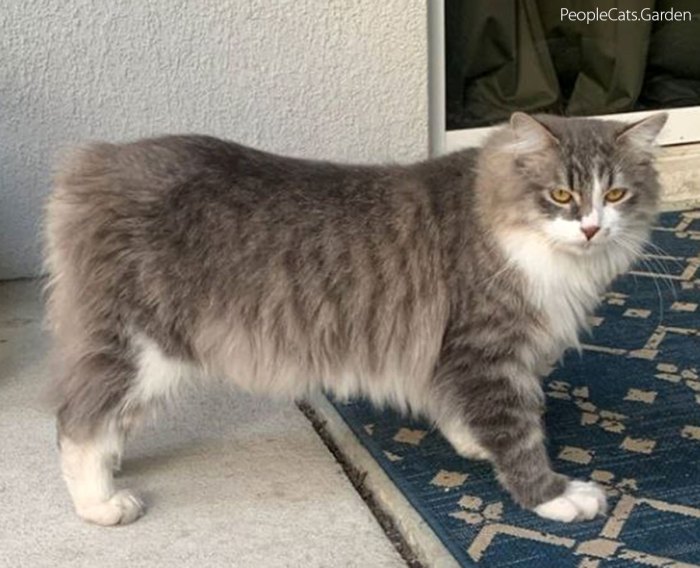
While the lack of a tail is the most defining feature of the Manx cat, they possess other distinctive physical traits. They tend to be medium-sized cats with a sturdy, muscular build. Their hind legs are often longer than their front legs, giving them a unique, slightly hopping gait. Manx cats have a rounded head with a broad muzzle and large, expressive eyes.
Their coat can come in a wide variety of colors and patterns, including solid colors, tabby patterns, and tortoiseshell. The Cymric variety, with its longer, plumed tail, has a particularly luxurious appearance.
| Trait | Manx Cat | Standard Domestic Shorthair |
|---|---|---|
| Tail Length | Variable (Rumpy, Stumpy, Longy, Cymric) | Typically present, medium length |
| Body Shape | Sturdy, muscular, often with longer hind legs | Variable, generally more balanced proportions |
| Head Shape | Rounded with broad muzzle | Variable |
| Coat Variations | Wide range of colors and patterns | Wide range of colors and patterns |
Factors Influencing Manx Cat Prices
The price of a Manx cat can vary considerably, depending on a number of factors. Understanding these factors is crucial for anyone considering purchasing one. From pedigree and breeder reputation to coat color and age, several elements contribute to the final cost. Let’s break down the key influences on Manx cat pricing.
The Impact of Pedigree and Show Quality
Just like with any pedigree breed, a Manx cat’s pedigree and show quality significantly impact its price. Cats with champion bloodlines and those that meet the breed standard for showing are considerably more expensive. These cats have been carefully bred to possess desirable traits and are often registered with cat fancier associations like the Cat Fanciers’ Association (CFA) or The International Cat Association (TICA).
The documentation proving lineage and show potential adds to the value.
Kittens vs. Adult Manx Cats
Generally, kittens command a higher price than adult Manx cats. This is due to several reasons, including demand, the perceived novelty of a kitten, and the potential for future breeding. However, adopting an adult Manx cat can be a rewarding experience, and often comes at a lower cost. Adult cats also have the advantage of a more established personality, allowing potential owners to better assess their compatibility.
Breeder Reputation and Location
The reputation and location of the breeder play a significant role in determining the price of a Manx cat. Reputable breeders who prioritize health testing, genetic screening, and socialization will typically charge more for their kittens. Their experience and commitment to responsible breeding practices justify the higher price. Geographic location also matters; breeders in areas with higher demand or limited availability may charge more.
Rarity of Coat Colors
Certain coat colors in Manx cats are rarer than others, which can increase their value. The Cymric variety, with its longer, plumed tail, is relatively uncommon and often commands a premium price. Tabby patterns, while not exceptionally rare, can also be sought after by enthusiasts. The specific color and pattern combination can influence the price, with unique or striking markings often fetching higher prices.
- Vet Care: Regular checkups, vaccinations, and parasite prevention.
- Food: High-quality cat food to support health and growth.
- Breeding Costs: Stud fees, pregnancy care, and kitten rearing expenses.
- Health Testing: Genetic screening for Manx Syndrome and other potential health issues.
- Cattery Maintenance: Providing a clean, safe, and stimulating environment for the cats.
- Registration Fees: Costs associated with registering kittens with cat fancier associations.
Price Ranges: Different Types of Manx Cats
Understanding the different price tiers for Manx cats is essential for budgeting and making an informed decision. Prices vary based on quality, lineage, and other factors. Here’s a breakdown of typical price ranges for various types of Manx cats.
Pet-Quality Manx Kittens
Pet-quality Manx kittens, those not intended for showing or breeding, typically range from $800 to $1,500. This price reflects the cost of raising the kitten, including vet care, food, and socialization. While these kittens may have minor imperfections that prevent them from meeting show standards, they are still healthy and loving companions.
Show-Quality Manx Kittens
Show-quality Manx kittens, those with exceptional conformation and pedigree, can command prices ranging from $2,000 to $5,000 or even higher. These kittens have been carefully bred to meet the breed standard and possess champion bloodlines. The investment reflects the breeder’s dedication to producing top-quality cats.
Adult Manx Cats
The price of an adult Manx cat typically falls between $600 and $2,500, depending on age, health, and pedigree. Older cats may be less expensive than younger ones, particularly if they are spayed or neutered. Health issues can also affect the price, with cats requiring ongoing medical care often being offered at a reduced rate.
Double-Domed Eyes and Price
Manx cats with double-domed eyes, a distinctive feature where the eyes protrude slightly, are often considered particularly charming and can command a slightly higher price. While not a guaranteed price increase, the unique appearance can be a desirable trait for some buyers, potentially adding $100 to $300 to the overall cost.
| Quality | Description | Price Range |
|---|---|---|
| Pet Quality | Suitable as a companion, may have minor imperfections. | $800 – $1,500 |
| Show Quality | Meets breed standard, champion bloodlines. | $2,000 – $5,000+ |
| Adult (General) | Age and health dependent. | $600 – $2,500 |
Geographic Variations in Pricing
Manx cat prices aren’t uniform across the country or globe. Regional demand, breeder availability, and other factors contribute to price variations. Let’s explore how pricing differs across various regions.
Regional Differences in the United States
On the East Coast, Manx cat prices generally range from $1,000 to $2,000, reflecting a moderate level of demand and a decent number of breeders. The West Coast tends to have slightly higher prices, ranging from $1,200 to $2,500, due to higher demand and potentially fewer breeders. In the Midwest, prices are typically more moderate, ranging from $800 to $1,800.
These are general estimates, and individual breeder pricing can vary.
European Pricing (UK and Germany)
In the United Kingdom, Manx cats typically cost between £800 and £2,000 (approximately $1,000 to $2,500 USD). Germany sees similar pricing, with prices ranging from €900 to €2,200 (approximately $1,000 to $2,400 USD). The availability of breeders and the popularity of the breed influence these prices.
Canadian Pricing
In Canada, Manx cat prices are generally comparable to those in the United States, ranging from CAD $1,000 to $2,500. Transportation costs and import regulations can sometimes add to the overall price, particularly for cats being shipped from the US.
Geographic Distribution of Manx Cat Prices: Imagine a map of the United States. The East Coast would be shaded a light yellow, representing prices between $1,000 and $1,500. The West Coast would be a darker orange, indicating prices between $1,500 and $2,500. The Midwest would be a pale green, representing prices between $800 and $1,800. Areas with very few breeders would be highlighted in red, signifying higher prices due to limited availability.
Europe would be similarly color-coded, with the UK and Germany in shades of blue reflecting their respective price ranges.
Purchasing from Breeders vs. Rescues/Shelters
Deciding where to acquire a Manx cat – from a reputable breeder or a rescue/shelter – is a significant decision. Each option has its own advantages and disadvantages. Let’s weigh the pros and cons of each approach.
Breeders: Advantages and Disadvantages
Buying from a reputable breeder offers the advantage of knowing the cat’s lineage and health history. Responsible breeders conduct health testing and genetic screening to minimize the risk of inherited diseases like Manx Syndrome. However, purchasing from a breeder is typically more expensive than adopting from a shelter. It’s crucial to thoroughly research breeders and ensure they adhere to ethical breeding practices.
Rescues and Shelters: A Possibility
While rare, it’s possible to find Manx cats or Manx mixes in rescues and shelters. This is a more affordable option and provides a loving home for a cat in need. However, the cat’s history may be unknown, and health testing may not have been performed. Adoption fees are generally much lower than breeder prices.
Health Testing and Genetic Screening
When purchasing from a breeder, insist on proof of health testing and genetic screening for Manx Syndrome and other potential health concerns. Responsible breeders will be transparent about their testing procedures and results. This helps ensure you’re bringing home a healthy kitten.
Adoption Fees vs. Purchase Price
Typical adoption fees for cats in shelters range from $50 to $200, while the purchase price from a breeder typically ranges from $800 to $5,000 or more, depending on the quality and pedigree of the cat.
| Source | Cost | Health Guarantees | Pedigree Information |
|---|---|---|---|
| Reputable Breeder | $800 – $5,000+ | Often includes health guarantees and genetic screening results. | Full pedigree documentation. |
| Rescue/Shelter | $50 – $200 | Limited or no health guarantees. | Unknown or limited history. |
Associated Costs of Manx Cat Ownership
Owning a Manx cat isn’t just about the initial purchase price. There are ongoing expenses to consider, including food, litter, vet care, and more. Let’s break down the costs associated with Manx cat ownership.
Ongoing Expenses
Regular expenses include high-quality cat food (approximately $30-$50 per month), litter (approximately $20-$40 per month), and toys (variable). Vet care is also a significant ongoing expense, including annual checkups, vaccinations, and preventative medications.
Potential for Higher Vet Bills
Manx cats are predisposed to certain health issues, particularly Manx Syndrome, which can lead to higher vet bills. Manx Syndrome can affect the spine, hind legs, and bladder, requiring specialized care and potentially surgery. It’s crucial to be prepared for these potential costs.
Grooming and Toys
Manx cats generally require minimal grooming, but regular brushing can help prevent matting. Providing a variety of toys is essential for keeping them entertained and stimulated. Budget for replacing worn-out toys and introducing new ones regularly.
Estimated Annual Expenses
A reasonable estimate for annual expenses for a Manx cat is $1,000 to $3,000, depending on health and lifestyle. This includes food, litter, vet care, toys, and other supplies.
Sample Manx Cat Owner Budget:
- One-Time Costs: Adoption/Purchase Fee ($800 – $5,000), Initial Vet Visit ($100 – $300), Supplies (litter box, food bowls, toys) ($100 – $200)
- Recurring Costs (Monthly): Food ($30 – $50), Litter ($20 – $40), Toys ($10 – $20), Preventative Medications ($10 – $30)
- Recurring Costs (Annual): Vet Checkups & Vaccinations ($200 – $500), Potential Emergency Vet Visits (variable)
Understanding Manx Cat Genetics and Health
A deeper understanding of Manx cat genetics and health is crucial for responsible ownership and breeding. The genetic basis of Manx Syndrome and the importance of preventative care are key considerations.
The Genetic Basis of Manx Syndrome
Manx Syndrome is caused by a recessive gene that affects the development of the spine. While the taillessness is dominant, the syndrome itself is recessive. Breeding two Manx cats together significantly increases the risk of producing kittens with Manx Syndrome, which can manifest in various ways, including spinal deformities, bladder problems, and hind leg weakness. The severity of the syndrome varies greatly.
Responsible Breeding Practices
Source: toptropicals.com
Responsible breeders avoid breeding two Manx cats together to minimize the risk of Manx Syndrome. They may use genetic testing to identify carriers of the gene and avoid breeding them. Ethical breeders prioritize the health and well-being of their cats above all else.
Other Common Health Concerns
Besides Manx Syndrome, Manx cats are also prone to other health concerns, such as hypertrophic cardiomyopathy (HCM), a heart condition, and corneal dystrophy, an eye condition. Regular vet checkups and preventative care can help detect and manage these issues.
Preventative Care Measures
Preventative care measures include regular vet checkups, vaccinations, parasite prevention, and a healthy diet. Early detection and treatment of health problems can significantly improve a Manx cat’s quality of life.
Inheritance Pattern of the Manx Gene: Imagine a flowchart. At the top, you have two Manx cats breeding. The possible outcomes for their kittens are: 25% Rumpy (homozygous for the Manx gene), 50% Stumpy or Longy (heterozygous carriers), and 25% Normal (without the Manx gene). The Rumpy kittens are at the highest risk of Manx Syndrome, while the Normal kittens are not affected. The Stumpy/Longy kittens can pass the gene on to their offspring, but may not exhibit severe symptoms themselves.
Finding Reputable Manx Cat Breeders
Finding a reputable Manx cat breeder is essential for ensuring you’re getting a healthy, well-socialized kitten. Here’s what to look for and how to verify a breeder’s credentials.
Characteristics of a Reputable Breeder
Reputable breeders are knowledgeable about the breed, prioritize health testing and genetic screening, provide a clean and stimulating environment for their cats, and are willing to answer your questions thoroughly. They typically require potential buyers to sign contracts and may have waiting lists.
Visiting the Cattery and Meeting the Parent Cats
Visiting the breeder’s cattery is a crucial step in the selection process. It allows you to assess the living conditions of the cats and meet the parent cats. Observe the cats’ behavior and health – they should be friendly, alert, and well-groomed.
Questions to Ask a Breeder
Before purchasing a kitten, ask the breeder about their breeding practices, health testing procedures, and socialization methods. Inquire about the kitten’s lineage and any known health concerns in the family line.
Verifying Credentials and Reputation
Check if the breeder is registered with a reputable cat fancier association. Ask for references from previous buyers and check online reviews. A reputable breeder will be transparent and willing to provide documentation and answer your questions.
- Red Flags:
- Breeder is unwilling to let you visit the cattery.
- Kittens are sold at very low prices.
- Breeder doesn’t ask you questions about your lifestyle and experience with cats.
- Kittens are not vaccinated or dewormed.
- Breeder is secretive about their breeding practices.
Final Wrap-Up
Navigating the world of Manx cat prices can feel complex, with so many variables at play. From the initial purchase price to the ongoing costs of care, responsible ownership requires careful planning and consideration. By understanding the genetic factors, breeder practices, and regional differences, you can make an informed decision and ensure you’re providing a loving and healthy home for your new Manx companion.
Ultimately, the joy and unique personality of a Manx cat are priceless, making the investment worthwhile for the right owner.
FAQ Corner
What is Manx Syndrome and how does it affect price?
Manx Syndrome is a genetic condition resulting from the tailless gene, potentially causing spinal and bowel issues. Kittens with severe Manx Syndrome are often not sold, and breeders who prioritize health testing to minimize the risk will typically charge more for kittens with clear health screenings.
Why are Cymric Manx cats more expensive?
Cymrics are Manx cats with long hair, a less common variation. Their rarity and the extra effort required to breed and maintain the long-haired trait contribute to a higher price.
Can I find Manx cats at a lower price from a rescue?
Yes, you might find Manx cats or Manx mixes in rescues and shelters. Adoption fees are generally much lower than purchasing from a breeder, but health history and pedigree information may be limited.
What health testing should a reputable breeder provide?
Reputable breeders should provide health testing for Manx Syndrome and other common Manx cat health concerns, such as hip dysplasia and patellar luxation. They should be able to share the results with you.
Do double-domed eyes significantly impact the price?
Double-domed eyes are a desirable trait in Manx cats, particularly for show quality. While not always a huge price difference, they can add a premium, especially if the eyes are exceptionally well-formed.
What’s the difference between pet-quality and show-quality Manx cats?
Pet-quality Manx cats are healthy and well-tempered but may have minor cosmetic imperfections that don’t meet show standards. Show-quality cats have exceptional conformation, coat, and eye characteristics, making them suitable for competition.

