Ever watched your cat inhale their food in a flash? It’s a common sight, but it can lead to some real problems down the line. Domestic cats are natural hunters, designed to stalk and nibble on prey throughout the day. But domestication and readily available food have thrown a wrench into that instinct, often resulting in gulping, overeating, and even boredom.
We’re diving deep into the world of slow feeders for cats – what they are, why they’re beneficial, and how to introduce one to your furry friend, all to help them enjoy a healthier, happier mealtime.
This guide will explore everything from understanding your cat’s natural eating behaviors and the issues that arise when those behaviors are disrupted, to the different types of slow feeders available and how to choose the perfect one for your cat’s unique personality and needs. We’ll also cover the practicalities of transitioning your cat to a slow feeder and keeping it clean and well-maintained.
Understanding Feline Eating Behaviors & Problems
Cats are fascinating creatures, and their eating habits are deeply rooted in their evolutionary history. Understanding these instincts is key to ensuring your feline friend thrives. Domestic cats, while comfortable in our homes, still retain the behaviors of their wild ancestors, which can sometimes lead to issues when combined with a modern, often over-abundant, food supply. This section will explore those behaviors, common problems, and potential health concerns arising from rapid eating.
Detail the natural hunting and feeding patterns of wild cats.
Wild cats are obligate carnivores, meaning their diet consists primarily of meat. Their hunting strategy is built around short bursts of intense activity followed by periods of rest and digestion. They typically hunt small prey like rodents, birds, and insects, consuming multiple small meals throughout the day and night. This “little and often” approach is crucial for their digestive system, which is designed to process small portions of protein-rich food frequently.
The hunt itself isn’t just about acquiring food; it’s a vital part of their physical and mental well-being, providing exercise and stimulating their natural instincts.
Explain how domestication has altered these patterns.
Domestication has significantly altered these natural patterns. While cats retain their hunting instincts, the need to actively hunt for survival has largely disappeared. We provide them with readily available food, often in large quantities. This can lead to a disconnect between their innate drive to hunt and the ease with which they obtain food. Furthermore, the shift from a diet of whole prey (which includes bones, organs, and muscle) to processed commercial cat food has changed the nutritional profile they receive, potentially impacting their digestive health.
Discuss common eating problems in domestic cats (e.g., gulping, overeating, boredom).
Several eating problems are common in domestic cats, often stemming from these altered patterns. Gulping, or eating too quickly, is a major concern, leading to indigestion and potential health issues (discussed later). Overeating, driven by boredom or the availability of constant food, can lead to obesity and related health problems. Boredom eating is particularly prevalent in indoor cats who lack sufficient mental and physical stimulation.
Finally, some cats develop picky eating habits, refusing to eat certain foods or exhibiting a general lack of appetite.
Provide a list of potential health issues linked to rapid eating.
Rapid eating isn’t just a behavioral quirk; it can have serious health consequences. Here’s a list of potential issues:
- Vomiting: Swallowing large amounts of air while gulping can trigger vomiting.
- Bloating: Rapid ingestion of food and air can lead to gastric dilatation (bloating), a potentially life-threatening condition.
- Regurgitation: Undigested food may be regurgitated due to inadequate chewing and swallowing.
- Obesity: Overeating, often associated with rapid consumption, contributes to weight gain and obesity.
- Food Aversion: If a cat experiences discomfort after eating quickly, they may develop an aversion to food.
- Megaesophagus: While less common, rapid eating can exacerbate megaesophagus, a condition where the esophagus enlarges and struggles to move food to the stomach.
Create a table (responsive, 3 columns) comparing free-feeding, scheduled feeding, and puzzle feeding approaches.
| Feeding Approach | Description | Pros & Cons |
|---|---|---|
| Free-Feeding | Food is left out continuously, allowing the cat to eat whenever they want. | Pros: Convenient for owners. Cons: Encourages overeating, can lead to obesity, doesn’t provide mental stimulation, difficult to monitor food intake. |
| Scheduled Feeding | Food is provided at specific times of the day. | Pros: Allows for portion control, easier to monitor food intake, can help prevent overeating. Cons: Requires consistent timing, may not suit all cats’ preferences. |
| Puzzle Feeding | Food is presented in a way that requires the cat to work for it, using slow feeders or interactive toys. | Pros: Provides mental stimulation, slows down eating, encourages natural hunting behaviors, can aid in weight management. Cons: Requires initial investment in puzzle feeders, some cats may initially resist. |
What are Slow Feeders for Cats? – Types & Designs
Define what a slow feeder for cats is and its primary purpose.
A slow feeder for cats is a specially designed bowl or device intended to slow down a cat’s eating speed. Its primary purpose is to address the common problem of gulping and rapid consumption, promoting healthier eating habits and preventing associated health issues. Essentially, it introduces obstacles and challenges that force the cat to eat more deliberately.
Identify the different types of slow feeders available (bowls, mats, puzzles, interactive toys).
The market offers a variety of slow feeders to suit different cat personalities and preferences. These include:
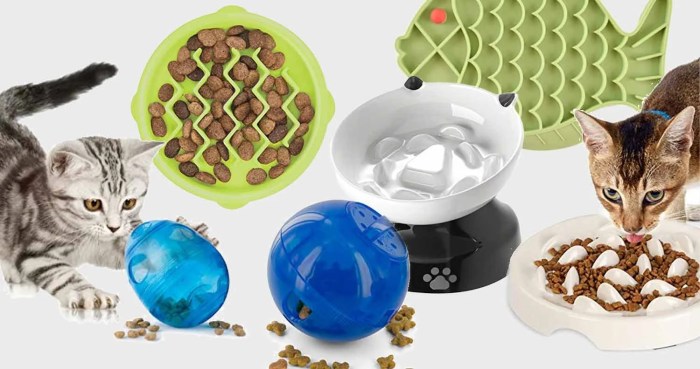
- Slow Feeder Bowls: These are bowls with built-in obstacles like ridges, bumps, or maze-like patterns.
- Slow Feeder Mats: These are textured mats that scatter food, requiring the cat to hunt for each bite.
- Puzzle Feeders: These are more complex devices that require the cat to manipulate levers, slides, or compartments to access the food.
- Interactive Toys: These toys dispense food as the cat plays with them, combining feeding with enrichment.
Describe the design features of various slow feeders (e.g., maze patterns, obstacles, raised platforms).
Design features vary widely depending on the type of slow feeder. Slow feeder bowls often feature maze patterns, raised ridges, or strategically placed obstacles that prevent the cat from simply scooping up all the food at once. Mats typically have a textured surface with varying heights and depths. Puzzle feeders incorporate levers, rotating compartments, and sliding doors that require the cat to solve a “puzzle” to access the food.
Some designs include raised platforms to encourage the cat to reach and paw at the food.
Elaborate on materials used in slow feeder construction (stainless steel, ceramic, silicone, plastic) and their pros/cons.
The material used in a slow feeder is important for both safety and durability. Common materials include:
- Stainless Steel: Pros: Durable, hygienic, easy to clean, doesn’t retain odors. Cons: Can be noisy, may be more expensive.
- Ceramic: Pros: Aesthetically pleasing, doesn’t retain odors, easy to clean. Cons: Can be fragile, may chip or break.
- Silicone: Pros: Flexible, non-slip, easy to clean, often dishwasher safe. Cons: Can be prone to tearing, may retain odors if not cleaned thoroughly.
- Plastic: Pros: Affordable, lightweight, often dishwasher safe. Cons: Can scratch easily, may retain odors, some plastics may contain BPA (ensure BPA-free).
Design a visual description of a slow feeder bowl with multiple internal ridges, suitable for generating an image description.
Imagine a circular, shallow bowl made of bright blue, food-grade plastic. The interior surface isn’t smooth; instead, it’s covered in a network of raised, white ridges. These ridges are arranged in a spiral pattern, radiating outwards from the center of the bowl. The ridges vary in height, ranging from approximately 0.5 to 1 inch, creating a complex maze-like landscape. The ridges are spaced closely together, preventing the cat from easily reaching the food at the bottom of the bowl.
The outer rim of the bowl is slightly raised to prevent food from spilling.
Benefits of Using a Slow Feeder for Your Cat
Share the advantages of slow feeding for digestive health.
Slow feeding significantly benefits a cat’s digestive health. By slowing down the eating process, it allows the cat to chew their food more thoroughly, breaking it down into smaller particles. This reduces the workload on the stomach and intestines, promoting better digestion and nutrient absorption. It also allows saliva, which contains digestive enzymes, to mix with the food, further aiding in the digestive process.
Discuss how slow feeders can help prevent vomiting and bloating.
Gulping food often leads to swallowing air, which can cause vomiting and bloating. Slow feeders minimize air intake by forcing the cat to eat more deliberately. The slower pace also reduces the risk of gastric dilatation (bloating), a serious and potentially life-threatening condition.
Explain how they can reduce boredom and provide mental stimulation.
For indoor cats, slow feeders offer a valuable source of mental stimulation. The act of working for their food engages their natural hunting instincts, providing a form of enrichment that can alleviate boredom and reduce stress. Puzzle feeders, in particular, require problem-solving skills, keeping the cat entertained and mentally engaged.
Detail the potential for weight management through slower consumption.
Source: welovecatsandkittens.com
Slower eating naturally leads to reduced food intake. The cat feels fuller sooner, preventing overeating and contributing to weight management. This is particularly beneficial for cats prone to obesity.
Create a bulleted list outlining the psychological benefits of engaging with a slow feeder.
* Reduces Stress & Anxiety: Engaging with a slow feeder can provide a calming and focusing activity.
Satisfies Hunting Instincts
Mimics the natural hunting process, fulfilling a primal need.
Increases Confidence
Successfully “solving” a puzzle feeder can boost a cat’s confidence.
Provides a Sense of Accomplishment
Earning their food provides a sense of satisfaction.
Reduces Destructive Behaviors
Mental stimulation can reduce boredom-related destructive behaviors.
Final Review
Ultimately, a slow feeder for your cat isn’t just about slowing down their eating; it’s about enriching their lives. By mimicking their natural hunting instincts, these feeders can reduce digestive issues, combat boredom, aid in weight management, and even provide psychological benefits. From maze bowls to interactive puzzles, there’s a slow feeder out there to suit every cat. With a little patience and the right approach, you can transform mealtime from a frantic rush into a more enjoyable and beneficial experience for your beloved feline companion.
So, take the time to assess your cat’s eating habits and consider incorporating a slow feeder into their routine. You might be surprised at the positive impact it has on their overall health and well-being!
User Queries
My cat hates the slow feeder! What do I do?
Don’t give up! Start by putting a small amount of wet food in the slow feeder. Gradually increase the amount as your cat gets more comfortable. You can also sprinkle some of their favorite treats inside to entice them.
Are slow feeders safe for all cats?
Generally, yes, but always check for small parts that could be a choking hazard, especially for kittens. Ensure the material is non-toxic and durable.
How often should I clean a slow feeder?
Daily cleaning is ideal to prevent bacteria growth. Disassemble complex feeders according to the manufacturer’s instructions.
Can I use a slow feeder for treats?
Absolutely! Slow feeders are a great way to make treat time more engaging and mentally stimulating for your cat.
What’s the best material for a slow feeder?
Stainless steel is a popular choice for its durability and ease of cleaning. Ceramic is also good, but can be heavier. Avoid brittle plastics that could break.
Will a slow feeder guarantee my cat will lose weight?
It can certainly help! Slower eating often leads to feeling fuller sooner, which can contribute to weight management, but it’s best combined with a healthy diet and exercise.

