Our feline friends are notorious for their independent spirits and adventurous streaks. While we adore their quirky personalities, it can be a real worry when they slip out the door or explore beyond our sight. Lost cats are a heartbreaking reality, and sadly, recovery rates can be low without assistance. Thankfully, advancements in pet technology, particularly the rise of the smallest cat GPS tracker, are offering a new level of reassurance for worried cat owners.
This guide dives deep into everything you need to know about these tiny lifesavers, from technology options to attachment methods and beyond.
Keeping your cat safe is paramount, and concerns range from the obvious dangers like traffic and predators to the less visible risks of wandering too far and getting disoriented. Understanding these risks and exploring solutions like GPS tracking is the first step towards ensuring your cat’s well-being. We’ll explore how these devices can bridge the gap between our desire for their freedom and our need to know they’re safe.
The Ultimate Guide to Smallest Cat GPS Trackers: Keeping Your Feline Friend Safe
Let’s face it, cats are independent creatures. Their adventurous spirits often lead them on explorations we can’t always follow. While their independence is part of their charm, it also presents a real concern: the risk of them getting lost. It’s a worry shared by countless cat owners, and thankfully, technology is stepping in to help. This guide dives deep into the world of small cat GPS trackers, exploring everything from the technology behind them to choosing the right one for your furry companion.
We’ll cut through the jargon and give you the information you need to make an informed decision and bring peace of mind to your cat-loving life.
1. Introduction
The Need for Small Cat GPS Trackers
Cats, despite their reputation for being aloof, are prone to wandering. Their natural instincts to hunt and explore can lead them far from home, sometimes into dangerous situations. Escape artistry is practically a feline superpower – a quick dash out an open door or a clever climb over a fence can quickly turn a relaxing afternoon into a frantic search.
The potential dangers are numerous: traffic accidents, encounters with predators (coyotes, foxes, even larger dogs), and simply getting disoriented and lost in unfamiliar territory. The emotional toll of a lost cat is significant, and the financial cost of searching can add up quickly.
Statistics paint a sobering picture. Studies suggest that only around 2% of lost cats are recovered without any form of tracking device. However, that number jumps to a remarkable 50% when a GPS tracker is used. This dramatic difference highlights the immense value of these devices. The rise of “pet tech” is undeniable, with owners increasingly seeking ways to enhance their pets’ safety and well-being.
GPS trackers are a prime example of this trend, offering a proactive solution to a common concern.
| Concern | Description |
|---|---|
| Traffic Accidents | Cats wandering near roads are at high risk of being hit by vehicles. |
| Predators | Exposure to wild animals like coyotes, foxes, and birds of prey. |
| Wandering | Getting lost in unfamiliar areas due to disorientation or curiosity. |
| Theft | Unfortunately, cats can be targets of theft. |
| Exposure to Toxins | Ingestion of poisonous plants or chemicals. |
2. Defining “Smallest”
Size and Weight Considerations
When we talk about the “smallest” cat GPS tracker, we’re referring to a device that minimizes impact on your cat’s comfort and mobility. Dimensions are key: we’re looking at trackers with a length of under 2 inches (5cm), a width of under 1 inch (2.5cm), and a height of under 1 inch (2.5cm).
Weight is equally crucial; ideally, a tracker should weigh less than 20 grams (0.7 ounces) to avoid hindering your cat’s natural movements. Anything significantly heavier can cause discomfort, alter their gait, and even affect their behavior.
The impact of size and weight on a cat’s behavior is significant. A bulky tracker can restrict their ability to jump, climb, and squeeze into tight spaces – all activities that are essential for a cat’s well-being. It can also lead to irritation and scratching at the device, potentially causing injury or dislodging the tracker altogether. A lighter, more compact tracker is far more likely to be tolerated and won’t interfere with their natural instincts.
| Cat Size | Acceptable Tracker Weight Range (grams) | Acceptable Tracker Weight Range (ounces) |
|---|---|---|
| Kitten (under 5 lbs) | 5-10 | 0.2 – 0.4 |
| Adult Cat (5-10 lbs) | 10-15 | 0.4 – 0.5 |
| Large Adult Cat (10+ lbs) | 15-20 | 0.5 – 0.7 |
Imagine a large, clunky tracker weighing 30 grams strapped to a small kitten. The kitten would likely struggle to move freely, potentially leading to stress and even physical limitations. Even for a larger adult cat, a tracker exceeding 20 grams can noticeably impact their agility and comfort.
3. Technology Options for Miniature Trackers
Choosing the right tracking technology is crucial for a small cat GPS tracker. The three main options are GPS, Bluetooth, and cellular. GPS (Global Positioning System) uses satellites to pinpoint a cat’s location with high accuracy, but requires a clear view of the sky and consumes more battery power. Bluetooth trackers rely on proximity to a paired device (usually a smartphone) and offer limited range, typically within a few hundred feet.
Cellular trackers use mobile networks to transmit location data, providing the widest range but also incurring ongoing subscription costs.
| Technology | Pros | Cons |
|---|---|---|
| GPS | High accuracy, wide range (when signal is available) | Higher battery consumption, requires clear sky view, can be more expensive |
| Bluetooth | Low cost, low power consumption | Limited range, requires proximity to a paired device |
| Cellular | Wide range, real-time tracking | Ongoing subscription costs, higher device cost, battery drain |
In urban environments, GPS signals can be obstructed by buildings, leading to less reliable tracking. Bluetooth’s short range makes it unsuitable for cats who venture far from home. Cellular trackers offer the best coverage but come with a recurring monthly fee. In rural areas, GPS generally performs better due to fewer obstructions.
For a tracker prioritizing minimal size and reasonable accuracy, a GPS module combined with a low-power microcontroller and optimized data transmission is the ideal choice, balancing size, functionality, and battery life.
4. Top Contenders
Examining Available Products
Several small cat GPS trackers are currently available, each with its own strengths and weaknesses. Here are five notable contenders:
- Tractive D5: A popular choice known for its sleek design and global coverage.
- Whistle GO Explore: Offers activity monitoring and a long battery life.
- Fi Smart GPS Tracker: Features a durable design and a responsive app.
- Pawfit 3: A lightweight option with geofencing capabilities.
- Link AKC Smart Collar: Combines GPS tracking with activity monitoring and a stylish design.
| Product Name | Dimensions | Battery Life | Price (USD) |
|---|---|---|---|
| Tractive D5 | 60 x 35 x 13 mm | Up to 7 days (depending on usage) | $79.99 (plus subscription) |
| Whistle GO Explore | 70 x 35 x 15 mm | Up to 10 days (depending on usage) | $99.99 (plus subscription) |
| Fi Smart GPS Tracker | 48 x 48 x 11 mm | Up to 30 days | $89.99 (plus subscription) |
| Pawfit 3 | 35 x 25 x 8 mm | Up to 7 days | $69.99 (plus subscription) |
| Link AKC Smart Collar | 55 x 25 x 15 mm | Up to 5 days | $99.99 (plus subscription) |
Accuracy varies between trackers, with some reporting location updates every few seconds while others update every few minutes. Fi Smart GPS Tracker is often praised for its rapid update frequency, while Tractive D5 offers a good balance of accuracy and battery life.
5. Battery Life and Charging Solutions for Tiny Devices
Providing sufficient battery life in a tiny tracker is a significant engineering challenge. The smaller the device, the less space there is for a battery. Manufacturers often utilize lithium-ion or lithium-polymer batteries, which offer a high energy density in a compact form factor. However, battery life is heavily influenced by usage patterns.
Frequent GPS usage, especially when transmitting location data regularly, significantly drains the battery. Conversely, using the tracker primarily for geofencing alerts (which only trigger when the cat leaves a designated area) consumes considerably less power. Ambient temperature also plays a role; extreme heat or cold can reduce battery performance.
Flowchart: Factors Affecting Battery Life
- GPS Usage Frequency: High frequency = faster drain.
- Data Transmission Frequency: Frequent updates = faster drain.
- Geofencing Usage: Minimal drain (alerts only).
- Ambient Temperature: Extreme temperatures = reduced performance.
- Battery Capacity: Larger capacity = longer life.
6. Attachment Methods
Ensuring Secure and Comfortable Fit
Source: cattime.com
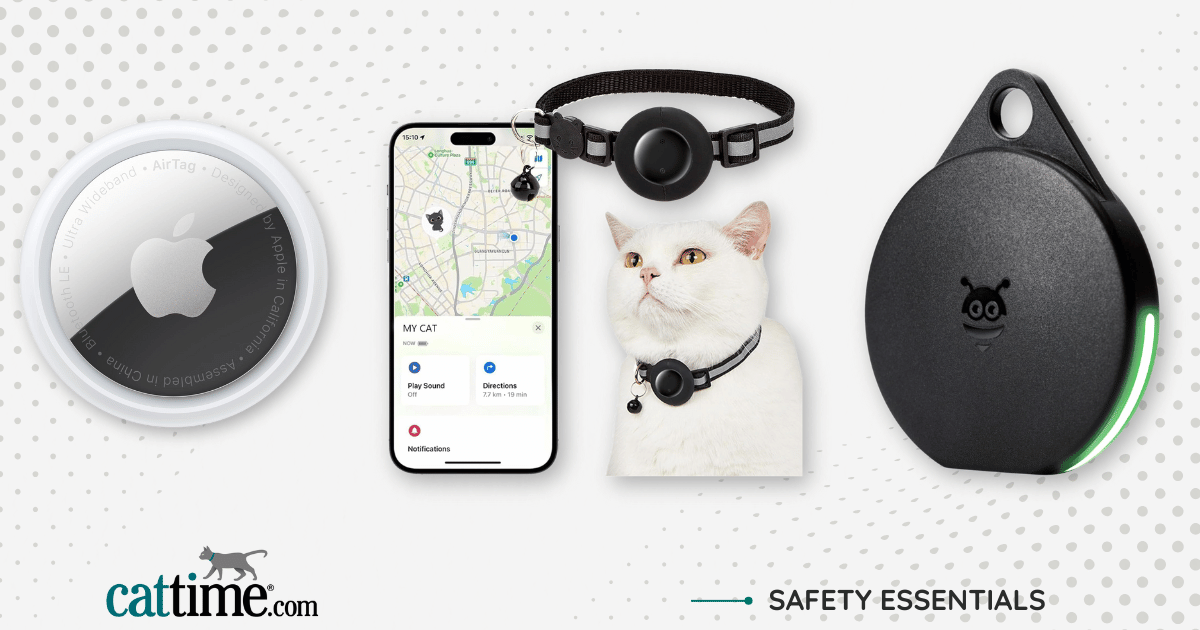
A secure and comfortable attachment is essential for any cat GPS tracker. Common methods include collar clips, harnesses, and adhesive patches. Collar clips are the simplest option but can be uncomfortable for some cats. Harnesses offer a more secure and comfortable fit, distributing the weight of the tracker more evenly. Adhesive patches are less common but can be useful for short-term tracking.
The key is to ensure the tracker doesn’t impede the cat’s movement or cause irritation. Regularly check the attachment for signs of chafing or discomfort. A well-designed attachment should be lightweight, flexible, and made from non-toxic materials.
- Silicone: Soft, flexible, and hypoallergenic.
- Nylon: Durable and resistant to wear and tear.
- Cotton: Breathable and comfortable for long-term wear.
- Biothane: Waterproof and easy to clean.
7. Features Beyond Location Tracking
Many small cat GPS trackers offer features beyond basic location tracking. Activity monitoring allows owners to track their cat’s daily activity levels, providing insights into their behavior and potential health concerns. Geofencing enables the creation of safe zones, triggering alerts when the cat leaves these designated areas. Temperature sensing can provide early warnings of potential heatstroke or hypothermia.
Geofencing is particularly useful for keeping cats safe within a yard or apartment. By setting up a virtual boundary, owners can receive instant notifications if their cat wanders outside the designated area. Activity monitoring can help identify changes in behavior that may indicate illness or stress.
Temperature sensing, while less common, can be a valuable safety feature, especially in extreme weather conditions. A sudden rise or drop in body temperature can be an early indicator of a health problem.
8. Installation and Setup Procedures
Installing and setting up a small cat GPS tracker is typically a straightforward process. First, charge the tracker fully. Then, download the corresponding mobile app and create an account. Next, pair the tracker with your smartphone via Bluetooth or Wi-Fi. Finally, configure the tracker’s settings, including geofences and notification preferences.
- Charge the tracker.
- Download and install the mobile app.
- Create an account and log in.
- Pair the tracker with your smartphone.
- Configure geofences and notification settings.
Troubleshooting Common Setup Issues:
- Tracker won’t pair: Ensure Bluetooth is enabled on your smartphone and the tracker is in pairing mode.
- GPS signal weak: Move to an open area with a clear view of the sky.
- Notifications not working: Check your app settings and ensure notifications are enabled.
9. Durability and Water Resistance
Durability and water resistance are crucial considerations for a cat tracker. Cats are notorious for their playful antics, which can often involve scratching, chewing, and exploring wet environments. A durable tracker should be able to withstand these challenges without damage.
Water resistance levels vary. Splash-proof trackers can handle light rain or splashes, while waterproof trackers offer greater protection against submersion. Protecting the tracker from damage caused by scratching or chewing is essential. Consider using a protective collar or harness to shield the device.
Materials like reinforced plastic and rubberized coatings enhance durability. Sealed construction techniques prevent water from entering the device.
10. Cost Considerations and Subscription Plans
The cost of a small cat GPS tracker can vary significantly depending on the features and technology. Upfront costs typically range from $50 to $150. However, many trackers require ongoing subscription plans for cellular data and app access. These subscription fees can range from $5 to $20 per month.
| Tracker | Tracker Purchase Price (USD) | Monthly Subscription Fee (USD) | Total Cost of Ownership (1 Year) (USD) |
|---|---|---|---|
| Tractive D5 | $79.99 | $7.99 | $167.98 |
| Whistle GO Explore | $99.99 | $9.99 | $219.97 |
| Fi Smart GPS Tracker | $89.99 | $9.99 | $209.97 |
Final Summary
From pinpoint accuracy to extended battery life and comfortable designs, the world of smallest cat GPS trackers is constantly evolving. We’ve explored the technology, the options, and the practical considerations involved in choosing the right tracker for your furry companion. Ultimately, investing in a small cat GPS tracker isn’t just about technology; it’s about investing in peace of mind, knowing you can quickly locate your beloved cat should they ever wander too far.
With the right tracker and a little preparation, you can let your cat explore with confidence, knowing they’re always within reach.
Questions Often Asked
How accurate are the smallest cat GPS trackers?
Accuracy varies depending on the technology (GPS, Bluetooth, cellular) and environmental factors. GPS generally offers the best accuracy outdoors, while Bluetooth is more suited for indoor tracking. Cellular trackers provide wider range but can be less precise.
What’s the difference between GPS, Bluetooth, and cellular tracking?
GPS uses satellites for location, offering wide range but requiring clear sky view. Bluetooth has a short range but is accurate indoors. Cellular uses mobile networks, providing wide coverage but requiring a subscription.
How do I choose the right attachment method for my cat?
Consider your cat’s personality and comfort. Collar clips are common, but harnesses offer more security. Adhesive patches are less recommended as they can irritate the skin.
Do I need a subscription for a cat GPS tracker?
Cellular trackers almost always require a subscription for data usage. GPS trackers that rely on your smartphone’s connection may not, but range will be limited.
How long does the battery last?
Battery life varies greatly, from a few hours to several weeks, depending on usage and the tracker’s technology. Frequent GPS use drains the battery faster.
Are these trackers waterproof?
Most are at least splash-proof, but fully waterproof trackers are available. Check the product specifications for the level of water resistance.
Can I set up a “safe zone” with a GPS tracker?
Yes! Geofencing allows you to define safe zones and receive alerts when your cat leaves them. This is a great feature for keeping your cat within your yard or home.

