The mesmerizing swirl of stripes on a tabby mackerel cat is more than just a pretty pattern; it’s a fascinating glimpse into the world of feline genetics. These cats, instantly recognizable by their distinctive markings, boast a rich history and a surprising amount of genetic complexity. From the subtle nuances of stripe density to the influence of different coat colors, let’s dive into the captivating world of the mackerel tabby!
Understanding the mackerel tabby pattern requires exploring its genetic roots, appreciating the variety of colors it can manifest in, and recognizing how it differs from other tabby variations. We’ll also look at the breeds that commonly showcase this beautiful pattern and how to identify it, even in a tiny kitten. Get ready to unravel the secrets behind those stunning stripes!
The Alluring World of Mackerel Tabby Cats
The stripes! The shimmer! The undeniable charm of a mackerel tabby cat is captivating. These felines boast a distinctive coat pattern that’s more than just visually appealing; it’s a fascinating glimpse into the world of feline genetics. This article dives deep into the mackerel tabby pattern, exploring its origins, variations, common breeds, and the science behind its beautiful markings. We’ll unravel the mysteries of this popular pattern and give you a comprehensive understanding of what makes these cats so special.
Defining the Tabby Mackerel Pattern
The mackerel tabby pattern, often likened to the stripes of a mackerel fish (hence the name!), is one of the most common and recognizable tabby patterns in cats. It’s fundamentally rooted in genetics, specifically the interplay of the agouti gene and its modifiers. The agouti gene dictates whether a cat will express a banded hair pattern (tabby) or a solid color.
When the agouti gene is “on,” it allows for the production of multiple pigments within each hair shaft, creating the characteristic stripes and markings. The “mackerel” aspect refers to the specific arrangement of these bands – a series of narrow, parallel stripes running vertically down the cat’s sides.The appearance of the mackerel stripe is a key identifier. These stripes are typically narrow and closely spaced, creating a “tiger-like” or “fishbone” effect.
The density of these stripes can vary significantly; some cats have very distinct, bold stripes, while others have a more subtle, ghost-like pattern. The background color between the stripes also plays a crucial role in the overall appearance.Distinguishing the mackerel pattern from other tabby variations is important. Here’s a comparison table to illustrate the differences:
| Pattern Type | Description | Stripe Appearance | Common Breed Examples |
|---|---|---|---|
| Classic Tabby | Wider, swirling patterns; often described as “bullseye” markings. | Broad, looping swirls and blotches. | British Shorthair, Persian |
| Ticked Tabby | Individual hairs have bands of color, creating a “sand-like” or “agouti” appearance; minimal stripes. | No distinct stripes; a speckled or sandy texture. | Abyssinian, Somali |
| Spotted Tabby | Distinct spots of varying sizes scattered across the body. | Round or oval spots. | Bengal, Ocicat |
| Mackerel Tabby | Narrow, parallel stripes running vertically down the sides. | Narrow, closely spaced stripes. | Maine Coon, Bengal, American Shorthair |
“Ghost mackerel” markings occur when the tabby pattern is present genetically but is very faint or muted. This can be caused by a number of factors, including dilution genes (which we’ll discuss later) or a recessive modifier gene that reduces the intensity of the pattern. Essentially, the cat carries the tabby gene, but it doesn’t express itself as strongly.
Color Variations within Mackerel Tabby Cats
The beauty of the mackerel tabby pattern lies not only in its stripes but also in the incredible range of colors it can display. You’ll find mackerel tabbies in brown (often called “seal” or “seal lynx”), silver (a shimmering, grey-toned pattern), blue (a diluted grey), cream (a pale, warm color), and red (also known as orange or ginger). Each color variation adds a unique dimension to the pattern.Colorpoint restriction, a gene that limits pigment production to the extremities (face, ears, paws, tail), can also affect the mackerel tabby pattern.
Colorpoint mackerel tabbies exhibit the classic colorpoint markings – a lighter body with darker points – while still retaining the distinctive vertical stripes. Siamese and Himalayan cats can sometimes display this combination.Tortoiseshell tabby (torbie) cats present a fascinating blend of colors. The mackerel tabby pattern manifests within the tortoiseshell coloration, creating a unique combination of stripes and patches of black, red, and sometimes cream.
The distribution of these colors is random, making each torbie cat truly one-of-a-kind.
Breeds Commonly Featuring the Mackerel Tabby Pattern
Several cat breeds are renowned for their prevalence of the mackerel tabby pattern. These include the majestic Maine Coon, the striking Bengal, the elegant Abyssinian, and the adaptable American Shorthair. While the pattern is common across these breeds, the specific markings and overall appearance can vary.Here’s a table outlining typical mackerel tabby markings and breed-specific variations:
| Breed | Typical Mackerel Pattern | Distinctive Features |
|---|---|---|
| Maine Coon | Bold, wide stripes; often with a prominent “necklace” marking. | Large size, long flowing fur, bushy tail. |
| Bengal | Sharp, well-defined stripes; often with rosettes (spot-like markings within the stripes). | Muscular build, short, sleek coat, wild appearance. |
| Abyssinian | Ticked mackerel pattern (individual hairs have bands of color); subtle stripes. | Ticked coat, graceful build, playful personality. |
| American Shorthair | Moderate stripes; can range from bold to subtle. | Sturdy build, round face, adaptable temperament. |
The history of the mackerel tabby pattern within these breeds is intertwined with their origins. For example, the Bengal’s mackerel pattern is a direct result of its hybrid ancestry, combining the markings of Asian Leopard Cats with domestic cats.
Distinguishing Mackerel Tabby from Similar Patterns
It’s easy to confuse the mackerel tabby pattern with other tabby variations. Differentiating it from a ticked tabby is crucial. Ticked tabbies lack distinct stripes; instead, they have a “sand-like” appearance due to banded hairs. Look closely – if you see clear, vertical stripes, it’s likely a mackerel tabby.Comparing the mackerel tabby to a spotted tabby is also straightforward. Spotted tabbies have distinct spots, whereas mackerel tabbies have stripes.
The arrangement is the key difference – parallel lines versus scattered spots.The “bow tie” tabby marking, a distinctive white patch on the chest resembling a bow tie, can occur in conjunction with the mackerel pattern. It doesn’t change the underlying pattern itself but adds a charming detail.Identifying a mackerel tabby pattern on a kitten can be trickier than on an adult cat.
Kittens often have softer, less defined markings that become more pronounced as they mature. Look for the potential for vertical stripes, even if they are faint. As the kitten grows, the pattern will typically sharpen and become more visible.
The Genetics of Mackerel Tabby Markings in Detail
The mackerel tabby pattern is a complex interplay of several genes. The tabby mosaic variegation gene (T) is the primary gene responsible for creating the tabby pattern in general. It exists in two forms: T (dominant, producing tabby markings) and t (recessive, resulting in a solid color).The Inhibitor gene (I) plays a significant role in the intensity of the tabby pattern.
It influences the amount of pigment produced, affecting how bold or subtle the stripes appear.Dilution genes (d) also impact the appearance of the mackerel tabby pattern. The “d” gene dilutes black pigment to blue, and red pigment to cream. This is why you see blue and cream mackerel tabbies.
Visual Characteristics and Markings
The “necklace” marking, a distinctive band of darker fur around the neck, is a common feature in mackerel tabby cats. It often appears as a darker stripe that encircles the neck, resembling a necklace. Its location is typically just below the ears and along the upper chest.”Thumbprints” or “bracelets” are another characteristic marking – small, darker markings on the legs that resemble thumbprints or bracelets.
These are often found on the forelegs and hindlegs.The “mask” markings, darker fur around the eyes and nose, are common in mackerel tabby cats. This creates a striking facial pattern that enhances their overall appearance.A “perfect” mackerel tabby pattern would ideally feature evenly spaced, moderately wide stripes that run vertically down the sides. The stripes should be well-defined and consistent in density, without any gaps or breaks.
The background color should provide a good contrast to the stripes, making them stand out.
Mackerel Tabby Patterns in Different Coat Lengths
The mackerel tabby pattern is visible in both short-haired and long-haired cats, but its appearance differs significantly. In short-haired cats, the stripes are typically more defined and easier to see. The sleek coat allows the pattern to shine through.In long-haired cats, the pattern can be obscured by the length and density of the fur. The stripes may appear softer and less distinct, but they are still present.
Long-haired breeds like the Maine Coon and Norwegian Forest Cat often display the mackerel tabby pattern beautifully.
The visual impact of a mackerel tabby pattern is dramatically different between a sleek shorthair and a fluffy longhair. The shorthair showcases crisp, defined stripes, while the longhair presents a softer, more diffused version of the same pattern, creating a luxurious and textured appearance.
Uncommon or Rare Mackerel Tabby Variations
While the standard brown, silver, blue, and red mackerel tabby variations are common, rarer combinations do exist. A striking example is a charcoal mackerel tabby, a very dark grey with subtle silver undertones.”Broken” mackerel tabby patterns, where patches of tabby fur are interspersed with areas of solid color, are also relatively uncommon. These patterns are often the result of a genetic mutation affecting the expression of the tabby gene.Genetic mutations can further influence the mackerel tabby pattern, leading to unusual stripe patterns or color variations.
These mutations are often unpredictable and can result in unique and captivating markings.Here’s a list of 5 uncommon mackerel tabby variations:
1. Chocolate Mackerel Tabby
(Estimated Prevalence: 1 in 5,000) – A rich, dark brown color with distinct mackerel stripes.
2. Lilac Mackerel Tabby
(Estimated Prevalence: 1 in 10,000) – A pale, greyish-pink color with subtle mackerel stripes.
3. Smoky Mackerel Tabby
(Estimated Prevalence: 1 in 7,500) – A dark grey color with a smoky appearance and faint mackerel stripes.
4. Golden Mackerel Tabby
(Estimated Prevalence: 1 in 6,000) – A warm, golden color with well-defined mackerel stripes.
5. Torbie with Bold Mackerel Stripes
(Estimated Prevalence: Varies greatly) – A tortoiseshell cat with exceptionally clear and prominent mackerel stripes.
Caring for Mackerel Tabby Cats – Health Considerations
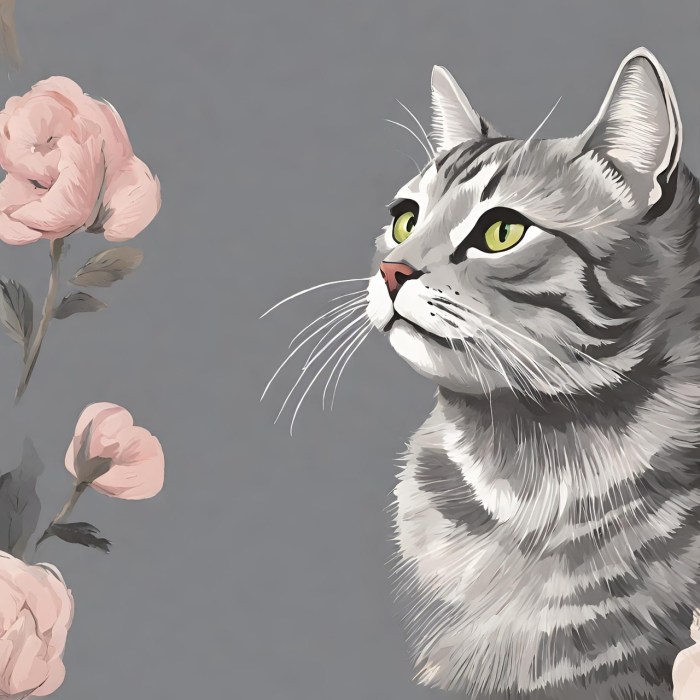
Source: pixabay.com
Certain health conditions are more prevalent in breeds commonly featuring the mackerel tabby pattern. For example, Maine Coons are prone to hypertrophic cardiomyopathy (HCM), a heart condition. Bengals can be susceptible to progressive retinal atrophy (PRA), an eye disease.Regular grooming is essential for mackerel tabby cats, especially those with long hair. Brushing several times a week helps prevent mats and tangles and keeps their coat healthy and shiny.Cats with specific color variations, such as blue or cream, may be more prone to skin sensitivities.
It’s important to use gentle, hypoallergenic shampoos and avoid harsh chemicals.
| Breed (featuring mackerel tabby) | Potential Health Concerns |
|---|---|
| Maine Coon | Hypertrophic Cardiomyopathy (HCM), Hip Dysplasia |
| Bengal | Progressive Retinal Atrophy (PRA), Hypertrophic Cardiomyopathy (HCM) |
| Abyssinian | Pyruvate Kinase Deficiency (PKD), Progressive Retinal Atrophy (PRA) |
Illustrative Descriptions of Mackerel Tabby Cats
A silver mackerel tabby Bengal cat is a vision of power and grace. Its muscular build is accentuated by the sharp, well-defined silver stripes that ripple across its sleek, short coat. The striking markings create a mesmerizing pattern that evokes the wild beauty of its ancestors.A blue mackerel tabby Maine Coon exudes a gentle charm. Its shaggy, long coat is a soft, muted blue, with subtle vertical stripes that add depth and texture.
The cat’s calm demeanor and affectionate nature make it a beloved companion.A red mackerel tabby Abyssinian is a bundle of energy and playfulness. Its ticked coat gives it a unique, shimmering appearance, while the red mackerel stripes add a touch of elegance. The cat’s inquisitive eyes and lively personality make it a joy to watch.A mackerel tabby kitten exploring its surroundings is a captivating sight.
The tiny stripes, though faint, are already visible, hinting at the magnificent pattern to come. Its playful pounces and curious glances reveal a world of wonder and excitement. The contrast between the dark stripes and the lighter background creates a visually striking image, full of promise and potential.
Summary
From the agouti gene’s crucial role to the subtle differences between a mackerel and ticked tabby, we’ve explored the many facets of this beloved pattern. Whether you’re a seasoned cat enthusiast or simply curious about the science behind your feline friend’s appearance, the mackerel tabby offers a captivating blend of beauty and biology. So, next time you admire those striking stripes, remember the intricate genetic dance that brought them to life!
Ultimately, the tabby mackerel cat is a testament to the incredible diversity within the feline world, showcasing a pattern that’s both visually stunning and genetically fascinating. It’s a reminder that even the simplest things, like a cat’s stripes, can hold a wealth of scientific wonder.
General Inquiries
Why are some tabby cats more stripey than others?
The intensity of the mackerel stripes is influenced by the Inhibitor gene (I). A stronger Inhibitor gene results in fainter stripes, while a weaker one leads to more pronounced markings.
What’s the difference between a “ghost mackerel” and a regular mackerel tabby?
Ghost mackerel markings are fainter and less defined stripes, often appearing as a subtle shimmer rather than bold lines. This can be due to variations in the Inhibitor gene or other genetic factors affecting pigment distribution.
Can a cat have both mackerel and ticked tabby markings?
While rare, it’s possible! It usually results in a very subtle mackerel pattern overlaid on a ticked base, making it difficult to discern.
Do male and female mackerel tabby cats look different?
Not typically. The pattern itself is not sex-linked, so males and females of the same breed and color will generally have similar markings.
What does the “necklace” marking signify?
The necklace marking is a darker band of fur around the cat’s chest, often resembling a necklace. It’s a common feature in mackerel tabby cats and doesn’t have any specific meaning beyond being a characteristic marking.
Are there any health concerns specific to mackerel tabby cats?
Not directly related to the pattern itself. However, breeds commonly featuring the mackerel tabby pattern (like Maine Coons or Bengals) may have breed-specific health concerns that owners should be aware of.

