Tailless cats, with their distinctive appearance and intriguing history, have captivated cat lovers for centuries. From the rolling hills of the Isle of Man to Japanese folklore, these unique felines have carved out a special place in our hearts and imaginations. This exploration delves into the fascinating world of tailless cat breeds, uncovering their origins, genetics, health considerations, and the charming personalities that make them so beloved.
We’ll journey through the history of these breeds, examining how natural mutations and selective breeding have shaped their appearance and behavior. Beyond the obvious absence of a tail, we’ll discover the subtle physical and neurological adaptations that allow these cats to thrive, and consider the ethical responsibilities that come with breeding them. Get ready to uncover the secrets behind these captivating creatures!
Tailless Cat Breeds: A Comprehensive Guide
The absence of a tail might seem like a simple trait, but in the feline world, it opens up a fascinating realm of genetics, history, and unique characteristics. This guide delves into the world of tailless cat breeds, exploring their origins, health considerations, and the captivating personalities that make them so beloved. We’ll journey from the misty shores of the Isle of Man to the vibrant landscapes of Japan, uncovering the stories behind these remarkable animals.
Introduction to Tailless Cat Breeds
The term “tailless” in cats refers to breeds exhibiting a complete or significantly reduced tail. While a naturally occurring phenomenon, taillessness has also been shaped by selective breeding over generations. Historically, taillessness has appeared sporadically in various cat populations, often attributed to spontaneous genetic mutations. However, certain breeds, like the Manx, have seen intentional breeding to emphasize and stabilize this trait.
Early accounts of tailless cats date back centuries, with mentions in folklore and historical records from various regions, including Europe and Asia. The geographical distribution of these cats reflects both natural occurrences and the impact of human migration and trade.
The Manx Breed: A Detailed Examination
The Manx cat is arguably the most well-known tailless breed, originating from the Isle of Man, a small island in the Irish Sea. Beyond the absence of a tail, Manx cats are characterized by a rounded body, short legs, and a distinctive “bunny-like” hop when they move. Their hind legs are often slightly longer than their front legs, contributing to this unique gait.
The defining genetic feature of the Manx is a mutation in the
M* gene. This gene controls tail development, and its variations result in different tail lengths. The most common variations are
“rumpy” (no tail), “stumpy” (short tail with a few vertebrae), “longy” (a longer tail, resembling a normal cat’s tail, but still shorter than average), and “blunted” (a short, rounded tail).
| Parent 1 Genotype | Parent 2 Genotype | Possible Offspring Genotypes | Probability of Each Genotype |
|---|---|---|---|
| Mm | Mm | MM, Mm, mm, mm | 25% MM, 50% Mm, 25% mm |
| Mm | mm | Mm, mm | 50% Mm, 50% mm |
| MM | mm | Mm | 100% Mm |
Unfortunately, the
- M* gene is dominant, and the recessive
- mm* genotype is associated with Manx Syndrome, a complex condition involving spinal deformities, bowel and bladder problems, and neurological issues. Responsible breeders carefully select breeding pairs to minimize the risk of producing kittens with Manx Syndrome.
The Cymric Breed: A Manx Variation
The Cymric is essentially a longhaired version of the Manx cat. The distinction lies solely in coat length; both breeds share the same genetic background and tailless characteristics. The Cymric breed was officially recognized in the 1970s as a way to acknowledge and promote the longhaired Manx variant. Cymric cats are known for their gentle and affectionate temperaments. They are often described as playful, intelligent, and devoted companions, forming strong bonds with their human families.Here’s a comparison of the Manx and Cymric:
- Coat Length: Manx – short to medium; Cymric – long
- Overall Appearance: Both share the same body shape and taillessness, but the Cymric has a more luxurious, flowing coat.
- Grooming Needs: Manx require minimal grooming; Cymrics need regular brushing to prevent mats and tangles.
Other Tailless or Short-Tailed Cat Breeds
While the Manx and Cymric are the most prominent tailless breeds, other cat breeds occasionally exhibit taillessness or very short tails. These include the Japanese Bobtail, Kurilian Bobtail, and occasionally, American Bobtail.The Japanese Bobtail is instantly recognizable by its distinctive pom-pom tail, which is short, kinked, and flexible. They are known for their vocalizations, often described as chirps and trills rather than typical meows.
These cats originated in Japan, where they were historically valued for their ability to control rodent populations in silk farms.The Kurilian Bobtail, originating from the Kuril Islands (a chain of islands between Russia and Japan), is a naturally occurring breed adapted to island life. Their short, fluffy tails are often curled or kinked, and they are known for their playful and affectionate personalities.
| Breed Name | Tail Description | Origin Country |
|---|---|---|
| Japanese Bobtail | Short, kinked, pom-pom tail | Japan |
| Kurilian Bobtail | Short, fluffy, curled or kinked tail | Russia (Kuril Islands) |
| American Bobtail | Short, bobbed tail (varying length) | United States |
Physical Characteristics & Anatomy
Tailless cats exhibit significant skeletal differences compared to cats with tails. The absence of a tail means fewer vertebrae in the spinal column, typically ranging from 18 to 22 vertebrae compared to the usual 25-33. This reduction impacts the overall length and flexibility of the spine. The lack of a tail affects a cat’s balance and agility. Cats use their tails for counterbalancing, especially during jumps and quick turns.
Tailless cats compensate for this by developing stronger hind legs and a more flexible spine. Neurologically, tailless cats may exhibit adaptations, such as increased sensitivity in their hindquarters, allowing them to better sense their surroundings and maintain balance.
Diagram Description: Imagine two side-by-side illustrations of a cat’s spinal column. The first depicts a cat with a tail, showing a long, continuous column of vertebrae extending to the tip of the tail.
The second illustration shows a tailless cat, with the spinal column ending abruptly at the base of the pelvis. The tailless cat’s spine appears slightly more curved and flexible, highlighting the compensatory adaptations.
Temperament and Behavior
Manx and Cymric cats are generally known for their affectionate and playful personalities. They are often described as being “dog-like” in their loyalty and devotion to their human families. They are intelligent and can be trained to perform tricks. The absence of a tail doesn’t drastically alter a cat’s behavior, but it can influence their movements and interactions. They may exhibit a slightly different gait and a tendency to hop rather than walk smoothly.
“My Manx, Pip, is the most affectionate cat I’ve ever known. He follows me everywhere, loves to cuddle, and has the funniest little hop when he’s excited. He’s a total character!”
Sarah M., Manx Cat Owner
Caring for a Tailless Cat
Caring for a Manx or Cymric cat is similar to caring for any other cat, but with a few specific considerations. Diet should be high-quality and appropriate for their age and activity level. Regular exercise is essential to maintain their muscle tone and prevent obesity. Grooming needs vary depending on the coat length; Manx cats require minimal grooming, while Cymrics benefit from regular brushing.
Potential health issues, particularly those related to Manx Syndrome, require vigilant monitoring and prompt veterinary care. Creating a stimulating environment with plenty of toys and climbing opportunities is crucial for their physical and mental well-being.Here are 5 essential toys for a Manx or Cymric cat:
- Interactive Wand Toy: Encourages exercise and provides mental stimulation.
- Puzzle Feeder: Challenges their problem-solving skills and slows down eating.
- Catnip Mouse: Provides a burst of playful energy.
- Scratching Post: Satisfies their natural scratching instincts and helps maintain claw health.
- Soft Plush Toy: Offers comfort and companionship, especially for cats who enjoy cuddling.
Breeding and Ethical Considerations
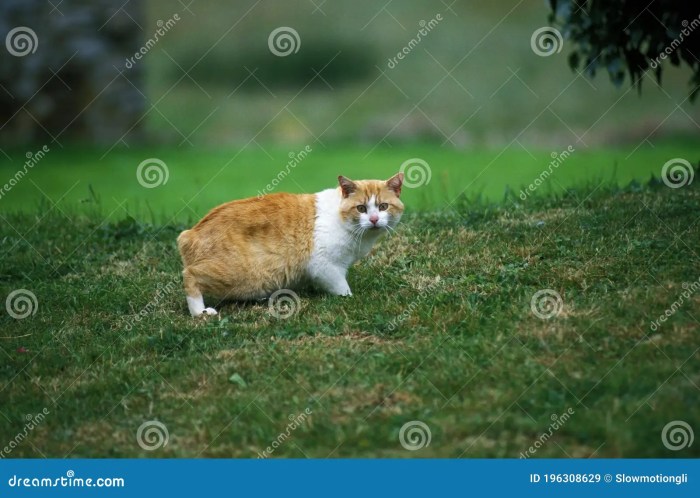
Source: dreamstime.com
Breeding Manx and Cymric cats raises ethical concerns, primarily due to the risk of Manx Syndrome. Responsible breeders prioritize minimizing this risk through careful genetic screening and selective breeding practices. Genetic testing can identify carriers of the
M* gene, allowing breeders to avoid pairing carriers to reduce the likelihood of producing kittens with the condition.
Responsible Manx Breeding Flowchart:
1. Genetic Screening
Test all breeding cats for theM* gene.
-
2. Pairing Selection
Only breed cats with known genotypes (MM or Mm) to avoid producing kittens with the
- mm* genotype.
3. Pregnancy Monitoring
Monitor pregnancies closely for any signs of complications.
4. Kitten Evaluation
Thoroughly examine kittens for any signs of Manx Syndrome.
5. Kitten Placement
Place kittens in loving, responsible homes, providing potential owners with information about the breed’s health concerns.
Visual Descriptions & Imagery
A “rumpy” Manx cat presents a striking appearance. Its body is compact and rounded, with a short, low-slung profile. The hindquarters are particularly muscular, giving it a powerful, athletic look. The head is often described as having a “Roman nose” – a slightly convex profile. The eyes are large and expressive, often a vibrant color like gold or green.
The coat is typically short and dense, with a wide range of colors and patterns.A “stumpy” Manx cat has a short tail, typically measuring between 2 and 5 inches in length. The tail is often kinked or curled, and it may have a slightly rough texture. The overall body shape is similar to the rumpy Manx, but the presence of the tail adds a touch of individuality.Manx and Cymric coats come in a variety of colors and patterns, including solid colors (black, white, cream), tabby patterns (classic, mackerel, ticked), and tortoiseshell patterns.
Cymric coats are known for their luxurious texture and often have a slight sheen.The posture and gait of a Manx cat are unique. Without a tail for balance, they often have a slightly hunched back and a distinctive “bunny hop” when they move. Their hind legs are often slightly longer than their front legs, contributing to this unusual gait.
Tailless Cats in Popular Culture
Tailless cats, particularly Manx cats, have appeared in literature, film, and folklore throughout history. In some cultures, tailless cats are considered to be symbols of good luck or prosperity. They have also been portrayed as mysterious or even supernatural creatures in various stories and legends.
| Cultural Reference | Description of Cat | Significance/Symbolism |
|---|---|---|
| Isle of Man Folklore | Tailless cats believed to be spirits of drowned sailors | Good luck, protection from evil spirits |
| “A Wizard of Earthsea” by Ursula K. Le Guin | A Manx-like cat named Gebbeth accompanies the protagonist | Wisdom, guidance, connection to the natural world |
| Various Japanese Legends | Japanese Bobtails often depicted as messengers of the gods | Good fortune, prosperity, warding off evil |
Last Word
From the iconic Manx and Cymric to the Japanese Bobtail and Kurilian Bobtail, the world of tailless cats is surprisingly diverse. Understanding their unique genetics, potential health concerns, and the importance of responsible breeding practices is crucial for ensuring their well-being. Ultimately, these cats offer a compelling blend of charm, resilience, and a touch of the extraordinary, making them truly special companions.
Whether you’re a seasoned cat enthusiast or simply curious about these remarkable animals, we hope this exploration has deepened your appreciation for the tailless breed of cat and the fascinating stories they hold.
FAQ Compilation
Why are some cats born without tails?
Taillessness is primarily caused by a genetic mutation, most notably the “M” gene found in breeds like the Manx. This mutation affects the development of the spine, leading to varying degrees of tail absence.
What is Manx Syndrome?
Manx Syndrome is a collection of birth defects that can occur in Manx cats due to the same genetic mutation that causes taillessness. It can affect the spine, bladder, bowel, and brain, and can range in severity.
What’s the difference between a Manx and a Cymric?
The difference is primarily coat length. Manx cats have short hair, while Cymric cats have long hair. They share the same genetic background and taillessness characteristic.
Are tailless cats good jumpers?
While they may lack a tail for balance, tailless cats are often surprisingly agile and capable jumpers. They compensate with strong leg muscles and a flexible spine.
Do tailless cats have any behavioral quirks?
Many owners report that tailless cats are exceptionally affectionate and playful. Some believe the absence of a tail can make them appear more “dog-like” in their loyalty and interaction with humans.

