Have you ever seen a cat without a tail? It’s a surprisingly common trait in certain breeds, and the history behind it is fascinating! From ancient folklore to modern genetics, the absence of a tail in felines is a captivating subject. We’ll dive into the unique world of tailless cat breeds, exploring their origins, characteristics, and the health considerations that come with this distinctive feature.
Get ready to discover some truly remarkable cats!
The journey of taillessness in cats is a blend of natural mutations and deliberate breeding practices. Genetic quirks have led to the development of breeds like the Manx, Japanese Bobtail, and Kurilian Bobtail, each with its own unique story and tail variations. Understanding the science behind this trait, and the potential health implications, is key to providing the best possible care for these special companions.
Introduction to Tailless Cat Breeds
The absence of a tail in cats is a fascinating quirk, sparking curiosity and admiration. While it might seem like a simple trait, the story behind taillessness is complex, involving both natural mutations and deliberate breeding practices. This article delves into the world of tailless cat breeds, exploring their history, genetics, and unique characteristics. We’ll journey from the rugged Isle of Man to the serene landscapes of Japan and Siberia, uncovering the stories behind these captivating felines.
Historically, taillessness in cats has arisen through two primary pathways: natural occurrence and selective breeding. Natural taillessness has been observed in feral cat populations across the globe, often attributed to harsh environmental conditions or genetic drift. However, the deliberate cultivation of tailless traits has led to the development of distinct breeds, each with its own unique history and genetic profile.
Understanding the genetic underpinnings of taillessness is crucial to appreciating the diversity within these breeds and addressing potential health concerns.
The genetic mutations responsible for taillessness are primarily variations in the T gene, which controls tail development. These mutations can range from complete absence of the tail to the presence of a short stump. The degree of taillessness is not always predictable, and can vary significantly even within the same breed. The expression of the T gene is complex, influenced by other genes and environmental factors, resulting in a spectrum of tail lengths and shapes.
| Type of Taillessness | Origin | Genetic Mutation (if known) | Examples |
|---|---|---|---|
| Complete Absence (Rumpy) | Isle of Man, Japan, Siberia | Dominant mutation in the T gene | Manx, Japanese Bobtail, Kurilian Bobtail |
| Short Stump (Stumpy) | Isle of Man | Heterozygous state of the T gene | Manx |
| Slightly Reduced Tail (Tailed) | Isle of Man | Heterozygous state of the T gene | Manx |
| Long Tail (Longy) | Isle of Man | Homozygous normal T gene | Manx |
The Manx Breed: The Classic Tailless Cat
The Manx cat is arguably the most well-known tailless breed, originating from the Isle of Man, a small island in the Irish Sea. For centuries, the island’s isolated population of cats developed a unique genetic trait: taillessness. The limited gene pool on the Isle of Man led to a high prevalence of this mutation, solidifying the Manx’s reputation as the quintessential tailless cat.
Early settlers recognized the breed’s distinct appearance and began selectively breeding Manx cats, further refining their characteristics.
The Manx gene, designated as Lm, is a dominant gene that causes taillessness. However, it’s not a simple case of one gene determining tail length. The Lm gene affects the spine, and homozygous individuals (carrying two copies of the gene) often suffer from Manx Syndrome, a collection of spinal abnormalities that can lead to a range of health problems.
Heterozygous individuals (carrying one copy of the gene) typically have a short tail or no tail at all, but are less likely to experience severe health complications.
Manx cats are categorized into four tail types, each with a distinct appearance: Rumpy cats have no tail whatsoever; Stumpy cats have a short, often kinked tail; Tailed cats have a slightly longer tail, typically 2-6 inches; and Longy cats have a full-length tail, resembling that of a standard cat. Rumpy Manx cats are considered the most “classic” representation of the breed, while Longy cats are relatively rare.
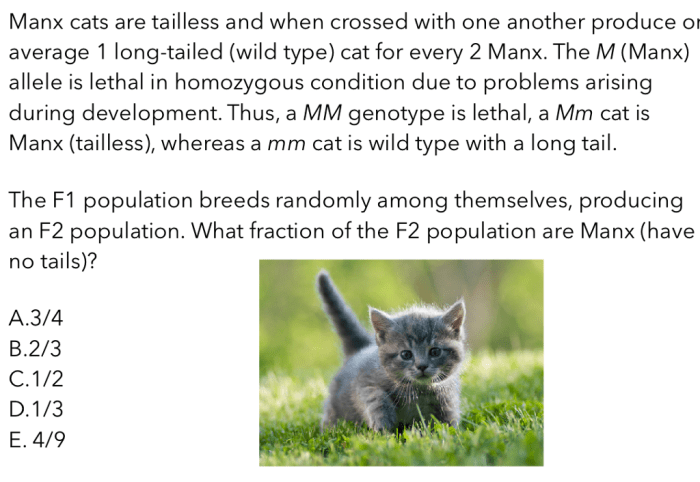
The inheritance of the Manx gene follows a complex pattern. A cat with a full tail (tt) will never produce a tailless kitten. A cat with a short tail or no tail (Tt) has a 50% chance of producing a tailless kitten (Tt) and a 50% chance of producing a cat with a full tail (tt). Two tailless cats (Tt x Tt) have a 25% chance of producing a kitten with no tail and Manx Syndrome (TT), a 50% chance of producing a tailless kitten (Tt), and a 25% chance of producing a kitten with a full tail (tt).
This intricate inheritance pattern highlights the importance of responsible breeding practices to minimize the risk of Manx Syndrome.
Historical accounts often depict Manx cats as beloved companions on the Isle of Man, valued for their unique appearance and affectionate personalities. Sailors traveling to and from the island frequently brought Manx cats aboard their ships, spreading the breed’s popularity throughout the world. The Manx’s adaptability and charming demeanor quickly endeared it to cat lovers everywhere.
Japanese Bobtail: A Naturally Short-Tailed Breed
The Japanese Bobtail is a captivating breed with a rich cultural history in Japan. Revered for centuries, these cats were often found in temples and palaces, considered symbols of good luck and prosperity. Their distinctive short, pom-pom-like tail has made them a beloved icon of Japanese art and folklore. The breed’s origins are somewhat shrouded in mystery, but it’s believed to have arrived in Japan from China centuries ago, where it interbred with native cats, eventually developing its characteristic tail.
The Japanese Bobtail’s short tail is the result of a spontaneous genetic mutation affecting the vertebrae. Unlike the Manx gene, which primarily affects the spine, the Japanese Bobtail’s mutation results in a shortened tail due to a failure of the vertebrae to fully fuse. This mutation is autosomal dominant, meaning that only one copy of the gene is needed for the trait to be expressed.
While both the Manx and Japanese Bobtail exhibit taillessness, their tails are structurally different. The Manx tail is often completely absent or a very short stump, while the Japanese Bobtail’s tail is a distinct, flexible pom-pom. Genetically, the mutations responsible for these traits are entirely separate, highlighting the independent evolution of taillessness in these two breeds.
“Legend tells of a temple cat who, after chasing a mouse up a bamboo stalk, became so startled that its tail became permanently kinked, resulting in the unique appearance of the Japanese Bobtail.”
Beyond their distinctive tails, Japanese Bobtails are known for their elegant and slender bodies, large eyes, and alert expressions. Their coats come in a wide variety of colors and patterns, including solid colors, tabby patterns, and bi-colors. The “mi-ke” pattern, a combination of white markings on the face and legs with a colored body, is particularly prized in Japan.
Kurilian Bobtail: A Siberian Tailless Variation
The Kurilian Bobtail is a relatively new breed, originating from the Kuril Islands, a chain of islands between Russia and Japan. These cats developed naturally in a harsh environment, adapting to the cold climate and rugged terrain. Their unique tail, often described as resembling a plume or a rabbit’s tail, is a defining characteristic of the breed. The Kurilian Bobtail’s history is intertwined with the history of the Kuril Islands, having lived alongside the indigenous people for centuries.
The Kurilian Bobtail’s tail is remarkably flexible and ringed, giving it a distinctive appearance. Unlike the Manx tail, which is often stiff or absent, the Kurilian Bobtail’s tail can be curled, twisted, and held in a variety of positions. This flexibility is likely an adaptation to the breed’s environment, allowing them to balance on uneven terrain and navigate through dense vegetation.
The Kurilian Bobtail’s adaptation to harsh Siberian climates is evident in its thick, dense coat, which provides excellent insulation against the cold. They are also known for their resilience and independence, traits that have allowed them to thrive in a challenging environment. Their strong build and agile movements reflect their history as skilled hunters and survivors.
Comparing the Kurilian Bobtail’s tail to those of the Manx and Japanese Bobtail reveals distinct differences. The Manx tail is often absent or a short stump, the Japanese Bobtail has a pom-pom tail, and the Kurilian Bobtail has a flexible, ringed tail. Genetically, the mutations responsible for these tail variations are likely different, although further research is needed to fully understand the genetic basis of the Kurilian Bobtail’s tail.
- Coat Colors: Black, White, Blue, Red, Cream, Tortoiseshell, Tabby (various patterns)
- Coat Patterns: Solid, Bicolor, Tricolor, Smoke, Shaded
Other Breeds with Occasional Taillessness
While the Manx, Japanese Bobtail, and Kurilian Bobtail are the most well-known tailless breeds, taillessness can occasionally occur as a spontaneous mutation in other cat breeds. This is a relatively rare occurrence, but it has been observed in breeds such as the American Shorthair, British Shorthair, and Persian. These instances are typically the result of a new, recessive mutation arising within the breed’s gene pool.
The frequency of taillessness in these breeds is extremely low, often occurring in less than 1% of kittens. The genetic factors involved are not always fully understood, but it’s believed that recessive mutations affecting tail development are the most likely cause. Responsible breeders typically do not intentionally breed tailless cats in these breeds, as it can increase the risk of health problems.
Breeding for taillessness in breeds where it is not a standard characteristic raises ethical concerns. While some breeders may view taillessness as a desirable trait, it’s important to consider the potential health risks associated with the mutation. Prioritizing the health and well-being of cats should always be the primary concern.
| Breed | Frequency of Taillessness | Possible Genetic Factors | Breed Standard Considerations |
|---|---|---|---|
| American Shorthair | <1% | Recessive mutation affecting tail development | Taillessness is a fault and not accepted in the breed standard |
| British Shorthair | <1% | Recessive mutation affecting tail development | Taillessness is a fault and not accepted in the breed standard |
| Persian | <1% | Recessive mutation affecting tail development | Taillessness is a fault and not accepted in the breed standard |
Taillessness in breeds outside of the established tailless breeds can potentially lead to health implications. The absence of a tail can affect a cat’s balance and coordination, and it may also impact their ability to communicate effectively. Spinal abnormalities, bowel and bladder issues, and other health problems can arise from the underlying genetic mutations that cause taillessness.
Health Considerations for Tailless Cats
Source: cheggcdn.com
Manx Syndrome is a significant health concern associated with the Lm gene in Manx cats. This syndrome encompasses a range of spinal abnormalities, including scoliosis, kyphosis, and spina bifida. These abnormalities can lead to neurological problems, bowel and bladder dysfunction, and pain. The severity of Manx Syndrome varies depending on the individual cat and the number of copies of the Lm gene they carry.
Preventative measures and veterinary care are crucial for tailless cats. Regular veterinary checkups, including neurological examinations, can help detect and manage potential health problems early on. A balanced diet and appropriate exercise can also contribute to overall health and well-being. Responsible breeding practices, such as avoiding breeding homozygous Manx cats (TT), are essential to minimize the risk of Manx Syndrome.
The absence of a tail can affect a cat’s balance and coordination. The tail plays a vital role in maintaining equilibrium, particularly during activities such as jumping and climbing. Tailless cats may compensate for this lack of balance by developing stronger leg muscles or adjusting their posture. However, they may also be more prone to falls and injuries.
- Signs of Spinal Abnormalities: Difficulty walking, weakness in limbs, incontinence, pain
- Signs of Bowel/Bladder Issues: Constipation, diarrhea, straining to urinate or defecate
- Signs of Neurological Problems: Seizures, tremors, disorientation
Safely handling and supporting a tailless cat during grooming and examinations requires extra care. Provide a stable surface for the cat to stand on, and gently support their hindquarters to prevent them from falling. Avoid sudden movements or loud noises that could startle the cat and cause them to lose their balance.
Caring for Tailless Cats: Unique Needs
Providing appropriate environmental enrichment is particularly important for tailless cats, considering their potential balance challenges. Offer a variety of climbing structures, such as cat trees and shelves, but ensure they are stable and accessible. Provide ramps or steps to help them reach elevated surfaces safely. Interactive toys and puzzle feeders can also help keep them mentally stimulated and physically active.
Specific dietary considerations may be necessary for tailless cats, particularly those with Manx Syndrome. A high-quality diet that is easily digestible can help prevent bowel and bladder issues. Consult with a veterinarian to determine the best diet for your cat’s individual needs.
Adapting a home environment to accommodate a tailless cat’s needs involves making small adjustments to ensure their safety and comfort. Remove any potential hazards, such as loose rugs or electrical cords. Provide soft bedding in warm, draft-free areas. Consider using non-slip mats on floors to prevent slips and falls.
Socializing and training tailless cats requires patience and understanding. They may be more sensitive to stress than other cats, so introduce them to new people and situations gradually. Positive reinforcement techniques, such as rewarding desired behaviors with treats and praise, can be effective for training.
- Essential Care Practices: Regular veterinary checkups, balanced diet, safe environment, mental stimulation, gentle handling
Visual Descriptions of Tailless Cat Characteristics
A Manx cat is instantly recognizable by its rounded body shape and short legs. Their hindquarters are particularly rounded, giving them a distinctive “barrel-backed” appearance. Their head is round with a broad muzzle and large, expressive eyes. Their coat is typically short and dense, and comes in a wide variety of colors and patterns. The absence of a tail further accentuates their unique silhouette, creating a charming and endearing appearance.
The Japanese Bobtail’s appearance is dominated by its unique tail. The tail is short, typically 3-5 inches long, and resembles a pom-pom or a rabbit’s tail. It is flexible and kinked, with a distinctive texture. Their body is slender and elegant, with long legs and large, alert eyes. Their coat is soft and silky, and comes in a variety of colors and patterns, including the prized “mi-ke” pattern.
The Kurilian Bobtail possesses a striking appearance, characterized by its thick, dense coat, expressive eyes, and overall robust build. Their coat is often long and flowing, with a distinctive ringed pattern on their tail. Their eyes are large and almond-shaped, and their ears are set wide apart. Their overall impression is one of strength, agility, and resilience.
Comparing the body types and facial features of Manx, Japanese Bobtail, and Kurilian Bobtail cats reveals subtle but distinct differences. Manx cats have a more rounded body shape and shorter legs, while Japanese Bobtails are more slender and elegant. Kurilian Bobtails are generally more robust and muscular, with a thicker coat. Facial features also vary, with Manx cats having a broader muzzle and Japanese Bobtails having more alert eyes.
Coat patterns and colors commonly found in each breed are diverse. Manx cats exhibit a wide range of colors and patterns, including solid colors, tabby patterns, and bi-colors. Japanese Bobtails are known for their striking “mi-ke” pattern and their variety of solid colors. Kurilian Bobtails display a range of colors and patterns, including solid colors, tabby patterns, and the distinctive ringed pattern on their tail.
Closing Summary
From the iconic Manx with its varying tail lengths to the pom-pom tail of the Japanese Bobtail and the flexible rings of the Kurilian Bobtail, the world of tailless cats is wonderfully diverse. We’ve explored their histories, genetics, and the unique care they require. Whether you’re a seasoned cat lover or just curious about these charming creatures, hopefully, you’ve gained a new appreciation for the beauty and complexity of tailless cat breeds and the special bond we share with them.
Ultimately, these cats, despite their unique physical trait, offer the same love, companionship, and joy as any other feline friend. With proper care and understanding, they can live long, happy, and fulfilling lives.
Question & Answer Hub
Are all tailless cats Manx?
No, while the Manx is the most well-known tailless breed, other breeds like the Japanese Bobtail and Kurilian Bobtail also naturally have short or absent tails. Taillessness can also occur as a spontaneous mutation in other breeds.
Is it cruel to breed for taillessness?
That’s a complex ethical question. Breeding specifically for taillessness in breeds where it’s not a standard characteristic raises concerns about potential health problems associated with the underlying genetic mutations. Responsible breeders prioritize health and temperament above all else.
What is Manx Syndrome?
Manx Syndrome is a collection of birth defects linked to the Manx gene (Lm). It can affect the spine, bowel, bladder, and other organs. Severity varies greatly, and some cats with the gene show no symptoms.
Do tailless cats have balance problems?
While they often adapt well, the absence of a tail can slightly affect a cat’s balance and coordination, especially during quick movements or jumps. Providing environmental enrichment and safe spaces can help.
What’s the difference between a Rumpy, Stumpy, Tailed, and Longy Manx?
These terms describe the tail length in Manx cats. A Rumpy has no tail, a Stumpy has a short stump, a Tailed has a partial tail, and a Longy has a full-length tail.
Can you tell if a cat is a Manx just by looking at it?
It can be difficult! While the taillessness is a key characteristic, other breeds can also be tailless. A veterinarian or experienced breeder can often identify a Manx based on its overall body shape and other features.

