There’s something utterly captivating about a ticked tabby kitten – their shimmering fur, their playful energy, and their unique, almost wild appearance. These aren’t your typical striped or spotted felines; they possess a distinctive pattern that’s both beautiful and fascinating. We’re diving deep into the world of ticked tabby kittens, exploring their genetics, colors, care, history, and what makes them such beloved companions.
Get ready to learn everything you’ve ever wanted to know about these enchanting creatures!
The ticked tabby pattern is a genetic marvel, resulting in a fur coat that appears to be subtly banded, rather than having distinct stripes or spots. This effect is largely due to the agouti gene, which controls how light reflects off the hair shaft. Understanding this genetic basis is key to appreciating the beauty and rarity of these cats, and we’ll break down the science in a way that’s easy to understand.
The Enchanting World of Ticked Tabby Kittens
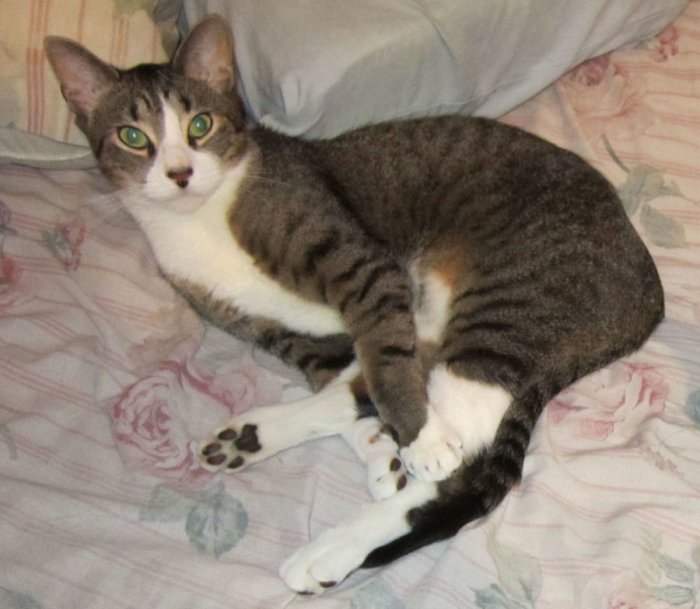
Source: thecatsite.com
The ticked tabby pattern is one of the most captivating and unique markings you’ll find in the feline world. It’s more than just a pretty face; it’s a fascinating blend of genetics and visual appeal. This article dives deep into everything you need to know about these gorgeous cats, from their genetic origins to their playful personalities and how to best care for them.
Get ready to be charmed!The visual effect of a ticked tabby is unlike any other. Instead of distinct stripes or spots, their fur appears to be “ticked” with bands of color, creating a shimmering, almost agouti-like appearance. Understanding the science behind this pattern, and appreciating the nuances of their colors and personalities, will deepen your admiration for these special cats.
Defining the “Ticked Tabby” Pattern
The ticked tabby pattern isn’t just a random occurrence; it’s a result of specific genetic interactions. It fundamentally differs from the more familiar classic, mackerel, and spotted tabby patterns. The key lies in how the agouti gene functions. Unlike other tabby patterns where pigment is deposited in distinct bands along the hair shaft, in ticked tabbies, the pigment is distributed evenly along the entire hair.
This creates the illusion of ticking, where each individual hair displays multiple bands of color.The visual characteristics of a ticked tabby kitten are striking. Their fur often has a soft, plush texture. Color distribution is uneven, with darker bands appearing at the tips of the hairs, fading to lighter shades closer to the skin. This creates a shimmering, almost sandy appearance.
Variations exist, with some kittens exhibiting more pronounced ticking than others. The overall effect is a subtle, yet captivating, pattern.The agouti gene is the master switch for the ticked appearance. In its dominant form (A), it allows for the even distribution of pigment along the hair shaft. When the agouti gene is recessive (a), the pigment is deposited in bands, resulting in the classic, mackerel, or spotted tabby patterns.
The presence of the dominant agouti allele is therefore essential for the ticked tabby pattern to manifest.
| Pattern Type | Description | Visual Cue | Genetic Influence |
|---|---|---|---|
| Classic | Characterized by swirling, blotchy patterns. | Broad, marble-like markings. | Tabby ‘M’ marking on forehead; controlled by Tabby Alleles (T) |
| Mackerel | Displays narrow, parallel stripes. | Vertical stripes resembling a fish skeleton. | Tabby ‘M’ marking on forehead; controlled by Tabby Alleles (T) |
| Spotted | Features distinct spots of varying sizes. | Clearly defined spots scattered across the body. | Tabby ‘M’ marking on forehead; controlled by Tabby Alleles (T) |
| Ticked | Shows a shimmering, “ticked” appearance with no distinct stripes or spots. | Individual hairs display multiple bands of color; subtle, sandy appearance. | Dominant Agouti gene (A) |
Tabby Kitten Colors & Variations
Ticked tabby kittens come in a delightful range of colors, each adding its own unique charm. You’ll find them in shades of brown (often referred to as “Abyssinian” brown), silver (a beautiful shimmering grey), cream (a soft, warm hue), and blue (a diluted grey-blue). The base color interacts with the ticking pattern to create a truly stunning effect.Rare or unusual color combinations do exist within the ticked tabby pattern.
For example, a “chocolate ticked tabby” (a rich, dark brown) or a “lilac ticked tabby” (a pale, greyish-pink) are less common but highly sought after. These variations are the result of further modifications to the base color genes.The interaction between the ticked pattern and base colors is fascinating. A brown base color will result in a warm, reddish-brown ticking. A silver base will create a shimmering grey ticking.
Cream bases produce a soft, golden ticking, and blue bases result in a cool, greyish-blue ticking. Understanding this interplay allows you to appreciate the subtle nuances of each kitten’s appearance.Lighting conditions significantly impact how the ticked pattern is perceived. In bright sunlight, the ticking appears more pronounced, creating a shimmering effect. In dimmer light, the pattern may seem more subtle, with the overall color appearing more uniform.
This dynamic visual change adds to the allure of ticked tabby kittens.
Caring for a Ticked Tabby Kitten
The dietary needs of a growing ticked tabby kitten are similar to those of any other kitten – high-quality, nutrient-rich food is essential for healthy development. Look for kitten food specifically formulated to support growth, with a good balance of protein, fat, and essential vitamins and minerals. Avoid foods with excessive fillers or artificial additives.Grooming a ticked tabby kitten is relatively straightforward, thanks to their generally short, plush fur.
Regular brushing (once or twice a week) helps remove loose hair and prevent mats. A soft-bristled brush is ideal. Pay particular attention to areas prone to tangling, such as behind the ears and under the legs. Bathing is rarely necessary unless the kitten gets particularly dirty.While generally healthy, ticked tabby kittens can be susceptible to common feline health concerns, such as upper respiratory infections and intestinal parasites.
Regular veterinary checkups, vaccinations, and deworming are crucial for preventative care. Early detection and treatment of any health issues are key to ensuring a long and happy life.Here’s a sample daily routine for a ticked tabby kitten:
- Morning: Provide fresh food and water. Engage in a 15-20 minute playtime session with interactive toys.
- Mid-day: Offer a small snack. Ensure access to a clean litter box.
- Afternoon: Another playtime session, focusing on different types of toys to keep them stimulated.
- Evening: Dinner time. Provide a cozy spot for relaxation and sleep.
- Night: Quiet time for rest and bonding with their human companions.
The History and Origins of Ticked Tabby Cats
The history of the ticked tabby pattern is intertwined with the evolution of domestic cats and the selective breeding practices of humans. While the exact origins are difficult to pinpoint, the pattern is believed to have existed in ancient cat populations in Africa and Asia. Early depictions of cats with ticked markings can be found in ancient Egyptian art.The breeds most commonly associated with the ticked tabby pattern are the Abyssinian and the Somali.
The Abyssinian, with its distinctive “ticked” coat, is considered the foundation breed for the ticked tabby pattern. The Somali, often referred to as the “Abyssinian longhair,” shares the same ticked pattern but with a longer, flowing coat.Historical accounts often describe Abyssinian cats as being prized possessions of royalty and nobility. Their unique appearance and captivating personalities made them highly sought after.
Stories abound of explorers bringing Abyssinian cats back to Europe in the 19th century, sparking widespread interest in the breed.Here’s a timeline showcasing the evolution of the ticked tabby pattern:
- Ancient Times: Evidence of ticked markings in cats in Africa and Asia.
- Ancient Egypt: Depictions of ticked cats in Egyptian art.
- 19th Century: Abyssinian cats brought to Europe by explorers.
- Early 20th Century: Development of the Abyssinian breed standard.
- Mid-20th Century: Emergence of the Somali breed.
- Present Day: Ticked tabby pattern found in various breeds and mixed-breed cats.
Visual Descriptions for Illustrations
Imagine a silver ticked tabby kitten playfully batting at a sunbeam. The light catches the individual hairs, highlighting the subtle bands of color and creating a shimmering effect. The kitten’s fur appears almost metallic in the sunlight, with a soft, plush texture. The contrast between the silver ticking and the warm tones of the sunbeam is visually striking.Picture a portrait of a brown ticked tabby kitten with bright, curious eyes.
The dark ticking creates a beautiful contrast against the lighter undercoat, emphasizing the kitten’s playful and energetic personality. The eyes are wide and alert, reflecting intelligence and curiosity. The overall impression is one of charm and vitality.Envision a cream ticked tabby kitten curled up asleep in a cozy bed. The softness of its fur is palpable, with the cream ticking creating a warm, inviting glow.
The kitten’s paws are tucked neatly under its chin, and its face is relaxed and peaceful. The scene evokes a sense of comfort and tranquility.Visualize a group of ticked tabby kittens interacting with each other. They are playfully chasing each other, batting at toys, and tumbling over each other in a flurry of activity. Their personalities shine through in their energetic movements and curious expressions.
The scene captures the joy and exuberance of kittenhood.
Ticked Tabby Kitten Temperament and Behavior
Ticked tabby kittens are generally known for their playful, intelligent, and affectionate personalities. Breed-specific tendencies, such as the Abyssinian’s active and curious nature, often influence their behavior. They are typically energetic and enjoy exploring their surroundings.Observations consistently reveal that ticked tabby kittens are highly playful and intelligent. They enjoy interactive toys, puzzle feeders, and games that challenge their minds. They are also known for their social behavior, often forming strong bonds with their human companions and other pets.Early socialization is crucial for shaping the temperament of a ticked tabby kitten.
Exposing them to a variety of people, places, and experiences during their formative weeks helps them develop into well-adjusted and confident adults.
| Behavior | Description | Potential Causes |
|---|---|---|
| Playfulness | High energy levels and a desire to engage in interactive games. | Breed predisposition, kittenhood development, lack of stimulation. |
| Vocalization | Frequent meowing and chirping to communicate needs and desires. | Hunger, boredom, attention-seeking, medical conditions. |
| Affection | Seeking physical contact and displaying signs of love and loyalty. | Bonding with humans, feeling secure, genetic predisposition. |
Distinguishing Ticked Tabby from Other Patterns
The key difference between a ticked tabby and a mackerel tabby lies in the striping pattern. Mackerel tabbies have distinct, parallel stripes running down their sides, resembling a fish skeleton. Ticked tabbies, on the other hand, lack these distinct stripes; their pattern is more subtle and shimmering.Comparing a ticked tabby with a spotted tabby highlights the presence or absence of distinct spots.
Spotted tabbies have clearly defined spots scattered across their bodies, while ticked tabbies have no spots – just the shimmering, ticked appearance.Even when the pattern is subtle or obscured by other markings, a ticked tabby kitten can be identified by examining individual hairs under magnification. The presence of multiple bands of color along each hair shaft is a telltale sign of the ticked pattern.
Ticked tabbies lack the bold, defined stripes of mackerel tabbies and the distinct spots of spotted tabbies. Instead, they exhibit a shimmering, almost blended appearance, where individual hairs display multiple bands of color.
Breeding and Genetics of Ticked Tabby Kittens
The genetic inheritance of the ticked tabby pattern is governed by the agouti gene (A) and the tabby gene (T). The dominant agouti allele (A) is necessary for the ticked pattern to appear. The tabby gene (T) determines whether the cat will display a classic, mackerel, or spotted pattern, but it is irrelevant in ticked tabbies as the agouti gene overrides it.The probability of producing ticked tabby kittens depends on the genotypes of the parent cats.
If both parents are homozygous for the dominant agouti allele (AA), all offspring will be ticked tabbies. If one parent is heterozygous (Aa) and the other is homozygous recessive (aa), there is a 50% chance of producing ticked tabby kittens.While the ticked tabby pattern itself is not typically associated with genetic health issues, it’s important to note that certain breeds known for the ticked pattern, such as the Abyssinian, may be predisposed to specific health conditions.
Responsible breeders screen their cats for these conditions to minimize the risk of passing them on to their offspring.
The Appeal of Ticked Tabby Kittens
People are drawn to ticked tabby kittens for their unique appearance and captivating personalities. The shimmering, almost ethereal quality of their coats is undeniably appealing. Their playful and intelligent nature makes them wonderful companions.Many owners of ticked tabby cats describe them as being exceptionally affectionate and loyal. They often form strong bonds with their human families and enjoy participating in household activities.
Their playful antics and curious personalities bring joy and laughter to their homes.The ticked tabby pattern contributes significantly to the overall aesthetic appeal of domestic cats. The subtle shimmer and unique coloration create a visually striking and memorable appearance. It’s a pattern that sets them apart from other tabby variations.Here’s a list of adjectives describing the visual and personality traits that make ticked tabby kittens desirable companions:
- Beautiful
- Shimmering
- Playful
- Intelligent
- Affectionate
- Loyal
- Curious
- Energetic
- Charming
- Unique
Resources for Further Information
For reputable information on cat breeds and genetics, consider these resources:
| Resource Type | Description | Link/Contact Information |
|---|---|---|
| Website | The Cat Fanciers’ Association (CFA) | www.cfa.org |
| Book | “The Complete Cat Breed Book” by DK Publishing | Available at major bookstores and online retailers. |
| Breeder | Abyssinian and Somali Cat Breeders Association (ASCBA) | www.ascba.org |
Concluding Remarks
From their ancient origins to their modern-day popularity, ticked tabby kittens have charmed cat lovers for centuries. Whether you’re a seasoned breeder, a curious pet owner, or simply someone who appreciates feline beauty, there’s so much to admire about these unique cats. Hopefully, this exploration has deepened your understanding and appreciation for the ticked tabby kitten – a truly special breed with a captivating story to tell.
Now, go forth and admire their shimmering coats!
FAQ Compilation
Why are ticked tabbies sometimes called “agouti” cats?
The term “agouti” refers to the gene responsible for the ticked pattern. It’s a descriptive name for the genetic mechanism, so it’s often used interchangeably with “ticked tabby.”
Do all ticked tabby kittens have the same personality?
While ticked tabbies are generally known for being intelligent and playful, individual personalities can vary. Breed-specific tendencies (like the Abyssinian’s active nature) also play a role.
What’s the best way to groom a ticked tabby kitten?
Regular brushing (2-3 times a week) with a soft-bristled brush is usually sufficient. Their fur doesn’t typically mat easily, but gentle grooming helps remove loose hair and keeps their coat healthy.
Are ticked tabby kittens prone to any specific health problems?
Like all breeds, ticked tabbies can be susceptible to certain genetic conditions. Responsible breeders screen for these issues, so choosing a reputable breeder is crucial.
How can I tell the difference between a ticked tabby and a classic tabby?
Classic tabbies have swirling, blotched patterns, while ticked tabbies have a more subtle, banded appearance with no distinct stripes or spots. It’s all about the lack of bold markings in the ticked pattern.
What are some rare color variations in ticked tabby kittens?
While brown, silver, cream, and blue are common, you might encounter rarer colors like cinnamon, lilac, or even chocolate ticked tabbies, depending on the breed and genetics.

