Let’s be honest, beauty is in the eye of the beholder, and that’s especially true when it comes to our feline friends. What one person finds charming, another might find… unusual. This exploration dives into the fascinating world of cat breeds often considered the “ugliest,” examining the history of selective breeding, the genetics behind their distinctive appearances, and the cultural perceptions that shape our ideas of feline beauty.
We’ll look beyond conventional standards and appreciate the unique qualities that make these cats special, even if they don’t fit the typical “cute” mold.
From hairless wonders to those with folded ears and unusual facial structures, we’ll unpack the reasons behind these perceptions. We’ll also consider the health implications sometimes associated with these breeds and the ethical considerations surrounding their breeding. Get ready to challenge your assumptions and discover a whole new level of appreciation for the diversity of the cat world!
The World’s Most “Unusual” Cat Breeds: A Celebration of Feline Diversity
Let’s be honest, the concept of an “ugly” cat is inherently subjective. What one person finds endearing, another might find… less so. Beauty, especially when it comes to our feline companions, truly is in the eye of the beholder. This article isn’t about declaring any breed definitively “ugly.” Instead, it’s a journey into the fascinating world of cat breeds that often defy conventional notions of feline attractiveness, exploring the genetics, history, and unique charm that make them special.
We’ll delve into why certain breeds are perceived as unusual, and hopefully, challenge your own ideas about what makes a cat beautiful.
Cultural perceptions of beauty in cats vary widely. In some cultures, sleek, elegant breeds like Siamese are prized, while in others, a more robust, “wild” appearance is considered desirable. Historically, cat breeds haven’t always been bred for aesthetics. Early domestication focused on practical purposes – pest control – and later, specific traits like fur length or temperament became the focus.
Selective breeding, often driven by human preference, has dramatically shaped the appearance of modern cat breeds, sometimes with unintended consequences for their health and well-being. The pursuit of a particular look can sometimes overshadow the importance of a cat’s overall health and quality of life.
Here’s a quick overview of some breeds often considered “unusual” in appearance:
| Breed | Common Perception (Attractive/Unattractive) | Reason for Perception |
|---|---|---|
| Sphynx | Unattractive (often initially) | Hairlessness, wrinkled skin |
| Scottish Fold | Unattractive (due to health concerns) | Folded ears, associated with osteochondrodysplasia |
| Persian | Attractive (classic beauty) but can be perceived as unhealthy | Long fur, flat face, potential health issues |
| Cornish Rex | Unusual | Curly coat, slender build |
| Lykoi | Unusual, “Werewolf-like” | Sparse, patchy fur |
The Sphynx: Hairlessness and Wrinkles
The Sphynx cat is arguably the most recognizable “unusual” breed. Its defining characteristic, of course, is its lack of fur. While they aren’t entirely hairless – they have a fine downy fuzz that feels like peach skin – the absence of a traditional coat makes them stand out dramatically. Their skin is often wrinkled, particularly around the face, shoulders, and paws, adding to their unique appearance.
They also tend to have large, expressive eyes and prominent ears.
The hairlessness of the Sphynx is due to a naturally occurring genetic mutation. This mutation affects the keratin gene, which is responsible for hair growth. Interestingly, the Sphynx isn’t truly “hairless” in the genetic sense; they simply have a faulty gene that prevents the hair from reaching full length. The mutation is recessive, meaning a cat needs two copies of the gene to exhibit hairlessness.
Many Sphynx owners describe falling in love with their cat’s quirky appearance. They often highlight the breed’s playful and affectionate personalities, emphasizing that their unusual looks are just a small part of what makes them special. Some owners even find the wrinkles endearing, comparing them to a wise, old face. The initial reaction to a Sphynx can be surprising, but many people quickly become captivated by their charm.
Imagine running your hand across a Sphynx’s skin. It’s surprisingly warm to the touch, significantly warmer than a cat with a full coat. The texture is soft and suede-like, with a slight tackiness due to the lack of fur to absorb oils. The wrinkles feel like gentle folds, adding a unique tactile dimension to their appearance. It’s a truly unusual and memorable sensation.
The Scottish Fold: Folded Ears and Osteochondrodysplasia
The Scottish Fold is instantly recognizable by its distinctive folded ears, a trait that has made it one of the most popular cat breeds. However, these adorable folded ears are a result of a genetic condition called osteochondrodysplasia, a form of cartilage and bone development disorder. This condition affects the cartilage throughout the body, not just the ears.
Unfortunately, osteochondrodysplasia in Scottish Folds can lead to a range of health problems, including arthritis, joint pain, and limited mobility. The severity of these issues can vary greatly, but many affected cats experience significant discomfort throughout their lives. The folded ears themselves can also cause problems, such as ear infections due to reduced airflow.
Scottish Folds come in two varieties: those with folded ears and those without. The “straight” Scottish Folds, which don’t inherit the osteochondrodysplasia gene, have typical, erect ears. While they share the same body type and temperament as their folded-ear counterparts, their appearance is significantly different. The degree of folding can also vary, with some cats having a single fold and others having a tighter, more pronounced fold.
“As veterinarians, we have a responsibility to prioritize the health and welfare of animals. Breeding Scottish Folds, knowing the high probability of causing debilitating arthritis and other joint problems, raises serious ethical concerns. Responsible breeders should prioritize health over appearance and avoid perpetuating this genetic condition.” – Dr. Emily Carter, Veterinary Orthopedist
The Persian: Long Fur, Flat Face, and Health Concerns
Source: tag24.de
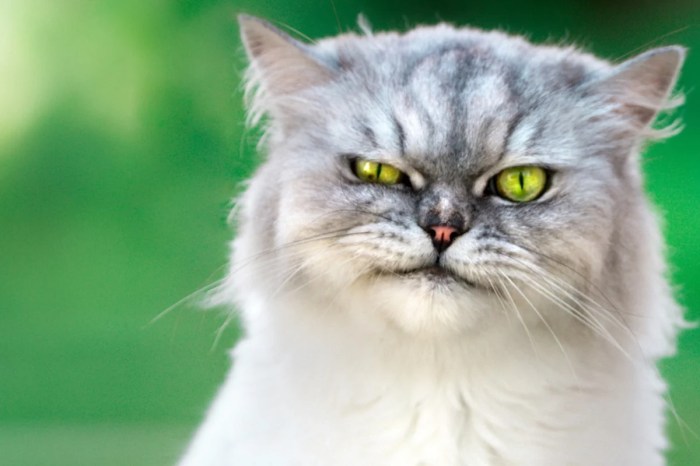
The Persian cat is a classic example of a breed shaped by human preference. Their most striking features are their long, flowing fur, a brachycephalic (flat) face, and large, expressive eyes. This combination of traits has made them a beloved breed for centuries, but it also comes with a significant downside: a predisposition to various health problems.
The Persian’s flat face, while aesthetically pleasing to some, causes a number of issues. The shortened nasal passages can lead to breathing difficulties, particularly in hot weather. Tear duct problems, known as epiphora, are also common, resulting in excessive tearing and potential staining of the fur around the eyes. The flat face also makes them more susceptible to dental problems and respiratory infections.
Grooming a Persian cat is a significant commitment. Their long fur requires daily brushing to prevent mats and tangles. Regular bathing (typically every 1-2 weeks) is also necessary to keep their coat clean and healthy. In addition to brushing and bathing, you’ll need to clean their eyes daily to prevent tear staining and trim their nails regularly. It’s a time-consuming process, but essential for maintaining a Persian’s well-being.
- Polycystic Kidney Disease (PKD): Characterized by cysts forming on the kidneys, leading to kidney failure. Symptoms include increased thirst and urination, weight loss, and lethargy. Treatment involves managing symptoms and potentially dialysis or kidney transplant.
- Progressive Retinal Atrophy (PRA): A degenerative eye disease that leads to blindness. Symptoms include night blindness and gradual vision loss. There is no cure for PRA.
- Hypertrophic Cardiomyopathy (HCM): A heart condition where the heart muscle thickens, reducing its ability to pump blood effectively. Symptoms include difficulty breathing, coughing, and lethargy. Treatment involves medication to manage symptoms.
- Brachycephalic Airway Syndrome (BAS): A collection of breathing problems caused by the shortened nasal passages. Symptoms include noisy breathing, exercise intolerance, and heat sensitivity. Treatment may involve surgery to widen the nasal passages.
- Tear Duct Problems (Epiphora): Excessive tearing that can lead to skin irritation and staining. Symptoms include watery eyes and wet fur around the eyes. Treatment may involve medication or surgery to improve tear drainage.
The Cornish Rex: Curly Coat and Elongated Features
The Cornish Rex is instantly recognizable by its unique, wavy coat. This distinctive feature is the result of a spontaneous genetic mutation that occurred in Cornwall, England, in the 1950s. Unlike other curly-coated animals, the Cornish Rex’s coat is not crimped; instead, it consists of loose, wavy curls that feel soft and silky to the touch.
Beyond their curly coat, Cornish Rex cats have a slender build, large ears, and long, elegant legs. Their bodies are often described as being “whippet-like” due to their long, lean physique. They are known for their playful and energetic personalities, often described as being “dog-like” in their affection and willingness to interact with their owners.
The Cornish Rex’s coat texture is unlike anything found in other curly-coated animals. While a poodle’s curls are tight and springy, and a sheep’s wool is dense and crimped, the Cornish Rex’s coat is loose, flowing, and almost ethereal. It’s a truly unique and captivating texture.
Imagine a Cornish Rex leaping – a flash of lithe muscle and flowing curls. Their long legs propel them effortlessly through the air, their large ears twitching with alertness. The unusual proportions of their body – the long torso, slender legs, and oversized ears – create a striking and graceful silhouette as they bound across the room.
The Devon Rex: Similarities and Differences to Cornish Rex
The Devon Rex shares a similar curly coat with the Cornish Rex, but the curl pattern is distinctly different. While the Cornish Rex has loose, wavy curls, the Devon Rex has tighter, more defined curls that often resemble corkscrews. Overall, the Devon Rex has a slightly more mischievous and pixie-like appearance, with a wider head and larger eyes.
The Devon Rex’s curly coat is also the result of a genetic mutation, but a different mutation than the one responsible for the Cornish Rex’s coat. This mutation affects the hair follicle structure, causing the hairs to curl in a unique pattern. Like the Cornish Rex, the Devon Rex’s coat is soft and silky to the touch, but the tighter curls give it a different feel.
Devon Rex cats are known for their large, expressive eyes and prominent cheekbones, which contribute to their distinctive and somewhat otherworldly appearance. They are also highly intelligent and playful, often described as being “clown-like” in their antics.
| Feature | Cornish Rex | Devon Rex |
|---|---|---|
| Coat Texture | Loose, wavy curls | Tighter, corkscrew curls |
| Head Shape | Wider, more angular | More rounded, pixie-like |
| Body Type | Long, slender, “whippet-like” | Slightly more compact |
| Temperament | Playful, energetic, affectionate | Intelligent, mischievous, clown-like |
The Xoloitzcuintli (Mexican Hairless Dog)
A Feline Comparison
A Feline Comparison
While not a cat, the Xoloitzcuintli, or Mexican Hairless Dog, is included here due to its striking resemblance to the Sphynx cat – both share a lack of fur. This comparison highlights the fascinating parallel evolution of hairlessness in different species.
The Xoloitzcuintli has a rich history and cultural significance in Mexico, dating back over 3,000 years. They were revered by the Aztecs and Mayans, who believed they were sacred guardians of the underworld and companions to the deceased in the afterlife. The breed comes in three sizes: toy, miniature, and standard, and can be either hairless or coated.
The skin characteristics of the Xoloitzcuintli and the Sphynx are similar in that they both lack a protective fur coat. However, the Xoloitzcuintli’s skin tends to be thicker and more pigmented than the Sphynx’s, often exhibiting a darker hue. Both breeds are susceptible to sunburn and require protection from the elements.
Petting a Xoloitzcuintli is a unique experience. Their skin feels warm and smooth, almost velvety to the touch. It lacks the texture of fur, but has a subtle elasticity. The warmth is noticeable, radiating from their body. It’s a surprisingly comforting sensation, a testament to the breed’s adaptation to a warm climate.
The Lykoi: “Werewolf Cat” Appearance
The Lykoi, often nicknamed the “werewolf cat,” is a relatively new breed that has gained popularity due to its strikingly unusual appearance. Characterized by sparse fur and a patchy coat, the Lykoi resembles a miniature werewolf, with dark patches around the eyes, nose, and mouth.
The Lykoi’s unusual coat is the result of a spontaneous genetic mutation that affects the hair follicles. This mutation causes some hair follicles to be completely absent, while others produce only sparse, broken hairs. The resulting coat pattern is unpredictable and varies from cat to cat.
The Lykoi breed was first discovered in 2011, and it has only recently been recognized by major cat registries. Despite its relatively recent development, the Lykoi has quickly gained a devoted following due to its unique appearance and playful personality.
Imagine a Lykoi in a dimly lit room. The sparse fur accentuates the cat’s muscular build, creating a shadowy, almost spectral appearance. The dark patches around the eyes and nose further enhance the “werewolf” effect, giving the cat an intense and captivating gaze. The overall impression is one of mystery and intrigue.
Breeds with Unusual Facial Features (Beyond Flat Faces)
While brachycephalic breeds like Persians are well-known for their unusual facial structures, several other breeds exhibit distinctive, non-traditional facial features that contribute to their unique appearance. These features can be the result of various genetic factors and can sometimes impact a cat’s health and well-being.
The genetic factors contributing to these unusual facial features are often complex and involve multiple genes interacting with each other. In some cases, the features are simply variations within a normal range, while in others, they represent more significant deviations from the typical feline phenotype.
These unusual facial features can sometimes impact a cat’s vision or breathing. For example, a Munchkin’s short legs can alter the angle of their head, potentially affecting their field of vision. Similarly, a Selkirk Rex’s plush, wavy coat can obscure their eyes, impacting their ability to see clearly.
- Munchkin: Short legs impacting head carriage and potentially affecting vision.
- Selkirk Rex: Plush, wavy coat affecting facial contours and potentially obscuring vision.
- American Curl: Ears that curl backward, altering the shape of the head and potentially affecting hearing.
The Role of Grooming and Presentation
Grooming practices can significantly alter a cat’s appearance, particularly in breeds with long or dense fur. Regular brushing, bathing, and trimming can enhance a cat’s natural beauty and keep their coat healthy and manageable. Conversely, neglecting grooming can lead to mats, tangles, and a generally unkempt appearance.
Diet and overall health also play a crucial role in a cat’s coat quality and appearance. A balanced diet rich in essential nutrients, such as omega-3 fatty acids, can promote a shiny, healthy coat. Underlying health conditions can also affect coat quality, leading to dullness, hair loss, or excessive shedding.
Different grooming styles can dramatically affect the perceived attractiveness of a cat. For example, a Persian cat with a meticulously groomed, flowing coat will appear significantly more elegant than one with a matted and tangled coat. Similarly, trimming a long-haired cat’s fur can create a more manageable and stylish look.
Imagine a Persian cat before grooming: its long fur is matted and tangled, its face is obscured by fur, and its overall appearance is somewhat disheveled. Now, picture the same cat after a thorough grooming session: its fur is long, flowing, and lustrous, its face is clean and clear, and its overall appearance is one of classic elegance. The transformation is remarkable, demonstrating the power of grooming to enhance a cat’s natural beauty.
Last Recap
Our journey through the world of the “ugliest” cat breeds has revealed that beauty truly is subjective. While some breeds might not conform to traditional standards of feline attractiveness, they possess unique charm and fascinating genetic stories. Whether it’s the wrinkly skin of a Sphynx, the folded ears of a Scottish Fold, or the curly coat of a Cornish Rex, each breed offers a glimpse into the incredible diversity of the feline species.
Ultimately, the most important thing is a cat’s personality and the love they bring to their human companions – and that transcends any superficial notion of beauty.
So, the next time you encounter a cat that doesn’t quite fit the mold, remember that “ugly” is just a label, and there’s likely a whole lot of character and charm waiting to be discovered.
FAQ Overview
Why are some cat breeds considered “ugly”?
It’s largely due to their deviation from the typical fluffy, round-faced cat we often see in media. Selective breeding has prioritized certain traits, sometimes at the expense of conventional beauty standards. Cultural perceptions also play a role – what’s considered attractive varies across different societies.
Are these “ugly” breeds unhealthy?
Not necessarily, but some breeds, like the Scottish Fold and Persian, have genetic predispositions to health problems related to their unique features. Responsible breeders are working to mitigate these issues, but it’s important to be aware of potential concerns before acquiring one of these cats.
What’s the difference between a Cornish Rex and a Devon Rex?
Both have curly coats, but the Cornish Rex has tighter, more defined curls, while the Devon Rex has looser, wavier curls. They also differ slightly in head shape and body type.
Why is the Xoloitzcuintli (hairless dog) included in this discussion?
It’s included because its hairlessness and overall appearance share similarities with the Sphynx cat, making it a relevant comparison for understanding hairless animals.
What’s the best way to care for a Persian cat’s long fur?
Daily brushing is essential to prevent mats and tangles. Regular bathing (every few weeks) and professional grooming are also recommended. It’s a significant time commitment!

