Have you ever seen a cat that just… stood out? Not in a bad way, but in a way that made you do a double-take? The feline world is full of surprises, and while we often think of cats as sleek and graceful, there’s a whole universe of breeds that defy conventional beauty standards. What one person finds charming, another might consider unusual, and that’s precisely what makes exploring “weird looking” cat breeds so fascinating.
It’s a journey into genetics, cultural perceptions, and the sheer delightful variety of our feline companions.
Our understanding of beauty in animals, especially cats, is surprisingly subjective and has shifted dramatically throughout history. What was once considered desirable – a long, slender body, perhaps – might now be seen as less appealing. Cultural influences play a huge role too; a breed popular in one country might be considered quite odd in another. From the perpetually wavy Cornish Rex to the famously hairless Sphynx, let’s dive into the breeds that challenge our notions of feline aesthetics and celebrate their unique charm.
The Fascinating World of Weird-Looking Cat Breeds
Let’s be honest, beauty is in the eye of the beholder. This holds true for humans, dogs, and, of course, cats. What one person finds adorable, another might consider… unusual. Defining a “weird-looking” cat breed is inherently subjective, a blend of personal preference and evolving aesthetic standards. Throughout history, feline beauty has been interpreted differently, influenced by cultural norms and breeding practices.
Ancient Egyptians revered cats as deities, valuing sleek, powerful physiques. In medieval Europe, cats were often associated with witchcraft, leading to less favorable perceptions. Today, we see a resurgence of appreciation for diverse appearances, with breeds showcasing unique features that challenge traditional notions of feline beauty. This article explores some of the most strikingly unconventional cat breeds, delving into their genetics, characteristics, and the reasons behind their distinctive looks.
We’ll cover breeds like the Cornish Rex, Sphynx, Devon Rex, and more, offering a glimpse into the wonderfully weird world of feline aesthetics.
Before we dive in, it’s important to acknowledge the role of cultural influences. What’s considered “normal” in one part of the world might be seen as bizarre in another. For example, long-haired cats are prized in colder climates for their warmth, while short-haired cats are more common in warmer regions. Breeds often cited for their unconventional looks include the Sphynx (hairless), Cornish Rex (wavy coat), Devon Rex (elf-like features), and Peterbald (varying degrees of hairlessness).
These breeds represent a fascinating intersection of genetics and human preference, demonstrating our willingness to embrace diversity in the feline world.
The Cornish Rex: Wavy Wonders
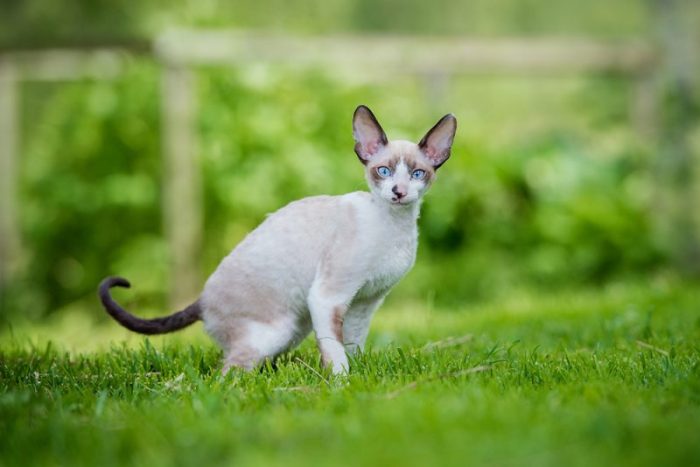
The Cornish Rex is instantly recognizable thanks to its incredibly unique coat. This isn’t just a slight wave; it’s a ripple of curls that cover the entire body. The story of the Cornish Rex begins in Cornwall, England, in 1950, when a barn cat gave birth to a kitten with an unusual, curly coat. This kitten, named Kallibunker, carried a spontaneous genetic mutation that would eventually lead to the breed we know today.
Breeders recognized the potential and began selectively breeding these curly-coated cats, establishing a new and captivating breed.
Genetic Basis of the Wavy Coat
The Cornish Rex’s curly coat is the result of a recessive gene that affects the keratin structure within the hair shaft. Unlike typical cat hair, which is smooth and cylindrical, Cornish Rex hair is wavy and ribbon-like. This is because the gene disrupts the formation of the hair’s outer layer, causing it to curl. Interestingly, this same gene also affects other physical characteristics, contributing to the breed’s slender build and large ears.
Physical Characteristics Beyond the Coat
While the coat is the defining feature, the Cornish Rex possesses other distinctive traits. They have a long, slender body with long legs and large, wedge-shaped heads. Their ears are exceptionally large and set low on the head, giving them a perpetually alert expression. Their eyes are oval-shaped and often green or gold. The overall impression is one of elegance and agility.
Comparison to Other Short-Haired Breeds
Compared to other short-haired breeds like the American Shorthair or British Shorthair, the Cornish Rex is noticeably more slender and delicate. While those breeds tend to have a more robust build, the Cornish Rex is characterized by its lithe frame and graceful movements. The coat texture is, of course, the most significant difference, setting the Cornish Rex apart from any other short-haired breed.
| Feature | Cornish Rex | Typical Cat |
|---|---|---|
| Coat | Wavy, curly, short | Smooth, straight, varying lengths |
| Head Shape | Wedge-shaped, long | Rounded |
| Ear Size | Large, low-set | Medium, proportional to head |
| Body Length | Long, slender | Varies, generally more compact |
The Sphynx: Hairless and Striking
Source: catster.com
The Sphynx cat is perhaps the most recognizable “weird-looking” breed, primarily due to its lack of fur. However, describing them as simply “hairless” doesn’t quite capture their unique appeal. The breed’s history is relatively recent, originating in Canada in the 1960s. A hairless kitten, named Prune, was discovered and bred with other cats, eventually leading to the development of the Sphynx breed.
Despite the name, Sphynx cats are not entirely devoid of hair; they often have a fine down covering their skin, particularly on their nose, ears, and paws.
Genetic Basis of Hairlessness
Hairlessness in Sphynx cats is caused by a recessive gene mutation that affects the keratin production necessary for hair growth. This mutation doesn’t completely eliminate hair follicles, but it prevents the production of a full coat. Interestingly, the gene responsible for hairlessness in Sphynx cats is different from the gene that causes hairlessness in other breeds like the Peterbald.
Skin Texture and Differences from Fur
The Sphynx’s skin has a unique texture, often described as feeling like suede or peach fuzz. It’s warmer to the touch than a cat with a fur coat and lacks the insulating properties of fur. The skin is also more prone to sunburn and temperature fluctuations, requiring special care.
Wrinkles and Skin Folds
Sphynx cats are known for their prominent wrinkles and skin folds, particularly around the face, shoulders, and hips. These wrinkles are a natural consequence of the lack of fur and the elasticity of their skin. While the exact purpose of these wrinkles is unknown, they likely contribute to the breed’s distinctive and endearing appearance.
Care Requirements for Sphynx Skin
Due to their lack of fur, Sphynx cats require specific care to maintain healthy skin. Regular bathing (typically once or twice a week) is necessary to remove excess oils that accumulate on their skin. Sun protection is also crucial, as their skin is highly susceptible to sunburn. Keeping their skin moisturized with specialized lotions can also help prevent dryness and irritation.
The Devon Rex: Elf-Like Charm
The Devon Rex is another breed celebrated for its unusual appearance, often described as having an “elf-like” quality. Originating in Devon, England, in the 1950s, the Devon Rex’s unique features stem from a spontaneous genetic mutation. Unlike the Cornish Rex, which has a wavy coat, the Devon Rex has a short, loose curl that gives their fur a soft, almost velvety texture.
Genetic Origins and Differences from Cornish Rex
The Devon Rex’s mutation is distinct from the one responsible for the Cornish Rex’s coat. While both result in curly fur, the genetic mechanisms are different. The Devon Rex mutation affects the hair follicle structure, causing the hair to curl in a looser, more wave-like pattern. This also influences other physical characteristics, leading to a different overall appearance.
Physical Characteristics: Large Ears, Wide-Set Eyes, and Wavy Coat
The Devon Rex is characterized by its large, low-set ears, wide-set eyes, and short, wavy coat. Their head is wedge-shaped, and their body is slender and muscular. The curls are typically looser than those of the Cornish Rex, and the coat can vary in density. Their expressive eyes and mischievous expressions contribute to their charming and playful personality.
Comparison to Cornish Rex
While both breeds share a curly coat, the Devon Rex and Cornish Rex have distinct differences. The Devon Rex’s curls are looser and less defined, while the Cornish Rex has tighter, more uniform curls. The Devon Rex also has larger ears and a more wedge-shaped head compared to the Cornish Rex. The overall impression is that the Devon Rex has a more playful and mischievous appearance, while the Cornish Rex exudes an air of elegance and refinement.
The Devon Rex is a bundle of energy and affection, a cat that demands attention and thrives on interaction. Their playful antics and quirky personalities perfectly complement their unusual appearance, making them truly captivating companions. They are known for their dog-like loyalty and their ability to learn tricks.
Closing Summary
From the curly-coated LaPerm to the plush Selkirk Rex and the strikingly patterned Peterbald, we’ve uncovered a remarkable array of breeds that redefine what it means to be a “weird looking” cat. Ultimately, appreciating these unique felines isn’t about judging their appearance against a rigid standard, but about celebrating the incredible diversity within the cat world. Each breed’s unusual features are a testament to the power of genetics and the beauty of individuality.
So, the next time you encounter a cat that looks a little different, take a moment to appreciate its unique charm – you might just discover your new favorite breed!
FAQ Compilation
Why do some cats look so different from the “typical” cat?
It all comes down to genetics! Mutations in genes can affect coat texture, body shape, and even the presence or absence of fur. These mutations, when passed down through generations, create the unique characteristics we see in different breeds.
Are “weird looking” cat breeds healthy?
Generally, yes! While some breeds can be predisposed to certain health issues due to their unique genetics (like skin problems in Sphynx cats), responsible breeders prioritize health and temperament. It’s always important to research a breed thoroughly and find a reputable breeder.
Do cats with unusual appearances have different personalities?
Not necessarily! While personality can be influenced by breed, it’s largely individual. However, some breeds, like the Devon Rex, are known for being particularly playful and affectionate, which can enhance their quirky appearance.
What’s the difference between a Cornish Rex and a Devon Rex?
Both have wavy coats, but the mutations are different. Cornish Rexes have tighter, more defined waves, while Devon Rexes have looser, softer waves and larger ears. Their head shapes also differ slightly.
How do I care for a Sphynx cat’s skin?
Sphynx cats require regular bathing (usually once a week) to remove oil buildup. They also need sun protection, as their lack of fur makes them susceptible to sunburn. Keeping their skin moisturized is also crucial.

