Ever stumbled upon a cat that just… looks different? We’re diving into the fascinating world of the weirdest looking cats, exploring breeds and genetic quirks that result in truly unique appearances. It’s a journey through aesthetics, genetics, and even a little bit of cultural perception, all centered around our feline friends and what we consider “unusual.” From hairless wonders to cats with extra toes, prepare to be amazed by the sheer variety of looks within the cat kingdom.
The concept of what’s considered “weird” in a cat is surprisingly subjective and has shifted dramatically over time. Historically, cats with unusual traits might have been viewed with suspicion or even fear. Now, many of these same features are celebrated and actively sought after by breeders and cat lovers alike. We’ll trace the history of some of these breeds, examining how human preferences have shaped their evolution and the ethical considerations that come with intentionally breeding for extreme traits.
The Weirdest Looking Cats: A Deep Dive into Unconventional Felines
Let’s be honest, beauty is in the eye of the beholder. This is especially true when we’re talking about animals. What one person finds adorable, another might consider… unusual. When it comes to cats, the definition of “weirdest looking” is entirely subjective. We’re drawn to certain features, while others might make us pause.
This article explores the fascinating world of cats that defy conventional beauty standards, delving into genetics, breeding, and cultural perceptions that shape our views on feline aesthetics.
The history of unusual cat breeds is surprisingly rich. While many modern breeds are relatively recent creations, the appreciation for unique feline appearances dates back centuries. Ancient Egyptians revered cats, but their focus was more on their symbolic significance than their physical traits. As cat breeding evolved, particularly in the 19th and 20th centuries, breeders began to intentionally select for specific characteristics, sometimes resulting in breeds that look quite different from their wild ancestors.
Our perception of what constitutes “weird” has also shifted over time. What was once considered a deformity might now be celebrated as a unique and desirable trait.
| Breed | Defining Feature | Origin |
|---|---|---|
| Sphynx | Lack of fur, wrinkled skin | Canada |
| Cornish Rex | Curly coat, elongated body | England |
| Lykoi | Sparse, mottled fur resembling a werewolf | United States |
Breeds with Unique Physical Characteristics
Certain breeds have become synonymous with unusual appearances, captivating cat lovers with their distinctive features. Let’s take a closer look at some of the most notable examples.
The Sphynx Cat: A Hairless Wonder
The Sphynx cat is perhaps the most recognizable “weird” cat breed. Their lack of fur is their defining characteristic, though they aren’t entirely hairless – they possess a fine downy fuzz that feels like peach skin. Their skin is wrinkled, particularly around the shoulders and hips, and they often have large, bat-like ears. Sphynx cats require regular bathing to prevent oil buildup on their skin, and they are sensitive to temperature extremes.
Common health concerns include hypertrophic cardiomyopathy (HCM), a heart condition, and progressive retinal atrophy (PRA), an eye disease.
The Cornish Rex: A Curly-Coated Charmer
The Cornish Rex boasts a strikingly curly coat, a result of a spontaneous genetic mutation. Unlike other long-haired breeds, the Cornish Rex’s curls are tight and springy, covering their entire body. They have an elongated body, long legs, and large ears. Known for their playful and energetic personalities, Cornish Rex cats are often described as being dog-like in their affection and willingness to interact with their owners.
They thrive on attention and are known to be quite vocal.
The Devon Rex: A Cousin with a Different Curl
The Devon Rex shares a similar curly coat to the Cornish Rex, but the curl is looser and wavier. Their head shape also differs; Devon Rex cats have a distinctive “pixie” face with a short nose and large, low-set eyes. They are also known for their large ears, which are set low and far back on their head. Like the Cornish Rex, Devon Rex cats are intelligent, playful, and affectionate, often forming strong bonds with their human companions.
The Lykoi Cat (Wolf Cat): A Genetic Rarity
The Lykoi cat, often nicknamed the “wolf cat,” is a relatively new breed resulting from a natural genetic mutation. Their most striking feature is their sparse, mottled fur, which gives them a unique, almost werewolf-like appearance. Patches of fur are missing around their eyes, nose, and ears, creating a distinctive mask-like pattern. The Lykoi’s fur is also unusually coarse and wiry.
This mutation affects the hair follicles, preventing them from producing a full coat of fur. They are generally healthy and active cats.
Imagine a cat with a face framed by sparse, dark fur, giving the impression of a wolf’s mask. Their eyes are large and expressive, often a vibrant green or gold, contrasting sharply with the dark fur around them. The nose is small and delicate, and the ears are large and pointed, adding to their alert and intelligent expression. Their body is lean and muscular, covered in a patchy coat of coarse, wiry fur.
The overall impression is one of wildness and mystery, a feline that seems to have stepped out of a fairytale.
Genetic Mutations and Their Impact on Appearance
The unusual appearances we see in cats are often the result of fascinating genetic mutations. These mutations can affect everything from coat color and pattern to body structure and even the number of toes. Understanding the genetic basis of these traits helps us appreciate the complexity of feline genetics.
Chimerism: Two Genomes in One Cat
Chimerism is a rare phenomenon where an individual has two or more genetically distinct populations of cells. In cats, this can occur when two embryos fuse early in development, resulting in a single cat with patches of fur displaying different colors or patterns. These patterns are often strikingly symmetrical, appearing as if the cat has been split down the middle.
The genetic basis of chimerism lies in the early stages of embryonic development.
Polydactyly: Extra Toes
Polydactyly, or having extra toes, is a relatively common genetic trait in cats, particularly in certain populations. The number of extra toes can vary, and the condition can affect one or all four paws. While polydactyly doesn’t typically cause any health problems, it can affect a cat’s gait and dexterity. The gene responsible for polydactyly is dominant, meaning that a cat only needs to inherit one copy of the gene to exhibit the trait.
Sectoral Heterochromia: Eyes of Different Colors
Sectoral heterochromia is a fascinating condition where a single iris is divided into two or more colors. This can result in a cat having a partially blue eye, a partially green eye, or a combination of other colors. The cause of sectoral heterochromia is thought to be a disruption in the migration of melanocytes, the cells that produce pigment, during eye development.
It’s often associated with other genetic mutations and doesn’t typically affect a cat’s vision.
Unusual Coat Patterns: Brindling and Ticking
Genetic mutations can also lead to unusual coat patterns. Brindling, for example, is a pattern of faint, irregular stripes that overlay the cat’s base color. Ticking, on the other hand, is a pattern where individual hairs are banded with different colors, creating a salt-and-pepper effect. These patterns are often subtle but can significantly alter a cat’s overall appearance.
Dominant genes express their trait even if only one copy is inherited, while recessive genes require two copies to be expressed. In cat coat color genetics, for example, the black coat color is often dominant over the chocolate or lilac colors. This means a cat can carry the recessive gene for chocolate or lilac without displaying that color itself.
Cats with Facial Anomalies
While many unusual cat appearances are celebrated, some cats are born with facial anomalies that can affect their health and well-being. These anomalies can range from mild to severe and are often the result of genetic or environmental factors.
Shortened Snouts and Other Deformities
Cats can be born with shortened snouts, flattened faces, or other facial deformities. These conditions can be caused by genetic mutations affecting craniofacial development or by exposure to certain toxins during pregnancy. The severity of the anomaly can vary greatly, and affected cats may experience breathing difficulties, dental problems, or other health issues.
Prominent Brow Ridges and Unusual Ears
Some cats exhibit prominent brow ridges or unusual ear shapes. These features can be inherited traits or the result of developmental abnormalities. While they may not always cause health problems, they can affect a cat’s appearance and expression.
Strabismus (Crossed Eyes)
Strabismus, or crossed eyes, is a condition where the eyes are misaligned. It can be caused by a variety of factors, including genetic predisposition, neurological problems, or eye muscle weakness. In some cases, strabismus can affect a cat’s vision and require medical intervention.
“Squished” Faces: Brachycephalic Breeds
Certain breeds, such as Persians and Exotic Shorthairs, are known for their “squished” faces, a characteristic known as brachycephaly. This is the result of selective breeding for a shortened nose and flattened face. While these cats are often considered adorable, brachycephaly can lead to a range of health problems, including breathing difficulties, eye problems, and dental issues.
- Breathing difficulties
- Eye problems (e.g., corneal ulcers, dry eye)
- Dental problems (e.g., overcrowding, malocclusion)
- Skin infections
- Increased risk of heatstroke
Color and Pattern Variations Beyond the Norm
Beyond the standard tabby, calico, and solid colors, cats can exhibit a wide range of unusual color and pattern variations. These variations are often the result of complex genetic interactions and can create truly striking appearances.
The Flame Point Pattern
The Flame Point pattern, also known as the Red Point pattern, is a variation of the Colorpoint pattern. In Flame Points, the points (face, ears, paws, and tail) are a warm red or orange color, while the body is a lighter cream or white. The distribution of color is unique to Flame Points, with the points typically being more intense than in other Colorpoint breeds.
Ticked Tabby Patterns
Ticked tabby patterns, also known as Abyssinian tabby patterns, differ from classic tabby patterns in that they lack the distinct stripes or swirls typically associated with tabby markings. Instead, each individual hair is banded with different colors, creating a shimmering, salt-and-pepper effect. The overall appearance is more subtle and muted than a classic tabby.
Colorpoint Cats: A Temperature-Sensitive Trait
Colorpoint cats, such as Siamese and Himalayan cats, exhibit a pattern where the points (face, ears, paws, and tail) are darker than the body. This pattern is caused by a temperature-sensitive gene that inhibits pigment production in warmer areas of the body. Cooler areas, such as the points, allow pigment to develop, resulting in the characteristic colorpoint pattern.
Unusual Color Combinations
Cats can also exhibit unusual color combinations, such as chocolate and lilac (grayish-purple). These colors are the result of recessive genes and are less common than more typical colors like black and brown.
| Pattern Name | Description | Genetic Basis (brief) | Example Breed |
|---|---|---|---|
| Ticked Tabby | Banded hairs creating a shimmering effect | Agouti gene | Abyssinian |
| Colorpoint | Darker points due to temperature-sensitive gene | Temperature-sensitive allele | Siamese |
| Flame Point | Red/orange points on a cream body | Variant of Colorpoint gene | Flame Point Siamese |
| Torbie | Tortoiseshell pattern with tabby markings | Combination of sex-linked orange gene and tabby gene | Domestic Shorthair |
The Role of Breeding and Selective Breeding
The unusual appearances we see in many cat breeds are, in part, the result of intentional breeding practices. Breeders have selectively bred cats for specific traits, sometimes pushing the boundaries of what is considered “normal.”
Intentional Creation of Unusual Appearances
Breeders have intentionally created unusual appearances in cats by selecting for specific traits over generations. This process can involve crossing different breeds or focusing on mutations that produce unique characteristics. The goal is often to establish a breed standard that defines the desired appearance and temperament.
Ethical Considerations
Selective breeding for extreme traits raises ethical considerations. While breeders may strive to create beautiful and unique cats, it’s important to prioritize the health and well-being of the animals. Breeding for traits that compromise a cat’s health or quality of life is ethically questionable.
History of Selective Breeding
Breeds like the Persian and the Exotic Shorthair were developed through selective breeding for their distinctive flat faces. The Cornish Rex and Devon Rex were created from spontaneous mutations and then selectively bred to enhance their curly coats. These examples demonstrate how breeders have shaped the appearance of cats over time.
Working Abilities vs. Unusual Looks
Breeding practices differ significantly between breeds bred for specific working abilities (e.g., Maine Coons bred for mousing) and those bred primarily for their unusual looks. Working breeds are often selected for traits that enhance their performance, while appearance-focused breeds are selected for aesthetic qualities.
Selective Breeding Process:
- Initial Selection: Identifying individuals with desired traits.
- Pairing: Breeding selected individuals together.
- Evaluation: Assessing offspring for the desired traits.
- Repeat: Repeating the process over multiple generations, selecting the best individuals each time.
- Breed Standard: Establishing a formal standard that defines the ideal appearance and temperament.
“Accidental” Unusual Cats: Rescues and Mixed Breeds
Not all unusual-looking cats are the result of intentional breeding. Many rescued cats and mixed breeds exhibit striking or unique appearances, often defying easy categorization.
Stories of Rescued Cats
Numerous stories exist of rescued cats with remarkable appearances. These cats often have unique markings, unusual coat colors, or distinctive facial features that set them apart. Their stories highlight the beauty and diversity of the feline population.
Challenges of Breed Identification
Identifying the breed mix of cats with unusual features can be challenging. Visual assessment alone is often unreliable, and genetic testing may be required to determine a cat’s ancestry with certainty.
Unexpected Combinations of Traits
Mixed breeds can exhibit unexpected combinations of traits, resulting in cats that look unlike any recognized breed. This genetic mixing can produce a wide range of appearances, from subtle variations to dramatic transformations.
Memorable Mixed-Breed Appearances
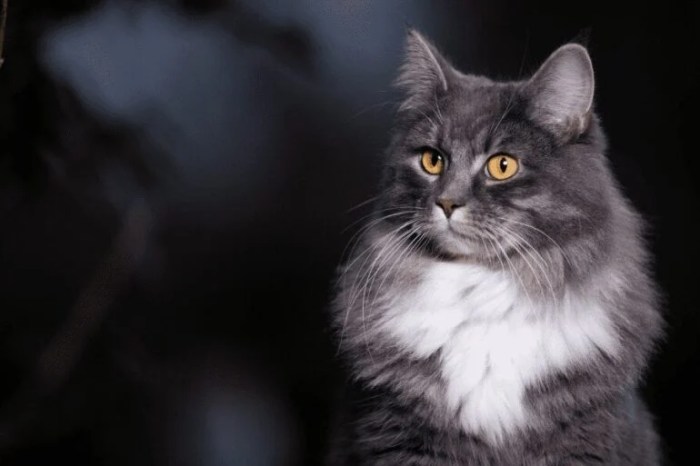
Source: cattitudedaily.com
Consider a cat with the long, fluffy fur of a Persian but the sleek body and pointed markings of a Siamese. Or a cat with the curled coat of a Rex but the robust build of a Maine Coon. These are just a few examples of the unique and memorable appearances that can arise in mixed-breed cats.
- Unusual coat colors or patterns
- Distinctive facial features (e.g., large ears, short snout)
- Body shape and size that doesn’t fit any known breed
- Combination of traits from different breeds
Cultural Perceptions of Unusual Cat Appearances
The perception of unusual cat appearances varies across cultures. What is considered beautiful or desirable in one culture may be viewed differently in another.
Cultural Views on Unusual Cats
In some cultures, cats with unusual appearances are seen as symbols of good luck or prosperity. In others, they may be viewed with suspicion or even fear. These perceptions are often rooted in cultural beliefs and folklore.
Symbolism of Cat Features
Certain cat features are associated with specific symbolic meanings in various cultures. For example, a cat with mismatched eyes (heterochromia) may be seen as having mystical powers in some cultures, while a cat with a long tail may be considered a symbol of good fortune.
Unusual Cats in Art and Folklore
Unusual cat appearances have been portrayed in art, literature, and folklore throughout history. From ancient Egyptian depictions of cats with human-like features to modern-day illustrations of fantastical feline creatures, cats have captured the imagination of artists and storytellers for centuries.
Western vs. Eastern Perceptions
Western cultures tend to value cats with sleek, elegant appearances, while Eastern cultures may place more emphasis on cats with unique markings or unusual features. These differences reflect broader cultural attitudes towards beauty and aesthetics.
Imagine a Japanese woodblock print depicting a cat with a strikingly asymmetrical face, one eye larger than the other. The cat is seated amidst a field of cherry blossoms, its unusual appearance juxtaposed with the delicate beauty of the flowers. The cat’s asymmetrical face is not seen as a flaw but rather as a symbol of individuality and uniqueness, reflecting the Japanese appreciation for wabi-sabi, the beauty of imperfection.
Final Wrap-Up
From the striking Sphynx to the wolf-like Lykoi and the countless mixed breeds showcasing unexpected combinations, the world of cats is full of surprises. We’ve seen how genetics, selective breeding, and even cultural perspectives all play a role in shaping the appearances we find fascinating, bizarre, or simply beautiful. Ultimately, these “weirdest looking cats” remind us that beauty truly is in the eye of the beholder, and that embracing diversity – even in our feline companions – is something to celebrate.
FAQ Overview
Why do some cats have different colored eyes?
This is often due to sectoral heterochromia, a genetic condition where the iris has different colors within it. It can be caused by variations in melanin production.
Are cats with extra toes (polydactyly) healthy?
Generally, yes! Polydactyly is usually harmless and doesn’t affect a cat’s health. It’s more common in certain cat populations, like those in the Eastern United States.
What causes a cat to have a “Flame Point” pattern?
The Flame Point pattern is a form of partial albinism. The cat is born all white, and the color develops later in life, primarily on the face, ears, paws, and tail, due to temperature-sensitive enzyme activity.
Is it ethical to breed cats for unusual appearances?
That’s a complex question! While many breeders are dedicated to the health and well-being of their cats, breeding for extreme traits can sometimes lead to health problems. Responsible breeders prioritize health and temperament above all else.
Why do some cats have skin folds or wrinkles?
This is often a characteristic of breeds like the Sphynx, and it’s due to the lack of fur. The skin can be more elastic and prone to wrinkling, especially when the cat is relaxed.
Can you tell what breeds are in a mixed-breed cat just by looking at it?
It’s difficult! While certain features can hint at potential breed mixes, a definitive answer usually requires genetic testing.

