What Colors Do Cats Like the Most? A Feline Vision Guide

Ever wondered why your cat seems so indifferent to your vibrant red toy, but perks up at a glimpse of blue? It all comes down to how cats see the world! Unlike our full-spectrum vision, feline eyes have evolved to perceive color differently. This article dives into the fascinating science behind cat vision, exploring which colors they can actually see, which ones they prefer, and how you can use this knowledge to create a more enriching environment for your furry friend.
We’ll unravel the mysteries of dichromatic vision and discover the shades that truly captivate your cat’s attention.
Understanding a cat’s color perception isn’t just a fun fact; it can significantly impact their environment, from the toys you choose to the colors of their bedding. We’ll break down the science, explore preferred hues like blues and grays, and even discuss colors to avoid, all while considering how individual cat personalities and lighting conditions play a role. Get ready to see the world through your cat’s eyes!
What Colors Do Cats Like the Most? A Feline Perspective
Cats are mysterious creatures, and understanding their world can feel like a constant puzzle. We decorate our homes, choose toys, and even pick out furniture, often without considering how our feline companions perceive it all. A big part of that perception is color. While we humans enjoy a vibrant spectrum, cats see the world differently. This article dives into the science of feline color vision, explores which colors they’re most likely to notice and enjoy, and offers practical tips for creating a cat-friendly environment based on their unique visual abilities.
Cat Vision and Color Perception
The way a cat’s eye is built is fundamentally different from ours. Human eyes have three types of photoreceptor cells called cones, allowing us to see a wide range of colors. Cats, however, have only two types of cones. These cones are responsible for detecting color, and the number of cones directly impacts the breadth of colors a creature can perceive.
Additionally, cats have a higher concentration of rod cells, which are responsible for vision in low light conditions. This adaptation is crucial for nocturnal hunters.Cats primarily perceive shades of blue, gray, and yellow. Their color range is significantly narrower than ours, lacking the ability to distinguish between red, orange, and green as we do. Instead, these colors often appear as muted browns or grays.
Evolutionarily, this limitation makes sense. Cats are crepuscular hunters, meaning they are most active at dawn and dusk when light is low. A wide range of color vision isn’t as important for survival in those conditions as the ability to see well in dim light and detect movement. Understanding this difference is the first step in appreciating how cats experience their surroundings and tailoring their environment to their needs.
The Science of Color and Cats
Cats possess what’s known as dichromatic vision. This means they see the world in two primary colors, similar to how some humans with color blindness perceive the world. The wavelengths of light that cats are most sensitive to fall within the blue-violet and yellow-green ranges. They are less sensitive to red and green wavelengths.Comparing feline vision to other animals is fascinating.
Dogs, like cats, also have dichromatic vision, but their color perception differs slightly. While cats are more sensitive to blues and yellows, dogs are more sensitive to blues and yellows, but less sensitive to greens. Birds, on the other hand, often have tetrachromatic vision (four cones), allowing them to see a much broader spectrum of colors, including ultraviolet light. This highlights the incredible diversity of visual adaptations across the animal kingdom.
| Color Range | Human Perception |
|---|---|
| Red | Vibrant red hues |
| Orange | Bright orange tones |
| Yellow | Rich yellow shades |
| Green | Lush green colors |
| Blue | Deep blue tones |
| Violet | Intense violet shades |
| Cat Perception | Blue-Gray |
| Cat Perception | Yellow |
Preferred Colors: Blues and Grays
Blues and grays are generally considered the most visible and appealing colors for cats. This is directly linked to their dichromatic vision; these colors fall within the wavelengths they can readily detect. While it’s difficult to definitively say what a cat “likes,” observations and some limited research suggest a preference for these hues. Cats often seem drawn to blue and gray toys, bedding, and even areas of their environment.The environment plays a significant role in how a cat perceives color.
Lighting conditions drastically alter how colors appear. A blue toy under bright sunlight will look different than the same toy under dim, artificial light. Shadows and reflections also impact color perception.Here’s a breakdown of specific shades of blue and gray that are likely to be most appealing:
- Slate Gray: Evokes a sense of calm and security, mimicking natural stone or rock formations.
- Sky Blue: Reminiscent of open spaces and the outdoors, potentially triggering a sense of exploration.
- Steel Blue: A cooler, more muted blue that can be visually stimulating without being overwhelming.
- Charcoal Gray: Provides a strong contrast against lighter surroundings, making it easier for cats to spot.
Yellow and Green: Secondary Preferences
Yellow and green are also relatively visible to cats, though not as strongly as blues and grays. They fall within the range of wavelengths cats can detect, albeit with less vibrancy than we perceive them.These colors can be effectively incorporated into a cat’s environment. Yellow toys, for example, can be visually stimulating, while green bedding might provide a sense of tranquility.
The appeal of yellow and green is generally less pronounced than that of blues and grays.Different intensities of yellow and green can elicit varying reactions. A bright, lime green might be more stimulating than a muted, olive green. A pale yellow might be calming, while a vibrant golden yellow could be more engaging. Experimentation is key to understanding your cat’s individual preferences.
Colors to Avoid: Reds and Oranges
Reds and oranges are the least visible colors for cats. They appear as muted browns or grays, lacking the vibrancy we associate with these hues. This is because cats lack the cones necessary to properly perceive these wavelengths.The lack of vividness in reds and oranges likely makes them less stimulating or appealing to cats. They don’t stand out as much against the background, and they don’t trigger the same visual interest as blues, grays, or yellows.Anecdotally, many cat owners have observed that cats don’t seem particularly interested in red or orange toys.
While they might chase a moving object regardless of color, they don’t appear to be drawn to these colors specifically.
Imagine a cat encountering a bright red laser pointer. While it may chase it initially due to the movement, it likely won’t perceive the color as vividly as a human would. The red appears more like a dull brown, and the cat is responding primarily to the light’s motion.
Color and Cat Behavior
Color can subtly influence a cat’s behavior. Blues and grays, with their calming effect, can contribute to a relaxed atmosphere, encouraging naps and quiet observation. Yellows and greens, being more stimulating, might encourage playfulness and exploration.There’s a potential connection between color and a cat’s stress levels. A visually chaotic environment with too many bright, contrasting colors could potentially increase anxiety.
Conversely, a calming palette of blues and grays might help reduce stress.Using color strategically can create a more comfortable and engaging environment for your cat. A designated “calming zone” with blue or gray bedding could provide a safe haven, while a play area with yellow or green toys could encourage activity.
| Color | Potential Effect | Example Application |
|---|---|---|
| Blue | Calming, Relaxing | Bedding, Scratching Post |
| Gray | Secure, Grounded | Cat Tree, Hiding Box |
| Yellow | Stimulating, Playful | Toys, Interactive Feeders |
| Green | Tranquil, Natural | Plants (cat-safe varieties), Bedding |
Color in Cat Toys and Furniture
When choosing cat toys and furniture, prioritize colors that cats can see well: blues, grays, and yellows. However, color isn’t the only factor. Texture and movement are equally important. A crinkly toy, a feather wand, or a ball that bounces are all highly engaging, regardless of color.Balancing color preferences with aesthetic considerations for the human owner is key. You don’t have to sacrifice style entirely.
Incorporate pops of blue or gray into your cat’s environment while maintaining a cohesive design.Here’s a list of materials that reflect colors well for cats, considering their texture and durability:
- Soft fleece in slate gray – provides comfort and a sense of security.
- Durable nylon in sky blue – ideal for toys that need to withstand rough play.
- Corduroy in olive green – offers a tactile experience and a calming visual.
- Canvas in steel blue – suitable for scratching posts and cat beds.
Individual Cat Variation
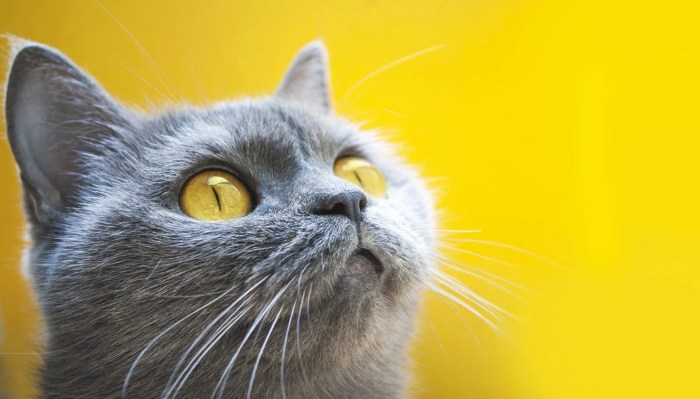
Source: color-meanings.com
Just like humans, cats have individual color preferences. What one cat finds appealing, another might ignore. Age, breed, and personality can all influence these preferences. A playful kitten might be more drawn to bright colors than a senior cat seeking a quiet retreat.Observing your cat’s reactions to different colors is the best way to determine their individual preferences. Pay attention to which toys they gravitate towards, which areas of the house they prefer, and how they react to different colored objects.Here’s a simple observation log format: Cat Name: [Cat’s Name] Date: [Date] Color: [Color Observed] Reaction: [Description of Cat’s Reaction – e.g., “Approached and sniffed,” “Ignored,” “Played with enthusiastically”]
The Role of Lighting
Different types of lighting significantly affect a cat’s perception of color. Natural sunlight provides the most complete spectrum of light, allowing cats to see colors as vividly as they can. Artificial light, particularly incandescent bulbs, emits a warmer, yellower light that can distort color perception. Fluorescent lights can create a cooler, bluer cast.Light intensity also plays a crucial role. In dim light, cats rely more on their rod cells, reducing their ability to distinguish colors.
Brighter light allows them to utilize their cones more effectively.Optimizing lighting to enhance a cat’s ability to see colors involves maximizing natural light whenever possible. Supplementing with full-spectrum LED bulbs can provide a more balanced light source.Imagine sunlight filtering through a window, casting a soft, diffused glow across the room. To a cat, the blues and grays of the furniture might appear subtly more vibrant, while the reds and oranges are muted and less distinct.
Now picture the same room lit by a standard incandescent bulb. The overall tone is warmer, and the blues and grays appear less saturated, while the reds and oranges take on a more brownish hue.
Closure
So, what colors do cats like the most? The short answer is blues and grays, followed by yellows and greens. Reds and oranges are largely invisible to them. But remember, every cat is an individual, and their preferences can vary. By understanding the basics of feline color vision and paying attention to your cat’s reactions, you can create a home that’s not only aesthetically pleasing to you but also stimulating and comforting for your beloved companion.
It’s a small change that can make a big difference in their overall well-being!
Ultimately, enriching your cat’s environment with their preferred colors, combined with engaging textures and playful movement, is a fantastic way to boost their happiness and create a stronger bond. Now you’re equipped with the knowledge to tailor your cat’s world to their unique visual experience!
Popular Questions
Why can’t cats see all the colors humans do?
Cats have fewer cone cells (responsible for color vision) in their eyes compared to humans. This results in dichromatic vision, meaning they primarily see shades of blue, yellow, and gray.
Do all cats like blue and gray?
While blues and grays are generally preferred, individual cats can have different preferences. Observing your cat’s reactions to various colors is the best way to determine their personal favorites.
Why do cats chase red laser pointers if they can’t see red well?
They’re chasing the movement, not the color. The bright dot is stimulating, even if the color itself isn’t particularly visible.
How does lighting affect a cat’s color perception?
Different lighting conditions can alter how colors appear. Natural sunlight generally provides the best color visibility for cats, while artificial light can distort colors.
Should I repaint my house in blue and gray for my cat?
Not necessarily! While incorporating these colors into their environment is beneficial, a drastic change isn’t required. Focus on toys, bedding, and smaller accents.
Are there any colors that cats find stressful?
While not definitively proven, very bright or intense colors, especially reds and oranges, might be overstimulating for some cats and potentially contribute to stress.
