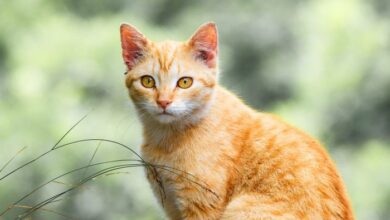
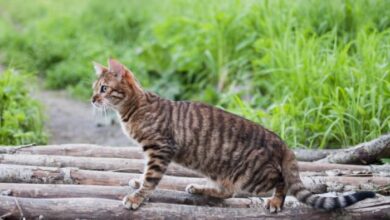
Have you ever noticed a cat with strikingly bold, narrow stripes running down its sides, resembling a fish’s scales? That’s likely a mackerel tabby! This captivating pattern is more than just a pretty face; it’s rooted in fascinating genetics and appears across a wide range of breeds. We’ll dive deep into the world of mackerel tabbies, exploring their genetics, color variations, common breeds, and even a bit of their history and care.
The mackerel tabby pattern, named after the silvery stripes of the mackerel fish, is a dominant trait influenced primarily by the agouti gene. This gene dictates whether a cat’s hair shaft will have a banded appearance, creating the characteristic “tick” markings. Understanding this genetic basis helps us appreciate the diversity within the tabby world and how different genes interact to produce the stunning variations we see in our feline friends.
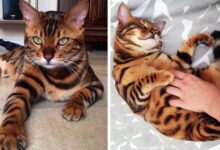


The Alluring Mackerel Tabby: A Deep Dive
The mackerel tabby pattern is one of the most recognizable and beloved markings in the cat world. It’s a classic look, often associated with wildness and beauty, but there’s a fascinating science behind those striking stripes. This article will explore everything you need to know about mackerel tabbies, from their genetics to the breeds that commonly showcase this pattern, and even a little about their history and care.
Let’s unravel the mysteries of this captivating feline design.
Defining the Mackerel Tabby Pattern
The mackerel tabby pattern, named after the fish with its distinctive banded appearance, is a result of complex genetic interactions. At the heart of it all is the agouti gene. This gene dictates whether a cat will express a banded (agouti) or solid (non-agouti) coat. In agouti cats, each individual hair has bands of different colors, creating the tabby pattern.
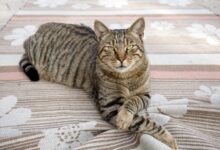
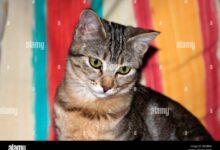
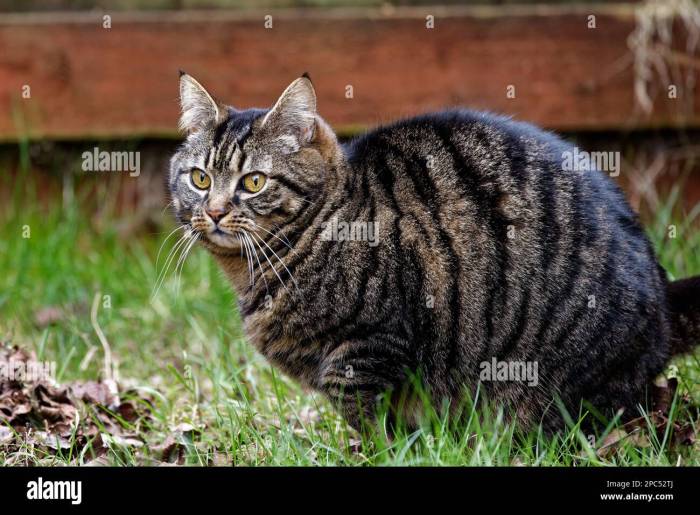
The “mackerel” designation specifically refers to the narrow, parallel stripes that run along the cat’s sides, resembling the bones in a mackerel fish.The “tick” markings are a key characteristic of the mackerel tabby. These are the individual banded hairs that create the overall striped effect. You’ll notice these ticks most prominently on the belly and legs of a mackerel tabby.
They’re a visual testament to the agouti gene in action.Distinguishing a mackerel tabby from other tabby patterns – classic, spotted, and ticked – is crucial. Classic tabbies have swirling, marbled patterns. Spotted tabbies have distinct spots rather than stripes. Ticked tabbies, also known as Abyssinian tabbies, have a more subtle pattern where the banding is less pronounced and the stripes are often ghosted or blended.
| Pattern Name | Swirl/Band Presence | Spot Size | Tick Distribution |
|---|---|---|---|
| Mackerel | Narrow, parallel stripes | N/A | Prominent on belly and legs |
| Classic | Swirling, marbled patterns | N/A | Minimal tick distribution |
| Spotted | Distinct spots | Variable, from small to large | Moderate tick distribution |
| Ticked | Ghosted or blended stripes | N/A | Evenly distributed, subtle ticking |
Color Variations within Mackerel Tabby
Mackerel tabby cats come in a stunning array of colors. Silver is a very common and striking variation, with a silvery-grey background and darker stripes. Brown mackerel tabbies have rich, chocolate-brown stripes against a warmer background. Orange or red mackerel tabbies are vibrant and eye-catching. Blue mackerel tabbies, a result of dilution, have a softer, greyish-blue hue.Dilution genes play a significant role in altering the appearance of mackerel tabby cats.
These genes essentially “fade” the base color. For example, a black mackerel tabby with the dilution gene will become a blue mackerel tabby. A chocolate brown mackerel tabby with the dilution gene will become a lilac mackerel tabby.The influence of tortoiseshell (tortie) genetics, resulting in a “torbie” (tortoiseshell tabby) pattern, adds another layer of complexity. In torbie cats, patches of red or cream are interspersed with the mackerel tabby stripes, creating a unique and beautiful combination.
The distribution and intensity of the red/cream patches can vary greatly.Imagine a visual guide showcasing these color combinations. It would feature a central image of a mackerel tabby cat, with smaller panels branching out to illustrate different variations. One panel might show a silver mackerel tabby with thick, dark grey stripes and a bright white underbelly. Another could depict a blue mackerel tabby with fainter, greyish-blue stripes and a slightly warmer background.
A third panel could display a torbie mackerel tabby with patches of orange and cream interspersed among the brown stripes. The visual guide would also include a scale indicating stripe thickness, ranging from very thin and delicate to bold and prominent, and a scale for background color intensity, from pale and muted to rich and saturated.
Breeds Commonly Exhibiting the Mackerel Tabby Pattern
Several cat breeds are known for frequently displaying the mackerel tabby pattern. The American Shorthair often showcases this pattern, particularly in brown and silver variations. Maine Coons, with their large size and luxurious coats, are also commonly found in mackerel tabby patterns. Bengals, bred to resemble wild cats, almost always exhibit the mackerel tabby pattern, often with striking rosettes. The Abyssinian, famous for its ticked coat, can also display a subtle form of the mackerel tabby pattern.Breed standards regarding the mackerel tabby pattern vary.
In American Shorthairs, the pattern should be clearly defined and well-marked. Maine Coons are judged on the overall balance and harmony of the pattern, with a preference for bold markings. Bengal breed standards specifically require the pattern to be clearly visible and sharply defined, often described as “wild-type.” Abyssinians, while primarily known for their ticked pattern, may exhibit a ghosted mackerel tabby pattern, which is considered acceptable.The manifestation of the mackerel tabby pattern differs across these breeds.
In Bengals, the stripes are often bold and sharply defined, sometimes forming rosettes. In Maine Coons, the pattern tends to be broader and more blended, complementing their long, flowing fur. American Shorthairs typically have a more classic, well-defined mackerel pattern. Abyssinians have a more subtle, ghosted pattern.
The Bengal breed standard emphasizes the mackerel tabby pattern as a defining characteristic, requiring “distinct, bold, and clearly defined markings.” The pattern should be “wild-type,” meaning it closely resembles the markings of a wild cat, showcasing a strong contrast between the stripes and the background color.
Distinguishing Features and Identification
Source: alamy.com
While some patterns might superficially resemble the mackerel tabby, subtle differences can help confirm a true mackerel tabby. Look for the consistent, parallel stripes running along the sides of the cat, rather than swirling patterns or distinct spots. The presence of prominent “tick” markings on the belly and legs is another key indicator.The “necklace” marking, a distinctive feature in many mackerel tabbies, is a band of darker fur around the neck.
This marking is often more pronounced in males. It’s a visual cue that can help identify a cat as a mackerel tabby.Stripe width and density are also important factors. Mackerel tabbies typically have relatively narrow, well-defined stripes. The density of the stripes can vary, but a true mackerel tabby will have a consistent pattern throughout the body.Identifying a mackerel tabby pattern on a kitten can be tricky, as the markings may be less defined.
Start by looking for faint stripes along the sides. As the kitten grows, the markings will become more pronounced. Pay close attention to the belly and legs, where the “tick” markings are most visible.
Genetics and Breeding Considerations
The inheritance of the mackerel tabby pattern follows a relatively straightforward genetic model. The agouti gene (A) is dominant over the non-agouti gene (a). This means that a cat with at least one copy of the agouti gene (AA or Aa) will express a tabby pattern. The specific type of tabby pattern (mackerel, classic, spotted, ticked) is determined by other genes.Producing specific color combinations within a mackerel tabby breeding program requires careful consideration of the parent’s genotypes.
For example, breeding a silver mackerel tabby (aa) with a brown mackerel tabby (aa) will likely result in silver and brown mackerel tabby kittens. Understanding the underlying genetics allows breeders to predict and influence the coat colors of their offspring.Genetic testing is available to determine a cat’s tabby status. These tests typically analyze DNA to identify the presence or absence of the agouti gene.
While these tests can confirm whether a cat is a tabby carrier, they may not always be able to determine the specific type of tabby pattern.Here’s a flowchart illustrating possible genotypes and phenotypes of offspring from two mackerel tabby parents (both Aa):[Flowchart Description: Start with “Two Mackerel Tabby Parents (Aa x Aa)”. Branch 1: “AA offspring – Mackerel Tabby”. Branch 2: “Aa offspring – Mackerel Tabby”.
Branch 3: “aa offspring – Non-Agouti (Solid Color)”. Each branch should have a 25% probability indicated.]
Mackerel Tabby Appearance and Physical Characteristics
Cats exhibiting the mackerel tabby pattern can vary significantly in body structure and size, depending on the breed. However, they generally fall within the medium to large size range. American Shorthairs and Maine Coons tend to be larger, while Abyssinians are typically smaller and more slender.Coat length significantly impacts the visual impact of the mackerel tabby markings. Short-haired cats showcase the stripes clearly and distinctly.
Medium-haired cats have a softer, more blended appearance. Long-haired cats create a flowing, luxurious effect, with the stripes subtly visible beneath the fur.Common eye colors found in mackerel tabby cats include green, gold, and copper. Green eyes are often associated with silver mackerel tabbies, while gold and copper eyes are more common in brown and orange mackerel tabbies. These eye color associations are linked to the underlying genetics of pigment production.Here’s a list of physical traits often observed in mackerel tabby cats, categorized by head shape, ear size, and tail length:* Head Shape: Round, wedge-shaped, slightly triangular
Ear Size
Medium to large, pointed, often with tufts of fur
Tail Length
Medium to long, tapering to a point
Historical and Cultural Significance
Throughout history, mackerel tabby cats have been associated with independence, mystery, and a connection to the wild. Their striking markings have often been interpreted as symbols of good luck or protection. In some cultures, they were believed to ward off evil spirits.The pattern has been depicted in art and literature for centuries. Ancient Egyptian art frequently featured tabby cats, reflecting their importance in Egyptian culture.
In more recent times, mackerel tabbies have appeared in countless paintings, illustrations, and literary works, often representing a sense of adventure or untamed beauty.Folklore and superstitions surrounding cats with this pattern vary across cultures. Some believe that mackerel tabbies bring good fortune to their owners, while others associate them with heightened intuition and psychic abilities.Here’s a timeline highlighting significant moments in the recognition and appreciation of the mackerel tabby pattern:[Timeline Description: 3000 BC – Tabby cats depicted in Ancient Egyptian art.
1800s – Formal recognition of tabby patterns in cat fancy. Early 1900s – Development of breed standards for breeds exhibiting the mackerel tabby pattern. 1960s – Introduction of the Bengal breed, further popularizing the mackerel tabby pattern. Present – Continued appreciation and breeding of mackerel tabby cats across various breeds.]
Caring for a Mackerel Tabby Cat
General care guidelines for cats apply to mackerel tabby cats, emphasizing aspects relevant to their coat type. Regular grooming is essential to prevent matting, especially in long-haired varieties. Brushing several times a week helps remove loose fur and distribute natural oils, keeping the coat healthy and vibrant.Potential health concerns may be more prevalent in certain breeds exhibiting the mackerel tabby pattern.
For example, Maine Coons are prone to hypertrophic cardiomyopathy (HCM), while Bengals can be susceptible to progressive retinal atrophy (PRA). Regular veterinary checkups and genetic testing can help identify and manage these potential health issues.A balanced diet is crucial for maintaining a healthy coat and vibrant markings. Look for cat food that is rich in protein and essential fatty acids, such as omega-3 and omega-6.
These nutrients support skin and coat health, promoting a shiny and lustrous appearance.
| Coat Length | Recommended Tool | Technique |
|---|---|---|
| Short | Rubber brush or grooming glove | Gentle brushing in the direction of hair growth |
| Medium | Slicker brush and metal comb | Brush to remove loose fur, then comb to detangle |
| Long | Slicker brush, metal comb, and detangling spray | Brush and comb regularly, paying close attention to areas prone to matting. Use detangling spray as needed. |
End of Discussion
From the subtle nuances of stripe density to the vibrant range of colors, the mackerel tabby pattern offers a constant source of wonder. Whether you’re a seasoned cat breeder, a curious pet owner, or simply an admirer of feline beauty, exploring the genetics and characteristics of the mackerel tabby provides a deeper appreciation for the incredible diversity within the cat world.
So next time you see a cat with those distinctive stripes, you’ll know exactly what you’re looking at – a truly remarkable example of nature’s artistry!
FAQ Summary
What exactly
-is* a “tick” marking?
Tick markings are the individual banded hairs that create the mackerel tabby pattern. Each hair has alternating bands of color, giving the coat a slightly textured, shimmering appearance.
How does a mackerel tabby differ from a classic tabby?
Mackerel tabbies have narrow, parallel stripes, while classic tabbies have swirling, blotchy patterns. Think of mackerel as stripes and classic as marble.
Can a tortoiseshell cat also be a tabby?
Yes! A “torbie” (tortoiseshell tabby) combines the tortoiseshell pattern (patches of black and orange) with the mackerel tabby stripes. It’s a beautiful and relatively uncommon combination.
What does the “necklace” marking refer to?
The necklace marking is a distinctive dark stripe that wraps around the throat of many mackerel tabby cats, resembling a necklace. It’s a common and recognizable feature.
Is genetic testing necessary to confirm a cat is a mackerel tabby?
While visual identification is usually sufficient, genetic testing can confirm a cat’s tabby status and help breeders predict offspring patterns with greater accuracy.
What are some common eye colors in mackerel tabby cats?
Mackerel tabbies can have a variety of eye colors, including green, gold, yellow, and copper. There’s no direct genetic link between eye color and the tabby pattern itself.