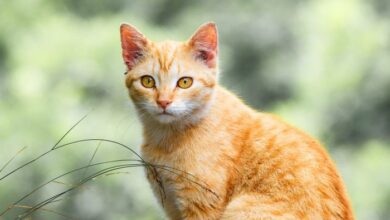
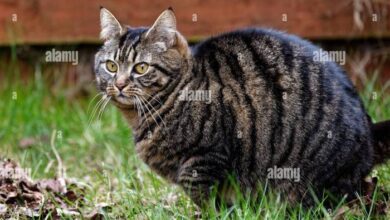
Have you ever been captivated by a cat’s coat that mimics the striking patterns of a tiger? The “tiger striped” look, more formally known as tabby, is a widespread and fascinating phenomenon in the feline world. It’s more than just a pretty pattern; it’s a window into the complex genetics that shape our beloved companions. This guide dives deep into the world of tiger striped cat breeds, exploring the science behind the stripes, the breeds that proudly display them, and how to care for these gorgeous felines.
The tabby pattern isn’t a breed itself, but rather a coat pattern that appears across numerous breeds. It’s rooted in a fascinating interplay of genes, primarily the Agouti gene, which dictates whether a cat’s hairs are banded (creating the tabby effect) or solid. Variations within this gene, combined with others, result in the diverse range of tabby patterns we see – classic swirls, mackerel stripes, spotted markings, and ticked agouti.
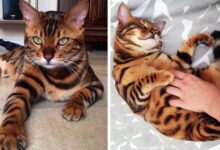
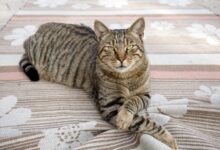
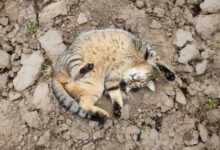

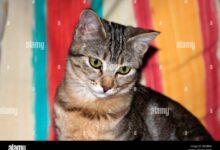
Understanding this genetic basis helps us appreciate the beauty and complexity of feline coat coloration.
Tiger Striped Cats: A Comprehensive Guide to Tabby Patterns
The mesmerizing patterns of tiger stripes on cats have captivated humans for centuries. But these aren’t just random markings; they’re a fascinating display of genetics and evolution, resulting in what we commonly refer to as “tabby” patterns. This guide will delve into the world of tiger striped cats, exploring the genetics behind these patterns, identifying popular breeds that showcase them, and providing insights into their care and unique characteristics.
Whether you’re a seasoned cat lover or just starting your feline journey, prepare to be amazed by the diversity and beauty of tabby cats.The term “tabby” isn’t a breed itself, but rather a coat pattern. It’s one of the most common and ancient patterns found in domestic cats, appearing in countless breeds and mixed breeds worldwide. The distinctive stripes, swirls, spots, or ticked patterns are a result of a complex interplay of genes, primarily the Agouti gene.
Understanding this gene and its variations is key to appreciating the diversity of tabby patterns. The prevalence of tabby patterns is a testament to their evolutionary advantage, likely providing camouflage and aiding in hunting success for wild ancestors.
Tabby Pattern Types: A Detailed Overview
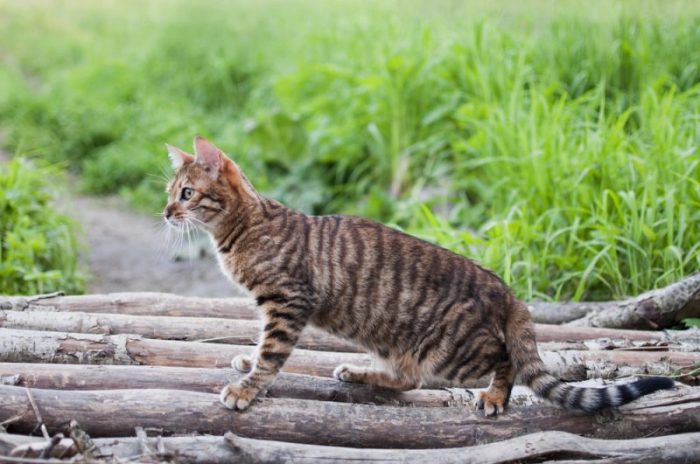
Source: catster.com
| Tabby Pattern Type | Description | Common Breed Associations |
|---|---|---|
| Classic | Characterized by bold, swirling patterns on the sides, often resembling a marble cake. A distinctive “M” marking is present on the forehead. | Maine Coon, British Shorthair, Persian |
| Mackerel | Features narrow, parallel stripes running vertically down the sides, resembling the skeleton of a mackerel fish. This is the most common tabby pattern. | Abyssinian, Bengal, Egyptian Mau |
| Spotted | Displays distinct spots of varying sizes and shapes scattered across the body. These spots can be large and bold or small and subtle. | Bengal, Ocicat, Toyger |
| Ticked | Lacks distinct stripes or spots; instead, each hair shaft has bands of different colors, creating a “ticked” or “agouti” appearance. | Abyssinian, Somali, Singapura |
Popular Cat Breeds Exhibiting Tiger Striped Patterns
Several cat breeds are renowned for their striking tiger striped markings. Let’s explore five of the most popular, examining their typical appearance, historical background, and unique characteristics.
Maine Coon: The Gentle Giant with Classic Markings
Maine Coons are often associated with the classic tabby pattern. Their markings typically involve broad, swirling patterns on their sides, a prominent “M” on their forehead, and often darker stripes along their spine. The coat color variations are incredibly diverse, ranging from brown tabby (often called “seal tabby”) with rich brown stripes and a cream or white undercoat, to silver tabby with charcoal gray stripes and a silvery-white undercoat, and even red tabby (ginger) with reddish-orange stripes and a white undercoat.
Historically, Maine Coons originated in the state of Maine, where they developed a thick, water-resistant coat to withstand harsh winters. Their tabby patterns likely provided camouflage in the forests and fields of their native habitat. Visual Description of a Maine Coon with a Classic Tabby Pattern: Imagine a large, muscular cat with a long, flowing coat of rich brown and cream. The fur is dense and plush, with swirling patterns across its sides that resemble a marble cake.
A distinctive dark brown “M” marking is clearly visible on its forehead. The legs are striped with darker brown, and the tail is long and bushy, with rings of brown and cream. The face is broad and expressive, with large, tufted ears and intelligent green eyes.
Bengal: A Fusion of Domestic and Wild
Bengals are instantly recognizable for their wild appearance, largely due to their striking tabby markings.
Abyssinian: The Elegant Ticked Tabby
Abyssinians are known for their ticked tabby pattern.
American Shorthair: A Versatile and Adaptable Breed
American Shorthairs frequently display tabby patterns.
Egyptian Mau: The Ancient Spotted Beauty
Egyptian Maus are celebrated for their unique spotted tabby pattern.
Bengal Cats: The Defining Example
The Bengal breed stands out as a prime example of a cat breed heavily influenced by tiger striped markings. Their unique history is intertwined with the Asian Leopard Cat (ALC), a small wild cat native to Asia. In the 1960s, Jean Mill, a geneticist, began a breeding program to create a domestic cat with the appearance of a wild cat, specifically the ALC.
By carefully crossing ALCs with domestic cats, she successfully established the Bengal breed.The Bengal breed standard allows for a range of acceptable tabby patterns, primarily marbled and spotted. Marbled Bengals exhibit swirling, flowing patterns reminiscent of marble, while spotted Bengals display distinct spots of varying sizes. Breeders selectively breed Bengals to enhance the “wild” appearance of their markings, aiming for bold, contrasting patterns and rosettes (circular spots with a darker Artikel).
The goal is to create a cat that visually resembles a miniature leopard or jaguar.
According to breed standards, the ideal Bengal tabby pattern should feature bold, clearly defined markings with a high degree of contrast between the background color and the stripes or spots. Rosettes, when present, should be well-formed and have a dark border, resembling the markings of a wild cat. The pattern should flow seamlessly across the body, creating a visually striking and dynamic appearance.
Maine Coon Cats and Their Tabby Variations
Maine Coons frequently display classic tabby patterns due to the genetic predisposition within the breed. The Agouti gene, responsible for the tabby pattern, is highly expressed in Maine Coons, leading to the prevalence of swirling patterns.The color combinations seen in Maine Coon tabbies are incredibly diverse. Brown tabby, also known as seal tabby, is a common variation, featuring rich brown stripes and a cream or white undercoat.
Silver tabby showcases charcoal gray stripes and a silvery-white undercoat. Red tabby (ginger) displays reddish-orange stripes and a white undercoat. Other variations include blue tabby, cream tabby, and smoke tabby.The intensity and clarity of the tabby markings in Maine Coons are influenced by genetics. Some cats have bold, sharply defined markings, while others have more subtle, muted patterns. This variation is due to the interaction of multiple genes that control pigment production and distribution.
Identifying a Classic Tabby Pattern in a Maine Coon Kitten:
1. Observe the Forehead
Look for a distinct “M” marking on the forehead. This is a hallmark of the classic tabby pattern.
2. Examine the Sides
Check for swirling, circular patterns on the sides of the body. These patterns should be broad and well-defined.
3. Assess the Stripes
Note whether the stripes are bold and contrasting or more subtle and blended.
4. Consider the Tail
Observe the tail for rings or stripes, which are common in classic tabby patterns.
5. Look at the Legs
Check for stripes or markings on the legs.
Abyssinian and Somali Cats: Ticked Tabby Patterns
Abyssinians and Somalis are renowned for their unique “ticked” tabby pattern, also known as the agouti pattern. Unlike classic, mackerel, or spotted tabbies, ticked cats don’t have distinct stripes or spots. Instead, each individual hair shaft has alternating bands of different colors, creating a shimmering, salt-and-pepper appearance.The genetic mechanism behind the ticked tabby pattern involves the Agouti gene. In ticked cats, the Agouti gene is expressed in a way that allows for the banding of colors along each hair shaft.
This prevents the development of distinct stripes or spots. Comparison of Ticked Tabby Patterns in Abyssinians versus Somalis:| Feature | Abyssinian Ticked Tabby | Somali Ticked Tabby ||—|—|—|| Coat Length | Short, dense, and close-lying | Semi-long, silky, and flowing || Overall Appearance | Sleek and muscular | More fluffy and fox-like |
American Shorthair and Other Breeds
Beyond the breeds already discussed, several other cat breeds frequently exhibit tiger striped patterns. British Shorthairs often display classic tabby patterns, while Norwegian Forest Cats are known for their mackerel tabby markings. These patterns contribute significantly to the overall aesthetic appeal of these breeds, enhancing their charm and character. Other Breends that can display tabby patterns:* Ocicat: Known for its spotted tabby pattern, resembling an ocelot.
Toyger
Bred to resemble a miniature tiger, with bold, dark stripes on a golden background.
Chartreux
While often solid blue-gray, Chartreux cats can occasionally display ghost tabby markings.
Korat
Similar to Chartreux, Korats can sometimes exhibit subtle tabby markings.
Understanding Tabby Genetics in Detail
The Agouti gene plays a pivotal role in determining tabby patterns. This gene controls whether a cat’s hairs are banded (agouti) or solid colored. When the Agouti gene is “on,” it allows for the banding of colors along each hair shaft, resulting in a tabby pattern. When the Agouti gene is “off,” it produces a solid-colored cat.Other genes also influence the intensity, clarity, and distribution of tabby markings.
Genes controlling pigment production and deposition affect the darkness and contrast of the stripes or spots. Modifier genes can alter the shape and arrangement of the markings.The concept of “ghost tabby” markings refers to faint tabby patterns that are visible in solid-colored cats. These markings are a result of the Agouti gene being partially expressed, allowing for subtle banding of colors along the hair shafts.
They are often more visible when the cat is wet or in bright sunlight.Different combinations of genes can result in a wide variety of tabby patterns. For example, a cat with a dominant Agouti gene and a specific modifier gene might display a spotted tabby pattern, while a cat with a recessive Agouti gene and a different modifier gene might display a ticked tabby pattern.
Caring for Tiger Striped Cats
Caring for tiger striped cats involves general cat care principles applicable to all breeds, regardless of their coat pattern. This includes providing a nutritious diet, fresh water, regular veterinary checkups, and plenty of opportunities for play and enrichment. Breed-Specific Care Requirements:* Maine Coons: Require regular grooming to prevent mats and tangles due to their long, thick coat.
Bengals
Are highly active and require plenty of playtime and mental stimulation.
Abyssinians
Are intelligent and curious and benefit from interactive toys and puzzle feeders.Potential health concerns common in these breeds include hypertrophic cardiomyopathy (HCM) in Maine Coons and Bengals, and progressive retinal atrophy (PRA) in Abyssinians. Regular veterinary checkups and genetic testing can help monitor for these conditions. Essential Items for Caring for a Tiger Striped Cat:* High-quality cat food
- Fresh water bowl
- Litter box and litter
- Scratching post
- Interactive toys
- Grooming brush and comb
- Cat carrier
- First-aid kit
Distinguishing Tabby Patterns
The four main tabby patterns – Classic, Mackerel, Spotted, and Ticked – each possess unique characteristics that allow for easy identification. Understanding these differences is key to appreciating the diversity of tabby markings. Detailed Descriptions of Each Pattern:* Classic: Swirling, marble-like patterns with a distinctive “M” on the forehead.
Mackerel
Narrow, parallel stripes running vertically down the sides.
Spotted
Distinct spots of varying sizes and shapes scattered across the body.
Ticked
Each hair shaft has bands of different colors, creating a shimmering, salt-and-pepper appearance. Visual Guide to Identifying Tabby Patterns: (No image links provided, descriptions only) Imagine a cat with broad, swirling patterns on its sides – that’s likely a classic tabby. Now picture a cat with narrow, vertical stripes – that’s a mackerel tabby. A cat covered in spots would be a spotted tabby, and a cat with a shimmering, salt-and-pepper coat is a ticked tabby.
Flowchart to Determine Tabby Pattern:
Does the cat have distinct stripes or spots?
Yes
Proceed to question 2.
No
The cat likely has a ticked tabby pattern.
Are the stripes narrow and parallel?
Yes
The cat is likely a mackerel tabby.
No
Proceed to question 3.
Are the markings swirling and circular?
Yes
The cat is likely a classic tabby.
No
The cat is likely a spotted tabby.
Ultimate Conclusion
From the majestic Maine Coon’s classic swirls to the Bengal’s wild-inspired spots, the tiger striped pattern adds a unique charm to a wide variety of cat breeds. Whether you’re a seasoned cat enthusiast or just starting your journey into the world of feline appreciation, understanding the genetics and characteristics of these breeds can deepen your connection with these amazing animals.
Ultimately, a tiger striped cat isn’t just a pet; it’s a living work of art, a testament to the wonders of nature and the enduring bond between humans and cats.
So, embrace the stripes, appreciate the science, and enjoy the company of these captivating creatures. There’s a whole world of feline beauty waiting to be explored!
FAQ Corner
Why are some cats not tabby, even though their parents are?
The tabby pattern is dominant, but other genes can mask it. If a cat inherits two copies of a gene that suppresses tabby markings, it will appear solid-colored, even if it carries the tabby gene from its parents. This is often referred to as a “ghost tabby.”
Can you tell how old a tabby cat is by its markings?
Not really! While some subtle changes in the clarity and definition of tabby markings can occur with age, there’s no reliable way to determine a cat’s age based solely on its stripes.
What’s the difference between a classic and a mackerel tabby?
Classic tabbies have swirling, marbled patterns, often resembling a bullseye. Mackerel tabbies have narrow, parallel stripes that run down the sides of the body, resembling a fish skeleton.
Do all Bengal cats have spots?
While spots are the most common and desired pattern in Bengals, they can also exhibit a marbled tabby pattern, which features swirling patterns similar to classic tabbies.
What does it mean when someone says a cat is “ticked”?
A “ticked” tabby pattern, seen in Abyssinians and Somalis, means each individual hair has alternating bands of color, creating a shimmering, salt-and-pepper effect rather than distinct stripes or spots.
Are tabby cats more prone to certain health problems?
The tabby pattern itself doesn’t directly cause health problems. However, certain breeds known for displaying tabby patterns (like Maine Coons and Bengals) can be predisposed to specific genetic conditions. Responsible breeders screen for these conditions.