It’s fascinating to consider how genetic variations can manifest across species. While Down syndrome is well-known in humans, the possibility of similar chromosomal abnormalities in our feline companions is a relatively unexplored area. This exploration delves into the potential for “Down syndrome in cats,” examining observed traits, diagnostic challenges, and the compassionate care these unique animals might require. We’ll navigate the complexities of feline genetics, drawing parallels to human understanding while acknowledging the distinct differences.
Genetic variations are a natural part of life for cats, leading to the incredible diversity we see in breeds and individual personalities. However, sometimes these variations can involve chromosomal differences, potentially resulting in a condition resembling Down syndrome. Understanding the history of recognizing these abnormalities, alongside the science behind Down syndrome in humans, provides a crucial foundation for investigating its potential presence in cats.
![What is Feline Radial Hypoplasia? - [Vet Explains Pets]](https://miowcat.com/wp-content/uploads/2026/05/persian-cat-1-header2-220x150.jpg)

Introduction to Feline Genetic Variations
Cats, like all living creatures, possess a remarkable genetic blueprint that dictates their physical traits, behaviors, and susceptibility to certain health conditions. While most cats inherit a standard set of genes resulting in typical feline characteristics, variations can occur. These variations can range from subtle differences in coat color to more significant deviations from the norm. Understanding these genetic variations is crucial for appreciating the diversity within the feline population and for addressing potential health concerns that may arise.
Common feline genetic conditions, such as hypertrophic cardiomyopathy (HCM), polycystic kidney disease (PKD), and various coat color mutations, demonstrate the impact of genetic factors on feline health. These conditions highlight the importance of genetic screening and responsible breeding practices. Historically, observations of unusual feline traits have been documented for centuries, though the underlying genetic mechanisms were not understood until the advent of modern genetics.
Understanding Down Syndrome: The Human Perspective
Down syndrome, also known as Trisomy 21, is a genetic condition in humans characterized by the presence of an extra copy of chromosome 21. This chromosomal abnormality leads to a range of physical characteristics and developmental challenges. Individuals with Down syndrome often exhibit distinctive facial features, including a flattened facial profile, upward slanting eyes, and a small nose. They may also experience intellectual disabilities, delayed speech development, and an increased risk of certain health problems, such as heart defects and thyroid disorders.
The genetic mechanism behind Down syndrome is relatively straightforward: an error during cell division results in an individual having three copies of chromosome 21 instead of the usual two. While the specific mechanisms causing this error can vary, advanced maternal age is a known risk factor. The parallels between Down syndrome in humans and potential chromosomal abnormalities in other species lie in the fundamental principle of gene dosage – having an extra copy of a chromosome can disrupt normal development and function.
Potential Manifestations in Cats: Observed Traits
While Down syndrome as it exists in humans hasn’t been definitively diagnosed in cats, anecdotal observations suggest that some felines may exhibit traits potentially indicative of a similar chromosomal abnormality. It’s important to emphasize that these are
-potential* indicators and require thorough investigation and genetic testing for confirmation. These observations are based on reports from breeders, veterinarians, and cat owners.
- Facial Features: Some cats have been reported to have a slightly flattened facial profile, a broader nose, and a more open mouth. The eyes might appear slightly wider-set than usual.
- Body Proportions: A stockier build, with shorter limbs relative to the body size, has been noted in some cases. The torso might appear proportionally longer.
- Coat Characteristics: While not consistently observed, some cats with suspected conditions have been reported to have a softer, finer coat texture than typical.
- Behavioral Differences: Anecdotal reports suggest that these cats may exhibit a more docile and affectionate temperament, sometimes accompanied by a heightened sensitivity to stimuli.
- Motor Skills and Coordination: Some cats have been observed to have slightly impaired motor skills, such as clumsiness or difficulty with jumping. A tendency to stumble or exhibit a lack of coordination has also been reported.
Diagnostic Challenges and Testing Methods
Definitively diagnosing a condition mirroring Down syndrome in cats presents significant challenges. The subtle nature of the observed traits, coupled with the lack of a standardized diagnostic criteria, makes it difficult to distinguish these cats from those with other genetic variations or developmental abnormalities. Furthermore, the genetic complexity of chromosomal abnormalities can make them difficult to detect.
- Karyotyping: This traditional method involves examining a cat’s chromosomes under a microscope to identify any numerical or structural abnormalities. A sample of cells, typically from blood or bone marrow, is cultured, and the chromosomes are stained and arranged in pairs.
- Chromosomal Microarray Analysis (CMA): CMA is a more advanced technique that uses DNA probes to detect subtle chromosomal deletions or duplications that may not be visible with karyotyping. This method offers higher resolution and can identify smaller genetic variations.
Current testing methods have limitations. Karyotyping may miss small chromosomal abnormalities, while CMA can be expensive and may not be readily available in all veterinary clinics. Further research is needed to develop more sensitive and specific diagnostic tests for feline chromosomal abnormalities.
Potential Causes and Risk Factors
Chromosomal abnormalities in cats, like those in humans, are often the result of spontaneous mutations during gamete formation (egg or sperm). These mutations occur randomly and are not typically inherited from the parents. However, certain factors may increase the likelihood of these events.
- Spontaneous Mutations: The most common cause is an error during meiosis, the process of cell division that produces eggs and sperm.
- Advanced Maternal Age: While not as significant a factor as in humans, advanced maternal age may be associated with a slightly increased risk of chromosomal abnormalities.
- Inbreeding: Breeding cats that are closely related can increase the likelihood of inheriting recessive genetic mutations, which may contribute to developmental abnormalities.
- Environmental Factors: The role of environmental factors in the development of chromosomal abnormalities in cats is not well understood. Exposure to certain toxins or radiation during pregnancy may potentially increase the risk, but more research is needed.
Health Concerns and Associated Conditions
Cats with suspected conditions mirroring Down syndrome may be predisposed to a range of health problems, although the specific manifestations can vary. These potential health concerns are often linked to the disruption of normal development caused by the chromosomal abnormality.
- Heart Defects: Congenital heart defects, such as ventricular septal defects (holes in the heart), are a common concern.
- Respiratory Issues: Respiratory problems, including brachycephalic syndrome (difficulty breathing due to shortened airways), may be observed.
- Immune Deficiencies: A weakened immune system, making the cat more susceptible to infections, is a possibility.
- Accelerated Aging: Some individuals with chromosomal abnormalities may experience accelerated aging, leading to a shortened lifespan.
Increased susceptibility to infections is a significant concern, as these cats may have difficulty fighting off common pathogens. Regular veterinary checkups and preventative care are essential.
Management and Supportive Care
A comprehensive care plan for cats with suspected conditions should focus on early intervention, supportive therapies, and proactive management of potential health problems. The goal is to maximize the cat’s quality of life and address any specific needs that may arise.
- Early Intervention: Early veterinary care and monitoring are crucial for identifying and addressing any health concerns promptly.
- Managing Health Problems: Medications and other therapies may be needed to manage heart disease, respiratory infections, or other conditions.
- Environmental Enrichment: Providing a stimulating and enriching environment can help improve the cat’s physical and mental well-being.
- Behavioral Modification: Addressing any behavioral issues through positive reinforcement techniques can enhance the cat’s quality of life.
Nutritional Considerations
Cats with suspected conditions may have unique nutritional needs due to potential metabolic differences. A carefully formulated diet can help support their overall health and well-being.
- High-Quality Diet: A balanced, high-quality diet that meets the cat’s nutritional requirements is essential.
- Digestibility: Choosing a diet that is easily digestible can help prevent gastrointestinal problems.
- Specific Dietary Supplements: Certain dietary supplements, such as omega-3 fatty acids, may be beneficial for supporting heart health and immune function.
- Weight Management: Regular monitoring of weight and body condition score is important to ensure the cat maintains a healthy weight.
Ethical Considerations and Responsible Breeding
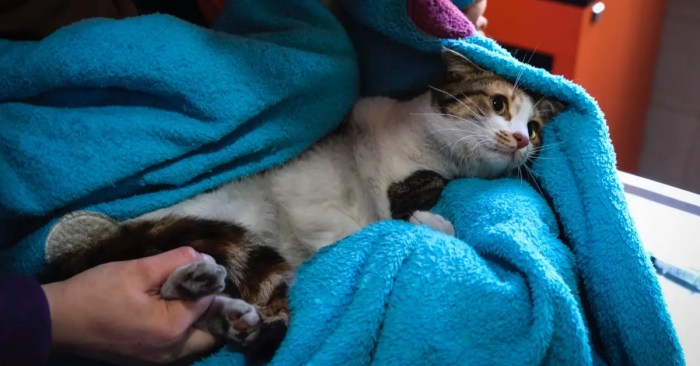
Source: greenmatters.com
Breeding cats with known or suspected genetic abnormalities raises significant ethical concerns. Responsible breeders have a duty to avoid perpetuating these conditions and to prioritize the health and welfare of their cats.
| Resource Name | Description | Contact Information |
|---|---|---|
| The Cat Fanciers’ Association (CFA) | Provides information on responsible breeding practices and genetic testing. | www.cfa.org |
| Breed-Specific Cat Clubs | Offer guidance on genetic health testing and responsible breeding within specific breeds. | Varies by breed; search online for the relevant club. |
| Veterinary Genetics Laboratory | Provides genetic testing services for cats. | www.vgl.uc Davis.edu |
Anecdotal Evidence and Case Studies
Documented cases of cats exhibiting traits suggestive of a condition similar to Down syndrome are limited, but several anecdotal reports exist. These cases often involve cats with a flattened facial profile, stockier build, and a docile temperament. However, it’s crucial to interpret anecdotal evidence with caution, as these traits can also be caused by other factors.
One documented case involved a domestic shorthair cat named “Oliver” who was brought to a veterinary clinic with concerns about his unusual appearance. Oliver had a noticeably flattened facial profile, a stockier build, and a tendency to drool. He also exhibited a docile temperament and a slight lack of coordination. Genetic testing revealed a chromosomal abnormality, although the specific nature of the abnormality was not fully characterized.
Oliver lived a relatively long and happy life with his owners, receiving supportive care for his health concerns.
The limited anecdotal evidence suggests that while cats may exhibit traits reminiscent of Down syndrome in humans, definitive diagnosis and understanding of the underlying genetic mechanisms remain a significant challenge. Further research is essential to clarify the prevalence and nature of these conditions in cats.
Future Research Directions
Further research is needed to better understand genetic variations in cats and to develop more accurate diagnostic tests. Several areas warrant investigation.
- Genetic Screening: Developing more sensitive and specific genetic screening tests for feline chromosomal abnormalities.
- Gene Therapy: Exploring the potential for gene therapy or other interventions to improve the health and well-being of affected cats.
- Comparative Genomics: Comparing the genomes of cats with suspected conditions to those of healthy cats to identify specific genetic markers.
Visual Representations: Describing Potential Physical Characteristics
Imagine a cat with a slightly flattened facial profile. The nose is a bit broader than typical, and the forehead slopes gently. The eyes, while still almond-shaped, appear slightly wider-set, giving the face a softer, more open expression. The chin might be less prominent, and the overall impression is one of gentle roundness rather than the sharp angles often seen in typical feline faces.
The fur is soft and plush, and the cat carries itself with a relaxed posture.
Picture a cat with slightly shorter limbs and a stockier build. The body is proportionally longer than usual, and the legs appear a bit shorter in relation to the torso. The cat is not clumsy, but its movements are deliberate and grounded. The chest is broad, and the overall impression is one of solidity and strength, rather than the lean, agile appearance of some breeds.
Envision a cat with a slightly enlarged tongue and a tendency to drool. The tongue protrudes slightly from the mouth, even when the cat is relaxed. Drool may be present, particularly after eating or drinking. The mouth appears slightly open, and the cat may have difficulty closing it completely. The jawline might be slightly softer, and the overall impression is one of gentle, relaxed features.
End of Discussion
The journey through understanding potential “Down syndrome in cats” reveals a landscape of challenges and opportunities. Definitive diagnosis remains difficult, but careful observation of physical traits, behavioral patterns, and potential health concerns can guide compassionate care. While more research is needed to fully unravel the genetic intricacies, prioritizing supportive care, nutritional needs, and ethical breeding practices offers the best path forward for these special felines, ensuring they live fulfilling and comfortable lives.
Ultimately, recognizing and addressing the needs of cats exhibiting traits suggestive of a chromosomal abnormality requires a blend of scientific understanding, veterinary expertise, and, most importantly, a deep commitment to their well-being. Continued research and responsible breeding practices are key to improving the lives of these unique animals.
Common Queries
What exactly
-is* Down syndrome in humans, and how does it relate to this discussion?
Down syndrome in humans is caused by an extra copy of chromosome 21 (Trisomy 21), leading to characteristic physical features and developmental delays. We’re exploring whether similar chromosomal abnormalities could occur in cats, resulting in a comparable condition.
Are there any confirmed cases of Down syndrome in cats?
Currently, there are no definitively confirmed cases of Down syndrome in cats as diagnosed with the same certainty as in humans. What we have are anecdotal observations of cats exhibiting traits that
-suggest* a chromosomal abnormality, prompting further investigation.
What are some of the physical traits that might indicate a cat has this condition?
Potential traits include a slightly flattened facial profile, shorter limbs, a stockier build, an enlarged tongue, and a tendency to drool. These are subtle differences from typical feline features and should be considered in conjunction with other observations.
What kind of genetic testing can be done on cats?
Karyotyping and chromosomal microarray analysis are the primary genetic testing methods. Karyotyping examines the number and structure of chromosomes, while microarray analysis looks for smaller chromosomal deletions or duplications.
What are the biggest health concerns for cats with suspected chromosomal abnormalities?
Potential health concerns include heart defects, respiratory issues, immune deficiencies, and an increased susceptibility to infections. Accelerated aging and a shortened lifespan are also possibilities.
What can I do to support a cat with suspected Down syndrome?
Focus on early intervention, supportive therapies, a tailored nutritional plan, environmental enrichment, and behavioral modification to improve their quality of life. Regular veterinary checkups are crucial.
Is it ethical to breed cats that might carry these genetic abnormalities?
Responsible breeding practices are paramount. Genetic counseling for breeders is essential to minimize the risk of passing on potential genetic abnormalities. Breeding cats with known or suspected conditions should be carefully considered and often avoided.

