Keeping our feline friends happy and healthy is a top priority, and often overlooked is the importance of proper hydration. Many cats simply don’t get enough water from their food or traditional water bowls, leading to potential health issues like urinary tract problems. The good news? Cat fountains offer a fantastic solution! These circulating water sources entice cats to drink more, providing fresh, filtered water in a way that’s often more appealing than a stagnant bowl.
We’ll explore the different types, materials, and features to help you choose the best cat fountain for your furry companion and your home.




The Ultimate Guide to Cat Fountains: Keeping Your Feline Hydrated
Let’s be honest, getting cats to drink enough water can be a challenge. They’re notoriously picky, and sometimes, a simple water bowl just doesn’t cut it. That’s where cat fountains come in. They’re not just a trendy gadget; they’re a vital tool for ensuring your cat stays properly hydrated, leading to a healthier and happier life. This guide will walk you through everything you need to know about choosing, using, and maintaining a cat fountain, so you can provide your furry friend with the best possible hydration solution.
Proper hydration is crucial for a cat’s overall health. Water helps regulate body temperature, aids in digestion, supports kidney function, and even contributes to a shiny coat. Dehydration can lead to urinary tract problems, kidney disease, and other serious health issues. Traditional water bowls, while convenient, often fall short. Water can quickly become stale, collect dust and hair, and develop an unpleasant taste that cats find unappealing.
Plus, the stagnant nature of still water doesn’t entice them like a flowing stream would.
Cats are naturally drawn to moving water – think about how they’re attracted to dripping faucets or running hoses. This instinct stems from their wild ancestors, who instinctively avoided standing water sources that could harbor bacteria or predators. Cat fountains mimic this natural behavior, providing fresh, flowing water that encourages cats to drink more. There’s a surprising variety of fountains available, from simple gravity-fed models to sophisticated electric fountains with multi-stage filtration systems.
Understanding these differences is key to finding the right fit for your cat and your home.
Types of Cat Fountains: A Comparative Overview
Choosing the right material for your cat fountain is a significant decision. Each material – ceramic, stainless steel, and plastic – offers unique advantages and disadvantages. Ceramic fountains are often aesthetically pleasing and don’t impart a taste to the water, but they can be prone to chipping and are generally more expensive. Stainless steel fountains are incredibly durable, hygienic, and easy to clean, but some cats may dislike the metallic taste.
Plastic fountains are the most affordable option and come in a wide range of designs, but they can scratch easily, absorb odors, and may not be as durable as the other two.
| Material | Ease of Cleaning | Noise Level | Price Range |
|---|---|---|---|
| Ceramic | Moderate – Can stain, requires gentle cleaning | Low to Medium | $30 – $80+ |
| Stainless Steel | Excellent – Easy to sanitize | Low to Medium | $25 – $60 |
| Plastic | Easy, but can scratch and absorb odors | Low to Medium | $15 – $40 |
Beyond material, cat fountains differ in their functionality. Gravity-fed fountains rely on the natural flow of water from a reservoir, requiring no electricity. They’re quiet and simple but may not provide as consistently fresh water as electric models. Electric fountains use a pump to circulate water, often incorporating filtration systems for improved water quality. Filtered fountains, typically electric, boast advanced filtration to remove impurities and odors.
Visually, you’ll find a range of designs. Tiered fountains offer multiple levels for cats of different sizes to drink from. Circular fountains provide a wide drinking surface. Spa-style fountains often feature a bubbling or cascading water effect, mimicking a natural spring.
Filtration Systems: Ensuring Water Purity
The quality of the water your cat drinks is paramount. Cat fountains utilize various filtration systems to remove impurities and improve taste. Activated carbon filters are the most common, effectively removing chlorine, odors, and some heavy metals. Foam filters trap larger debris like hair and sediment. Ion exchange resins can help reduce water hardness.
Regular filter replacement is crucial for maintaining optimal water quality. A general guideline is to replace filters every 2-4 weeks, depending on usage and water quality.
- Chlorine: Commonly found in tap water, chlorine can affect taste and potentially irritate a cat’s sensitive palate.
- Sediment: Rust, sand, and other particles can cloud the water and make it unappealing.
- Heavy Metals: Lead and other heavy metals can leach into water from pipes and fixtures, posing a health risk.
- Bacteria: Standing water can harbor bacteria, which can cause illness.
- Odors: Tap water can sometimes have an unpleasant odor that cats find off-putting.
Noise Levels: Finding a Quiet Fountain
A noisy fountain can be disruptive to both you and your cat. Several factors contribute to fountain noise, including the type of pump, water flow rate, and the fountain’s overall construction. Magnetic pumps are generally quieter than submersible pumps, as they operate outside the water reservoir. Vibration can also amplify noise, so a stable base and vibration dampeners can help.
Placement is key – avoid placing the fountain on a hard surface that transmits vibrations.
| Fountain Model | Reported Noise Level |
|---|---|
| [Fountain Model A] | Low |
| [Fountain Model B] | Medium |
| [Fountain Model C] | High |
Capacity and Size: Matching the Fountain to Your Cat’s Needs
Determining the appropriate fountain size depends on the number of cats you have and their individual drinking habits. A single cat typically needs around 16 ounces of water per day, but some cats drink more than others. Larger capacity fountains are essential for multi-cat households to ensure there’s always enough fresh water available. Consider the placement of the fountain within your home.
Compact fountains are ideal for small apartments, while larger fountains can be accommodated in spacious houses. For a single cat, a 32-64 ounce fountain is usually sufficient. For two or more cats, consider a 64-128 ounce or larger fountain.
Ease of Cleaning and Maintenance
Regular cleaning is vital to prevent bacterial growth and maintain the fountain’s functionality. Thorough cleaning should be performed at least once a week. Disassemble the fountain and wash all parts with warm, soapy water. Rinse thoroughly and allow to dry completely before reassembling. Different materials require different cleaning approaches – ceramic can be cleaned with a mild abrasive, while stainless steel can be sanitized with vinegar.
- Dish soap
- Soft sponge or cloth
- White vinegar
- Bottle brush
- Baking soda (for stubborn stains)
Disinfecting the fountain regularly with a pet-safe disinfectant is also recommended to eliminate any lingering bacteria. Always rinse thoroughly after disinfecting.
Features and Functionality: Beyond the Basics
Many cat fountains offer features beyond basic water circulation. Multiple drinking bowls cater to cats with different preferences. Adjustable water flow allows you to customize the stream to your cat’s liking. LED lighting can add a decorative touch and provide visibility in low-light conditions. Automatic shut-off timers conserve energy and prevent the pump from running dry.
UV sterilization eliminates bacteria and viruses, providing an extra layer of water purification.
Prioritize safety when choosing a cat fountain. Look for models made from BPA-free materials and featuring a stable base to prevent tipping. A well-designed fountain should be durable, hygienic, and safe for your feline companion.
Top Fountain Models: Detailed Descriptions
[Fountain Model A]: This popular fountain features a [describe material, e.g., BPA-free plastic] construction and a [describe filtration system, e.g., triple-layer filtration system with activated carbon and foam]. It has a [describe design, e.g., tiered design with multiple drinking levels] and a [describe capacity, e.g., 68-ounce capacity]. User reviews praise its [mention positive aspects, e.g., quiet operation and ease of cleaning], but some note that [mention potential drawbacks, e.g., the filter needs to be replaced frequently].
Rating: [Rating out of 5 stars].
[Fountain Model B]: Crafted from [describe material, e.g., ceramic], this fountain boasts a [describe design, e.g., sleek, minimalist design]. Its [describe filtration system, e.g., replaceable filter cartridge] effectively removes [mention impurities removed, e.g., chlorine and odors]. The [describe capacity, e.g., 80-ounce capacity] is suitable for multiple cats. Users appreciate its [mention positive aspects, e.g., elegant appearance and quiet operation], but some find it [mention potential drawbacks, e.g., more difficult to clean than plastic models].
Rating: [Rating out of 5 stars].
Addressing Common Issues and Troubleshooting
Cat fountains can occasionally experience problems. A common issue is pump failure, which can be caused by debris or mineral buildup. Clogged filters can reduce water flow and affect water quality. Excessive noise can be caused by vibration or a faulty pump. Troubleshooting often involves cleaning the pump and filter, checking for obstructions, and ensuring the fountain is placed on a stable surface.
[Flowchart illustrating troubleshooting steps for a malfunctioning pump – describe the steps visually, e.g., “Step 1: Check power connection. Step 2: Clean the pump intake. Step 3: Replace the filter. Step 4: Contact manufacturer if problem persists.”]
Design Considerations: Aesthetics and Integration
Source: siameseofday.com
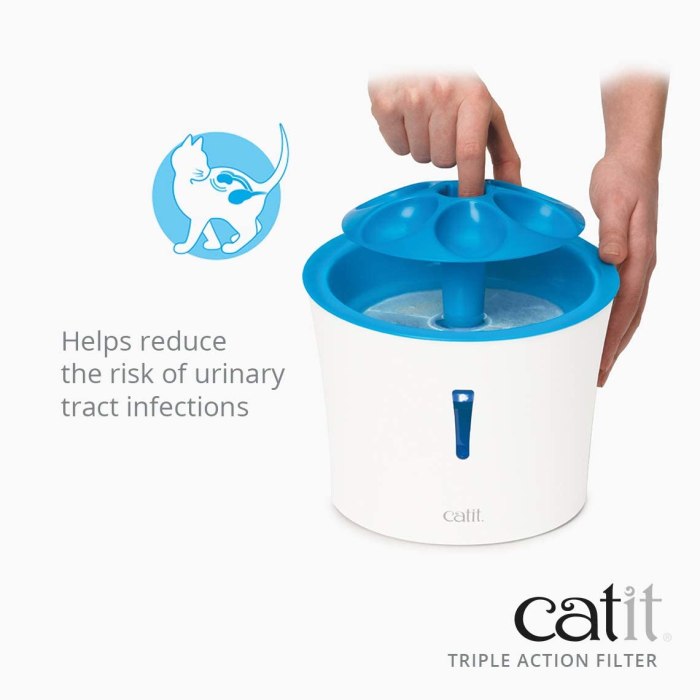
Choosing a cat fountain that complements your home décor is important. Consider your existing design style – modern aesthetics often pair well with stainless steel or minimalist plastic fountains, while rustic interiors can benefit from ceramic fountains with earthy tones. Minimalist designs blend seamlessly into any space. Think about placement – a corner of the kitchen or living room is often ideal, ensuring the fountain is accessible to your cat but doesn’t dominate the room.
Last Point
From ceramic elegance to stainless steel durability and the innovative features of electric and filtered models, the world of cat fountains offers something for every cat and every home. Understanding the importance of filtration, noise levels, and capacity ensures you’re providing your cat with the safest, most appealing, and convenient hydration possible. Investing in a quality cat fountain isn’t just about providing water; it’s about investing in your cat’s long-term health and happiness.
FAQ Section
How often should I replace the filter?
Most filters need replacing every 2-4 weeks, depending on usage and water quality. Check your fountain’s manual for specific recommendations.
Are all cat fountains noisy?
Not at all! Many modern fountains are designed to be very quiet. Look for models with magnetic pumps and consider placement to minimize noise.
Can I use tap water in a cat fountain?
While you
-can*, it’s best to use filtered water or let tap water sit for 24 hours to allow chlorine to evaporate. This improves taste and reduces potential irritation.
How do I clean a cat fountain thoroughly?
Disassemble the fountain and wash all parts with warm, soapy water. Rinse thoroughly and disinfect with a pet-safe solution. Pay special attention to the pump and filter housing.
What size fountain do I need for multiple cats?
A good rule of thumb is to choose a fountain with at least 1.5 to 2 times the water capacity as the number of cats you have. Larger capacity also reduces the frequency of refills.
Are plastic cat fountains safe?
Yes, as long as they are BPA-free. Always check the product description to ensure the plastic is safe for your pet.
What if my cat won’t use the fountain?
Try different fountain designs, water flow settings, and locations. You can also entice your cat with a few drops of tuna juice or catnip in the water initially.