For centuries, cats have thrived on carefully selected diets, and the trend of crafting homemade cat food recipes is experiencing a resurgence. Historically, people relied on what was available, often supplementing with scraps. Today, fueled by a desire for greater control over ingredients and a growing awareness of potential allergies, more and more cat owners are turning to homemade meals.
It’s a rewarding journey, but it requires understanding your cat’s specific needs and ensuring nutritional balance.
This guide dives deep into the world of preparing meals for your feline companion, covering everything from essential nutrients and safe ingredient selection to detailed recipes for kittens, adults, and seniors. We’ll tackle common misconceptions about homemade cat food and provide practical advice on food safety and storage, empowering you to create delicious and healthy meals your cat will love.
Introduction to Homemade Cat Food
For centuries, cats have thrived on diets dictated by instinct and availability – primarily small prey. While commercial cat food has revolutionized feline nutrition, a growing number of cat owners are rediscovering the benefits of preparing meals at home. The concept of homemade cat food isn’t entirely new; historically, resourceful pet owners have supplemented or even entirely replaced commercial food with cooked meats and vegetables.
However, the modern resurgence is driven by a desire for greater control over ingredients, addressing allergies, and simply providing what many believe is a more natural and wholesome diet for their beloved companions.
The appeal of homemade cat food lies in the ability to meticulously select ingredients, avoiding potential allergens and artificial additives often found in commercial brands. This can be particularly beneficial for cats with sensitive stomachs or diagnosed food allergies. However, it’s crucial to understand that creating a nutritionally complete and balanced homemade diet requires careful planning and a solid understanding of feline nutritional needs.
Many misconceptions surround homemade cat food, often stemming from concerns about ensuring adequate levels of essential nutrients like taurine and arginine, and the potential for creating an unbalanced diet that could lead to health problems. This guide aims to dispel those myths and provide a comprehensive resource for crafting safe, healthy, and delicious homemade meals for your feline friend.
Essential Nutritional Needs of Cats
Cats are obligate carnivores, meaning their bodies are specifically designed to thrive on a diet primarily composed of animal protein. Understanding their macronutrient and micronutrient requirements is the foundation of any successful homemade cat food recipe. The proportions of protein, fat, and carbohydrates, along with essential vitamins and minerals, must be carefully balanced to support optimal health and well-being.
- Protein: The cornerstone of a cat’s diet, protein provides essential amino acids crucial for muscle development, tissue repair, and overall health. Kittens require a higher protein percentage (around 30-40%) to support rapid growth, while adult cats need approximately 25-35%, and senior cats may benefit from slightly lower levels (20-30%).
- Fat: Fat is a concentrated source of energy and provides essential fatty acids for healthy skin, coat, and brain function. Ideal fat percentages range from 9-15% for kittens, 8-12% for adults, and 5-10% for seniors.
- Carbohydrates: Cats have limited ability to digest carbohydrates. While small amounts can be included, they should constitute a minimal portion of the diet (ideally less than 10%).
- Vitamins & Minerals: Specific vitamins and minerals are vital for feline health. Taurine is absolutely essential for heart function and vision; deficiency can lead to serious health problems. Arginine is crucial for ammonia detoxification. Omega-3 and Omega-6 fatty acids support healthy skin and coat. Calcium and Vitamin D are essential for bone health.
- Hydration: Cats often don’t drink enough water, increasing their risk of urinary tract issues. Homemade recipes can be formulated to encourage water intake by incorporating wet ingredients like broth or adding water to the food.
Ingredient Selection: Proteins
Choosing the right protein sources is paramount for a healthy homemade cat food diet. The quality and digestibility of the protein directly impact a cat’s overall health and energy levels. Here’s a breakdown of suitable options, categorized by quality and cost:
- High-Quality (and often more expensive): Chicken (boneless, skinless), Turkey (boneless, skinless), Duck. These are generally highly digestible and well-tolerated by most cats.
- Mid-Range: Beef (lean ground), Lamb (lean ground). While nutritious, some cats may be sensitive to beef.
- Lower Cost: Canned tuna (in water, not oil – use sparingly due to mercury concerns), Sardines (packed in water – excellent source of Omega-3s).
- Eggs: A fantastic source of protein and essential amino acids. Cooked eggs are safe and beneficial.
Proper Handling & Preparation: All protein sources should be thoroughly cooked to eliminate bacteria. Ground meat should be cooked until no pink remains. Poultry should be cooked to an internal temperature of 165°F (74°C). Fish should be deboned carefully. Raw feeding is a controversial topic and requires extensive knowledge and strict hygiene protocols to avoid bacterial contamination; it’s generally not recommended for novice homemade cat food preparers.
Comparison: Chicken and turkey are often the easiest to digest and are generally well-tolerated. Fish, while a good source of Omega-3s, can cause allergies in some cats. Beef can be harder to digest for some felines.
Ingredient Selection: Carbohydrates & Vegetables
While cats don’t require large amounts of carbohydrates, small amounts of cat-safe options can provide fiber and additional nutrients. Vegetables, when properly prepared, can also contribute to a balanced diet.
- Cat-Safe Carbohydrates (in moderation): Sweet potatoes (cooked and mashed), Brown rice (cooked), Oats (cooked). Moderation is key; excessive carbohydrates can lead to weight gain and digestive issues.
- Beneficial Vegetables: Pumpkin (canned, plain – excellent source of fiber), Carrots (cooked and pureed), Green beans (cooked and chopped), Peas (cooked). These provide vitamins, minerals, and fiber.
- Ingredients to Avoid: Onions, Garlic, Grapes, Raisins, Chocolate, Avocado, Xylitol (artificial sweetener), Alcohol, Caffeine. These are toxic to cats and can cause serious health problems.
Sample Recipes: Kitten Food
Kittens have significantly higher nutritional needs than adult cats to support their rapid growth and development. These recipes are formulated to meet those needs.
Recipe 1: Chicken & Sweet Potato Kitten Food
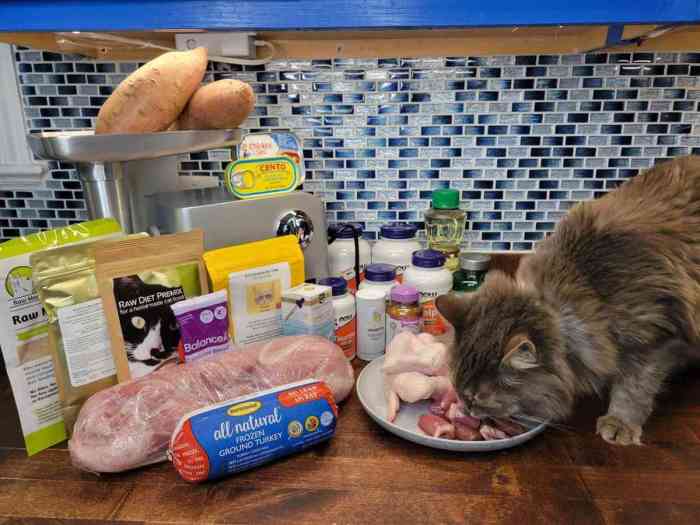
Source: cats.com
- Cooked, shredded chicken: 8 oz
- Cooked sweet potato (mashed): 4 oz
- Cooked brown rice: 2 oz
- Taurine supplement: As directed on the label
- Calcium supplement: As directed on the label
Preparation: Combine all ingredients thoroughly. Ensure the chicken is finely shredded and the sweet potato and rice are soft and easily digestible.
Recipe 2: Fish & Green Bean Kitten Food
- Cooked, deboned white fish (e.g., cod): 6 oz
- Cooked green beans (chopped): 3 oz
- Cooked oats: 2 oz
- Taurine supplement: As directed on the label
- Calcium supplement: As directed on the label
Preparation: Ensure all bones are removed from the fish. Chop the green beans into small, manageable pieces.
Recipe 3: Turkey & Carrot Kitten Food
- Cooked, ground turkey: 7 oz
- Cooked carrots (pureed): 3 oz
- Cooked brown rice: 2 oz
- Taurine supplement: As directed on the label
- Calcium supplement: As directed on the label
Preparation: Ensure the turkey is thoroughly cooked and ground finely. Puree the carrots until smooth.
Sample Recipes: Adult Cat Food
These recipes cater to different dietary needs of adult cats.
| Ingredient | Quantity | Preparation | Nutritional Information (Approximate) |
|---|---|---|---|
| Cooked Chicken Breast | 6 oz | Shredded | High in Protein |
| Cooked Pumpkin | 3 oz | Mashed | Fiber, Vitamins |
| Cooked Brown Rice | 1 oz | Cooked | Carbohydrates |
| Taurine Supplement | As directed | Mixed in | Essential Amino Acid |
Rationale: This recipe is a balanced option for general adult cat health. The pumpkin provides fiber for digestive support.
Supplementation & Fortification
Homemade cat food often requires supplementation to ensure nutritional completeness. Taurine, calcium, and vitamin D are particularly important to supplement, as they may be lacking in homemade diets. Consult with a veterinarian or a veterinary nutritionist to determine the appropriate dosages for your cat’s specific needs.
Food Safety & Storage
Proper food handling and storage are crucial to prevent bacterial contamination. Wash hands thoroughly before preparing food. Use clean utensils and cutting boards. Cook meat thoroughly. Refrigerate leftovers promptly and use within 2-3 days.
Freeze portions for longer storage (up to 2 months).
Troubleshooting Common Issues
Picky eating, digestive upset, and nutrient deficiencies can occur when transitioning to homemade cat food. Introduce new foods gradually. Adjust recipes based on your cat’s individual needs. Consult with a veterinarian if problems persist.
Flowchart: Cat Refuses Homemade Food
- Is the food fresh and appealing?
- Has the cat eaten similar foods before?
- Try warming the food slightly.
- Add a small amount of a familiar, palatable food.
- Consult with a veterinarian to rule out underlying medical conditions.
Visualizing the Food: Presentation & Palatability
Cats are often attracted to visually appealing food. Serve food in clean, shallow bowls. Add flavor enhancers like bone broth or nutritional yeast. Vary textures to keep meals interesting. A sprinkle of catnip can also stimulate appetite.
Final Conclusion
Creating homemade cat food recipes is a commitment, but the potential benefits – improved ingredient control, allergy management, and a deeper connection with your cat’s well-being – are significant. By understanding your cat’s nutritional needs, carefully selecting ingredients, and following safe preparation practices, you can provide a truly personalized and nourishing diet. Remember to always consult with your veterinarian to ensure your recipes are meeting your cat’s individual requirements and to address any specific health concerns.
Ultimately, the journey of crafting homemade cat food is about providing the best possible care for your beloved feline, one delicious and nutritious meal at a time. With the knowledge and resources provided here, you’re well-equipped to embark on this rewarding adventure!
Popular Questions
Can I feed my cat only homemade food?
Yes, but it requires careful planning and supplementation to ensure complete nutrition. It’s crucial to consult with a veterinary nutritionist to formulate balanced recipes.
What if my cat is a picky eater?
Introduce new foods gradually, mix them with familiar favorites, and experiment with different textures and flavor enhancers like bone broth or nutritional yeast.
How long does homemade cat food last in the refrigerator?
Generally, homemade cat food can be safely stored in the refrigerator for 2-3 days.
Do I need to cook all ingredients?
Some ingredients, like meat, need to be cooked thoroughly to eliminate bacteria. Others, like certain vegetables, can be added raw in moderation.
What if my cat has diarrhea after eating homemade food?
Stop feeding the new food immediately and consult your veterinarian. It could be a reaction to an ingredient or an imbalance in the recipe.
Is it expensive to make homemade cat food?
It can be, depending on the ingredients you choose. Focusing on affordable protein sources like chicken and turkey can help manage costs.
Do I need to grind the bones for calcium?
While bone meal is a good source of calcium, grinding bones yourself is risky and not recommended. Supplementation with calcium is generally safer and more reliable.

