Ever stopped and done a double-take at a cat, thinking you spotted a miniature leopard lounging around? You’re not alone! Several fascinating cat breeds boast striking spotted or rosette patterns that mimic their wild counterparts. This exploration delves into the world of these “leopard-like” cats, uncovering their origins, genetics, care requirements, and the unique appeal that draws people to these stunning felines.
We’ll journey from the well-known Bengal to the more elusive Savannah, and uncover the secrets behind their captivating appearances.
Beyond just their looks, these breeds have distinct personalities and needs. Understanding their history, from wild ancestors to carefully crafted breeding programs, is key to appreciating the complexities of owning one. We’ll also touch on the ethical considerations surrounding some of these hybrid breeds, ensuring you’re well-informed before considering bringing one into your home.
Cats That Look Like Leopards: A Comprehensive Guide
Source: wallpapercave.com
The allure of the wild is undeniable, and for many cat lovers, that fascination translates into a desire for a feline companion that embodies the beauty and power of a leopard. While owning a true leopard is, understandably, out of the question, several domestic cat breeds have been selectively bred to exhibit striking leopard-like markings and characteristics. This article delves into the world of these captivating cats, exploring their origins, genetics, care requirements, and the unique appeal they hold for their owners.
We’ll journey through the history and science behind their spotted coats, and examine the responsibilities that come with welcoming one of these magnificent creatures into your home.The quest for a domestic cat resembling a wild feline has led to some fascinating breeding programs and the development of truly remarkable breeds. Understanding the history and genetics behind these breeds is key to appreciating their unique qualities and ensuring their well-being.
Origins and Breeds Resembling Leopards
The desire to replicate the appearance of wild cats in a domestic setting isn’t new. Throughout history, humans have been captivated by the beauty of spotted felines. Modern breeding programs, however, have taken this fascination to a new level, resulting in several breeds that bear a striking resemblance to leopards, jaguars, and ocelots. These breeds aren’t simply “spotted”; they’ve been carefully developed to showcase specific patterns and characteristics that evoke the wild.Several breeds are commonly recognized for their leopard-like appearance.
These include the Bengal, Savannah, Ocicat, and Egyptian Mau. Each breed has a unique history and genetic background that contributes to its distinctive look. The Bengal, for instance, is a hybrid resulting from crosses with the Asian Leopard Cat, while the Ocicat was intentionally bred to resemble a wild cat without any wild ancestry. The Savannah, a more recent breed, is a cross between a Serval and a domestic cat.
The Egyptian Mau, an ancient breed, boasts naturally occurring spotted markings that have been preserved for centuries.The genetic origins of these breeds vary considerably. The Bengal and Savannah, being hybrids, inherit traits from both their domestic and wild ancestors. The Ocicat, despite its wild appearance, is entirely domestic, with its spotted pattern arising from a combination of recessive genes. The Egyptian Mau’s spotted coat is a naturally occurring trait that has been maintained through selective breeding.
The key to understanding these patterns lies in the Agouti gene, which we’ll explore in more detail shortly.
| Breed | Typical Size | Average Lifespan | Temperament |
|---|---|---|---|
| Bengal | 8-15 lbs | 12-16 years | Active, playful, intelligent, can be vocal |
| Savannah | 10-25+ lbs | 12-20 years | Energetic, intelligent, curious, requires experienced owner |
| Ocicat | 6-15 lbs | 10-15 years | Friendly, affectionate, playful, adaptable |
| Egyptian Mau | 6-12 lbs | 12-15 years | Active, intelligent, loyal, can be shy with strangers |
The Genetics of Leopard-Like Markings
The mesmerizing spotted patterns we see in leopard-like cats aren’t random occurrences; they’re the result of complex genetic interactions. Understanding these mechanisms provides insight into how breeders have been able to create these striking appearances. The foundation of these patterns lies in the Agouti gene, a master switch that controls whether a cat’s hair shaft is banded (agouti) or solid (non-agouti).The Agouti gene has several variations, each influencing the coat pattern in a different way.
The “A” allele produces the agouti pattern, where individual hairs have bands of different colors, creating a ticked or tabby appearance. The “a” allele results in a solid-colored coat. However, the presence of the Agouti gene doesn’t guarantee a spotted pattern. Other genes, such as the Tabby gene (T), play a crucial role in determining the specific pattern that emerges.
The Tabby gene has multiple alleles, including Mackerel (M), Classic (ma), Spotted (S), and Ticked (t).Different combinations of these genes interact to produce the specific appearance of leopard-like markings. For example, a cat with the “S” allele (Spotted Tabby) will exhibit spots, while a cat with the “ma” allele (Classic Tabby) will display swirling patterns. The intensity and distribution of the spots or rosettes are further influenced by other modifying genes.
The interplay of these genes is what creates the incredible diversity of patterns seen in these breeds.Here’s a simplified flowchart illustrating the inheritance patterns of spotted coats:[Flowchart Description: Start with “Parent 1” and “Parent 2”. Each parent has a box indicating possible genotypes for the Agouti (A/a) and Tabby (S/s) genes. Arrows lead to offspring boxes, showing possible combinations of alleles (e.g., AS x As).
Each offspring box indicates the resulting coat pattern based on the genotype (e.g., AS = Spotted, As x As = Solid).]
Bengal Cats: The Most Prominent Example
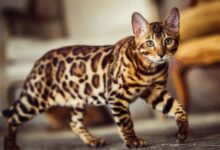
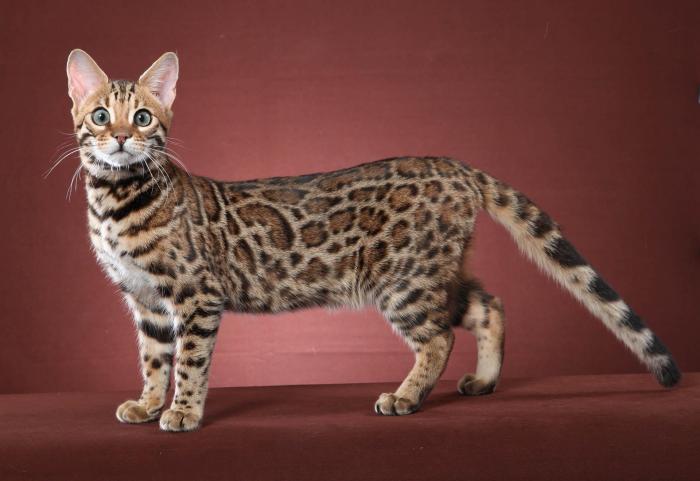
The Bengal cat is arguably the most well-known breed that resembles a leopard. Their striking spotted or marbled coats, combined with their athletic build and playful personalities, have made them incredibly popular. The breed’s history is rooted in a desire to create a domestic cat with the appearance of a wild feline, but with a gentle and affectionate temperament.The breeding history of the Bengal cat began in the 1960s when Jean Mill, an American cat breeder, crossed an Asian Leopard Cat (ALC) with domestic cats.
The ALC, a small wild cat native to Asia, possesses the distinctive spotted coat that defines the Bengal. Early generations (F1, F2) exhibited significant wild traits, but subsequent generations have been selectively bred to reduce these characteristics while retaining the desired appearance.The breeding of Bengals raises ethical considerations. Concerns exist regarding the welfare of ALCs used in breeding programs and the potential for Bengals to exhibit unpredictable behavior due to their wild ancestry.
Responsible breeders prioritize the health and temperament of their cats, carefully selecting breeding pairs and providing appropriate socialization.The filial generation (F) number indicates how far removed a Bengal is from its Asian Leopard Cat ancestor. F1 Bengals are the first generation offspring of an ALC and a domestic cat. F2 Bengals are the offspring of an F1 Bengal and a domestic cat, and so on.
As the generation number increases, the Bengal’s appearance becomes more domestic-like, with less pronounced spotting and a more predictable temperament.
| Generation | Appearance | Temperament | Legal Restrictions |
|---|---|---|---|
| F1 | Strong ALC resemblance, bold spots, large size | Can be unpredictable, requires experienced owner | Often restricted or prohibited in some areas |
| F2 | Still retains ALC characteristics, but less pronounced | More predictable than F1, but still energetic | May be restricted in some areas |
| F3 | Less ALC resemblance, smaller spots | Generally more docile and affectionate | Fewer restrictions |
| F4+ | Resembles a domestic cat with subtle spotting | Typically very affectionate and playful | Few to no restrictions |
Bengal cats exhibit various coat patterns, including spotted, marbled, and rosette. Spotted Bengals have distinct, well-defined spots. Marbled Bengals have a swirling pattern reminiscent of marble. Rosetted Bengals have spots that are larger and more circular, resembling miniature rosettes.
Savannah Cats: A Hybrid Marvel
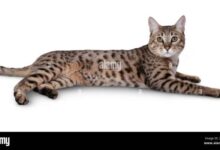
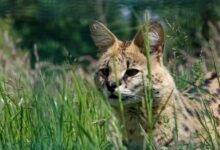
Savannah cats are a relatively new breed created by crossing a Serval, a medium-sized African wild cat, with a domestic cat. The result is a strikingly beautiful and energetic feline that embodies the grace and power of its wild ancestor. The creation of the Savannah breed was driven by a desire to combine the Serval’s exotic appearance with the domestic cat’s affectionate nature.The legal status of Savannah cats varies significantly depending on the region.
Due to their Serval ancestry, they are often subject to restrictions or outright bans in certain areas. The filial generation (F) number plays a crucial role in determining the legal status, with earlier generations (F1, F2) facing the most stringent regulations.Savannah cats, like Bengals, are classified by filial generation. F1 Savannahs are the offspring of a Serval and a domestic cat, and they retain the most Serval characteristics.
As the generation number increases (F2, F3, etc.), the Savannah’s appearance becomes more domestic-like, with less pronounced Serval features.Differences in size and energy levels are also apparent between different Savannah generations. F1 and F2 Savannahs are typically larger and more energetic than later generations. They require experienced owners who can provide ample exercise and mental stimulation.
Owning a Savannah cat is a unique and rewarding experience, but it’s not for everyone. These cats are intelligent, energetic, and require a significant commitment in terms of time, training, and enrichment. However, the bond you form with a Savannah cat is unlike any other, and their exotic beauty and playful personalities will enrich your life in countless ways.
Ocicat: The Domestic Leopard
The Ocicat is a fascinating breed because it was intentionally created to resemble a wild cat, despite having no wild ancestry. Developed in the 1960s by breeders who sought to create a domestic cat with the appearance of an ocelot, the Ocicat achieves its striking look through selective breeding of domestic cats with naturally occurring spotted patterns.The Ocicat’s personality is a key factor in its appeal as a family pet.
They are known for being friendly, affectionate, and playful, making them excellent companions for both adults and children. They are also intelligent and trainable, often enjoying interactive games and activities.Ocicats come in a variety of coat colors and patterns, including chocolate, cinnamon, blue, and lilac, all with distinctive spotted markings. The spots are typically bold and well-defined, further enhancing their resemblance to a wild cat.While the Ocicat’s appearance evokes a wild ocelot, it’s important to remember that they are entirely domestic cats.
Their behavior is typically more playful and affectionate than that of a wild ocelot, which is a solitary and elusive creature.
Egyptian Mau: Ancient Spotted Beauty
The Egyptian Mau is one of the oldest recognized cat breeds, with a history stretching back to ancient Egypt. Depictions of spotted cats appear in ancient Egyptian art, suggesting that the breed has remained relatively unchanged for thousands of years. Their naturally occurring spotted coat and distinctive “mascara” markings around the eyes make them truly unique.The “mascara” markings, a dark line extending from the eyes to the cheeks, are a defining characteristic of the Egyptian Mau.
These markings give the cat an alert and expressive appearance.The genetic basis for the Egyptian Mau’s spotted coat is complex, but it is believed to be a naturally occurring mutation that has been preserved through selective breeding. The spots are typically small and evenly distributed across the cat’s body.Egyptian Maus are known for their playful and energetic personalities. They are intelligent and curious cats who enjoy interactive games and activities.
They are also fiercely loyal to their families and can be quite vocal.
Visual Characteristics: Spot Patterns and Markings
The “leopard-like” appearance of these cats isn’t solely defined by the presence of spots. The type, size, shape, and distribution of these markings all contribute to the overall impression. Different breeds exhibit variations in spot patterns, ranging from distinct, well-defined spots to swirling patterns and rosette formations.Spot patterns can be broadly categorized into three types: spots, rosettes, and blotches. Spots are small, round markings that are evenly distributed across the cat’s body.
Rosettes are larger, more complex markings that resemble miniature roses or rosettes. Blotches are irregular, amorphous patches of color that lack a distinct shape.The size, shape, and distribution of spots are influenced by a variety of genetic factors. Larger spots are often associated with earlier generations of hybrid breeds, while smaller, more tightly packed spots are more common in later generations.
The color of the coat also influences the appearance of the markings. Darker coats tend to accentuate the spots, while lighter coats may make them appear less prominent.Here’s a descriptive guide illustrating the differences between spots, rosettes, and blotches:* Spots: Small, circular markings, typically less than 1 inch in diameter. They are evenly spaced and distributed across the body.
Rosettes
Larger, more complex markings, typically 1-3 inches in diameter. They have a central spot surrounded by a ring of darker fur, resembling a miniature rose. Rosettes are often clustered together.
Blotches
Irregular, amorphous patches of color, lacking a distinct shape. They are larger than spots and can cover a significant portion of the body.
Caring for Leopard-Like Cats
Caring for leopard-like cats requires a commitment to providing them with the specific needs that arise from their often high energy levels and unique genetic backgrounds. Their active nature demands a tailored approach to diet, socialization, training, grooming, and health management.These breeds often have high metabolisms and require a diet rich in protein and essential nutrients. High-quality commercial cat food, supplemented with lean meats and occasional treats, is recommended.
Portion control is important to prevent obesity, especially in less active individuals.Early socialization and training are crucial for these intelligent and energetic cats. Exposing them to a variety of people, animals, and environments from a young age can help them develop into well-adjusted adults. Positive reinforcement training methods, such as clicker training, can be effective for teaching them basic commands and behaviors.Grooming requirements vary depending on the coat type.
Bengals and Savannahs typically have short, sleek coats that require minimal grooming, while Egyptian Maus have a denser coat that benefits from regular brushing.Common health concerns in these breeds include hypertrophic cardiomyopathy (HCM), a heart condition, and progressive retinal atrophy (PRA), an eye disease. Regular veterinary checkups and genetic testing can help detect and manage these conditions.Here’s a list of essential toys and enrichment activities for keeping these cats stimulated:
- Interactive toys (e.g., puzzle feeders, laser pointers)
- Climbing structures (e.g., cat trees, shelves)
- Scratching posts
- Feather wands and other interactive toys
- Catnip toys
Distinguishing Features: Beyond the Spots
While the spotted coat is the most defining characteristic of these cats, other physical features contribute to their overall “leopard-like” appearance. A muscular build, a sleek coat, and almond-shaped eyes all enhance the impression of wildness and power.Subtle differences in facial structure distinguish the various breeds. Bengals often have a more angular face with prominent cheekbones, while Savannahs have a longer, more slender face.
Ocicats have a broad face with a strong chin, and Egyptian Maus have a wedge-shaped face with large, expressive eyes.The body language and movement patterns of these cats also bear similarities to those of wild leopards. They are agile and graceful, with a distinctive way of stalking and pouncing. Their confident gait and alert posture further contribute to their regal appearance.
| Feature | Bengal | Savannah |
|---|---|---|
| Body Build | Muscular and athletic | Long and lean, more elongated |
| Head Shape | Angular with prominent cheekbones | Longer and more slender |
| Ear Shape | Rounded tips | Larger and more pointed |
The Appeal of Leopard-Like Cats
The fascination with leopard-like cats stems from a combination of factors, including their striking appearance, their energetic personalities, and the inherent appeal of the wild. These cats offer a unique blend of exotic beauty and domestic companionship.Leopards and spotted cats have long held symbolic significance in various cultures. They are often associated with power, grace, and independence. Owning a cat that resembles these majestic creatures can be a way of connecting with the wild and embracing these qualities.Anecdotes abound of the unique bond between owners and their leopard-like cats.
Their playful antics, their affectionate gestures, and their unwavering loyalty create a special connection that enriches the lives of both cat and owner.Here’s a list of reasons people choose these breeds, categorized by personality preference:
- Active Individuals: Seeking a cat with high energy levels and a playful nature.
- Affectionate Individuals: Desiring a loyal and affectionate companion.
- Independent Individuals: Appreciating a cat with a confident and self-assured personality.
- Experienced Cat Owners: Willing to provide the specialized care and training that these breeds require.
- Aesthetic Appreciation: Drawn to the striking appearance and exotic beauty of these cats.
End of Discussion
From the genetic intricacies that create those mesmerizing spots to the playful energy of an Ocicat, the world of cats that resemble leopards is truly captivating. Whether you’re a seasoned cat enthusiast or simply curious about these remarkable animals, we hope this exploration has deepened your appreciation for their beauty, complexity, and the unique bond they share with their human companions.
Ultimately, these cats offer a glimpse into the wild, brought into the comfort of our homes, and a constant reminder of the incredible diversity within the feline world.
FAQ
Are leopard-like cats difficult to care for?
They generally require more attention and enrichment than average domestic cats due to their high energy levels. Proper diet, training, and plenty of interactive playtime are essential.
What is the difference between a spot and a rosette?
Spots are typically round and evenly spaced. Rosettes are larger, more complex markings that resemble a rose shape, often with a lighter center.
Why are some “leopard-like” cats illegal in certain areas?
This is often due to the inclusion of wild cat genetics (like Serval in Savannahs) which can pose safety concerns and are regulated to prevent uncontrolled breeding and potential environmental impact.
What is an F1 Bengal?
An F1 Bengal is the first generation offspring of a Bengal cat and an Asian Leopard Cat. They typically have the most prominent wild appearance and can be legally restricted.
Do leopard-like cats require special diets?
Yes, their high energy levels often necessitate a diet rich in protein and essential nutrients. Consulting with a veterinarian experienced in these breeds is recommended.
Are Ocicats truly wild cat hybrids?
No, Ocicats are entirely domestic cats. They were intentionally bred to resemble wild ocelots, but they have no wild cat ancestry.

