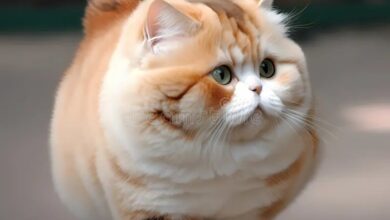
Ever noticed your cat giving you a little wink, or what seems like one? It’s a fascinating behavior that goes far beyond a simple eye twitch. We often project human emotions onto our feline friends, but what’s
-really* going on when a cat blinks, winks, or gives a slow blink? This exploration dives deep into the science, communication, and even the cultural interpretations of these subtle feline expressions, uncovering a world of meaning hidden in their eyes.
From the intricate muscle movements behind a wink to the evolutionary roots of feline facial expressions, we’ll unravel the mysteries of the cat’s blink. We’ll also look at how environment, breed, and even medical conditions can influence these behaviors, and learn practical ways to connect with your cat through the power of the slow blink – a gesture of trust and affection.
The Enigmatic Wink: Unraveling the Secrets of Feline Blinking
Cats are masters of subtle communication, and their blinks often leave us wondering – are they just tired, or is there something more going on? While a simple blink seems straightforward, the nuances of feline blinking, particularly the wink, are surprisingly complex. This article delves into the science, behavior, and cultural interpretations surrounding a cat’s blink, exploring everything from the physiological mechanisms to potential medical concerns.
The Science of Feline Winking
A cat’s blink isn’t just a random closure of the eyelids. It’s a carefully orchestrated process involving a complex interplay of muscles and neurological pathways. Distinguishing between a regular blink and a wink requires understanding these underlying mechanisms. A blink is a reflexive action, primarily to keep the eyes lubricated and free of debris. A wink, however, is a voluntary action, involving a more deliberate control of the eyelid muscles.
- Physiological Mechanisms: The blink reflex is triggered by sensory input – dryness, irritation, or even a sudden movement. It’s an involuntary response controlled by the brainstem. A wink, on the other hand, requires the coordinated action of the orbicularis oculi muscle (which closes the eyelid) and the levator palpebrae superioris muscle (which opens the eyelid). The wink involves selectively contracting the orbicularis oculi while partially inhibiting the levator palpebrae superioris, resulting in a partial closure of one eyelid.
- Facial Muscles Involved: The orbicularis oculi is the key player in both blinking and winking. Its contraction pulls the eyelids closed. The levator palpebrae superioris is responsible for lifting the eyelid. The precise control of these muscles, and the ability to contract one side more than the other, is what differentiates a wink from a regular blink.
- Neurological Pathways: The blink reflex travels along the trigeminal nerve. Winking, being voluntary, involves higher-level brain regions like the motor cortex, which sends signals down the facial nerve to control the facial muscles. This demonstrates a greater level of cognitive control compared to the reflexive blink.
- Blinking Rates: A relaxed cat typically blinks around 1-2 times per minute. During playful interactions, this rate can increase significantly, sometimes reaching 5-10 blinks per minute. This increased blinking is likely a combination of excitement and a way to maintain eye lubrication during rapid movements.
Cat Winking: Communication & Body Language
While we often anthropomorphize a cat’s wink, attributing human-like intentions, it’s important to understand the context within which it occurs. Genuine winks are relatively rare in cats, but the slow blink, often mistaken for a wink, is a crucial element of feline communication.
| Feature | Genuine Wink |
|---|---|
| Appearance | Partial closure of one eyelid, often brief and fleeting. |
| Context | Often occurs during playful interactions or when a cat is feeling particularly mischievous. |
| Frequency | Relatively rare. |
| Associated Body Language | May be accompanied by playful swats, dilated pupils, or a twitching tail. |
- Situations Where Cats Might Wink: A cat might exhibit a brief, partial eyelid closure during a playful pounce or when teasing a toy. It’s less about conveying a specific message and more about a momentary muscle twitch during heightened activity.
- The Slow Blink: A slow blink, where the cat slowly closes and opens its eyes, is a powerful signal of trust and affection. It’s essentially a feline equivalent of a smile. Cats often initiate slow blinks with humans they feel comfortable around.
- Accompanying Body Language: A slow blink is often accompanied by relaxed ears (forward or slightly to the side), a gently swaying tail, and a soft gaze. These cues reinforce the message of contentment and trust.
Cultural Interpretations of Cat Winks (Human Perspective)
Humans have a tendency to project their own emotions and intentions onto animals, and a cat’s wink is no exception. We often interpret it as a sign of playfulness, secret understanding, or even mischievousness. This anthropomorphism is deeply ingrained in our culture.
- Anthropomorphism: We readily assign human emotions like teasing or knowingness to a cat’s wink, even though it’s likely a more complex and nuanced behavior.
- Popular Culture: Cats are frequently portrayed as winking in cartoons, movies, and internet memes, often to convey a sense of slyness or intelligence. Think of cartoon cats with a knowing glint in their eyes and a subtle wink.
- History of Winking: In human interactions, winking has historically been associated with playful teasing, secret communication, or a shared joke. This association likely influences how we interpret a cat’s blink.
Human Interpretation Flowchart:
Start: Cat Blinks/Winks
-> Is the cat engaged in playful interaction (e.g., chasing a toy, batting at your hand)? Yes -> Likely playful expression. No -> Continue.
-> Does the cat appear relaxed and comfortable (e.g., slow blinking, relaxed ears)? Yes -> Sign of trust and affection. No -> Consider potential discomfort or medical issue (see section 4).
Medical Reasons for Unusual Blinking/Winking
While most blinking and winking behavior is normal, excessive or abnormal blinking can be a sign of an underlying medical condition. It’s crucial to consult a veterinarian if you notice any significant changes in your cat’s blinking habits.
| Medical Cause | Associated Symptoms | Diagnostic Tests |
|---|---|---|
| Eye Irritation (e.g., allergies, foreign body) | Excessive blinking, squinting, tearing, redness. | Eye exam, cytology (microscopic examination of eye discharge). |
| Glaucoma | Increased blinking, eye pain, cloudiness of the cornea. | Tonometry (measures eye pressure), ophthalmoscopy (examines the interior of the eye). |
| Neurological Issues | Abnormal blinking patterns, facial twitching, seizures. | Neurological exam, MRI or CT scan. |
Different Cat Breeds and Their Winking Tendencies
While individual personality plays a significant role, certain cat breeds are known for their expressive eyes and more pronounced facial expressions. This may be due to a combination of genetics and breeding practices.
- Persians: Known for their large, round eyes and flattened faces, Persians often exhibit a wide range of facial expressions, including slow blinks and what appear to be winks.
- Ragdolls: These gentle giants are known for their docile nature and expressive eyes, often engaging in slow blinks with their human companions.
- Siamese: Their striking blue eyes and vocal nature contribute to their expressive faces.
- Maine Coon: While not as overtly expressive as Persians, Maine Coons have large, intelligent eyes that can convey a range of emotions.
- Sphynx: The lack of fur on a Sphynx highlights their facial muscles, making their expressions, including blinking, more visible.
The Role of Light and Environment on Cat Blinking
A cat’s blinking rate is influenced by both internal and external factors. Changes in lighting conditions and the surrounding environment can significantly impact their blinking behavior.
- Lighting Conditions: In bright light, cats blink more frequently to protect their eyes from glare. In dimly lit environments, blinking rates decrease.
- Environmental Factors: Loud noises, the presence of other animals, or unfamiliar surroundings can trigger increased blinking as a sign of stress or anxiety.
- Safety and Security: A cat that feels safe and secure is more likely to engage in slow blinks, demonstrating trust and relaxation.
Imagine a cat in a dimly lit room: their blinks are slow, deliberate, and infrequent, almost languid. Contrast this with a brightly lit room, where their blinks are quick, almost imperceptible, a constant shield against the glare.
Training and Encouraging Slow Blinks in Cats

Source: 1funny.com
Building a strong bond with your cat involves understanding their communication signals and responding appropriately. Encouraging slow blinks is a wonderful way to foster trust and strengthen your connection.
- Mirroring Behavior: Cats are highly attuned to social cues. Mirroring their behavior, including slow blinking, can help establish a connection.
- Step-by-Step Guide: Start by making eye contact with your cat. Then, slowly close your eyes and open them again. Repeat this a few times. If your cat responds with a slow blink, you’ve successfully initiated a slow blink exchange.
“My cat, Leo, used to be very wary of me. But after consistently slow blinking at him, he started returning the gesture. Now, it’s our little ritual – a silent way of saying ‘I trust you.'”
Sarah M., Cat Owner
Visual Descriptions of a Cat’s Wink
A cat’s wink is a fleeting moment, a subtle shift in expression that can be easily missed. It’s not a dramatic closure of the eyelid, but rather a partial, momentary contraction.
- Eyelid and Muscle Movement: The upper eyelid briefly lifts, exposing a sliver of the iris. The orbicularis oculi muscle contracts, creating a slight crinkling around the eye.
- Subtle Expression Changes: The cat’s gaze becomes momentarily more intense, then softens as the eyelid returns to its normal position.
- Descriptive Phrases: A fleeting flicker, a momentary shadow, a playful glint, a subtle shift in focus.
Visual Representation: Imagine a cat sitting attentively, its whiskers relaxed and forward. The left eye is slightly narrowed, the upper eyelid lifted just enough to reveal a small portion of the iris. The right eye remains open and alert. The overall expression is one of playful curiosity, a hint of mischief dancing in the partially closed eye.
The Evolutionary Origins of Feline Facial Expressions
The evolution of feline facial expressions, including winking and slow blinking, likely played a crucial role in social communication among wild cats. These expressions may have served as signals of intent, helping to avoid conflict and establish social bonds.
- Communication Signals: Facial expressions likely evolved as a way for cats to communicate without resorting to aggression. A slow blink could have signaled non-threatening intentions, while a brief wink might have indicated playfulness or a challenge.
- Social Bonding: Facial expressions facilitated social bonding within feline groups, allowing cats to recognize and respond to each other’s emotional states.
- Comparison with Other Mammals: While the complexity of feline facial expressions may not match that of primates, they are more nuanced than those found in many other mammals, suggesting a significant role in social communication.
Distinguishing a Wink from a Corneal Reflex
It’s important to differentiate a deliberate wink from the corneal reflex, an involuntary blink triggered by stimulation of the cornea.
| Characteristic | Wink | Corneal Reflex | Slow Blink |
|---|---|---|---|
| Trigger | Voluntary action | Touch, air movement, foreign object | Relaxation, trust |
| Appearance | Partial eyelid closure, brief | Rapid, full eyelid closure | Slow, deliberate closure and opening |
| Context | Playful interaction, brief expression | Response to irritation or stimulus | Sign of trust and affection |
Final Thoughts
Ultimately, understanding a cat’s blink – whether it’s a genuine wink, a slow blink, or a reflex – is about deepening our connection with these enigmatic creatures. It’s a reminder that even the smallest gestures can hold profound meaning, and that paying attention to our cats’ body language can unlock a richer, more rewarding relationship. So, next time your cat gives you
-that* look, you’ll be better equipped to understand what they’re trying to tell you – and maybe even wink back!
FAQ
Why do cats blink so much?
Blinking is essential for keeping their eyes lubricated and free of debris. The frequency can increase with excitement, stress, or changes in environment.
Is a slow blink really a sign of affection?
Yes! A slow blink is often referred to as a “cat kiss” and is a clear sign of trust and comfort. It’s their way of saying they feel safe and relaxed around you.
What’s the difference between a wink and a corneal reflex?
A wink is a deliberate, controlled movement of the eyelid. A corneal reflex is an involuntary blink triggered by something touching or irritating the eye.
Can medical conditions cause unusual blinking?
Yes, conditions like eye infections, allergies, neurological problems, or even injuries can lead to excessive or abnormal blinking.
Are some cat breeds more prone to winking or slow blinking?
Breeds with expressive eyes, like Persians and Ragdolls, often exhibit more noticeable blinking and slow blinking behaviors due to their facial structure.
How can I encourage my cat to slow blink?
Mirror their behavior! Slowly close your eyes for a few seconds, then open them. Repeat this a few times, and your cat may reciprocate.
What does it mean if my cat winks at me and then runs away?
It could be playful teasing! They might be inviting you to chase them, or simply enjoying a moment of mischief.