Ever noticed your cat giving you a little wink? It’s a surprisingly complex behavior, and while it might seem like a playful gesture, there’s a whole world of feline communication happening behind those expressive eyes. This isn’t just about a muscle twitch; it’s about understanding the science, the social cues, and even the potential medical reasons behind a cat’s winks.
We’ll dive deep into what your cat might be trying to tell you, from subtle signs of trust to possible health concerns.
From the intricate muscle movements that allow for a wink to the evolutionary roots of feline facial expressions, we’ll explore the fascinating world of cat communication. We’ll also look at how different breeds express themselves and how cultural perceptions of cats influence our understanding of their winks. Ultimately, this guide aims to help you become a better observer of your feline friend and decipher the meaning behind those captivating winks.
The Enigmatic Wink: Unraveling the Secrets of Feline Facial Expressions
Cats. Those mysterious, independent creatures who share our homes and our hearts. We spend countless hours observing them, trying to decipher their moods and intentions. One particularly intriguing behavior is the wink. Is it a greeting?
A sign of affection? Or something else entirely? This article dives deep into the world of feline winking, exploring the science, communication, and cultural significance behind this captivating gesture.
We’ll explore the physiological mechanics behind a cat’s blink and wink, how they use it to communicate with each other and with us, and even touch on the evolutionary roots of these expressive facial movements. Get ready to become a feline wink expert!
The Science of Feline Winking
Understanding a cat’s wink starts with understanding the difference between a blink and a wink. While both involve the closing of the eyelids, the mechanism and purpose are distinct. A blink is a reflexive action, primarily to lubricate the eye and remove debris. A wink, however, is a voluntary movement, controlled by specific muscles.
Physiological Mechanisms
A standard blink is largely involuntary, triggered by sensory input like dust or dryness. It’s a quick, symmetrical closure of both eyelids. A wink, on the other hand, involves the Orbicularis oculi muscle, which encircles the eye. This muscle contracts unevenly, closing one eyelid while the other remains open. The strength and duration of the contraction determine the type of wink – a quick, playful wink versus a slow, deliberate one.
Muscles Involved
Beyond the Orbicularis oculi, other facial muscles contribute to a cat’s expressive range. The levator palpebrae superioris muscle raises the upper eyelid, and its interaction with the Orbicularis oculi allows for subtle variations in eyelid position. The zygomaticus muscle, while less prominent than in humans, influences the shape of the face and can contribute to a cat’s overall expression when combined with a wink.
Neurological Pathways
The neurological control of blinking and winking is complex. The trigeminal nerve plays a crucial role in controlling the facial muscles, including those involved in eyelid movement. The brain’s motor cortex sends signals to these nerves, initiating voluntary actions like winking. Interestingly, the degree of conscious control a cat has over its winking is still an area of ongoing research.
Blinking Rates: Rest vs. Interaction
Cats at rest typically blink around 1-2 times per minute. However, this rate increases significantly during social interaction, particularly with humans. Studies have shown that cats blink more frequently when being petted or when engaging in eye contact, suggesting a calming or appeasing behavior. This increased blinking can be a subtle way for a cat to signal that they are comfortable and not feeling threatened.
Communication Through Winks: What Cats are Saying
Cats are masters of non-verbal communication, and winks are just one piece of the puzzle. While we often anthropomorphize their winks, attributing human emotions to them, cats use winks to convey specific messages to each other.
Winks Between Cats
Winks in cat-to-cat interactions can signify a range of emotions and intentions. A quick, playful wink might be part of a game, a way to tease or challenge another cat. A slower, more deliberate wink can indicate submission or deference, particularly in hierarchical relationships. During courtship, winks can be a subtle form of flirtation, a way to gauge the other cat’s interest.
The Slow Blink: A Sign of Trust
Perhaps the most fascinating aspect of feline communication is the slow blink. Often mistaken for a wink, a slow blink involves closing the eyes slowly and deliberately, then opening them again. This behavior is a powerful signal of trust and relaxation. When a cat slow blinks at you, they are essentially saying, “I trust you, I feel safe around you.” It’s a gesture you can reciprocate to build a stronger bond with your feline friend.
Winking Patterns and Meanings
| Pattern Description | Possible Meaning | Context |
|---|---|---|
| Quick, repeated winks | Playfulness, teasing | During a game or chase |
| Slow, deliberate wink | Submission, deference | When encountering a higher-ranking cat |
| Slow blink (often mistaken for a wink) | Trust, relaxation | When interacting with a trusted human or cat |
| Asymmetrical blink (one eye closes more than the other) | Possible discomfort, mild irritation | Often accompanied by other subtle signs of distress |
Human-Feline Interaction: Interpreting Winks
So, why do cats wink at humans? While we can’t know for sure what’s going through their minds, there are several plausible explanations. Cats are incredibly observant and learn to associate certain behaviors with specific outcomes. A wink might be a learned response, a way to solicit attention or affection.
Reasons for Winking at Humans
Cats might wink in response to petting, talking, or direct eye contact. They may have learned that winking elicits a positive reaction from their human companions, such as more petting or treats. It could also be a way of acknowledging your presence, a subtle form of greeting.
“Soft Eyes” and Relaxed Behavior
The concept of “soft eyes” is crucial to understanding feline communication. Cats with soft eyes have relaxed pupils and a gentle gaze. This contrasts with “hard eyes,” which are wide, staring, and often indicate fear or aggression. Winking, particularly the slow blink, is a manifestation of soft eyes, signaling a relaxed and comfortable state.
Human Behaviors Triggering Winks
- High Likelihood: Gentle petting, slow blinking back at the cat, soft talking.
- Medium Likelihood: Direct eye contact (brief and non-threatening), offering treats, playing with toys.
- Low Likelihood: Loud noises, sudden movements, approaching the cat quickly.
Medical Considerations: When Winking is a Concern
While winking is often a normal behavior, it can sometimes indicate an underlying medical issue. Unusual or excessive blinking, or winking accompanied by other symptoms, warrants a closer look.
Potential Medical Conditions
Several conditions can affect a cat’s blinking patterns. Conjunctivitis (inflammation of the conjunctiva), corneal ulcers (sores on the cornea), and dry eye can all cause increased blinking or squinting. Neurological problems, such as facial nerve paralysis, can also lead to abnormal eyelid movements.
Observing Other Symptoms
It’s important to observe other symptoms alongside winking. Squinting, pawing at the face, redness, discharge from the eyes, and changes in appetite or behavior can all indicate a medical problem. Don’t ignore these signs – early intervention is key to successful treatment.
Flowchart: Concerning Winking Behavior
Step 1: Observe the Winking
-Is it excessive, unusual, or accompanied by other symptoms?Step 2: Check for Other Symptoms
-Redness, discharge, squinting, pawing at the face?Step 3: Mild Symptoms (occasional winking, no other signs)
-Monitor closely for 24-48 hours. Ensure fresh water is available.Step 4: Moderate Symptoms (increased winking, mild redness/discharge)
-Schedule a vet appointment within 24-48 hours.Step 5: Severe Symptoms (excessive winking, significant redness/discharge, squinting, pawing at the face, pain)
-Seek immediate veterinary care.
Breed-Specific Winking Tendencies
While winking is a universal feline behavior, certain breeds may exhibit it more frequently or with greater expressiveness. This could be due to differences in facial musculature or breed-specific personality traits.
Breed Comparisons
Siamese cats are known for their vocalizations and expressive faces, and they often display more pronounced winking and blinking behaviors. Persians, with their flat faces, may have difficulty blinking normally, leading to occasional unusual eyelid movements. Maine Coons, with their large eyes and gentle personalities, often engage in slow blinking with their human companions.
Anecdotal Evidence
Many cat owners report that their Oriental Shorthairs are particularly prone to winking, seemingly as a way to engage in playful banter. Conversely, some owners of British Shorthairs find their cats to be less expressive overall, with fewer noticeable winking behaviors.
| Breed | Typical Winking Frequency | Associated Behaviors | Possible Explanations |
|---|---|---|---|
| Siamese | High | Playfulness, vocalization, attention-seeking | Expressive facial features, vocal nature |
| Persian | Moderate | Occasional blinking difficulties, relaxed demeanor | Facial structure, potential for tear duct issues |
| Maine Coon | Moderate | Slow blinking, gentle interaction | Gentle personality, large eyes |
| British Shorthair | Low | Reserved demeanor, less expressive | Calm temperament, less pronounced facial features |
The Evolutionary Roots of Feline Facial Expressions
A cat’s facial musculature has evolved over millennia to facilitate communication, both within their own species and with other animals. Winking and other facial expressions play a vital role in establishing social hierarchies, resolving conflicts, and attracting mates.
Social Dynamics of Wild Cats
In the wild, subtle facial cues can be the difference between a successful hunt and a dangerous confrontation. A slow blink can signal non-aggression to a rival, while a direct stare can be a challenge. Winking, while less common in wild cats than in domestic cats, likely serves a similar purpose – a subtle way to communicate intentions.
Influence of Domestication
Domestication has likely influenced the expression and interpretation of feline winks. As cats have adapted to living alongside humans, they have become more adept at reading our cues and responding accordingly. The increased frequency of winking in domestic cats may be a result of this adaptation, a way to build rapport and strengthen the human-animal bond.
Comparison of Facial Muscles
While the basic facial musculature is similar between wild cats (like the African Wildcat, the ancestor of domestic cats) and domestic cats, there are subtle differences. Domestic cats tend to have more developed facial muscles, allowing for a wider range of expressions. The Orbicularis oculi muscle, in particular, may be slightly more robust in domestic cats, contributing to their ability to wink more deliberately.
Cultural Perceptions of Cats and Winking
Cats have held a unique place in human culture for centuries, often depicted in art, literature, and popular culture. Their facial expressions, including winking, have been interpreted in various ways across different cultures.
Depictions in Art and Literature
Ancient Egyptian art frequently portrays cats with serene expressions, symbolizing grace and independence. In medieval Europe, cats were often associated with witchcraft and viewed with suspicion. More recently, cats have become beloved companions, frequently depicted in humorous and affectionate ways, sometimes with a playful wink.
Cultural Interpretations of Winking
In some cultures, winking is considered a sign of flirtation or mischief. In others, it can be interpreted as a sign of disrespect or insincerity. The interpretation of a cat’s wink likely varies depending on the cultural context and the observer’s own beliefs and experiences.
Symbolism of Cats in Different Cultures
Cats are often associated with mystery, intuition, and independence. In some cultures, they are considered lucky charms, while in others, they are seen as omens of bad luck. These cultural perceptions can influence how we interpret a cat’s expressions, including their winks.
Evolution of Cat Imagery and Winking Depictions
- Ancient Egypt (3000-30 BC): Cats depicted with calm, dignified expressions, rarely winking.
- Medieval Europe (5th-15th centuries): Cats often portrayed as sinister figures, with limited facial expression.
- 18th-19th Centuries: Cats begin to appear in more playful and affectionate depictions, with occasional hints of winking.
- 20th-21st Centuries: Cats become ubiquitous in popular culture, frequently depicted with expressive faces and playful winks.
Advanced Observation Techniques: Deciphering Subtle Winks
Distinguishing a genuine wink from a partial blink or a twitch requires careful observation. It’s not just about seeing an eyelid close – it’s about understanding the context and the cat’s overall body language.
Differentiating Winks from Blinks and Twitches
A genuine wink involves a deliberate, asymmetrical closure of the eyelid. A partial blink is a quick, symmetrical closure. A twitch is an involuntary, jerky movement. Pay attention to the speed, symmetry, and duration of the eyelid movement.
Importance of Body Language
A cat’s body language provides crucial clues to their intentions. A relaxed posture, soft eyes, and a gentle tail sway suggest a positive interaction. A tense posture, dilated pupils, and a twitching tail may indicate fear or aggression.
Observing Subtle Changes
Look for subtle changes in a cat’s eyes and facial muscles. A slight softening of the gaze, a gentle twitch of the whiskers, or a subtle shift in the ears can all provide valuable insights into their emotional state.
Recording and Analyzing Winking Behavior
- Choose a Time and Location: Select a quiet, comfortable environment where the cat feels safe.
- Record Observations: Note the date, time, and context of each winking event.
- Document Body Language: Describe the cat’s posture, facial expression, and tail position.
- Analyze Patterns: Look for recurring patterns in the cat’s winking behavior.
- Share with a Veterinarian: If you notice any concerning changes, consult with a veterinarian.
Outcome Summary
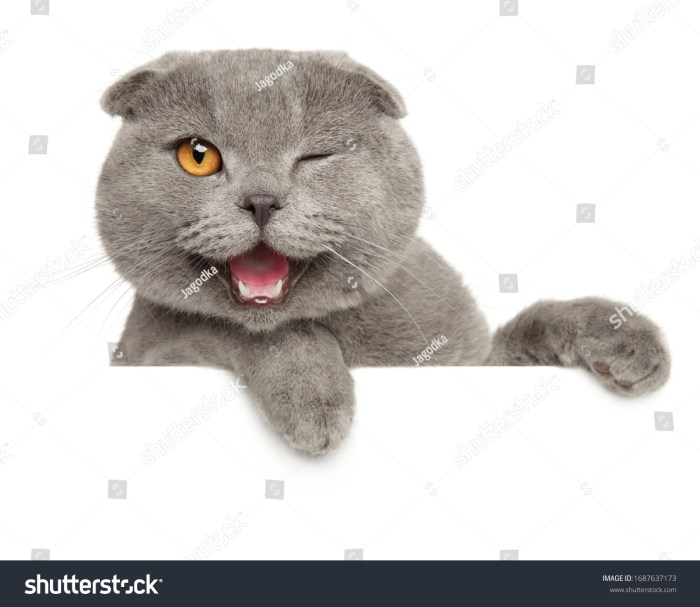
Source: shutterstock.com
So, the next time your cat gives you a slow blink or a quick wink, you’ll have a better understanding of what it might mean. Whether it’s a sign of affection, a playful invitation, or a potential health concern, recognizing these subtle cues can strengthen your bond with your cat and ensure their well-being. It’s a reminder that even the simplest gestures can hold a wealth of information when you know how to look – and listen – closely.
Understanding feline winks is more than just a fun fact; it’s a window into the complex and fascinating world of cat behavior. By paying attention to these subtle signals, we can build stronger relationships with our feline companions and appreciate the nuances of their communication.
Query Resolution
Why do cats blink so much?
Blinking is essential for keeping a cat’s eyes lubricated and clean. However, excessive blinking can sometimes indicate a medical issue, so it’s important to monitor for other symptoms.
Is a slow blink the same as a wink?
No, a slow blink is a deliberate, relaxed action that cats use to signal trust and comfort. It’s often reciprocated by humans as a sign of friendship.
What does it mean when my cat winks at me?
It could mean a variety of things! It might be a sign of affection, a playful invitation, or simply a response to your eye contact. Context is key to understanding the meaning.
Could a medical condition cause my cat to wink excessively?
Yes, conditions like conjunctivitis, corneal ulcers, and dry eye can cause altered blinking patterns. Always consult a vet if you notice unusual or concerning behavior.
Are some cat breeds more prone to winking than others?
Certain breeds, like Siamese and Persians, are known for their expressive faces and may exhibit more noticeable winking behaviors.
How can I tell the difference between a wink and a twitch?
A wink is a deliberate closure of one eye, while a twitch is an involuntary, brief spasm. Observe the context and the cat’s overall body language.
What should I do if I suspect my cat’s winking is a medical problem?
Contact your veterinarian immediately. They can perform a thorough examination and determine the underlying cause of the behavior.