Have you ever seen a cat move sideways, scuttling along like a little crab? It’s a peculiar sight, and increasingly, cat owners are reporting this unusual locomotion style – the “crab walk.” This isn’t just a quirky feline fad; it’s a fascinating phenomenon that can stem from a variety of causes, ranging from playful antics to underlying medical conditions. We’ll dive deep into the world of crab walking cats, exploring the potential reasons behind this movement, how to differentiate between playful and problematic behavior, and what steps you can take if you notice your feline friend adopting this sideways shuffle.
Understanding the mechanics of feline movement, from their musculoskeletal system to neurological pathways, is key to deciphering why some cats crab walk. We’ll examine potential anatomical variations, neurological disorders, orthopedic issues, and even the impact of environmental factors and breed predispositions. Plus, we’ll look at how to observe and record your cat’s movements to help your vet make an accurate diagnosis.
The Curious Case of the Crab Walking Cat
The internet is full of quirky cat videos, but the “crab walking cat” phenomenon stands out. It’s a sight that can be both amusing and concerning for owners – a feline moving sideways, resembling a crab scuttling across the sand. This isn’t a common behavior, and it naturally raises questions about what might be causing it. This article delves into the world of crab walking cats, exploring the observable characteristics, potential causes (both medical and behavioral), and what owners can do to understand and help their furry friends.
1. The Phenomenon
Crab Walking Cats
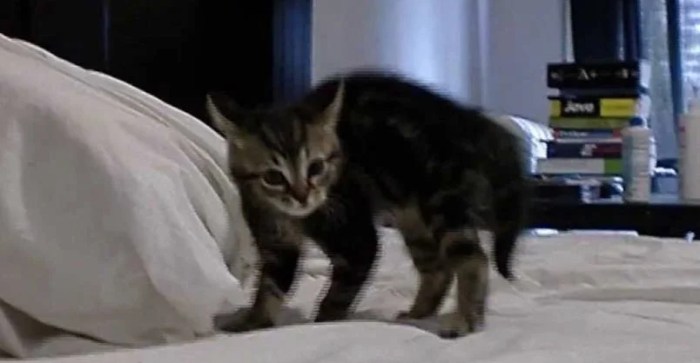
The crab walk isn’t a standard feline locomotion style. It’s characterized by a sideways movement, often with an exaggerated or asymmetrical limb placement. You might notice your cat using its front and hind legs in a coordinated, sideways fashion, rather than the typical forward stride. The speed can vary – some cats move slowly and deliberately, while others seem to scuttle with surprising agility.
Anecdotally, owners describe seeing this behavior in cats of all ages, though it seems more common in younger or more playful individuals. Some report it appearing suddenly, while others have observed it developing gradually over time. The underlying reasons are complex and can range from playful antics to underlying medical conditions.
| Observed Behavior | Possible Explanation | Likelihood (Low/Medium/High) |
|---|---|---|
| Sideways walking with exaggerated limb movements | Playful behavior, exploring balance | Medium |
| Asymmetrical limb use (one leg noticeably different) | Orthopedic pain or injury | High |
| Crab walk appearing after a fall or trauma | Neurological damage or pain | High |
| Slow, deliberate sideways movement with a hunched posture | Arthritis or degenerative joint disease | Medium |
| Crab walk combined with head tilt and circling | Vestibular disease or cerebellar dysfunction | Medium |
| Sudden onset of crab walking with no apparent injury | Neurological issue, potentially inflammatory | Low |
| Crab walking only on certain surfaces (e.g., carpet) | Surface-related discomfort or instability | Low |
2. Anatomy & Physiology Considerations
A cat’s musculoskeletal system is remarkably adapted for agility and precision. Typically, walking involves a coordinated sequence of muscle contractions and joint movements. The hind limbs provide propulsion, while the forelimbs contribute to balance and steering. The spinal cord acts as the primary communication pathway between the brain and the limbs, relaying motor commands and sensory feedback. Anatomical variations, such as subtle differences in limb length or joint angles, are common and usually don’t cause problems.
However, more significant variations, like hip dysplasia or a malformed paw,could* contribute to altered gait patterns, including a crab-like movement. Neurologically, the motor cortex in the brain initiates voluntary movement, while the cerebellum coordinates and refines those movements. Damage to either area can disrupt the normal feline gait.  (Imagine a diagram here illustrating a typical feline gait with a smooth, forward stride, contrasted with a crab walking gait showing sideways limb placement and a wider stance. Arrows would indicate the direction of movement and key muscle groups involved.)*
3. Medical Possibilities & Diagnoses
Source: welovecatsandkittens.com
Several medical conditions can manifest as altered gait, including the crab walk. Neurological disorders, particularly those affecting the cerebellum (responsible for coordination), are a significant concern. Cerebellar hypoplasia, stroke, or inflammation can disrupt the precise control of limb movements. Orthopedic problems, such as arthritis, hip dysplasia, or a fractured bone, can cause pain and lead a cat to favor certain limbs, resulting in an unusual walking style.
Even pain management strategies, like NSAIDs, can temporarily alter a cat’s movement patterns as they adjust to the medication’s effects.
| Potential Condition | Symptoms (Beyond Gait) | Diagnostic Tests | Treatment Options |
|---|---|---|---|
| Cerebellar Hypoplasia | Tremors, head tremors, difficulty grooming | Neurological exam, MRI | Supportive care, environmental modifications |
| Arthritis | Stiffness, reluctance to jump, decreased activity | Radiographs (X-rays), joint fluid analysis | Pain medication, weight management, physical therapy |
| Hip Dysplasia | Lameness, pain when touched, bunny hopping gait | Radiographs (X-rays), orthopedic exam | Pain medication, surgery (in severe cases) |
| Vestibular Disease | Head tilt, nystagmus (rapid eye movements), nausea | Neurological exam, blood work, MRI | Medications to reduce nausea, supportive care |
| Intervertebral Disc Disease (IVDD) | Pain, weakness, paralysis | Radiographs, MRI | Pain medication, steroids, surgery |
4. Behavioral & Environmental Factors
Stress and anxiety can significantly impact a cat’s posture and movement. A stressed cat might adopt a hunched posture or exhibit unusual pacing behaviors. Environmental factors also play a role. Slippery surfaces can make it difficult for a cat to maintain balance, leading to awkward movements. Uneven terrain can also contribute to instability.
A cat’s age and physical condition are crucial considerations. Obese cats may struggle with mobility, while older cats are more prone to arthritis.
- Provide non-slip surfaces on floors.
- Ensure easy access to litter boxes and food/water bowls.
- Create a safe and quiet space for the cat to retreat to when stressed.
- Maintain a consistent routine to minimize anxiety.
- Provide regular, gentle exercise to maintain muscle strength.
- Elevate food and water bowls for cats with neck or back pain.
- Use ramps or steps to help cats access favorite spots.
- Keep the environment free of hazards that could cause injury.
5. Breed Predispositions (If Any)
Certain cat breeds are statistically more prone to neurological or orthopedic conditions that can affect gait. For example, Persian cats are predisposed to Polycystic Kidney Disease (PKD), which can sometimes lead to secondary neurological issues. Maine Coons are known for developing hip dysplasia and spinal muscular atrophy. Siamese cats can be susceptible to amyloidosis, which can affect the nervous system.
Genetic factors likely contribute to these predispositions, although the exact mechanisms are often complex and not fully understood.
“While breed predispositions can increase the risk of gait abnormalities, it’s important to remember that not all cats within a breed will develop these conditions. Environmental factors and individual genetics play a significant role in determining whether a cat will exhibit unusual movement patterns.”
6. Visual Descriptions & Imagery
A cat crab walking presents a distinctive visual. The limbs move in a sideways, scuttling motion, often with the hind feet following the front feet in a coordinated fashion. The body posture might be slightly hunched or asymmetrical, depending on the underlying cause. The overall movement appears labored and uncoordinated compared to a typical feline stride.On a textured surface like carpet, the crab walking cat’s paws grip the fibers, creating a visible pattern of movement.
On grass, the paws sink slightly into the blades, adding a unique visual element. On tile, the cat might appear to slide slightly, further emphasizing the sideways motion.Distinguishing between a playful crab walk and one caused by injury is crucial. A playful crab walk is typically accompanied by a relaxed posture, playful vocalizations, and a generally happy demeanor. An injury-related crab walk is often characterized by a tense posture, signs of pain (e.g., flattened ears, tucked tail), and reluctance to move.Imagine a scene: a sunbeam streams across the living room floor, illuminating a cat crab walking through the warm light.
The shadows cast by the cat’s body elongate and distort with each sideways step, creating a mesmerizing visual effect. The dust motes dancing in the sunbeam highlight the cat’s unusual movement.
7. Comparative Locomotion in Animals
Crab walking isn’t unique to cats. Crabs, of course, are the quintessential example, but it’s also observed in insects like cockroaches and even some primates. The evolutionary advantage of crab-like locomotion lies in its ability to navigate tight spaces and uneven terrain. However, it’s generally less efficient for covering long distances compared to more conventional forms of locomotion. The biomechanical principles governing crab walking involve a lateral shift of weight and coordinated limb movements to propel the animal sideways.
| Animal | Locomotion Style | Adaptive Advantage |
|---|---|---|
| Crab | Crab Walking | Navigating rocky shorelines, tight crevices |
| Cockroach | Crab Walking | Rapid escape from predators, navigating cluttered environments |
| Spider Monkey | Sideways Climbing (similar to crab walking) | Moving through dense forest canopy |
| Mole | Lateral Undulation | Digging through soil |
| Sea Urchin | Lateral Movement with Tube Feet | Moving across the seafloor |
| Centipede | Lateral Wave-like Movement | Navigating narrow spaces |
8. Owner Observations & Reporting
When observing your cat’s unusual gait, it’s essential to record specific details. Note the frequency of the crab walking, the duration of each episode, and any triggers that seem to precede it (e.g., after waking up, after eating, during play). Safely video recording your cat’s movement is invaluable for veterinary consultation. Ensure the video is well-lit and clearly shows the cat’s gait from multiple angles.
Providing a comprehensive history to your veterinarian, including any recent injuries, changes in behavior, or dietary modifications, is crucial for accurate diagnosis.
- Observe the cat’s gait from different angles.
- Note any signs of pain or discomfort.
- Record the frequency and duration of the crab walking.
- Identify any potential triggers.
- Video record the cat’s movement for veterinary consultation.
9. The Playful Crab Walk
The crab walk can sometimes be a playful behavior, particularly in younger cats. This type of crab walk is often accompanied by a relaxed posture, playful vocalizations, and a generally happy demeanor. It might be a way for the cat to explore its balance or simply engage in a novel form of play.Differentiating between a playful crab walk and one caused by a medical issue requires careful observation.
A playful crab walk is typically brief and intermittent, while a medical-related crab walk is often more persistent and accompanied by other signs of illness. Enrichment and play are vital for feline behavior. Providing opportunities for exercise and mental stimulation can help prevent boredom and reduce stress, which might contribute to unusual movement patterns.
- Feather wands
- Laser pointers
- Puzzle toys
- Catnip mice
- Interactive treat balls
- Tunnel systems
- Cardboard boxes
- Fishing pole toys
10. Advanced Diagnostic Techniques
Advanced imaging techniques, such as MRI and CT scans, can provide detailed images of the brain, spinal cord, and musculoskeletal system, helping to identify underlying causes of altered gait. Nerve conduction studies and electromyography (EMG) can evaluate neurological function and identify nerve damage. Joint fluid analysis can help identify inflammatory or infectious conditions affecting the musculoskeletal system.*(Imagine a flowchart here illustrating the diagnostic process: Owner observes unusual gait -> Veterinary exam and history taking -> Initial diagnostics (radiographs, neurological exam) -> If necessary, advanced imaging (MRI, CT) and specialized tests (nerve conduction studies, joint fluid analysis) -> Diagnosis and treatment plan)*
Final Review
The crab walking cat is a captivating puzzle, blending playful behavior with potential medical concerns. Whether it’s a young kitten experimenting with new ways to move or a senior cat struggling with arthritis, recognizing the nuances of this gait is crucial for ensuring your cat’s well-being. By understanding the potential causes, observing your cat carefully, and working closely with your veterinarian, you can help your feline friend navigate life – sideways or otherwise – with comfort and joy.
It’s a reminder that even the most seemingly unusual behaviors in our pets can hold valuable clues about their health and happiness.
Common Queries
Why is my cat suddenly crab walking?
It could be anything from playful exploration to pain or a neurological issue. Careful observation and a vet visit are essential to determine the cause.
How can I tell if my cat is crab walking playfully or because of a problem?
Playful crab walking is usually accompanied by a happy demeanor, flexibility, and often occurs during play. Pain-related crab walking is often stiff, hesitant, and may be accompanied by signs of discomfort.
What kind of vet tests might be needed?
Depending on the suspected cause, tests could include bloodwork, X-rays, neurological exams, MRI, or CT scans.
Are certain cat breeds more prone to this?
Some breeds with predispositions to neurological or orthopedic conditions, like Persians and Maine Coons,
-may* be slightly more likely, but it can occur in any breed.
Should I change my cat’s environment?
Yes! Providing stable surfaces, avoiding slippery floors, and ensuring comfortable resting spots can help alleviate discomfort and improve mobility.
What can I do to enrich my cat’s environment to encourage healthy movement?
Interactive toys, climbing structures, and puzzle feeders can stimulate movement and prevent boredom, which can sometimes contribute to unusual gait patterns.
How important is it to video record my cat’s crab walking?
Very! A video provides valuable information for your vet, showing the pattern and context of the movement, which can aid in diagnosis.