That search – “pictures of cat worms” – it might seem a little unsettling, right? But it’s a surprisingly common one, driven by a range of reasons. Maybe you’re a concerned pet parent noticing something unusual in your cat’s litter box, a student researching parasites, or simply curious about the unseen world within our feline friends. Understanding why people search for these images, and what they might be looking for, is the first step in navigating this topic responsibly and informatively.
We’ll explore the types of worms, what they look like, and how to differentiate them from other feline health issues, all while keeping ethical considerations at the forefront.
This deep dive will cover everything from identifying common intestinal parasites like roundworms, tapeworms, and hookworms, to understanding their lifecycles and how they manifest in a cat’s physical condition. We’ll also look at the visual differences between larval and adult stages, and how to interpret what you might find in your cat’s stool. Finally, we’ll discuss the importance of accurate identification and veterinary diagnosis, and how to find reliable information and images.
Understanding the Search: “Pictures of Cat Worms”
Initial Context
Initial Context
Let’s be honest, searching for “pictures of cat worms” isn’t exactly a pleasant experience. But understanding
-why* someone might be typing those words into a search bar is crucial to providing helpful and sensitive information. It’s a search driven by a range of emotions and needs, and we need to address them thoughtfully. This section will explore the likely user intent, potential reasons behind the search, and the emotional responses someone might have when confronted with such imagery.
Likely User Intent and Profiles
The search “pictures of cat worms” isn’t a one-size-fits-all situation. Here are three distinct user profiles and their likely intentions:
- The Concerned Owner: This person is likely observing concerning symptoms in their cat – perhaps diarrhea, vomiting, weight loss, or visible worms in their stool. They’re using the search to visually confirm their suspicions and gain a better understanding of what might be affecting their pet. Their primary goal is to identify the problem and seek appropriate veterinary care.
- The Curious Student/Researcher: Someone studying veterinary science, animal health, or parasitology might be using the search for educational purposes. They’re looking for visual references to aid in their learning and understanding of feline parasites. Their intent is purely academic and informational.
- The Anxious Observer: This individual might have stumbled upon something unusual in their cat’s litter box and is experiencing anxiety and uncertainty. They’re seeking reassurance or confirmation that what they’ve seen isn’t a serious issue, or at least to understand what it
-is*.
Reasons for the Search
Beyond the broad user profiles, several specific reasons could lead someone to search for these images:
- Visual Confirmation: As mentioned, a cat owner might have seen something in their cat’s stool and wants to compare it to images to identify the type of worm.
- Learning About Prevention: Someone might be researching preventative measures for their cat and wants to see what they’re trying to avoid.
- Understanding Symptoms: A potential cat owner might be researching common feline health issues and wants to be aware of the visual signs of parasitic infection.
- Researching Treatment Options: Someone whose cat has already been diagnosed with worms might be looking for visual aids to understand the treatment process or the expected results.
Emotional Responses
Encountering images of parasites can evoke a range of emotions. Disgust is a common initial reaction, followed by concern for the animal’s well-being. Anxiety and worry are also likely, especially for concerned owners. Even for those searching for academic reasons, the images can be unsettling. It’s important to approach this topic with sensitivity and provide clear, factual information to alleviate anxiety and empower users to take appropriate action.
Types of Worms Commonly Found in Cats
Feline intestinal parasites are a common concern, and understanding the different types is the first step in prevention and treatment. This section will Artikel five common parasites, their lifecycles, and how they manifest in a cat’s physical condition. We’ll also compare their appearance in feces, providing a visual guide to help identify potential issues.
Common Intestinal Parasites
Here are five intestinal parasites frequently found in cats:
- Roundworms (Toxocara cati): These are the most common. Eggs are shed in feces, ingested by the cat, and hatch in the small intestine. Larvae migrate through the body before returning to the intestine to mature.
- Hookworms (Ancylostoma tubaeforme): Hookworms are blood-sucking parasites. Larvae penetrate the skin, migrate through the lungs, and then reach the small intestine. Eggs are shed in feces.
- Tapeworms (Dipylidium caninum, Echinococcus multilocularis): Tapeworms are segmented worms acquired by ingesting fleas or, in the case of
-Echinococcus*, infected prey. Segments containing eggs are shed in feces. - Whipworms (Trichuris vulpis): Less common than roundworms, whipworms reside in the large intestine. Eggs are shed in feces and require a specific environmental condition to hatch.
- Lungworms (Aelurostrongylus abstrusus): These parasites migrate through the lungs, causing respiratory issues before settling in the small intestine. Cats become infected by ingesting snails or slugs.
Comparing Worm Appearance in Feces
Identifying worms or their segments in a cat’s stool can provide valuable clues. Here’s a table comparing their appearance:
| Worm Type | Size | Color | Distinctive Features |
|---|---|---|---|
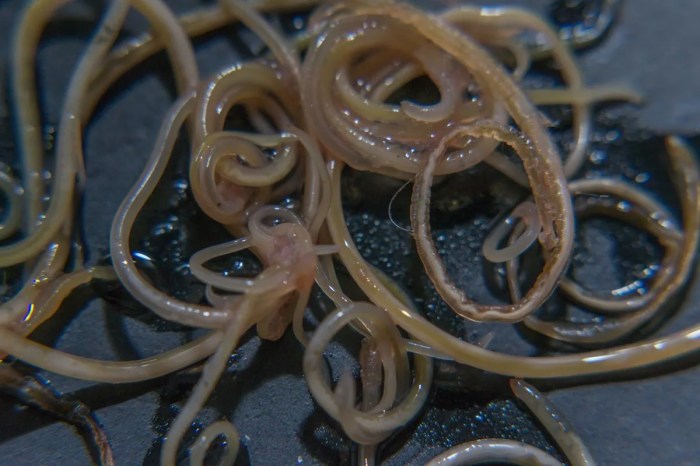
| Roundworm | 2-14 inches | Yellowish-white | Long, thin, spaghetti-like; often seen whole |
| Tapeworm | Varies; segments up to 1/2 inch | White to yellowish-brown | Flat, ribbon-like segments; often resemble grains of rice |
| Hookworm | 1/2 – 1 inch | Brownish-red | Thin, thread-like; difficult to see whole; often only eggs are present |
Symptoms of Worm Infestation
Different worm species manifest differently in a cat’s physical condition. Here’s a breakdown:
- Roundworms: Vomiting, diarrhea, weight loss, pot-bellied appearance (especially in kittens), dull coat.
- Hookworms: Anemia (pale gums), weakness, weight loss, dark, tarry stool (due to digested blood).
- Tapeworms: Visible segments in stool, scooting (dragging the rear end along the floor), weight loss.
- Whipworms: Diarrhea, weight loss, dehydration.
- Lungworms: Coughing, wheezing, difficulty breathing, lethargy.
Visual Characteristics of Worms in Cats – Detailed Descriptions
While the table in the previous section provides a general overview, a closer look at the visual characteristics of these parasites is essential for accurate identification. This section will delve into the appearance of mature roundworms, larval and adult tapeworms, and hookworm eggs under a microscope.
Mature Roundworm Appearance
A mature roundworm found in a cat’s intestines is typically 2 to 14 inches long. They are cylindrical in shape, with a smooth, glistening surface. Their color is usually a yellowish-white or creamy white. They are relatively thick, about the thickness of a pencil, and move actively within the intestine.
Larval vs. Adult Tapeworms
Tapeworms have distinct larval and adult stages. The larval stage, called a cysticercoid, is small (typically less than 1/4 inch) and appears as a small, white, fluid-filled sac. The adult tapeworm, on the other hand, is a long, segmented ribbon. Each segment, or proglottid, is about 1/2 inch long and contains eggs. The color of the segments varies from white to yellowish-brown.
As segments mature, they darken and become filled with eggs before being shed in the feces.
Hookworm Eggs Under a Microscope
Hookworm eggs are microscopic, measuring approximately 60-80 micrometers in diameter. They are oval or round in shape, with a thick, brownish-yellow shell. The inside of the egg contains a single, centrally located cell. Identifying these eggs requires a fecal flotation test performed by a veterinarian.
Visual Guide to Worm Segments in Feces
Identifying worm segments in a cat’s stool can be a crucial indicator of infection. Here’s a visual guide:
Segment identification is key. Unlike undigested food, worm segments are often uniform in shape and size. They also tend to be more rigid and less easily crushed. Careful observation and comparison to reference images are essential for accurate assessment.
- Roundworm segments: Not typically seen as segments, but rather as whole worms.
- Tapeworm segments: Small, flat, white or yellowish-brown segments that resemble grains of rice. They may be moist or dry.
- Hookworm eggs: Too small to be seen with the naked eye; require microscopic examination.
Final Thoughts
Source: cat-world.com
So, while the topic of “pictures of cat worms” might initially evoke a sense of discomfort, it’s ultimately about responsible pet ownership and understanding the potential health challenges our cats face. By recognizing the signs, knowing what to look for, and seeking professional veterinary advice, we can ensure our feline companions live long, healthy, and worm-free lives. Remember, this information is for educational purposes only and should never replace a consultation with a qualified veterinarian – they are the best resource for diagnosing and treating any health concerns your cat may have.
Hopefully, this exploration has demystified the world of cat worms and empowered you with the knowledge to be a more informed and proactive pet parent. Stay vigilant, observe your cat closely, and don’t hesitate to reach out to your vet if you have any concerns.
FAQ Overview
Why are people searching for “pictures of cat worms”?
People search for these images for various reasons: concern about their pet’s health, curiosity, research for school or personal interest, or to help identify a potential problem.
What’s the difference between roundworms, tapeworms, and hookworms?
Roundworms are long and thin, tapeworms appear as segments in stool, and hookworms are tiny and can cause anemia. Their appearance and lifecycle differ significantly.
Can I diagnose worms myself based on pictures?
No! While images can be helpful for understanding what worms look like, a definitive diagnosis requires a veterinary examination and fecal testing.
Are there ethical concerns about displaying images of animal parasites?
Yes, it’s crucial to present these images responsibly, with sensitivity and a focus on education rather than sensationalism.
What should I do if I suspect my cat has worms?
Contact your veterinarian immediately. They can perform a fecal exam and prescribe appropriate deworming medication.
How can I prevent my cat from getting worms?
Regular deworming, good hygiene practices (litter box cleaning), and preventing your cat from hunting rodents are all important preventative measures.