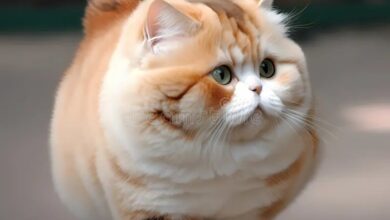
Ever noticed your cat’s tail vibrating like a tiny hummingbird? That quivering tail isn’t just a quirky habit; it’s a complex form of feline communication, packed with clues about their emotions, health, and environment. We’re diving deep into the world of the quivering tail cat, exploring everything from the neurological reasons behind it to how to interpret it in different situations.
Get ready to become a feline body language expert!
This isn’t just about recognizing a quiver; it’s about understanding the
-why* behind it. We’ll look at how age, breed, medical conditions, and even the surrounding environment can all influence your cat’s tail behavior. Plus, we’ll equip you with tools to document and analyze these observations, helping you build a stronger bond with your furry friend.
Understanding the Quivering Tail: A Cat’s Emotional Language
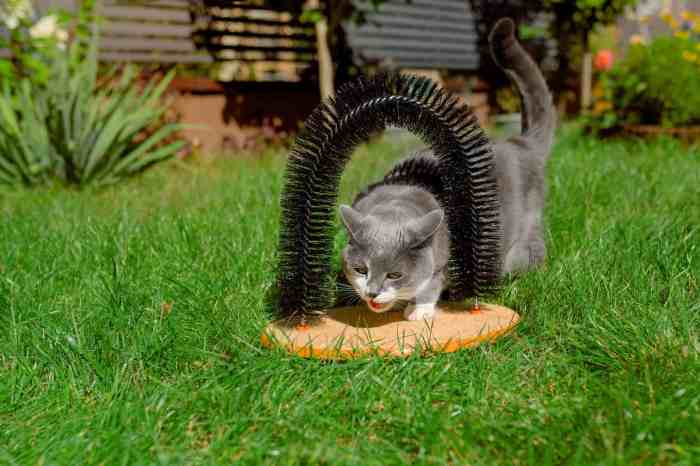
Source: meowhoo.com
That little tremor in your cat’s tail – it’s more than just a quirky habit. It’s a complex form of communication, a subtle signal revealing a range of emotions and even potential health concerns. While we often associate tail wags with dogs, cats use their tails to convey a surprising amount of information. This article dives deep into the fascinating world of the quivering cat tail, exploring the science, the emotions, and what it all means for understanding your feline friend.
Understanding the “Quivering Tail” Behavior
A cat’s tail isn’t just a furry appendage; it’s an extension of their spine, packed with nerves and muscles. The quivering itself is a neurological response, originating in the brain and sending signals down the spinal cord to the tail muscles. These muscles contract and relax rapidly, creating the visible tremor. Physiologically, this involves the activation of motor neurons and the release of neurotransmitters, similar to what happens when a cat is preparing to pounce.
The intensity of the quiver can vary depending on the underlying cause, ranging from a gentle ripple to a vigorous shake.
- Age Matters: Kittens often exhibit tail quivering as they explore their environment and experience new sensations. It’s a sign of excitement and curiosity. Adult cats use it more deliberately to communicate emotions, while senior cats might display it due to age-related neurological changes or underlying pain.
- Potential Medical Conditions: Frequent or unusual tail quivering can sometimes indicate a medical problem. These could include nerve damage (neuropathy), spinal issues (like intervertebral disc disease), urinary tract infections (UTIs – especially if accompanied by straining), or even certain types of pain.
- Breed Influence: While all cats can quiver their tails, some breeds might be more prone to it. For example, breeds with longer, more expressive tails, like Ragdolls or Persians, might display more noticeable quivering. However, this isn’t a definitive rule, and individual variation is significant.
Emotional States & Tail Quivering
The quivering tail isn’t a universal sign of one emotion. It’s a nuanced signal that needs to be interpreted in context. It can indicate excitement, frustration, anxiety, anticipation, or even a combination of these. Understanding the subtle differences requires careful observation of the cat’s entire body language.
| Tail Position | Possible Emotion(s) | Additional Body Language Cues |
|---|---|---|
| Quivering, held high | Excitement, anticipation, happiness | Ears forward, pupils dilated, purring, rubbing against objects |
| Quivering, held low | Anxiety, fear, uncertainty | Ears flattened, pupils dilated, crouching, hissing |
| Quivering, tucked between legs | Fear, submission, extreme anxiety | Body lowered, tail tucked tightly, ears flattened, dilated pupils |
| Quivering, swishing gently | Frustration, mild annoyance | Ears slightly back, whiskers forward, slow blinking |
Distinguishing between excitement and stress-induced tail quivering is crucial. An excited quiver is usually accompanied by a relaxed posture, playful behavior, and a generally happy demeanor. A stressed quiver, on the other hand, is often paired with a tense body, flattened ears, dilated pupils, and potentially hissing or growling. Observing the cat’s overall posture and vocalizations provides valuable clues.
Consider this: a cat’s ear position, vocalizations (meows, purrs, hisses), and pupil dilation all contribute to the overall message. A rapidly quivering tail combined with dilated pupils and flattened ears likely indicates fear or anxiety, while the same quiver with forward-pointing ears and a gentle purr suggests excitement and anticipation.
Contextual Factors Influencing Quivering
A cat’s environment plays a significant role in triggering tail quivering. Loud noises, unfamiliar people, or the presence of new pets can all cause anxiety and lead to a quivering tail. Routine changes, such as moving to a new home, introducing new furniture, or altering feeding schedules, can also disrupt a cat’s sense of security and trigger stress-related behaviors.
- Play and Hunting Instincts: Tail quivering is often observed during play and hunting scenarios. When a cat is stalking a toy or watching a bird outside the window, the anticipation and excitement can manifest as a subtle tail quiver. The intensity increases as the cat prepares to pounce.
Imagine a cat intently watching a laser pointer dot dance across the floor. The tail might start to quiver slightly as the cat focuses, then become more pronounced as it stalks and prepares to “catch” the elusive dot. This is a clear demonstration of the interplay between hunting instincts and tail behavior.
Here’s a flowchart illustrating a cat’s decision-making process when encountering a stimulus:
- Stimulus Detected: (e.g., unfamiliar sound, movement)
- Assessment: (Is it a threat? Is it prey? Is it familiar?)
- Emotional Response: (Fear, excitement, curiosity)
- Tail Behavior: (Quivering, twitching, swishing, puffing – based on emotional response)
- Action: (Flight, fight, freeze, play)
Quivering Tail in Specific Situations
The meaning of a quivering tail can change depending on the situation. Petting and grooming, for example, can elicit different responses. A positive response is usually accompanied by purring, rubbing, and relaxed posture. A negative response might involve a quivering tail, flattened ears, and attempts to move away.
When presented with food or a favorite toy, a cat’s tail might quiver with anticipation. The quiver becomes more intense as the cat gets closer to the reward. This is a clear sign of excitement and eagerness.
Interactions with other cats can also trigger tail quivering. During friendly interactions, the quiver might be subtle and accompanied by playful swishing. In confrontational situations, the quiver can be more rapid and intense, often accompanied by hissing and arched back.
Consider this scenario: A cat is sitting near a window, tail quivering rapidly, staring intently at a bird outside. The likely emotional state is a combination of excitement and anticipation. The bird represents potential prey, triggering the cat’s hunting instincts. The rapid tail quiver reflects the heightened state of alertness and readiness to pounce.
Medical Considerations & When to Seek Veterinary Advice
While tail quivering is often a normal behavior, it can sometimes be a symptom of an underlying medical condition. Nerve damage, spinal issues, and urinary tract infections are among the potential culprits. These conditions can disrupt the normal neurological signals controlling the tail muscles, leading to involuntary quivering.
- Seek immediate veterinary attention if you observe any of the following, in conjunction with tail quivering:
- Loss of coordination or balance
- Difficulty walking or standing
- Changes in urination or defecation habits
- Pain or sensitivity when touching the tail
- Sudden onset of weakness or paralysis
- Lethargy or loss of appetite
A veterinarian might employ various diagnostic procedures to determine the cause of unusual tail behavior, including a neurological exam, blood tests, urine analysis, and X-rays or MRI scans. Treatment options will depend on the underlying condition and may include medication, physical therapy, or surgery.
Illustrative Descriptions of Tail Quivering
Imagine a kitten, barely a few months old, presented with a vibrant feather toy. Its tiny tail begins to quiver, a rapid, almost imperceptible ripple running down its length. Wide-eyed, the kitten tracks the feather’s movements, its body a bundle of contained energy. The quiver intensifies as the feather dips and dives, a visual manifestation of pure, unadulterated excitement and sensory overload.
“The wait felt like an eternity. Every creak of the floorboards, every rustle of leaves outside, sent a jolt of anticipation through me. My tail, a frantic metronome, quivered with a desperate hope – a silent plea for my human to return home.”
A senior cat, showing signs of age, sits quietly in a sunbeam. Its tail gives a subtle, hesitant quiver, barely noticeable. The posture is slightly hunched, the eyes a little clouded. This isn’t the excited quiver of youth; it’s a more subdued tremor, suggesting discomfort or a mild ache.
Two cats engage in a playful chase. One cat, mid-leap, has its tail quivering rapidly, a blur of motion. The quiver isn’t frantic or fearful; it’s a rhythmic pulse accompanying the playful pounce, a clear signal of engagement and enjoyment in the game.
Comparing Tail Quivering to Other Cat Behaviors
While tail quivering is distinct, it’s important to differentiate it from other tail behaviors like twitching, swishing, and puffing. Tail twitching is a quick, short movement, often indicating mild irritation or focus. Tail swishing is a broader, more deliberate movement, signaling annoyance or agitation. Tail puffing is a defensive response, making the tail appear larger and more intimidating.
A cat’s overall posture and facial expression significantly modify the interpretation of a quivering tail. A relaxed posture and soft eyes suggest excitement, while a tense body and flattened ears indicate anxiety.
| Behavior | Possible Cause(s) | Associated Body Language | Severity Level (1-5) |
|---|---|---|---|
| Quivering | Excitement, anxiety, anticipation | Varies widely; consider overall posture | 2-4 |
| Twitching | Mild irritation, focus | Ears forward, whiskers forward | 1-2 |
| Swishing | Annoyance, agitation | Ears slightly back, tail moving side to side | 3-4 |
| Puffing | Fear, defensiveness | Arched back, fur standing on end | 4-5 |
Vocalizations also play a crucial role. A quivering tail accompanied by purring suggests happiness, while a quivering tail combined with hissing indicates fear or aggression. Understanding the interplay between tail behavior and vocalizations is key to accurately interpreting your cat’s emotional state.
Observing and Documenting Tail Behavior
Tracking a cat’s tail behavior over time can provide valuable insights into its emotional well-being. A simple observation log can be a useful tool. Include fields for date, time, situation, tail position, and other relevant observations.
Recording contextual information is essential. Note the environment, any recent changes, and the presence of other people or animals. This helps to identify potential triggers for tail quivering.
Video recording can be a powerful tool for documenting and analyzing a cat’s tail behavior. It allows you to review the behavior in detail and identify subtle cues that might be missed during live observation. Remember to consider your cat’s individual personality and history when interpreting its body language. What might be a sign of anxiety in one cat could be a playful gesture in another.
Final Thoughts
From the subtle quiver of a senior cat signaling discomfort to the enthusiastic wiggle of a kitten chasing a feather, the quivering tail is a fascinating window into your cat’s inner world. By understanding the nuances of this behavior, you can better respond to their needs, identify potential health concerns, and appreciate the intricate ways they communicate. So, keep observing, keep learning, and enjoy the journey of deciphering your cat’s unique language!
Ultimately, paying attention to your cat’s tail – and the rest of their body language – is a key ingredient in a happy, healthy relationship. It’s a constant reminder that even the smallest gestures can hold a wealth of information about the creatures we love.
Clarifying Questions
Why does my cat’s tail quiver when I pet them?
It can be a mixed signal! Sometimes it means they’re enjoying the petting, but it can also indicate overstimulation or discomfort. Look for other cues like flattened ears, tense muscles, or a swishing tail.
Could a quivering tail be a sign of pain?
Yes, it absolutely could. Especially if the quivering is new, frequent, or accompanied by other symptoms like limping, changes in appetite, or hiding. A vet visit is warranted.
Is tail quivering the same as tail twitching?
No. Twitching is usually a quick, involuntary movement, often indicating focus or mild frustration. Quivering is a more sustained vibration, typically linked to stronger emotions.
My cat’s tail puffs up and quivers – what does that mean?
A puffed-up tail combined with quivering usually signals fear, anxiety, or defensiveness. Your cat is trying to appear larger and more intimidating.
How can I tell the difference between excitement and stress-induced tail quivering?
Excitement is often accompanied by playful behavior, purring, and dilated pupils. Stress-induced quivering is usually paired with flattened ears, a tucked tail, and a tense posture.
Should I be concerned if my senior cat starts quivering their tail more often?
Yes, it’s wise to be cautious. Older cats are more prone to underlying medical conditions that can manifest as unusual tail behavior. A check-up is recommended.