Ever feel like your cat ismore* than just a pet? Like they’re your little shadow, constantly seeking your presence and affection? It might be more than just a strong bond – it could be imprinting. While all cats form attachments to their humans, imprinting is a deeper, more profound connection rooted in early kittenhood. It’s a fascinating phenomenon where a kitten forms an incredibly strong, almost exclusive attachment to a specific person, often developing behaviors that go beyond typical feline affection.
This journey explores the subtle and not-so-subtle signs that your cat might have imprinted on you, and what that means for your unique relationship. The critical window for imprinting occurs during the neonatal period, roughly from birth to around 6-8 weeks of age. During this time, kittens are incredibly vulnerable and rely heavily on their mother for comfort and security. Positive interactions with humans during this period can lead to a lasting imprint, shaping their social behavior and attachment style for life.
While primarily associated with this early stage, imprinting
can* sometimes develop later in life, particularly if a cat experiences a significant period of care and comfort from a single person during a vulnerable time. Imagine a tiny kitten, orphaned and taken in by a loving human, receiving constant cuddles, gentle petting, and a safe, warm place to sleep – that early nurturing can lay the foundation for a truly special bond.
Understanding Cat Imprinting
A Deep Dive
We all love the unique bond we share with our feline companions. But have you ever wondered if your cat’s affection goes beyond a typical pet-owner relationship? It might. Today, we’re exploring the fascinating concept of cat imprinting – a powerful, early attachment that can shape a cat’s behavior and personality in profound ways. It’s more than just loving your cat; it’s about understanding a connection forged in their earliest days.
Imprinting in animals, unlike simple bonding, is a rapid learning process that occurs during a critical period, essentially “fixing” a cat’s preference for a specific individual. Think of it like a baby bird imprinting on its mother – it’s a deep, instinctive connection. While bonding is built over time through positive interactions, imprinting is a more immediate and lasting phenomenon.
It’s not about teaching a cat to like you; it’s about them instinctively seeing you as a primary caregiver, almost like a parent figure. This is most likely to occur during the neonatal period, roughly from birth to 7-10 weeks of age, when kittens are incredibly vulnerable and reliant on a caregiver for survival. While the neonatal period is the prime time, experiences later in life, particularly during kittenhood, can still contribute to a strong, imprinting-like attachment, especially if a human consistently provides comfort, security, and care.
Imagine a tiny, orphaned kitten, just a few days old. A kind human gently scoops her up, providing warmth, food, and soothing strokes. The kitten instinctively nuzzles into the human’s hand, purring contentedly. This consistent, positive interaction lays the groundwork for a deep, potentially imprinting-level connection. The kitten learns to associate this human with safety, comfort, and nourishment, solidifying a bond that will likely last a lifetime.
Physical Signs of Imprinting
Source: cats.com
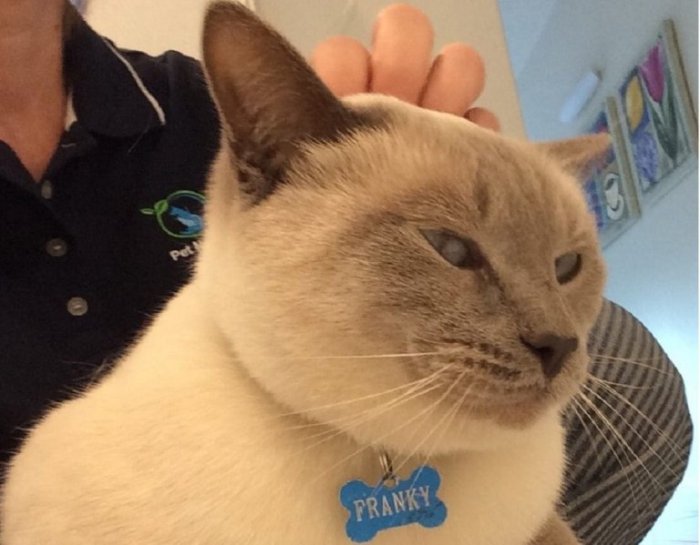
Recognizing imprinting isn’t always straightforward, but there are several physical behaviors that can offer clues. These aren’t guarantees, of course, but they suggest a particularly strong attachment. It’s about observing subtle cues and patterns in your cat’s interactions with you versus others.
A cat’s posture is a key indicator. Mirroring, where your cat subtly mimics your movements, is a strong sign of connection. Leaning against you, rubbing their head and body against your legs, and consistently seeking physical contact are all hallmarks of a cat who sees you as a source of comfort and security. The gaze is also telling; an imprinted cat will often maintain prolonged eye contact with their person, a behavior they might avoid with strangers.
This isn’t a stare-down; it’s a soft, trusting gaze that conveys a deep sense of connection.
| Behavior | Description | Intensity Level (Low, Medium, High) | Possible Explanation |
|---|---|---|---|
| Head-Butting (Bunting) | The cat gently bumps their head against your face, legs, or arms. | Low to Medium | Marking you with scent glands, showing affection, seeking attention. |
| Slow Blinking | The cat slowly closes and opens their eyes while looking at you. | Low to Medium | A sign of trust and relaxation, often interpreted as a “cat kiss.” |
| Kneading | The cat rhythmically pushes their paws into your lap or other soft surfaces. | Medium | A throwback to kittenhood, when kneading stimulated milk flow from their mother; now a comfort behavior. |
| Following | The cat consistently follows you from room to room. | Medium to High | Seeking proximity and reassurance, wanting to be involved in your activities. |
| Mirroring Posture | The cat subtly mimics your posture, such as leaning when you lean. | Low to Medium | Subconscious attempt to create a sense of connection and understanding. |
| Prolonged Eye Contact | The cat maintains soft, steady eye contact with you, avoiding a quick glance. | Medium | Sign of trust and affection, a willingness to be vulnerable. |
Behavioral Signs: Following and Seeking Proximity
An imprinted cat’s desire to be near their person is often intense. They aren’t just casually nearby; they actively seek your presence. The degree of this following behavior can vary, but it’s generally more pronounced than in a cat with a typical bond. When you’re preparing to leave the house, an imprinted cat might exhibit signs of anxiety, such as vocalizing, rubbing against your legs, or attempting to block your path.
This isn’t necessarily separation anxiety in the clinical sense, but rather a manifestation of their reliance on you for security and comfort.
Physical contact is another key indicator. Imprinted cats crave closeness, often rubbing against your legs, kneading on your lap, or seeking out a spot to sit on your lap. It’s a constant desire to be physically connected to their imprinted person.
- Always within 5 feet: The cat is almost always within arm’s reach, constantly monitoring your movements.
- Checks in frequently: The cat regularly approaches you for a brief interaction, such as a head-butt or a quick rub.
- Follows to different rooms: The cat accompanies you as you move from room to room, even if there’s no apparent reason for them to be there.
- Seeks lap time: The cat consistently tries to sit on your lap or nearby, seeking warmth and comfort.
- Sleeps at your feet: The cat chooses to sleep near your feet, ensuring they are close to you.
Vocalizations and Communication
Imprinted cats often develop a unique vocal repertoire with their person. Their vocalizations might differ from those they use with other people or animals. They might use a wider range of sounds, including chirps, trills, and soft meows, to get your attention. Some imprinted cats even seem to mimic their person’s vocal patterns, responding to your tone of voice with similar sounds.
These vocalizations aren’t just about demanding attention; they’re often expressions of contentment or reassurance, a way of communicating their feelings and strengthening the bond.
Grooming and Mutual Care
Grooming behaviors extend beyond the typical self-grooming. An imprinted cat might groom their person, gently licking their hands or face, or engaging in head-butting. Kneading on their person is also a significant sign, a comforting behavior rooted in kittenhood. Reciprocal grooming, where the cat allows you to gently brush or pet them, is also more common in imprinted cats, demonstrating a willingness to engage in mutual care.
The progression of grooming behaviors can be visualized as follows:
Head-Butting (Subtle Scent Marking) Licking Hands/Face (Affectionate Grooming) Kneading (Comfort and Security) Mutual Grooming (Reciprocal Care)
Reactions to Strangers and Other Animals
An imprinted cat’s reaction to strangers is often noticeable. They might become more alert, anxious, or even protective when unfamiliar people enter their home. This isn’t necessarily aggression, but rather a manifestation of their strong attachment to their person and a desire to ensure their safety. Their interactions with other pets in the household can also be influenced by their bond with their person.
They might seek reassurance from their imprinted person when interacting with other animals, or even exhibit possessive behaviors towards their person.
| Scenario | Imprinted Cat Reaction | Possible Explanation |
|---|---|---|
| Stranger Enters Home | Hides, becomes clingy to their person, vocalizes anxiously. | Feeling threatened, seeking reassurance from their trusted person. |
| Other Cat Approaches Person | Interposes themselves between the other cat and their person. | Protecting their person, asserting their bond. |
| Dog Enters Home | Stays close to their person, exhibiting cautious observation. | Seeking safety and guidance from their person in an unfamiliar situation. |
Sleep Patterns and Shared Spaces
Imprinted cats often exhibit a strong preference for sleeping near or on their person. They might choose to sleep at the foot of the bed, on a nearby chair, or even attempt to share the bed itself. This isn’t just about warmth and comfort; it’s about maintaining proximity and ensuring they can monitor their person’s well-being. Choosing a sleeping location that allows them to keep an eye on you is a clear sign of a deep, imprinting-level connection.
“My human’s bed is the best spot in the whole house. I like to curl up at the foot, close enough to feel their warmth but far enough to not be disturbed. Sometimes, if they let me, I sneak up and snuggle right next to them. It’s the safest, most comforting place in the world, and being near my human makes it even better.”
Unique and Subtle Signs
Beyond the more obvious behaviors, there are less noticeable signs that a cat might be imprinted on a person. Bringing “gifts” – small toys or even prey – can be a sign of affection and a desire to share. Following routines, such as waiting by the door when you get home from work, is another subtle indicator. Imprinted cats are also highly attuned to their person’s mood, reacting to changes in their emotional state with empathy and concern.
Imagine a cat who always brings their person a favorite toy after a stressful day at work. Or a cat who curls up extra close when their person is feeling down. These are subtle but powerful signs of a deep, imprinting-level connection.
A cat’s “comfort zone” around their imprinted person can be visualized as a concentric circle. The innermost circle represents the area where the cat feels most secure and relaxed, typically within arm’s reach of their person. The next circle represents the area where the cat feels comfortable and content, allowing for some distance but still maintaining visual contact. The outermost circle represents the cat’s general territory, where they feel safe and secure as long as their person is nearby.
Within this zone, the cat exhibits relaxed posture, slow blinking, and frequent checks in with their person.
Distinguishing Imprinting from Strong Bonding
While both imprinting and strong bonding result in a close relationship, they differ in intensity and exclusivity. Bonding is a gradual process built on mutual affection and trust. Imprinting, on the other hand, is a more rapid and profound attachment, often occurring during a critical developmental period. Imprinted cats tend to be more exclusively attached to their person, showing less interest in other individuals.
Early experiences and genetics play a role in both imprinting and bonding, but imprinting is more heavily influenced by early interactions during the neonatal period.

(Note: This is a description of a Venn diagram. The diagram would visually show the overlap and distinctions between imprinting and strong bonding. The ‘Imprinting’ circle is largely contained within the ‘Strong Bonding’ circle, but has a distinct area representing unique characteristics. The overlapping area represents shared characteristics like affection, trust, and companionship.)
The Impact of Imprinting on the Cat-Person Relationship
Imprinting can create a uniquely close and interdependent relationship. The cat relies heavily on their person for comfort and security, and the person often feels a deep sense of responsibility for the cat’s well-being. However, this intense bond can also present challenges when the person is unavailable or experiences significant life changes. Understanding imprinting is crucial for providing appropriate care and support for imprinted cats, ensuring their emotional needs are met throughout their lives.
Consider a scenario where a woman who was imprinted on by her cat suddenly has to move across the country for work. The cat, accustomed to her constant presence, becomes visibly distressed, exhibiting signs of anxiety and depression. Recognizing the cat’s imprinting allows the owner to proactively seek support, such as a temporary caregiver or a therapist specializing in feline behavior, to help the cat adjust to the change and maintain a healthy emotional state.
Concluding Remarks
From constant following and unique vocalizations to grooming habits and reactions to strangers, the signs of imprinting are varied and often incredibly endearing. Understanding these signs isn’t just about identifying a special bond; it’s about appreciating the depth of your cat’s connection and providing them with the care and reassurance they need. Whether your cat is a devoted shadow or simply a very affectionate companion, recognizing the nuances of their behavior can strengthen your relationship and ensure a happy, fulfilling life together.
Ultimately, imprinting creates a uniquely close and interdependent relationship, one that, while potentially presenting challenges during times of separation, is built on a foundation of profound love and trust.
Common Queries
Why is it called “imprinting”?
The term “imprinting” comes from ethology, the study of animal behavior. It originally described how certain birds would permanently recognize and follow the first moving object they saw after hatching. While feline imprinting isn’t exactly the same, the concept of a lasting, early attachment remains.
Can an adult cat still imprint on a person?
It’s less common, but possible! If an adult cat experiences a period of significant care, comfort, and security from a single person, they
-might* develop imprinting-like behaviors. It’s usually less intense than imprinting in kittens.
Is imprinting the same as a cat being “clingy”?
Not necessarily. Clinginess can be due to various factors, including boredom or anxiety. Imprinting is a deeper, more fundamental attachment rooted in early experiences.
What if my cat only shows some of these signs?
It doesn’t mean they aren’t imprinted! Every cat is different, and the signs can vary in intensity. A combination of several signs is a stronger indicator.
Should I worry if my cat is imprinted on me?
Not at all! It’s generally a positive thing, indicating a strong and loving bond. However, be mindful of potential anxiety if you’re away for extended periods and provide extra reassurance.
How does genetics play a role in imprinting?
While early experiences are crucial, genetics can influence a cat’s predisposition to form strong attachments. Some cats are naturally more affectionate and social than others.

