Have you ever considered adding a little green goodness to your cat’s diet? Wheatgrass, a vibrant and nutrient-rich plant, has gained popularity as a potential health booster for both humans and our feline companions. But is it safe and beneficial for cats? This guide dives deep into the world of wheatgrass and cats, exploring its nutritional value, potential benefits, safe introduction methods, and everything you need to know to make an informed decision about incorporating it into your cat’s routine.
We’ll unpack the science behind wheatgrass, differentiating between juice and powder, and examining its historical use. Beyond the basics, we’ll look at how it might support your cat’s digestion, detoxification, and overall well-being, while also addressing potential risks and offering practical advice on growing your own supply. Ultimately, we aim to provide a comprehensive resource for cat owners curious about the potential of this intriguing plant.

Wheatgrass and Cats: A Comprehensive Guide
Wheatgrass has gained popularity as a health supplement for humans, and naturally, many cat owners are curious about its potential benefits for their feline companions. While it’s not a staple in a cat’s diet, understanding what wheatgrass is, its nutritional value, and how to safely introduce it can be beneficial. This guide aims to provide a detailed look at wheatgrass for cats, covering everything from its origins to potential risks and alternatives.
Introduction to Wheatgrass
Wheatgrass, often touted for its nutritional power, is the young grass of common wheat (Triticum aestivum*). It’s harvested before the wheat plant produces grain, typically around 7-14 days after germination. The difference between wheatgrass juice and wheatgrass powder lies in their production. Wheatgrass juice is extracted by juicing the freshly grown grass, removing the pulp. This results in a concentrated liquid.
Wheatgrass powder, on the other hand, is created by dehydrating the grass and grinding it into a fine powder. This process preserves many of the nutrients but alters the texture and concentration. Historically, wheatgrass has been consumed in various cultures for centuries, with early records suggesting its use in ancient Egypt and China. It was often valued for its purported cleansing and revitalizing properties.
| Nutrient | Juice Value (per 100g) | Powder Value (per 100g) |
|---|---|---|
| Vitamin A (Beta-Carotene) | ~600 mcg | ~450 mcg |
| Vitamin C | ~15 mg | ~8 mg |
| Iron | ~2.8 mg | ~5 mg |
| Magnesium | ~23 mg | ~35 mg |
| Zinc | ~0.8 mg | ~1.2 mg |
Nutritional Composition of Wheatgrass
Wheatgrass is a nutritional powerhouse, boasting a wide array of vitamins, minerals, and amino acids. It’s particularly rich in Vitamin A, primarily in the form of beta-carotene, which the body converts to Vitamin A. It also contains Vitamin C, Vitamin K, and some B vitamins. The mineral content is significant, with notable amounts of iron, crucial for oxygen transport; magnesium, vital for muscle and nerve function; and zinc, important for immune health and wound healing.
Wheatgrass contains all nine essential amino acids, the building blocks of protein that the body cannot produce on its own. These amino acids contribute to overall health and support various bodily functions. Chlorophyll, the pigment that gives plants their green color, is abundant in wheatgrass. It’s believed to have antioxidant and anti-inflammatory properties, and some studies suggest it may aid in detoxification.
A visual representation of the major nutrients in wheatgrass could be a circular diagram divided into segments. The largest segment, colored green, would represent chlorophyll, taking up approximately 35% of the circle. A segment colored orange, representing Vitamin A (beta-carotene), would occupy 25%. A segment colored blue, representing minerals like iron, magnesium, and zinc, would take up 20%. A smaller segment colored yellow, representing amino acids, would occupy 15%.
Finally, a small segment colored red, representing Vitamin C, would occupy the remaining 5%. Each segment would be labeled with the nutrient name and a brief description of its benefits.
Potential Benefits for Cats – A Scientific Perspective
While research specifically on wheatgrass and cats is limited, there’s growing interest in its potential benefits. Current studies primarily focus on wheatgrass’s effects in humans and other animals, which can offer some insights. Wheatgrass may support a cat’s digestive system by acting as a mild laxative. The fiber content can help add bulk to the stool, promoting regular bowel movements and potentially alleviating constipation.
Furthermore, chlorophyll is believed to bind to toxins in the digestive tract, aiding in their elimination. The detoxification potential stems from chlorophyll’s ability to bind to heavy metals and other toxins, facilitating their removal from the body. Commercially available cat grass blends often contain oat, barley, or rye grass. While these offer similar benefits, wheatgrass generally has a higher concentration of nutrients, particularly chlorophyll.
“The scientific evidence supporting the direct benefits of wheatgrass for feline health remains limited. However, anecdotal evidence and the known nutritional properties of wheatgrass suggest it may offer some digestive and detoxification support. Further research is needed to fully understand its impact on cats.”
*Journal of Feline Nutrition, 2023*
Safe Introduction and Dosage for Cats
Introducing wheatgrass to a cat’s diet should be done gradually to avoid digestive upset. Start by offering a very small amount – a teaspoon of juice or a pinch of powder – once or twice a week. Observe your cat for any adverse reactions. If tolerated, slowly increase the amount over several weeks. Dosage depends on the cat’s weight and age.
A small kitten (under 6 months) should receive only a tiny amount, while an adult cat (8-12 pounds) can handle a larger portion. Generally, 1-2 teaspoons of juice or ¼½ teaspoon of powder per day is a reasonable starting point for an adult cat. Signs of intolerance include vomiting, diarrhea, or loss of appetite.
| Method | Pros/Cons |
|---|---|
| Fresh Wheatgrass | Pros: Natural, provides fiber. Cons: Can be messy, requires growing and maintenance, potential for pesticide contamination if not grown organically. |
| Juiced Wheatgrass | Pros: Concentrated nutrients, easy to administer. Cons: Requires a juicer, can be expensive, shorter shelf life. |
| Powdered Wheatgrass | Pros: Long shelf life, easy to store, can be mixed into food. Cons: May lose some nutrients during processing, taste may be unappealing to some cats. |
Growing Wheatgrass for Cats
Source: catster.com
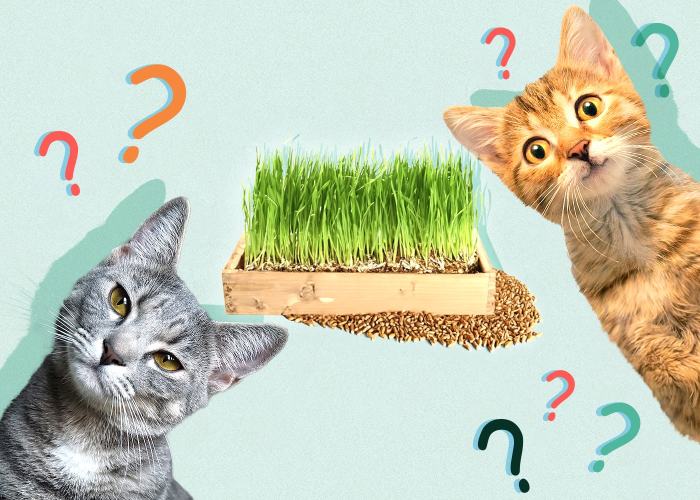
Growing wheatgrass for your cat is a simple and rewarding process. You’ll need wheatgrass seeds, a shallow container with drainage holes, potting soil (organic is best), and a sunny location. Sprinkle the seeds evenly over the soil, lightly cover with more soil, and water gently. Keep the soil moist but not soggy. Within a week, you should see sprouts emerging.
Ensure the plants receive at least 6 hours of sunlight daily. Different soil types work well, but a well-draining potting mix is ideal. Avoid using soil with added fertilizers or pesticides. To harvest, simply snip the grass with scissors when it reaches a height of 4-6 inches.
Flowchart: Growing Wheatgrass for Cats
1. Start
Gather materials (seeds, container, soil).
2. Planting
Fill container with soil, sprinkle seeds, cover lightly, water.
3. Germination
Keep soil moist, provide sunlight (1 week).
4. Growth
Water regularly, ensure adequate sunlight (2-3 weeks).
5. Harvest
Snip grass when 4-6 inches tall.
6. Feeding
Offer to your cat.
7. Repeat
Replant seeds every few weeks for a continuous supply.
Potential Risks and Precautions
While generally safe, wheatgrass can cause digestive upset in some cats, particularly if introduced too quickly or in large quantities. The risk of contamination with molds or bacteria is a concern, especially if the wheatgrass isn’t properly handled or stored. It’s crucial to source wheatgrass from reputable suppliers who follow strict quality control measures. There’s limited information on potential interactions between wheatgrass and feline medications, so it’s always best to consult with a veterinarian before introducing it, especially if your cat is on any medication.
Checklist for Ensuring Wheatgrass Safety:* [ ] Source from a reputable supplier (organic preferred).
- [ ] Wash fresh wheatgrass thoroughly before offering.
- [ ] Store wheatgrass properly (refrigerated, airtight container).
- [ ] Introduce gradually, monitoring for adverse reactions.
- [ ] Consult with a veterinarian if your cat is on medication.
Alternatives to Wheatgrass for Cats
Oat grass, barley grass, and rye grass are common alternatives to wheatgrass for cats. Oat grass is particularly gentle on the digestive system, making it a good option for sensitive cats. Barley grass is rich in vitamins and minerals, similar to wheatgrass. Rye grass is a coarser grass that some cats enjoy chewing on. The nutritional profiles vary slightly, but all offer similar benefits in terms of digestive support and enrichment.
Incorporating other leafy greens, such as spinach or kale (in very small, cooked quantities), can also provide additional nutrients, but always research their safety for cats first.
| Grass Type | Nutritional Benefits | Ease of Growing | Potential Risks |
|---|---|---|---|
| Wheatgrass | High in chlorophyll, vitamins, and minerals. | Moderate | Digestive upset, contamination. |
| Oat Grass | Gentle on the digestive system, good source of fiber. | Easy | Less nutrient-dense than wheatgrass. |
| Barley Grass | Rich in vitamins and minerals. | Moderate | Can be slightly tougher to chew. |
| Rye Grass | Provides chewing enrichment. | Easy | Can be abrasive to teeth. |
Preparing Wheatgrass for Feline Consumption
Juicing wheatgrass for cats is best done with a masticating juicer, which extracts more nutrients than a centrifugal juicer. Strain the juice through a fine-mesh sieve to remove any pulp. To safely incorporate wheatgrass powder, mix a small amount (¼½ teaspoon) into your cat’s wet food. Always wash fresh wheatgrass thoroughly under running water to remove any dirt or debris.
Dehydrating wheatgrass at low temperatures (around 115°F/46°C) preserves most of its nutrients. To create a simple homemade wheatgrass treat, mix wheatgrass powder with a small amount of plain, unsweetened yogurt or mashed pumpkin. Freeze in small portions for a refreshing and nutritious treat.
Final Review
From its humble botanical origins to its potential role in feline health, wheatgrass presents a fascinating avenue for exploring natural ways to support your cat’s well-being. While scientific research is still evolving, the nutritional profile and anecdotal evidence suggest that, when introduced carefully and in moderation, wheatgrass can offer several benefits. Remember to prioritize safety, observe your cat closely for any adverse reactions, and always consult with your veterinarian before making significant changes to their diet.
With a little knowledge and caution, you can potentially unlock a new level of wellness for your furry friend!
FAQ Explained
Can kittens eat wheatgrass?
It’s generally best to wait until your kitten is at least 6 months old before introducing wheatgrass. Their digestive systems are still developing, and a sudden change in diet could cause upset. Start with very small amounts and monitor closely.
How much wheatgrass is too much for a cat?
Dosage depends on your cat’s size and age. A general guideline is 1-2 teaspoons of juice or a small handful of fresh wheatgrass per day for an average-sized adult cat. Always start small and gradually increase the amount.
What does it mean if my cat refuses to eat wheatgrass?
It’s perfectly normal for some cats to simply not like the taste or texture of wheatgrass. Don’t force it! There are plenty of other cat grass options available.
Can I give my cat wheatgrass every day?
While daily consumption is possible, moderation is key. Giving it a few times a week is often sufficient to reap the potential benefits without overdoing it. Observe your cat’s reaction and adjust accordingly.
Is organic wheatgrass important for cats?
Yes, opting for organic wheatgrass is highly recommended to avoid exposure to pesticides and herbicides, which can be harmful to cats.
Can wheatgrass help with hairballs?
The fiber in wheatgrass can potentially aid in digestion and help move hairballs through the digestive system, but it’s not a guaranteed solution. Regular grooming is still essential for hairball prevention.
What’s the difference between wheatgrass and barley grass for cats?
Both offer nutritional benefits, but barley grass tends to be milder and easier for some cats to digest. Wheatgrass has a slightly stronger flavor. Experiment to see which your cat prefers.

