Ever noticed your cat’s tail doing a little dance – a rapid, subtle quiver? It’s a fascinating behavior, and while it might seem random, it’s actually a complex form of communication. From excitement to anxiety, a cat’s tail quiver can reveal a surprising amount about what they’re feeling and thinking. Let’s dive into the reasons behind this intriguing feline gesture, exploring everything from muscle mechanics to emotional states and even potential health concerns.
Understanding your cat’s tail isn’t just about satisfying curiosity; it’s about strengthening your bond and ensuring their well-being. By learning to interpret these subtle cues, you can better respond to their needs and create a more comfortable and enriching environment for your furry friend. We’ll break down the science, the emotions, and the potential medical implications behind the quivering tail, so you can become a true feline behavior expert.
Why Do Cats Quiver Their Tails? A Comprehensive Guide
That rapid, subtle vibration of a cat’s tail – it’s a common sight, but what does it
-really* mean? Is your feline friend excited, anxious, or something else entirely? This article dives deep into the fascinating world of cat tail quivering, exploring the physiological reasons, emotional states, potential medical causes, and breed-specific variations. We’ll break down the science and observation to help you better understand your cat’s communication.
1. Introduction
The Quivering Tail – Initial Observations
Source: catster.com
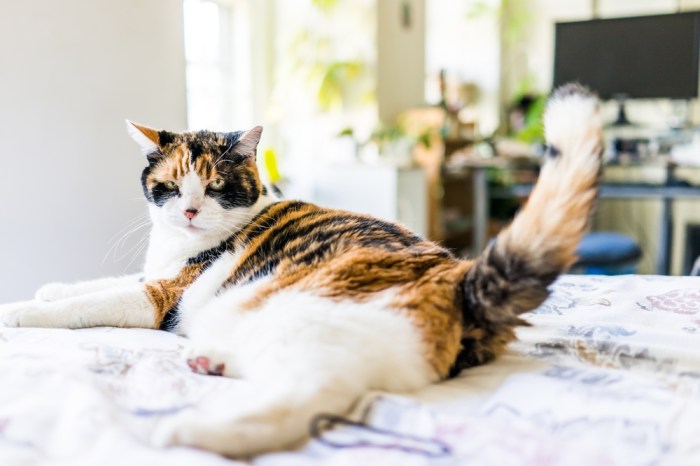
The sight of a cat’s tail quiver is instantly recognizable. It’s a rapid, often subtle, back-and-forth movement of the tail tip, sometimes extending further down the tail. The speed can range from a gentle ripple to a frantic vibration, and it’s frequently accompanied by other body language cues like flattened ears, dilated pupils, or a tense posture.
I’ve noticed this behavior in everything from a playful kitten batting at a toy to a senior cat observing birds outside the window. Even my own Maine Coon, Leo, will exhibit a slight quiver when he anticipates dinner – a sure sign he knows it’s almost time!
Observing tail quivers across different breeds and age groups reveals some interesting patterns. A young Siamese might quiver with intense excitement during a game of chase, while a Persian cat might display a more subtle quiver when feeling slightly uneasy in a new environment. The context is key to understanding the message.
| Behavior | Possible Interpretation | Context |
|---|---|---|
| Rapid, intense quiver with upright tail | Excitement, anticipation | Presenting a favorite toy, approaching food bowl |
| Slow, subtle quiver with tucked tail | Anxiety, fear | Loud noises, unfamiliar visitors |
| Moderate quiver with slightly drooped tail | Focused attention, mild frustration | Watching prey (birds, insects) through a window |
| Short, jerky quiver with a twitch | Mild irritation, uncertainty | Being petted in a sensitive spot |
| Constant, low-level quiver | Possible discomfort, underlying stress | Changes in environment, new pet in the house |
2. Physiological Causes
The Muscles and Nervous System
A cat’s tail isn’t just a fluffy appendage; it’s a complex structure. It’s an extension of the spine, containing approximately 23 vertebrae, each connected by muscles, tendons, and ligaments. These muscles, controlled by nerves originating in the spinal cord, allow for a wide range of movements, including the characteristic quiver. The muscles responsible for tail movement are primarily the
-caudal muscles*, which are arranged in layers to allow for both flexion and extension.
When a cat quivers its tail, these muscles contract and relax rapidly, creating the visible vibration.
The feline nervous system plays a crucial role in triggering these involuntary movements. The brain sends signals down the spinal cord to the caudal muscles, initiating the contractions. The speed and intensity of the quiver are regulated by the nervous system’s response to stimuli. Neurological pathways, involving areas like the cerebellum (responsible for motor coordination) and the amygdala (involved in emotional processing), are likely involved in coordinating the tail quiver response.
While the exact pathways are still being researched, it’s believed that sensory input (sight, sound, smell) is processed, triggering a cascade of signals that result in the muscle contractions.
3. Emotional States
Excitement and Anticipation
A cat’s tail quiver is often a clear indicator of excitement, particularly when anticipating something pleasurable. Think about the moment before dinner – that little quiver as your cat realizes the food bowl is about to be filled! The intensity of the quiver often reflects the level of excitement. A playful quiver, seen during a game with a feather wand, is generally faster and more energetic than the slow, deliberate quiver associated with anticipating a treat.
Distinguishing between playful excitement and intense focus on prey can be subtle. Playful excitement often involves a more relaxed posture, with a slightly curved tail and dilated pupils. When focused on prey, the tail quiver might be more controlled, accompanied by a low, stalking posture and intense, unwavering gaze. The ears will be forward, and the body will be tense and ready to pounce.
Beyond the tail quiver, other signs of excitement include dilated pupils, flattened ears (in some cases, ears might be slightly forward and alert), and a heightened sense of alertness. The combination of these cues provides a more complete picture of your cat’s emotional state.
Imagine this scenario: You bring out your cat’s favorite toy, a plush mouse. Initially, the cat is relaxed, observing. As you wiggle the mouse, the cat’s pupils begin to dilate. The ears perk up, rotating forward. A slight quiver starts in the tail, gradually increasing in speed and intensity as you engage in play.
The cat crouches low to the ground, wiggling its rear end, ready to pounce. This progression illustrates the build-up to a full-blown tail quiver driven by playful excitement.
4. Emotional States
Anxiety and Fear
While often associated with positive emotions, a tail quiver can also signal anxiety, fear, or stress in cats. In these situations, the quiver is typically slower and more subtle than the excited quiver. It’s often accompanied by other signs of distress, such as a tucked tail, flattened ears, dilated pupils, and a tense posture. The cat might also exhibit behaviors like hiding, hissing, or swatting.
Common triggers for anxiety-related tail quivering include loud noises (thunderstorms, fireworks), unfamiliar people or animals, veterinary visits, and changes in the home environment (moving, new furniture). The tail quiver is a manifestation of the cat’s heightened state of alert and apprehension.
- Loud Noises: A sudden bang or thunderstorm can trigger a rapid, anxious quiver accompanied by hiding.
- Unfamiliar Visitors: The presence of strangers can cause a subtle quiver and a tucked tail as the cat assesses the potential threat.
- Veterinary Visits: The stress of being handled and examined can lead to a constant, low-level quiver.
- Changes in Routine: Disruptions to the cat’s usual feeding or playtime schedule can cause anxiety and tail quivering.
- New Pets: Introducing a new animal into the household can create tension and trigger anxious tail behavior.
- Construction Noise: Ongoing construction nearby can be a constant source of stress, leading to persistent tail quivering.
- Unpleasant Smells: Strong or unfamiliar odors can cause discomfort and anxiety, manifesting as a quiver.
5. Medical Conditions
Potential Underlying Health Issues
While tail quivering is often a behavioral response, it can sometimes be a symptom of an underlying medical condition. Involuntary tail tremors or quivering that are not associated with emotional states should be investigated by a veterinarian. Conditions affecting the nervous system, such as vestibular disease (affecting balance) or neuropathy (nerve damage), can cause tremors.
Musculoskeletal issues, like arthritis or injuries to the tail, can also impact tail movement and cause quivering.
A veterinarian might diagnose these conditions through a physical examination, neurological assessment, and potentially blood tests or imaging (X-rays, MRI). Observable symptoms might include difficulty walking, head tilt, circling, or pain when the tail is touched. Treatment options vary depending on the underlying cause, ranging from medication to physical therapy to surgery.
6. Breed-Specific Tendencies
Variations in Tail Behavior
Certain cat breeds appear to be more prone to tail quivering than others, although the reasons for these differences are not fully understood. It’s likely a combination of genetic predisposition and breed-specific personality traits. For example, Siamese cats are known for their expressive tails, often exhibiting more dramatic quivers than some other breeds.
While there’s no definitive evidence that long-haired versus short-haired breeds differ significantly in tail quiver behavior, anecdotal observations suggest that long-haired breeds, like Persians, might display more subtle and controlled quivers, potentially due to their calmer temperament. However, this is not a universal rule, and individual variation within breeds is significant.
| Breed | Typical Tail Behavior |
|---|---|
| Siamese | Expressive, often rapid and dramatic quivers, especially when excited |
| Maine Coon | Moderate quivers, often associated with anticipation (e.g., food) |
| Persian | Subtle, controlled quivers, often more reserved in expression |
| Bengal | Energetic quivers, reflecting their playful and active nature |
| Abyssinian | Quick, twitchy quivers, often accompanied by playful movements |
7. Age-Related Changes
Tail Behavior Across the Lifespan
A kitten’s tail quiver is often more playful and exuberant than that of an adult cat. Kittens are naturally more energetic and curious, and their tail quivers reflect this enthusiasm. As cats mature, their tail behavior tends to become more refined and nuanced, with a greater range of expressions.
Age-related changes in muscle strength and neurological function can also affect tail movement. Senior cats might experience a slight decrease in muscle tone, which could result in a less vigorous quiver. Neurological conditions, such as arthritis or cognitive dysfunction, can also impact tail behavior. A senior cat’s quiver might be more hesitant or anxious, reflecting their overall health and mobility.
Imagine a playful kitten batting at a dangling toy – its tail quivers rapidly, with joyful wiggles and playful flicks. Now picture a senior cat observing birds from a windowsill – its tail might quiver slowly and subtly, perhaps accompanied by a slight tremor, reflecting a more cautious and contemplative state.
8. Environmental Factors
Influence of Surroundings
A cat’s environment significantly influences their tail quiver behavior. Noise levels, temperature, and the presence of other animals can all impact tail movement. A noisy environment can trigger anxiety and a constant, low-level quiver. Extreme temperatures can cause discomfort and affect tail posture. The presence of other cats, especially those with whom the cat has a tense relationship, can lead to anxious tail behavior.
Noise levels can trigger anxiety and a constant, low-level quiver, especially in sensitive cats.
Temperature extremes can cause discomfort and affect tail posture; a hot cat might hold its tail away from its body, while a cold cat might wrap it around itself.
The presence of other animals, particularly those with whom the cat has a tense relationship, can lead to anxious tail behavior and a tucked tail.
Changes in a cat’s routine or surroundings, such as moving to a new home or introducing a new pet, can trigger anxiety-related tail quivering.
The scent of unfamiliar animals can cause a cat to quiver its tail as it assesses the potential threat.
9. Distinguishing Quivering from Other Tail Movements
It’s important to differentiate a tail quiver from other tail movements, such as a tail twitch or a tail flick. A tail quiver is a rapid, back-and-forth vibration of the tail tip, often indicating excitement or anxiety. A tail twitch is a short, jerky movement, typically signaling mild irritation or uncertainty. A tail flick is a quick, sharp movement, often used to communicate annoyance or to direct attention.
The context in which each type of tail movement occurs is crucial for interpretation. A quiver is most often seen during moments of anticipation or emotional intensity. A twitch might occur when a cat is being petted in a sensitive spot. A flick is often used to signal a desire for space or to redirect attention.
The speed, intensity, and duration also differ. A quiver is relatively rapid and sustained, a twitch is brief and jerky, and a flick is quick and sharp. Imagine a visual guide: a quiver looks like a blurred line, a twitch is a short, distinct jump, and a flick is a quick snap.
Final Review
So, the next time you see your cat’s tail quiver, remember it’s more than just a twitch. It’s a window into their inner world, a complex signal conveying a range of emotions and potential needs. Whether it’s the joyful anticipation of a tasty treat or the subtle signs of anxiety, paying attention to your cat’s tail can deepen your understanding and strengthen your connection.
By considering the context, accompanying body language, and potential underlying factors, you can unlock the secrets behind this fascinating feline behavior.
Ultimately, observing your cat’s tail quiver, alongside other cues, allows you to be a more attentive and responsive guardian, ensuring a happy and healthy life for your beloved companion. Keep observing, keep learning, and enjoy the wonderful world of feline communication!
Commonly Asked Questions
Why does my cat’s tail quiver when I’m getting their food ready?
This is usually a sign of excitement and anticipation! They’re likely looking forward to a delicious meal and the quiver is a physical manifestation of their eagerness.
Is a quivering tail always a bad sign?
No, not at all! It can indicate excitement, anticipation, or even playful energy. It’s important to consider the context and other body language cues.
My cat’s tail is quivering and tucked under – what does that mean?
This is a strong indicator of fear, anxiety, or stress. Look for other signs like flattened ears, dilated pupils, and a hunched posture.
Could a quivering tail be a sign of pain?
Yes, it’s possible. If the quivering is accompanied by other signs of discomfort, such as limping, reluctance to move, or changes in appetite, consult a veterinarian.
My senior cat’s tail quivers more than it used to – is this normal?
It could be due to age-related changes in muscle strength or neurological function. It’s a good idea to discuss this with your vet to rule out any underlying health issues.
How is a tail quiver different from a tail twitch?
A quiver is a rapid, rhythmic shaking, often involving the entire tail. A twitch is a quick, jerky movement, usually shorter in duration and less intense.
What about a tail flick? What does that signify?
A tail flick is a short, sharp movement, often used to express annoyance or irritation. It’s a quick, dismissive gesture.