Ever witnessed your cat contorting into a blissful, rolling mess after encountering catnip? It’s a hilarious and fascinating display, but have you ever wondered
-why* they do it? Catnip’s effect on cats isn’t just a quirky behavior; it’s rooted in complex chemistry, genetics, and even evolutionary history. We’re diving deep into the science behind this feline frenzy, exploring everything from the specific compounds that trigger the reaction to why some cats are immune and others go completely wild.
This exploration will unravel the mysteries of catnip, examining how it interacts with a cat’s unique olfactory system, the genetic factors at play, and the various behaviors that can emerge. We’ll also touch on the evolutionary reasons behind this peculiar response and look at alternatives for those cats who don’t react to the classic herb. Get ready to understand your cat’s catnip obsession like never before!
Why Do Cats Roll in Catnip? A Deep Dive into Feline Euphoria
Ever witnessed your cat transform into a whirling dervish after encountering catnip? It’s a captivating sight, and one that’s puzzled cat lovers for generations. But it’s not just random silliness; there’s fascinating science behind this feline frenzy. This article will explore the chemical basis of catnip’s effects, the genetic factors that determine who gets “high,” the behaviors cats exhibit, and the evolutionary reasons behind this peculiar interaction.
We’ll unpack the science, the genetics, and the behaviors, all while keeping things approachable and easy to understand. So, let’s dive in and unravel the mystery of why cats go wild for catnip!
1. The Chemical Composition of Catnip & Its Effects
The magic of catnip isn’t about the plant itself, but rather the specific chemicals it produces. Understanding these compounds and how they interact with a cat’s senses is key to understanding the whole phenomenon.
Primary Chemical Compounds in Catnip
The primary active compound in catnip is nepetalactone. However, catnip ( Nepeta cataria) contains a variety of other volatile oils, including nepetalactol, nepetalactone alcohol, and several terpenes. These contribute to the overall scent profile and may play a minor role in the cat’s response, though nepetalactone is the star of the show.
How Nepetalactone Interacts with a Cat’s Olfactory System
When a cat smells catnip, nepetalactone molecules bind to specialized receptors in their nasal tissue. This binding triggers a cascade of neurological events, ultimately leading to the characteristic catnip response. It’s a direct interaction between a chemical compound and a biological system.
Receptors Activated by Nepetalactone
Specifically, nepetalactone activates a receptor called the TRPA1 receptor (Transient Receptor Potential Ankyrin 1). This receptor is part of a family of receptors involved in detecting irritants and noxious chemicals. Interestingly, the same receptor is also involved in sensing cold temperatures and certain spicy compounds in humans. The activation of TRPA1 in cats leads to a release of dopamine, a neurotransmitter associated with pleasure and reward, which explains the euphoric effects.
Comparison to Other Aromatic Compounds
Nepetalactone’s chemical structure is similar to other aromatic compounds found in plants, particularly terpenes. Terpenes are responsible for the characteristic scents of many herbs and spices. However, nepetalactone’s unique structure allows it to specifically bind to the TRPA1 receptor in cats, creating a distinct and powerful effect.
Chemical Compounds Table
| Compound | Molecular Weight (g/mol) | Primary Effect on Cats |
|---|---|---|
| Nepetalactone | 198.28 | Euphoria, rolling, rubbing, vocalization |
| Nepetalactol | 184.25 | Minor contribution to scent, potential mild effect |
| Nepetalactone Alcohol | 200.29 | Slightly less potent than nepetalactone |
2. Genetic Predisposition
Why Some Cats React & Others Don’t
Not all cats are created equal when it comes to catnip. While the vast majority of felines possess the necessary receptors, the ability to
-respond* to catnip is a genetically determined trait. This means some cats remain completely unaffected, while others experience a full-blown catnip frenzy.
Genetic Factors Influencing Sensitivity
The sensitivity to catnip is primarily controlled by a single gene, although other genes likely contribute to the intensity of the response. This gene influences the expression of the TRPA1 receptor, determining how readily it’s activated by nepetalactone. Variations in this gene can lead to different levels of sensitivity.
Percentage of Cats Not Affected
Approximately 20-30% of cats do not respond to catnip. This lack of response is a heritable trait, meaning it’s passed down from parents to offspring. Interestingly, this trait is more common in certain cat breeds, such as Siamese and Burmese.
Genes Involved in Catnip Response
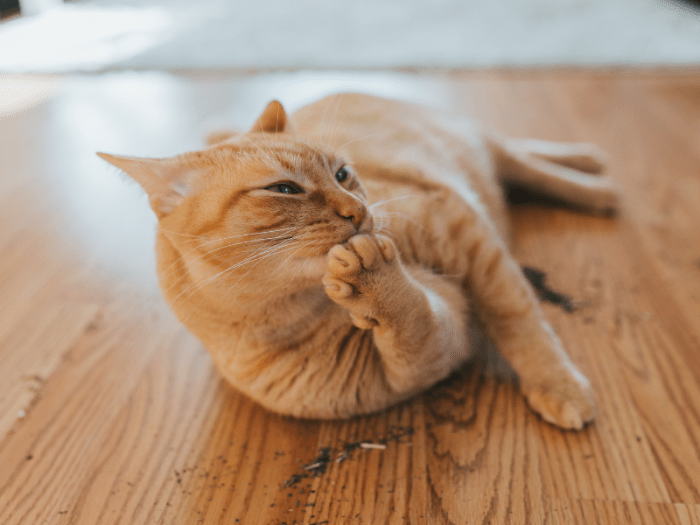
Source: visionpetcare.com
The gene responsible for catnip sensitivity has been identified as ORV1-AS1. This gene is an antisense long non-coding RNA that regulates the expression of the olfactory receptor gene OR5A1, which encodes the TRPA1 receptor. Variations in ORV1-AS1 influence how much TRPA1 receptor is produced, directly impacting a cat’s response to nepetalactone.
Inheritance Patterns
Catnip sensitivity follows a relatively simple inheritance pattern. It’s considered an autosomal dominant trait, meaning that a cat only needs one copy of the “responsive” allele to exhibit a reaction to catnip. If a cat inherits one responsive allele and one non-responsive allele, it will still respond to catnip, albeit potentially with a less intense reaction.
Genetic Pathways Flowchart
Here’s a simplified flowchart illustrating the potential genetic pathways:
- Parent 1: ORV1-AS1 (Responsive) / ORV1-AS1 (Non-Responsive)
- Parent 2: ORV1-AS1 (Responsive) / ORV1-AS1 (Non-Responsive)
- Possible Offspring:
- ORV1-AS1 (Responsive) / ORV1-AS1 (Responsive) – Responsive to catnip
- ORV1-AS1 (Responsive) / ORV1-AS1 (Non-Responsive) – Responsive to catnip
- ORV1-AS1 (Non-Responsive) / ORV1-AS1 (Non-Responsive) – Not responsive to catnip
3. The Behavioral Manifestations
What Rolling Is & Other Reactions
The behaviors cats exhibit when exposed to catnip are varied and often quite entertaining. From intense rolling to relaxed purring, the effects can be quite dramatic, but also subtle depending on the individual cat.
Typical Behaviors Observed
Common behaviors include rolling, rubbing their face and body on the catnip, vocalization (meowing, purring, chattering), drooling, dilated pupils, and general hyperactivity. Some cats may also become playful, batting at toys or chasing imaginary objects.
Excited vs. Relaxed Phases
The catnip response typically progresses through two phases. The initial “excited” phase is characterized by hyperactivity, rolling, and vocalization. This phase usually lasts for a few minutes. Following this, many cats enter a “relaxed” phase, where they become calmer, more mellow, and may even fall asleep.
Physiological Changes
During a catnip session, a cat’s heart rate increases, and their pupils dilate. These physiological changes are consistent with the release of dopamine and other neurotransmitters associated with pleasure and relaxation.
Behavioral Expression by Personality
Different cat personalities may express catnip-induced behaviors differently. Shy cats might simply rub their face on the catnip and become more relaxed, while playful cats might engage in more active play. Dominant cats might exhibit more vocalization and territorial behaviors.
Catnip Behaviors Categorized by Intensity
- Mild: Rubbing face/body, slight vocalization, increased purring.
- Moderate: Rolling, playful batting, drooling, dilated pupils.
- Intense: Hyperactivity, frantic rolling, loud vocalization, temporary disorientation.
4. Evolutionary Theories
Why Did This Behavior Evolve?
The catnip response is a fascinating evolutionary puzzle. Why would cats have evolved to react so strongly to a particular plant? Several theories attempt to explain this peculiar behavior.
Potential Evolutionary Advantages
One theory suggests that the catnip response evolved to attract cats to plants with beneficial properties. Catnip has a long history of medicinal use in humans, and it’s possible that cats instinctively sought out the plant for its potential health benefits.
Catnip and Parasite Control
Another intriguing theory links catnip to parasite control. Nepetalactone has been shown to repel certain insects, including mosquitoes and flies. It’s possible that cats evolved to rub against catnip to deter these pests, providing a natural form of insect repellent.
Comparison to Other Animal Behaviors
The catnip response is not unique to felines. Many animals exhibit behavioral changes in response to plant compounds. For example, deer are attracted to certain plants for their nutritional value, and bees are drawn to flowers for their nectar and pollen.
Hypotheses About the Origin of Catnip’s Effect
The most widely accepted hypothesis is that the catnip response is a byproduct of the plant’s defense mechanisms. Plants often produce volatile compounds to deter herbivores. In the case of catnip, nepetalactone may have initially evolved to repel insects, but cats subsequently “co-opted” this defense mechanism for their own benefit.
Co-evolution Timeline
Here’s a potential timeline illustrating the co-evolution of catnip plants and feline species:
- ~25 million years ago: Early cat ancestors emerge.
- ~10 million years ago: Catnip plants begin producing nepetalactone as a defense mechanism.
- ~5 million years ago: Early felines begin to exhibit a response to nepetalactone.
- ~1 million years ago: The catnip response becomes increasingly refined through natural selection.
- Present: Modern cats display a wide range of responses to catnip, influenced by genetics and individual personality.
5. The Science of Scent
How Cats Perceive and Process Aromas
Cats are renowned for their exceptional sense of smell, far surpassing that of humans. Understanding how cats perceive and process aromas, particularly volatile compounds like nepetalactone, is crucial to understanding the catnip experience.
Anatomy of a Cat’s Olfactory System
A cat’s olfactory system is remarkably complex. They have a significantly larger number of olfactory receptors than humans (around 200 million compared to our 5-6 million). Crucially, cats also possess a vomeronasal organ (Jacobson’s organ), a specialized structure located in the roof of their mouth that detects pheromones and other chemical signals.
Scent Molecule Detection and Transmission
When a cat inhales, scent molecules bind to olfactory receptors in their nasal cavity. This binding triggers electrical signals that are transmitted to the brain’s olfactory bulb, where the signals are processed and interpreted.
Pheromones and Catnip Interaction
Pheromones play a vital role in feline communication, conveying information about identity, reproductive status, and territory. Catnip may mimic or interact with pheromonal signals, potentially contributing to the behavioral changes observed during a catnip session.
Pathway of Scent Information Diagram
Imagine a diagram: Air enters the nose -> Scent molecules bind to olfactory receptors -> Electrical signals travel to the olfactory bulb in the brain -> Signals are processed and interpreted, triggering behavioral responses.
While humans primarily rely on sight, cats rely heavily on smell. Their olfactory system is far more sensitive and complex, allowing them to perceive a world of scents that is largely invisible to us. This heightened sense of smell is integral to their navigation, communication, and overall understanding of their environment.
6. Catnip Forms & Delivery Methods
Dried, Fresh, Oil, Spray
Catnip is available in various forms, each offering a slightly different experience for your feline friend. Understanding the nuances of each form can help you maximize the enjoyment and effectiveness of catnip.
Comparing Different Forms
Dried catnip is the most common form and generally considered the most potent. Fresh catnip has a milder effect. Catnip oil and spray offer concentrated doses but require careful handling.
Why Dried Catnip is More Potent
Drying catnip reduces the water content, concentrating the volatile oils, including nepetalactone. This results in a more intense aroma and a stronger effect on cats.
Usage and Safety Considerations for Oil and Spray
Catnip oil and spray should be used sparingly and diluted appropriately. Direct contact with skin and eyes should be avoided. Always supervise your cat during use and discontinue if any adverse reactions occur.
Benefits and Drawbacks of Each Delivery Method
Dried catnip is easy to store and use but can lose potency over time. Fresh catnip is more natural but has a shorter shelf life. Oil and spray offer concentrated doses but require caution.
| Form | Potency |
|---|---|
| Dried | High |
| Fresh | Moderate |
| Oil | Very High (use with caution) |
| Spray | Moderate (use sparingly) |
7. The Duration & Aftereffects of Catnip Exposure
The catnip experience is typically short-lived, but the aftereffects can be interesting. Understanding the duration and potential desensitization is key to responsible catnip use.
Typical Duration of a Catnip Session
A typical catnip session lasts between 5 and 15 minutes. After this period, the cat’s sensitivity to catnip diminishes, and the behavioral effects subside.
Temporary Immunity and Receptor Desensitization
Cats become temporarily immune to catnip’s effects due to receptor desensitization. Repeated exposure to nepetalactone causes the TRPA1 receptors to become less responsive, requiring a break before the cat can experience the effects again.
The Refractory Period
The refractory period, the time it takes for a cat to regain sensitivity to catnip, typically lasts for 2-3 hours. During this time, the receptors gradually recover their responsiveness.
Potential Long-Term Effects
Frequent catnip use is unlikely to have any long-term negative effects on cats. However, moderation is always recommended.
Catnip Response Curve Graph
Imagine a graph: X-axis (Time in minutes), Y-axis (Intensity of Response). The line starts low, rapidly increases to a peak around 5-10 minutes, then gradually declines back to baseline after 15 minutes.
8. Catnip Alternatives
Plants with Similar Effects
If you’re looking for alternatives to catnip, several other plants can elicit similar behavioral responses in cats. These alternatives offer a different sensory experience while still providing entertainment and enrichment.
Plants with Similar Behavioral Responses
Silver vine ( Actaea racemosa) and valerian root ( Valeriana officinalis) are popular catnip alternatives. Silver vine is particularly potent, often producing a more intense reaction than catnip.
Comparison of Chemical Compounds
Silver vine contains nepetalactone O-acetate, a compound structurally similar to nepetalactone. Valerian root contains actinidine, a volatile oil that interacts with a different set of receptors in the cat’s nose, producing a calming effect.
Relative Potency and Safety
Silver vine is generally considered more potent than catnip, while valerian root is milder. All three plants are considered safe for cats when used in moderation.
How Alternatives Might Be Used
Silver vine and valerian root can be used as substitutes for catnip to provide variety and prevent desensitization. They can be offered in toys, sprinkled on scratching posts, or used in enrichment activities.
| Plant | Potency | Safety | Common Reactions |
|---|---|---|---|
| Catnip | Moderate | Safe | Rolling, rubbing, vocalization |
| Silver Vine | High | Safe | Intense rolling, drooling, hyperactivity |
| Valerian Root | Low | Safe | Relaxation, purring, calmness |
| Honeysuckle | Low | Potentially Toxic (use with caution) | Mild interest, sniffing |
Concluding Remarks
From the intricate chemical makeup of catnip to the fascinating genetic predispositions that determine a cat’s reaction, the science behind the rolling, rubbing, and vocalizing is truly remarkable. Understanding the evolutionary advantages, the nuances of scent perception, and the different forms of catnip delivery can deepen our appreciation for this beloved feline pastime. Whether your cat is a devoted enthusiast or completely unaffected, exploring the world of catnip offers a glimpse into the complex and captivating lives of our furry companions.
So, the next time you see your cat lost in a catnip-induced reverie, you’ll know it’s more than just a silly moment – it’s a testament to the fascinating interplay of biology, genetics, and evolution.
FAQ Compilation
Why don’t all cats react to catnip?
Genetics play a huge role! Roughly 20-30% of cats lack the gene that makes them sensitive to nepetalactone, the active compound in catnip. It’s an inherited trait, so kittens inherit it from their parents.
How long does the catnip effect typically last?
Usually, the effects last for about 5-15 minutes. After that, cats experience a “refractory period” where they become temporarily immune.
What’s the “refractory period” and how long does it last?
It’s a period of about 2-3 hours where the cat’s receptors are desensitized, and catnip won’t have the same effect. Think of it like a temporary break from the fun!
Is catnip safe for cats?
Yes, generally! Catnip is non-toxic and safe for cats. However, excessive amounts can sometimes cause mild digestive upset.
Can I give my cat catnip every day?
While it’s safe, daily catnip exposure can lead to desensitization. It’s best to offer it in moderation, perhaps a few times a week, to keep the effects exciting.
What’s the difference between dried and fresh catnip?
Dried catnip is often more potent because the nepetalactone is more concentrated as the water evaporates. Fresh catnip can still be enjoyable, but the effect might be milder.
Are there any potential long-term effects of catnip use?
There are no known significant long-term negative effects from catnip use. It’s considered a safe and enjoyable enrichment activity for most cats.

