Ever noticed your cat enthusiastically rolling around in dirt, grass, or leaves? It’s a quirky behavior that can leave you wondering – why are they doing that? It turns out, this seemingly odd habit is rooted in a fascinating mix of instinct, scent communication, sensory exploration, and even a little bit of self-soothing. Let’s dive into the reasons behind this common feline activity and uncover the secrets hidden within their playful rolls.
From their wild ancestors to modern-day house cats, rolling in dirt has a long history. It’s not just about getting dirty; it’s a complex behavior with multiple layers of meaning. We’ll explore how evolutionary history, scent masking, sensory preferences, and even parasite control all play a role in why your cat might be enjoying a good dirt bath.
Why Do Cats Roll in Dirt? Unraveling the Mystery
Ever noticed your feline friend enthusiastically rolling around in dirt, grass, or whatever’s available on the ground? It’s a quirky behavior that can leave you wondering – why do they do it? Is it just a random quirk, or is there a deeper, more instinctual reason behind this seemingly odd habit? Let’s dive into the fascinating world of cat behavior and explore the potential explanations for this common feline activity.
Cats are complex creatures with a rich history and a unique way of interacting with the world. Their behavior is often rooted in their evolutionary past, and understanding that history can shed light on many of their current actions. Rolling in dirt is one such behavior, and it’s likely a combination of instinct, scent communication, sensory exploration, and even a bit of comfort-seeking.
Instinctual Behaviors & Ancestry
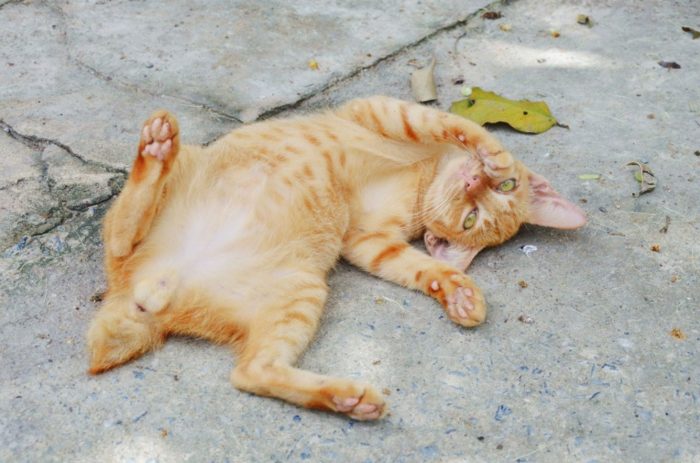
Source: betterwithcats.net
The domestic cat we know and love is descended from wild ancestors, primarily the African wildcat ( Felis silvestris lybica). These wild cats relied heavily on scent marking to establish and defend their territories, communicate with other cats, and attract mates. Scent marking wasn’t just about leaving a smell; it was a complex form of communication conveying information about identity, reproductive status, and social standing.
They would rub against objects, spray urine, and deposit feces – all ways of leaving their scent signature. Rolling, particularly in areas with strong scents like dirt or vegetation, could have been a way to distribute these scents more effectively across their bodies.
While domestic cats don’t face the same survival pressures as their wild ancestors, many of these instinctual behaviors remain ingrained in their DNA. Rolling in dirt might be a remnant of this ancestral behavior, even if the purpose has shifted from purely territorial marking to something more nuanced. We often see differences in rolling behavior between domestic and feral cat populations, with feral cats potentially exhibiting more frequent and intense rolling, possibly reflecting a stronger drive to mark territory.
| Wild Ancestor Behavior | Possible Domestic Cat Equivalent | Scientific Explanation (if available) |
|---|---|---|
| Rubbing against objects to deposit scent | Rubbing against furniture, legs, and people | Scent glands on the face and flanks release pheromones, marking territory and creating a familiar scent environment. |
| Spraying urine to mark territory | Occasional spraying (more common in unneutered males) | Urine contains pheromones that communicate territorial boundaries and reproductive status. |
| Depositing feces to mark territory | Careful placement of feces (often away from food and water) | Feces also contain scent markers, though less potent than urine. |
| Rolling in vegetation to mask scent | Rolling in dirt, grass, or leaves | Covers the cat’s natural scent with the scent of the environment, potentially confusing predators or masking their presence from other cats. |
| Scent-marking with claw scratches | Scratching furniture and surfaces | Scratching leaves scent markers from glands in the paws. |
Scent Masking & Camouflage
Cats are masters of scent communication. They use scent to identify each other, assess potential threats, and navigate their environment. They have a vomeronasal organ (also known as Jacobson’s organ) in their noses that allows them to detect pheromones, chemical signals that convey a wealth of information. Rolling in dirt can be a surprisingly effective way for a cat to mask its own scent, essentially creating a temporary camouflage.
Dirt, especially freshly turned soil or damp earth, is teeming with a variety of scents. When a cat rolls in it, the dirt particles adhere to their fur, absorbing and covering their natural scent. This can be particularly useful if the cat is trying to avoid detection by predators or other cats. They might be trying to cover up the scent of a predator that has been nearby, the scent of another cat they’re competing with, or even their own scent if they’ve been in a stressful situation.
The flowchart below illustrates the scent masking process:
- Cat rolls in dirt: The cat initiates the rolling behavior, making contact with the ground.
- Dirt absorbs/covers scent: Dirt particles adhere to the fur, absorbing and masking the cat’s natural scent.
- Reduced detectability by others: The cat’s scent is less detectable by predators, other cats, or other animals.
Sensory Exploration & Texture Preference
A cat’s sense of smell is incredibly sophisticated, far more sensitive than ours. They experience the world through scent in a way we can only imagine. Rolling in dirt isn’t just about scent masking; it can also be a form of sensory exploration. The feel and smell of different textures can be incredibly stimulating for a cat. They might enjoy the granular feel of sandy soil, the cool dampness of earth, or the tickling sensation of grass.
Cats are drawn to different types of ground materials depending on their texture and scent. Sandy soil, with its warm, granular feel and earthy scent, is a popular choice. Damp earth offers a cooler, more moist sensation. Grassy areas provide a variety of textures and smells, from the sharp scent of fresh grass to the earthy aroma of decaying leaves.
Even loose gravel or mulch can be appealing to a curious cat.
- Sandy soil: Warm, granular, slightly abrasive, earthy scent.
- Damp earth: Cool, moist, smooth, earthy scent.
- Grassy areas: Variable texture (soft, prickly), fresh, grassy scent.
- Loose gravel: Rough, uneven, cool, mineral scent.
- Mulch: Soft, crumbly, earthy, sometimes woody scent.
Marking Territory with New Scents
Scent marking is a fundamental aspect of feline behavior. Cats use scent to establish and defend their territory, communicate with other cats, and create a sense of familiarity and security. Rolling in dirt can be a unique way for a cat to “broadcast” their presence by transferring new scents onto their fur. The dirt itself carries a variety of scents, and when the cat rolls in it, those scents become part of their own scent profile.
While rubbing against objects is a common scent-marking behavior, rolling in dirt offers a broader distribution of scent. Rubbing typically deposits scent on a localized area, while rolling spreads the scent across the entire body. This can be particularly effective in marking a larger territory or signaling dominance to other cats.
A new cat enters the territory. The resident cat rolls in a patch of freshly turned soil, leaving a scent trail that signals, “This is my space.”
Comfort & Self-Soothing
Rolling is often associated with a feeling of comfort and relaxation in cats. After a grooming session, a cat might roll around to further distribute oils and scents, creating a sense of contentment. It’s possible that rolling in dirt can also be a self-soothing behavior, similar to how humans might fidget or rock when feeling stressed or anxious. The physical sensations of rolling – the pressure against the ground, the temperature changes, the feel of different textures – can be calming and reassuring.
| Possible Trigger for Rolling | Potential Comfort Benefit |
|---|---|
| Post-grooming relaxation | Distribution of scent glands and oils, creating a feeling of cleanliness and contentment. |
| Mild stress or anxiety | Sensory stimulation and pressure can help to distract from or alleviate anxiety. |
| Warm weather | Cooling effect of the ground, providing relief from heat. |
| Boredom | Sensory stimulation and physical activity can help to alleviate boredom. |
Parasite Control & Hygiene
While not a primary reason, rolling in certain types of dirt or plants might offer a rudimentary form of parasite control. Some plants contain natural insect-repelling properties, and rolling in them could help deter fleas, ticks, and other external parasites. Cats are susceptible to a variety of parasites, including fleas, ticks, ear mites, and intestinal worms. While rolling in dirt isn’t a guaranteed solution, it could potentially help reduce the risk of infestation.
[Infographic: A simple visual depicting a cat rolling in dirt. Arrows point from the dirt to the cat, with labels indicating potential benefits like “Insect Repellency,” “Deterring Ticks,” and “Natural Cleaning.” The infographic emphasizes that this is a supplementary behavior and not a replacement for regular parasite prevention measures.]
Breed-Specific Tendencies
While rolling in dirt is a behavior observed across many cat breeds, there might be some breed-specific tendencies. Anecdotal evidence suggests that some breeds, like the Burmese and Ragdoll, are more prone to rolling than others. This could be due to genetic factors influencing their sensory preferences or behavioral traits. However, more research is needed to confirm these observations.
- Burmese: Known for their playful and affectionate nature, Burmese cats often engage in enthusiastic rolling and stretching.
- Ragdoll: These gentle giants are known for their relaxed demeanor and tendency to flop and roll around when being petted.
- Abyssinian: Active and curious, Abyssinians may roll in dirt as part of their exploration of their environment.
Environmental Factors & Seasonal Changes
A cat’s rolling behavior is influenced by a variety of environmental factors. Weather, temperature, and the availability of ground materials all play a role. Cats are more likely to roll in dirt during warmer months, especially after rain when the soil is damp and fragrant. The type of soil also matters – cats might prefer sandy soil over clay soil, or vice versa, depending on their individual preferences.
- Weather: Warm, sunny days encourage rolling.
- Temperature: Damp, cool soil is appealing in warm weather.
- Ground materials: Availability of dirt, grass, leaves, and other textures.
- Soil type: Cats may prefer sandy, loamy, or clay soil based on texture and scent.
- Recent rainfall: Damp soil has a stronger scent and a more appealing texture.
Health Considerations & Potential Risks
While rolling in dirt is generally a harmless behavior, there are potential health risks to consider. Exposure to parasites, toxins, and allergens are all possibilities. It’s important to minimize these risks by regularly deworming your cat, keeping them up-to-date on vaccinations, and avoiding areas that may be contaminated with pesticides or other harmful substances. Signs of a health problem related to dirt exposure include skin irritation, digestive upset, and excessive scratching.
| Potential Risk | Preventative Measures |
|---|---|
| Parasite exposure (fleas, ticks, worms) | Regular deworming, flea and tick prevention medication. |
| Exposure to toxins (pesticides, fertilizers) | Avoid areas treated with chemicals, monitor for signs of poisoning. |
| Allergic reactions (to plants or soil) | Limit exposure to potential allergens, consult a veterinarian if symptoms develop. |
Last Recap
So, the next time you see your cat gleefully rolling in the dirt, you’ll have a better understanding of what’s going on beneath the surface. It’s a glimpse into their primal instincts, their unique sensory world, and their clever ways of communicating and feeling comfortable. While it’s important to be mindful of potential health risks, appreciating this behavior as a natural and often enjoyable part of being a cat can deepen your bond and understanding of your feline friend.
Ultimately, a little dirt isn’t always a bad thing! It’s a reminder of their wild heritage and a testament to the fascinating complexity of feline behavior.
FAQ Summary
Why do cats roll in dirt after a bath?
They might be trying to remove the scent of the shampoo or re-establish their own natural scent, which can be washed away during bathing.
Is it normal for my cat to roll in dirt?
Yes, it’s a common and generally normal behavior, though excessive rolling could indicate underlying stress or a skin issue.
Can rolling in dirt be harmful to my cat?
Potentially. It can expose them to parasites, toxins, or allergens. Regular vet checkups and preventative care are important.
Do male and female cats roll in dirt differently?
There’s no definitive evidence of significant differences, but unneutered males might be more inclined to scent-marking behaviors, including rolling.
Why does my cat seem to enjoy the smell of the dirt?
Cats have a highly developed sense of smell, and they may find the earthy scents of dirt and soil appealing and stimulating.
Can I stop my cat from rolling in dirt?
It’s difficult and potentially detrimental to completely prevent this natural behavior. Focus on minimizing risks and providing safe outdoor spaces.