Ever wondered about your cat’s mysterious origins? Feline breed DNA testing has revolutionized how we understand our furry companions, moving beyond guesswork and visual cues to reveal their genetic ancestry. It’s a fascinating journey into the world of cat genetics, tracing their lineage and uncovering surprising breed combinations. Before DNA testing, identifying a cat’s breed was largely based on appearance and anecdotal information, often leading to misinterpretations and assumptions.
Now, with a simple cheek swab, we can unlock a wealth of information about your cat’s genetic makeup.
The science behind these tests is surprisingly complex, utilizing specific DNA markers to identify different breeds. From the early days of breed identification to the sophisticated SNP arrays used today, the accuracy and detail of these tests have improved dramatically. Understanding how these tests work, the companies offering them, and how to interpret the results can empower you to better care for your feline friend and appreciate their unique heritage.
Introduction to Feline Breed DNA Testing
Ever wondered what mix of breeds makes up your furry friend? For centuries, cat lovers have relied on appearance and pedigree to guess a cat’s heritage. But with the rise of genetic testing, we now have a much more precise way to uncover a cat’s ancestry. Feline breed DNA testing is rapidly changing how we understand our cats, offering insights into their potential health, behavior, and even their unique physical traits.
This article will delve into the world of feline DNA testing, exploring the science, the companies offering these services, and what the results really mean.
Historically, identifying a cat’s breed was a largely subjective process. Breeders relied on physical characteristics, lineage records (which could be incomplete or inaccurate), and anecdotal observations. While some breeds have distinct appearances, many cats are mixed, making visual identification unreliable. The development of genetic markers provided a revolutionary tool, allowing us to objectively analyze a cat’s DNA and determine its breed composition with far greater accuracy.
At its core, feline breed DNA testing involves analyzing specific regions of a cat’s DNA. These regions contain markers that are associated with different breeds. The most common types of DNA markers used are Single Nucleotide Polymorphisms (SNPs) and microsatellites. SNPs are variations in a single nucleotide (building block of DNA) that occur frequently in the population. Microsatellites are short, repetitive DNA sequences that vary in length between individuals.
Both types of markers are highly informative because they are distributed throughout the genome and exhibit breed-specific patterns. The more markers analyzed, the more accurate the breed identification becomes.
| Methodology | Accuracy Rate (%) |
|---|---|
| SNP Arrays | 85-95 |
| Microsatellites | 70-80 |
Popular Feline Breed DNA Testing Companies
Several companies now offer feline breed DNA testing, each with its own strengths and weaknesses. Choosing the right company depends on factors like the number of breeds identified, accuracy, price, turnaround time, and data privacy policies. Here’s an overview of five leading providers:
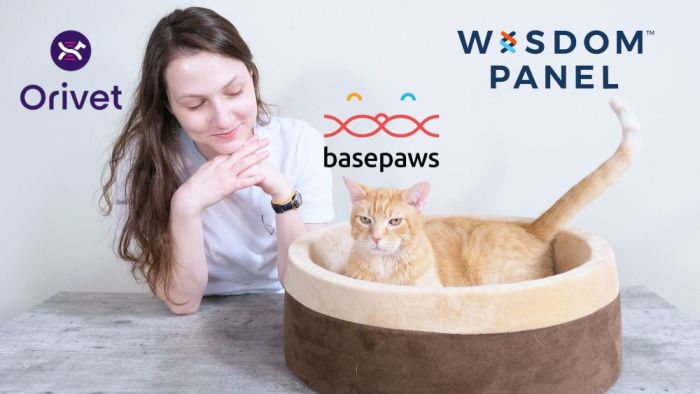
- Basepaws: Known for its focus on feline genetics and its ability to identify a wide range of breeds, including some less common ones. They also analyze for genetic health markers.
- Embark: Primarily known for dog DNA testing, Embark also offers a feline test that identifies breeds and screens for genetic health conditions.
- Wisdom Panel: Another company with a strong presence in dog DNA testing, Wisdom Panel’s feline test provides breed identification and insights into a cat’s ancestry.
- DNA My Dog: While the name suggests dogs, they also offer a feline DNA test that identifies breeds and provides a detailed breed report.
- Cat DNA Test: A more budget-friendly option, this company focuses primarily on breed identification and offers a straightforward testing process.
Accuracy rates vary between companies and depend on the number of breeds they can identify and the quality of their reference database. Basepaws and Embark generally report higher accuracy rates due to their extensive breed databases and advanced testing methodologies. However, it’s important to remember that all tests have limitations, especially when dealing with mixed breeds.
| Company Name | Price | Turnaround Time | Customer Rating (out of 5) |
|---|---|---|---|
| Basepaws | $95 – $129 | 2-4 weeks | 4.5 |
| Embark | $119 | 2-4 weeks | 4.7 |
| Wisdom Panel | $79 | 2-3 weeks | 4.0 |
| DNA My Dog | $79 | 2-3 weeks | 3.8 |
| Cat DNA Test | $49 | 1-2 weeks | 3.5 |
Data privacy is a crucial consideration. Most reputable companies have clear privacy policies outlining how they collect, use, and protect genetic information. Basepaws, for example, emphasizes that data is encrypted and not shared with third parties without consent. Embark also has a strong privacy policy, stating that data is used solely for providing testing services and research purposes with user consent.
It’s always recommended to carefully review the privacy policy of any company before submitting a DNA sample.
Understanding Test Results: Breed Percentages and Interpretations
Feline breed DNA test results are typically presented as a percentage breakdown of a cat’s genetic ancestry. These percentages represent the estimated proportion of each breed’s DNA found in the cat’s genome. For example, a cat might be reported as 60% Maine Coon, 30% Domestic Shorthair, and 10% unknown. It’s important to understand that these percentages are estimates based on the reference database used by the testing company.
Mixed breed identification is a significant aspect of these tests. Most cats are not purebred, and DNA testing can reveal the complex mix of breeds that contribute to their genetic makeup. However, accurately assigning percentages to all contributing breeds can be challenging. The accuracy of the percentages depends on the completeness of the company’s breed database and the similarity between the cat’s DNA and the reference samples.
Rare or newly emerging breeds may be difficult to identify accurately.
Interpreting breed percentage combinations requires some nuance. A 70% Maine Coon, 30% Domestic Shorthair cat likely exhibits many of the physical characteristics of a Maine Coon, such as a large size, long fur, and a gentle temperament, but may also have some traits associated with Domestic Shorthairs, such as a more compact build or a shorter coat. A cat with a more diverse mix, such as 20% Siamese, 20% Persian, 20% Bengal, and 40% Domestic Shorthair, will likely display a blend of traits from all these breeds, making it more difficult to predict its overall appearance and behavior.
Here’s a flowchart illustrating the process of interpreting results:
- Raw DNA Data: The initial data collected from the DNA sample.
- Breed Matching: The testing company’s algorithm compares the raw data to its reference database of known breeds.
- Percentage Calculation: Based on the matching scores, the algorithm calculates the estimated percentage of each breed in the cat’s DNA.
- Breed Profile: The results are presented as a breed profile, showing the percentage breakdown of the cat’s ancestry.
- Interpretation: Consider the percentages in conjunction with the cat’s physical characteristics and behavior to gain a comprehensive understanding of its heritage.
The Science Behind Feline Breed Identification
Breed characteristics in cats are largely determined by genetics. Specific genes control traits like coat color (e.g., the “orange” gene for orange fur), coat pattern (e.g., tabby patterns), and body type (e.g., the long-hair gene). DNA testing identifies variations in these genes that are associated with different breeds. For instance, the Persian breed is characterized by a specific mutation in the FGF5 gene, which leads to long fur.
A cat’s breed ancestry is reflected in its DNA as a combination of genetic markers inherited from its ancestors. Each breed has a unique genetic signature, and DNA testing can identify these signatures in a cat’s genome. The more closely a cat’s DNA matches the reference samples for a particular breed, the higher the percentage assigned to that breed.
Current testing methods have limitations. The accuracy of breed identification depends on the completeness of the breed database and the ability to distinguish between closely related breeds. Rare or emerging breeds may not be represented in the database, leading to inaccurate or inconclusive results. Furthermore, genetic mutations can influence breed identification. A cat with a spontaneous mutation that affects a specific trait may be misidentified as a different breed.
For example, a cat with a mutation in the dilute gene might appear lighter in color than expected for its reported breed. Similarly, a cat with a mutation affecting body size might be smaller or larger than the typical size for its breed. These unexpected results highlight the complexity of genetics and the limitations of current testing methods.
Benefits of Feline Breed DNA Testing
Knowing a cat’s breed composition offers several advantages. Understanding potential health predispositions is a primary benefit. Certain breeds are prone to specific genetic diseases, and DNA testing can help identify cats at risk. This allows owners to take preventative measures and work with their veterinarian to manage potential health issues.
Breed information can also guide nutrition and exercise choices. Different breeds have different energy levels and metabolic rates. Knowing a cat’s breed can help owners tailor their feeding and exercise routines to meet their cat’s specific needs. For example, a Bengal cat, known for its high energy levels, may require more exercise than a Persian cat, which is more sedentary.
DNA testing can also play a role in tracing a cat’s lineage and confirming its pedigree. This is particularly valuable for breeders who want to ensure the purity of their lines and maintain the integrity of their breeds. It can also help reunite lost cats with their owners by providing information about their ancestry.
- Maine Coon: Hypertrophic cardiomyopathy (HCM), spinal muscular atrophy (SMA)
- Persian: Polycystic kidney disease (PKD), progressive retinal atrophy (PRA)
- Siamese: Amyloidosis, asthma
- Bengal: Progressive retinal atrophy (PRA), pyruvate kinase deficiency (PKD)
- Abyssinian: Pyruvate kinase deficiency (PKD), renal amyloidosis
Potential Drawbacks and Ethical Considerations
While feline breed DNA testing offers many benefits, it’s important to be aware of potential drawbacks. Disappointment or confusion can arise if test results contradict perceived breed characteristics. A cat that looks and behaves like a Maine Coon might be reported as having a significant percentage of another breed, which can be unsettling for some owners.
Ethical implications of breed identification are also worth considering, particularly regarding responsible breeding practices. DNA testing can help breeders avoid breeding cats with genetic diseases, but it can also be used to perpetuate harmful breeding practices if not used responsibly. It’s crucial to prioritize the health and welfare of cats over breed standards.
Over-interpreting results and attributing behavioral traits solely to breed is another potential pitfall. While breed can influence behavior, it’s not the sole determinant. Environmental factors, socialization, and individual personality also play significant roles. Attributing all behavioral problems to breed can lead to unfair judgments and inappropriate treatment of cats.
Arguments For: Feline DNA testing provides valuable insights into a cat’s ancestry, potential health risks, and nutritional needs. It empowers owners to make informed decisions about their cat’s care and contributes to responsible breeding practices.
Arguments Against: The accuracy of DNA tests can be limited, and results can be misinterpreted. Over-reliance on breed information can lead to ethical concerns and potentially harmful breeding practices. The cost of testing may be prohibitive for some owners.
Sample Collection and Testing Procedures
Collecting a DNA sample from a cat is a relatively simple process. The most common method is a cheek swab, which can be performed at home using a kit provided by the testing company. Gently rub the swab against the inside of the cat’s cheek for 30-60 seconds to collect sufficient cells. A blood sample can also be collected by a veterinarian, but this is less common due to the invasive nature of the procedure.
Once the sample is collected, it is sent to a laboratory for analysis. The laboratory procedures involve extracting DNA from the cells, amplifying specific regions of the DNA using polymerase chain reaction (PCR), and analyzing the amplified DNA using various techniques, such as SNP arrays or microsatellite analysis. The data is then compared to a reference database of known breeds to determine the cat’s breed composition.
Quality control measures are implemented throughout the testing process to ensure accurate and reliable results. These measures include using validated DNA extraction and amplification protocols, employing rigorous data analysis techniques, and regularly calibrating equipment. Testing companies also participate in proficiency testing programs to assess the accuracy of their results.
Infographic Elements: The infographic would visually depict the entire testing process. First, a cat being gently swabbed inside its cheek. Next, a lab technician in a cleanroom environment carefully analyzing DNA samples under a microscope. Finally, a computer screen displaying a detailed breed profile with percentages and insights, showcasing the final result delivered to the cat owner.
Rare and Emerging Breeds in DNA Testing
Several cat breeds are gaining popularity and increasingly being tested. These include breeds like the Khao Manee (a rare white cat from Thailand), the Lykoi (a naturally occurring mutation resulting in a werewolf-like appearance), and the Sokoke (a naturally spotted breed from Kenya). As these breeds become more recognized, DNA testing plays a crucial role in validating their genetic distinctiveness.
Accurately identifying rare breeds is challenging due to limited genetic data. The reference databases used by testing companies typically contain more data for common breeds than for rare breeds. This can lead to inaccurate or inconclusive results for rare breeds. However, as more cats of these breeds are tested, the accuracy of identification will improve.
DNA testing helps validate the existence and genetic distinctiveness of new breeds by providing objective evidence of their unique genetic makeup. By comparing the DNA of cats purported to be a new breed to the DNA of cats from established breeds, researchers can determine whether the new breed represents a genetically distinct population.
| Breed Name | Key Characteristics | Number of Cats Tested |
|---|---|---|
| Khao Manee | Striking white coat, often with blue or odd eyes | ~500 |
| Lykoi | Sparse, patchy fur resembling a werewolf | ~300 |
| Sokoke | Naturally spotted coat, slender build | ~400 |
Integrating DNA Results with Veterinary Care
Source: cats.com
Veterinarians can utilize breed information from DNA tests to inform diagnostic and treatment decisions. Knowing a cat’s breed predispositions can help veterinarians anticipate potential health problems and tailor preventative care strategies. For example, a veterinarian might recommend more frequent screening for hypertrophic cardiomyopathy (HCM) in a Maine Coon cat.
It’s crucial to consider both genetic predispositions and individual cat health history. DNA testing provides valuable information, but it’s not a substitute for a thorough physical examination and a detailed medical history. A cat’s individual health status should always be the primary focus of veterinary care.
DNA testing can also help identify carriers of genetic diseases. This is particularly important for breeders who want to avoid breeding cats that will pass on genetic diseases to their offspring. By screening potential breeding cats for carrier status, breeders can make informed decisions about which cats to breed together.
- Hypertrophic Cardiomyopathy (HCM): Thickening of the heart muscle.
- Polycystic Kidney Disease (PKD): Formation of cysts in the kidneys.
- Progressive Retinal Atrophy (PRA): Degeneration of the retina, leading to blindness.
- Pyruvate Kinase Deficiency (PKD): Anemia caused by a deficiency in the enzyme pyruvate kinase.
- Spinal Muscular Atrophy (SMA): A genetic disorder affecting the motor neurons.
The Future of Feline Breed DNA Testing
The future of feline breed DNA testing holds exciting possibilities. Advancements in testing technology, such as whole-genome sequencing, will provide even more detailed information about a cat’s genetic makeup. Improved breed identification algorithms will enhance the accuracy of breed identification, particularly for rare and mixed breeds.
Incorporating additional traits, such as personality and behavior, into DNA testing is a potential area of development. While behavior is complex and influenced by many factors, genetics play a role. Future tests might provide insights into a cat’s temperament, activity level, and social preferences.
Citizen science and community-based data collection can play a significant role in expanding the genetic database for feline breeds. By encouraging cat owners to submit DNA samples and share information about their cats’ characteristics, researchers can build a more comprehensive understanding of feline genetics.
Speculative Scenario (20 years from now): In 2044, feline DNA testing is seamlessly integrated into veterinary care. A simple cheek swab at birth provides a comprehensive genetic profile, including breed ancestry, health predispositions, and even predicted personality traits. Veterinarians use this information to personalize preventative care plans, and breeders utilize it to optimize breeding programs. AI-powered algorithms analyze DNA data alongside environmental factors to provide tailored recommendations for nutrition, exercise, and enrichment, ensuring each cat lives a long, healthy, and fulfilling life.
Furthermore, a global feline genetic database allows for rapid identification of emerging diseases and facilitates collaborative research efforts to improve feline health worldwide.
Ending Remarks
Ultimately, a feline breed DNA test offers a captivating glimpse into your cat’s past, providing valuable insights into their potential health predispositions, nutritional needs, and even their lineage. While it’s important to remember that breed is just one piece of the puzzle – individual personality and health history are equally crucial – DNA testing can be a fun and informative way to deepen your bond with your cat and gain a greater appreciation for the incredible diversity within the feline world.
It’s a testament to how far we’ve come in understanding the genetic tapestry of our beloved pets.
Questions Often Asked
How accurate are feline breed DNA tests?
Accuracy varies depending on the methodology and company, but generally ranges from 70-95%. Rare breeds can be harder to identify with certainty.
Can a DNA test tell me my cat’s personality?
Currently, DNA tests primarily focus on breed identification. While research is ongoing, linking specific genes to personality traits in cats is still in its early stages.
What if my cat’s DNA results don’t match their appearance?
This is common! Many cats are mixed breeds, and their appearance might be dominated by one breed while their DNA reveals a more complex heritage. It’s also possible that the breed identification is incomplete due to limited genetic data for some breeds.
How long does it take to get the results back?
Turnaround time typically ranges from 2 to 6 weeks, depending on the company and their lab processing times.
Is my cat’s DNA information private?
It’s crucial to review the company’s data privacy policy. Reputable companies will ensure your data is protected and not shared without your consent.
Can DNA testing help me find my cat’s relatives?
Some companies are starting to offer features that allow you to connect with other cat owners who have cats with similar genetic profiles, potentially revealing relatives.