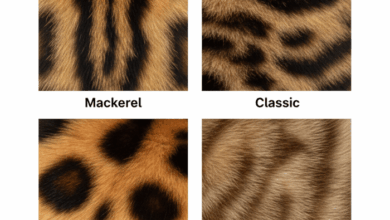
Tabby cat patterns are instantly recognizable – those swirling stripes, bold spots, or subtle ticking that make each feline unique. These aren’t just random markings; they’re a fascinating blend of genetics and evolution, deeply rooted in the history of domestic cats. From the classic swirls to the striking ticked appearance of Abyssinians, understanding tabby patterns unlocks a whole new level of appreciation for these beloved companions.
The secret lies within the Agouti gene, a master switch that dictates whether a cat’s fur will display a banded pattern. This gene interacts with other factors like color and fur length, creating an incredible diversity of appearances. We’ll explore the different tabby variations, from the common to the rare, and delve into the science behind these captivating designs.

Understanding Tabby Cat Patterns: A Comprehensive Guide
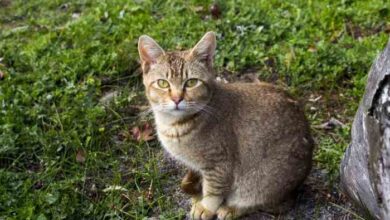
Tabby cats! They’re arguably the most common type of domestic cat, and their distinctive markings are instantly recognizable. But did you know there’s a whole world of variation within tabby patterns? From the swirling elegance of a classic tabby to the bold stripes of a mackerel, each pattern tells a story about genetics and evolution. This guide will delve into the fascinating world of tabby cats, exploring the different patterns, their genetic basis, and how they manifest across various breeds.
Let’s unravel the mysteries behind these beautiful markings!The prevalence of tabby patterns is no accident. They’re deeply rooted in feline genetics and have a long history, tracing back to wild cat ancestors. The tabby pattern isn’t just a visual trait; it’s a fundamental expression of a cat’s genetic makeup. Understanding the underlying genetics helps us appreciate the diversity we see in our feline companions.
The Agouti gene is the key player here. In its “on” state, it allows for the production of multiple pigment types within a single hair shaft, creating the banded or patterned appearance we associate with tabbies. When the Agouti gene is “off,” the cat becomes a solid color. This simple switch has a profound impact on coat appearance. Tabby patterns aren’t isolated traits; they interact with other feline characteristics like coat color (black, red, cream, etc.) and coat length (short, long, medium).
These interactions create an incredible range of possibilities, resulting in the diverse array of tabby cats we see today.
Classic Tabby (Blotched) Pattern
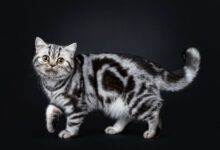
The classic tabby, also known as a blotched tabby, is instantly recognizable by its distinctive swirling, marbled appearance. Unlike the straight stripes of other tabby patterns, the classic tabby boasts a more relaxed, almost artistic design. These swirls often resemble butterfly-shaped markings on the sides and a characteristic “bullseye” pattern on the flanks.Differentiating a classic tabby from other variations can be tricky, but the key lies in observing the overall pattern.
While mackerel tabbies have parallel stripes, and spotted tabbies have distinct spots, the classic tabby exhibits those swirling, marbled patterns. The bullseye markings are a particularly strong indicator of a classic tabby.Imagine a cat with a rich, dark brown coat. Its forehead bears the classic “M” marking, a hallmark of all tabby cats. Around its eyes, you’ll find dark stripes, and its whisker pads are clearly defined.
The body is adorned with broad, swirling patterns that resemble marble. On its sides, prominent bullseye markings are visible, each ringed with darker shades. The tail mirrors the body pattern, with swirling bands of color. This visual description captures the essence of a classic tabby’s unique markings and their arrangement.Here’s a table comparing classic tabby markings across different base coat colors:
| Color | Description of Swirls | Typical Markings | Example Breed |
|---|---|---|---|
| Black | Dark swirls on a black background | “M” marking, dark stripes around eyes, bullseyes | British Shorthair |
| Red | Orange swirls on a red background | “M” marking, orange stripes around eyes, bullseyes | Maine Coon |
| Cream | Pale swirls on a cream background | “M” marking, cream stripes around eyes, bullseyes | Exotic Shorthair |
| Blue | Gray swirls on a blue background | “M” marking, gray stripes around eyes, bullseyes | Chartreux |
| Chocolate | Dark brown swirls on a chocolate background | “M” marking, chocolate stripes around eyes, bullseyes | Persian |
| Lilac | Pale gray swirls on a lilac background | “M” marking, lilac stripes around eyes, bullseyes | Ragdoll |
Mackerel Tabby Pattern
The mackerel tabby pattern is what most people think of when they picture a “tiger cat.” It’s characterized by a striking “tiger stripe” appearance, with narrow, parallel stripes running vertically along the body. This pattern is a direct throwback to the wild ancestors of domestic cats, who used stripes for camouflage in tall grasses and forests.The key features of a mackerel tabby are those distinct, narrow stripes.
They’re typically darker than the base coat color and run from the shoulders down to the tail. The “M” marking on the forehead is always present, and the stripes around the eyes are also prominent.Several breeds are commonly associated with the mackerel tabby pattern. The Abyssinian is perhaps the most well-known, with its ticked coat enhancing the striped appearance. Bengals, with their wild ancestry, also frequently display the mackerel pattern.
The Egyptian Mau is another breed renowned for its beautiful mackerel markings.Within the mackerel pattern, there are variations. Ticked tabbies, like the Abyssinian, have individual hairs with bands of color, creating a shimmering effect. Spotted tabbies, which are considered variations of the mackerel pattern, have spots instead of stripes, often resulting from a mutation affecting stripe development.
The mackerel tabby pattern is a testament to the power of natural selection. In the wild, these stripes provided crucial camouflage, allowing cats to stalk prey and evade predators effectively. Over generations, this advantageous trait has been passed down, shaping the appearance of many domestic cat breeds.
Spotted Tabby Pattern
Source: thehappycatsite.com
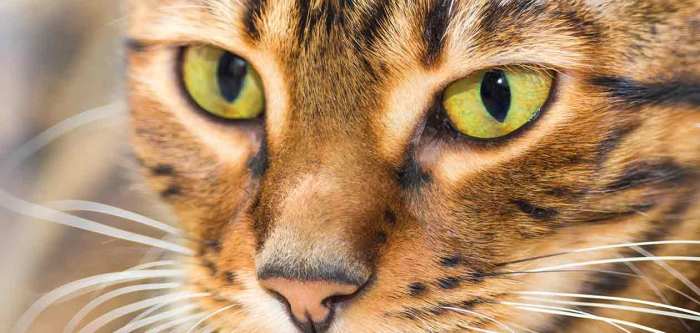
The spotted tabby pattern is a relatively recent development in domestic cat genetics, although it’s been increasingly popular thanks to breeds like the Bengal. Its genetic origins are linked to mutations affecting the development of stripes, causing them to break up into distinct spots.The spots in a spotted tabby pattern can vary significantly in size, shape, and density. You’ll find large, bold spots, small, scattered spots, and even rosette-shaped spots that resemble miniature roses.
The density of the spots can also range from sparse to very dense, covering the entire body.Distinguishing a spotted tabby from other patterns, particularly mackerel and ticked, requires careful observation. Mackerel tabbies have stripes, while ticked tabbies have a shimmering, banded appearance. Spotted tabbies, as the name suggests, have distinct spots.The Bengal cat is the quintessential example of a spotted tabby.
Their spots are often large and bold, with a distinctive two-toned appearance – a dark spot surrounded by a lighter halo. The spots are typically randomly distributed across the body, although some patterns may show a slight preference for certain areas.Here’s a table illustrating the differences in spot size and density across various spotted tabby breeds:
| Breed | Spot Size | Spot Density | Typical Markings |
|---|---|---|---|
| Bengal | Large to medium | Dense | Two-toned spots, random distribution |
| Ocicat | Medium | Moderate | Round spots, often on the sides and flanks |
| Toyger | Small to medium | Dense | Striped spots resembling a tiger cub |
| Egyptian Mau | Small | Moderate to dense | Small, teardrop-shaped spots |
Ticked Tabby Pattern (Abyssinian)
The Abyssinian tabby possesses a truly unique appearance – a “ticked” coat where each individual hair has bands of color. This creates a shimmering, almost ethereal effect, unlike any other tabby pattern. It’s a subtle yet captivating beauty.The ticking effect is genetically determined by the Agouti gene, but with a specific modification. Instead of allowing for broad bands of color, it creates very fine, alternating bands of pigment within each hair shaft.
This results in the characteristic ticked appearance.The intensity of the ticking can vary, affecting the overall appearance of the cat. Stronger ticking creates a more pronounced shimmer, while weaker ticking results in a more muted effect.The “ruddy” color, a warm, reddish-brown hue, is a hallmark of the Abyssinian tabby. This color is a result of the interaction between the Agouti gene and other pigment genes.Imagine an Abyssinian tabby bathed in sunlight.
Each hair shaft appears to contain multiple shades of brown, ranging from a deep, rich hue to a lighter, golden tone. The bands of color are so fine that they create a shimmering effect, as if the cat is constantly glowing. The “M” marking on the forehead is subtle but present, and the stripes around the eyes are faintly visible.
Tabby Markings: Face and Body
The face of a tabby cat is adorned with characteristic markings, including the iconic “M” marking on the forehead, stripes around the eyes, and clearly defined whisker pads. These markings are a universal feature of all tabby cats, regardless of the specific pattern.Variations in these facial markings exist across different tabby patterns. In classic tabbies, the stripes around the eyes may be broader and more rounded, while in mackerel tabbies, they tend to be more linear and defined.The body of a tabby cat displays a variety of markings – stripes, spots, or swirls – arranged in a distinctive pattern.
The arrangement of these markings is what differentiates the various tabby patterns.The “necklace” marking, a band of darker fur around the chest, is a common feature seen on many tabby cats. It adds a touch of elegance to their appearance.[Diagram illustrating the typical facial markings of a tabby cat, labeling each feature: “M” marking on forehead, stripes around eyes, whisker pads.]
Color Variations within Tabby Patterns
The appearance of tabby patterns is significantly influenced by the base coat color. Black, red, cream, blue, chocolate, and lilac are just a few of the base colors that can be combined with tabby patterns, creating a stunning array of possibilities.Dilution genes play a crucial role in influencing the intensity of the tabby markings. These genes dilute the pigment, resulting in lighter shades of color.
For example, a blue tabby is essentially a black tabby with a dilution gene, resulting in a gray appearance.Orange tabby cats, often referred to as “ginger tabbies,” are a particularly popular variation. The orange color is linked to the X chromosome, meaning that male cats (XY) only need one copy of the orange gene to express the color, while female cats (XX) need two copies.Tortoiseshell tabbies (torbies) and calico tabbies (dilute calicos) are fascinating combinations of tabby patterns and other color patterns.
They result from the interaction of multiple genes, creating a patchwork of colors and patterns.Here’s a table showcasing the different color combinations within tabby patterns:
| Base Color | Tabby Pattern | Dilution Effect | Example |
|---|---|---|---|
| Black | Mackerel | None | Classic Black Tiger |
| Red | Classic | None | Ginger Classic Tabby |
| Cream | Spotted | Dilute | Cream Bengal |
| Blue | Ticked | Dilute | Blue Abyssinian |
Rare Tabby Variations
Beyond the common tabby patterns, there exist less common variations, such as broken tabbies (patched tabbies) and tabby points. Broken tabbies have patches of solid color interspersed within the tabby pattern, while tabby points have tabby markings only on the face, ears, paws, and tail.These rare patterns are often the result of genetic mutations that disrupt the normal expression of the Agouti gene or other pigment genes.Identifying and classifying rare tabby variations can be challenging, as they often exhibit subtle differences from more common patterns.
Careful observation and genetic testing may be required to accurately determine the pattern.Detailed descriptions of the markings and characteristics of each rare variation are crucial for accurate identification and classification.[Visual guide to help differentiate between common and rare tabby patterns, showcasing examples of broken tabbies, tabby points, and other unusual variations.]
Tabby Patterns in Different Breeds
Numerous cat breeds are known for specific tabby patterns. Maine Coons are renowned for their classic tabby markings, while British Shorthairs often display mackerel tabby patterns. Persian cats can exhibit a variety of tabby patterns, including classic and mackerel.The tabby pattern interacts with other breed-specific characteristics, creating unique and visually striking combinations. For example, the long, flowing fur of a Maine Coon enhances the swirling patterns of a classic tabby, while the dense, plush coat of a Persian softens the stripes of a mackerel tabby.Comparing the tabby patterns found in different breeds reveals fascinating insights into the genetic history and selective breeding practices of these breeds.Here’s a table listing breeds and their most common tabby patterns:
| Breed | Primary Tabby Pattern | Secondary Patterns (if any) | Distinctive Features |
|---|---|---|---|
| Maine Coon | Classic | Mackerel | Large size, long fur, bushy tail |
| British Shorthair | Mackerel | Classic | Round face, dense coat, sturdy build |
| Persian | Classic | Mackerel | Long fur, flat face, large eyes |
| Abyssinian | Ticked | None | Ticked coat, graceful build, large ears |
Final Thoughts
From the bold stripes of the mackerel tabby to the subtle ticking of the Abyssinian, the world of tabby cat patterns is a testament to the beauty and complexity of genetics. Whether you’re a seasoned cat enthusiast or just starting to learn about feline characteristics, understanding these patterns offers a deeper connection to the animals we share our lives with.
So, next time you admire a tabby cat, remember the intricate genetic dance that created its unique and beautiful markings!
Expert Answers
Why are so many cats tabbies?
The tabby pattern is the ancestral pattern for all domestic cats. It’s the original coat pattern that evolved in wild cats, and the Agouti gene is dominant, meaning it’s very common and passed down easily.
Can two non-tabby parents produce a tabby kitten?
Yes! Tabbies can carry the recessive Agouti gene without displaying the tabby pattern themselves. If both parents carry it, there’s a chance their kitten will inherit both copies and express the tabby pattern.
What’s the difference between a ticked tabby and a spotted tabby?
Both are variations of the mackerel pattern. Ticked tabbies have hairs with multiple bands of color, creating a “ticked” or “agouti” appearance, while spotted tabbies have distinct spots instead of stripes, though the underlying pattern is still striped.
Are tortoiseshell tabbies always female?
Generally, yes. Tortoiseshell patterns (and torbie variations) are almost exclusively found in female cats due to the genetics of color inheritance linked to the X chromosome. Male tortoiseshells are rare and often sterile.
What does the “M” marking on a tabby cat’s forehead mean?
The “M” marking is a characteristic feature of all tabby cats and is believed to be a remnant of their wild cat ancestors. It’s a key identifier for the tabby pattern, regardless of the specific variation.