It’s heartbreaking to see your feline friend in discomfort, and an ingrown nail can be a surprisingly common source of pain for cats. These aren’t just a human problem; our furry companions can experience them too! This guide dives deep into everything you need to know about ingrown nails in cats, from recognizing the early signs to understanding treatment options and, most importantly, how to prevent them from happening in the first place.
We’ll cover the anatomy, potential causes, and what to expect if a vet visit is necessary, all presented in a way that’s easy to understand and actionable for every cat parent.

Understanding the unique way a cat’s nails grow, and why certain breeds are more prone to this issue, is the first step. We’ll explore the subtle behavioral changes that might indicate a problem, and how to perform a gentle paw check to catch it early. Whether you’re dealing with a minor irritation or a more serious infection, this guide will equip you with the knowledge to help your cat feel better.
Understanding Ingrown Nails in Cats
Ingrown nails in cats, while not as common as in humans, can be a painful and frustrating condition for our feline companions. It’s a problem that often requires veterinary attention and can significantly impact a cat’s quality of life. This article will delve into the specifics of ingrown nails in cats, covering everything from the underlying anatomy to treatment options and preventative measures.
We’ll break down the causes, symptoms, and potential long-term implications, empowering you to recognize and address this issue effectively.
Anatomical Differences and Predisposition
The feline nail structure differs significantly from that of humans, contributing to the development of ingrown nails. Cats possess a unique retractable claw mechanism. Their claws are anchored to a ligament and can be extended or retracted within a protective sheath. This sheath, along with the way the nail grows, makes them more susceptible to ingrown nails when the nail isn’t properly trimmed or when there are conformational issues.
Human nails grow straight out, while feline nails curve, and this curvature can lead to the nail edge digging into the paw pad.Certain breeds are predisposed to ingrown nails due to their nail conformation. Persians, Himalayans, and other breeds with long, thick fur that obscures the paws are particularly vulnerable. The fur can trap moisture and debris, creating an environment conducive to infection and hindering the owner’s ability to monitor the nails.
Additionally, breeds with abnormally curved or thick nails are at higher risk. The Maine Coon, with its large paws and often thick nails, can also be prone to this issue. Even within a breed, individual cats can vary in their nail conformation, making some more susceptible than others.Underlying medical conditions can also increase the risk. Hyperthyroidism, for example, can cause increased nail growth and brittleness, making them more likely to become ingrown.
Diabetes can impair the cat’s immune system, making them more susceptible to secondary infections if an ingrown nail develops. Arthritis can also contribute, as it can alter a cat’s gait and put uneven pressure on the paws, leading to nail abnormalities.
Recognizing the Signs and Symptoms
Early detection is key to managing ingrown nails effectively. Cats are masters of disguise when it comes to pain, so subtle behavioral changes are often the first clue. A cat might start limping, avoiding putting weight on a particular paw, or showing increased irritability when the paw is touched. They may also begin excessively licking or chewing at the affected paw, a clear sign of discomfort.Visually, a mild ingrown nail might present as slight redness or swelling around the nail bed.
The nail itself may appear to be growing into the paw pad rather than extending outwards. In more severe cases, you might notice pus, bleeding, or a significant amount of swelling and inflammation. The paw pad may be discolored, and the cat may be exhibiting signs of pain, such as guarding the paw or refusing to walk.Performing a gentle paw examination is crucial.
Carefully observe the nails, looking for any signs of redness, swelling, or abnormal growth. Gently press around the nail bed to check for tenderness. If your cat allows it, gently try to lift the nail to see if it’s embedded in the paw pad. Be extremely cautious, as any pressure can cause pain and distress.
| Symptom | Minor Ingrown Nail |
|---|---|
| Redness/Swelling | Slight |
| Pain | Mild, may only be noticeable upon touch |
| Behavioral Changes | Possible slight limping or licking |
| Nail Appearance | Slightly curved into the paw pad |
| Symptom | Severely Infected Ingrown Nail |
|---|---|
| Redness/Swelling | Significant, may extend beyond the paw |
| Pain | Severe, cat may cry or yelp when paw is touched |
| Behavioral Changes | Limping, refusal to walk, aggression when paw is approached |
| Nail Appearance | Embedded in paw pad, possible bleeding or pus |
| Other | Fever, lethargy, loss of appetite |
Initial Home Care and Monitoring
If you suspect your cat has an ingrown nail, initial home care focuses on cleaning and preventing further irritation. Gently clean the affected paw area with a mild antiseptic solution, such as diluted povidone-iodine (Betadine) or chlorhexidine. Avoid harsh chemicals like hydrogen peroxide, which can damage the tissue. Use a clean cloth or cotton ball to gently wipe the area.Trimming the nail requires extreme caution.
If the nail is only slightly ingrown, you might be able to carefully trim the sharp edge with cat nail clippers. Only trim a small amount at a time to avoid cutting too short and causing bleeding. If the nail is deeply embedded or inflamed, do not attempt to trim it yourself; seek veterinary assistance. Stopping the cat from licking or biting the paw is crucial to prevent infection.
An Elizabethan collar (cone) is often necessary.Monitor the paw’s condition closely over 24-48 hours. Take pictures daily to track any changes. Look for increased redness, swelling, pus, or signs of pain. If the condition worsens, or if your cat seems increasingly uncomfortable, schedule a veterinary appointment immediately.
Veterinary Intervention and Diagnosis
Source: animalpath.org
A veterinarian will perform a thorough physical examination, focusing on the affected paw. They may use a local anesthetic to numb the area before examining the nail more closely. Diagnostic procedures may include palpation to assess the extent of inflammation and pain, and visual inspection to determine the severity of the ingrown nail.X-rays are often necessary to assess the severity of the ingrown nail and to rule out any associated bone involvement.
X-rays can reveal if the nail has penetrated deep into the paw pad or even into the bone, which would require more aggressive treatment. They can also help identify any underlying bone abnormalities that may have contributed to the ingrown nail.Secondary infections are common with ingrown nails. The veterinarian will likely take a sample of any discharge from the paw to culture and identify the specific bacteria or fungi causing the infection.
This allows them to prescribe the appropriate antibiotic or antifungal medication.Before the consultation, consider these questions: When did you first notice the problem? Has your cat experienced any recent trauma to the paw? What is your cat’s diet and overall health status? Are there any other medical conditions your cat has?
Treatment Options: Conservative Approaches
Conservative treatment aims to reduce inflammation, prevent infection, and encourage the nail to grow out properly. Topical medications, such as antibiotic ointments or anti-inflammatory creams, can be applied to the affected area to reduce swelling and prevent bacterial growth. Your veterinarian will advise on the appropriate medication and application frequency.Nail reshaping, or “winging,” is a procedure performed by a veterinarian where the sharp edges of the nail are carefully trimmed or filed down to prevent further ingrowth.
This is typically done under local anesthesia. Protective bandages are then applied to protect the paw and promote healing. Bandages need to be changed regularly, typically every 1-2 days, to keep the area clean and dry. Your veterinarian will demonstrate the proper technique for bandage changes.
Surgical Treatment: Nail Removal (Onychectomy)
In severe cases, or when conservative treatment fails, surgical nail removal (onychectomy) may be necessary. This procedure involves either partial or complete removal of the nail. Partial nail removal involves removing only the portion of the nail that is ingrown, while complete nail removal involves removing the entire nail.Different surgical techniques are used, including avulsion (pulling the nail out) and surgical excision (cutting the nail out).
Recovery times vary depending on the technique used and the cat’s overall health. Generally, recovery takes 1-2 weeks.Potential risks and complications include infection, bleeding, pain, and regrowth of the nail (particularly with partial nail removal). Regrowth is more likely with partial removal and can be more problematic than the original ingrown nail.
| Feature | Partial Nail Removal | Complete Nail Removal |
|---|---|---|
| Recovery Time | 1-2 weeks | 1-2 weeks |
| Recurrence Rate | Higher (20-40%) | Very Low (less than 5%) |
| Potential Complications | Regrowth, infection, chronic pain | Infection, chronic pain, altered paw pad sensitivity |
Post-Operative Care and Rehabilitation
Pain management is crucial following surgery. Your veterinarian will prescribe pain medication to keep your cat comfortable. Keeping the surgical site clean and dry is essential to prevent infection. Follow your veterinarian’s instructions carefully regarding bandage changes and wound care.An Elizabethan collar (cone of shame) is typically required to prevent the cat from licking or chewing at the surgical site.
This is vital to prevent infection and promote healing. Follow-up appointments with the veterinarian are necessary to monitor the healing process and address any complications. Typically, follow-up appointments are scheduled 7-10 days after surgery, and then again 2-4 weeks later.
Preventing Future Ingrown Nails
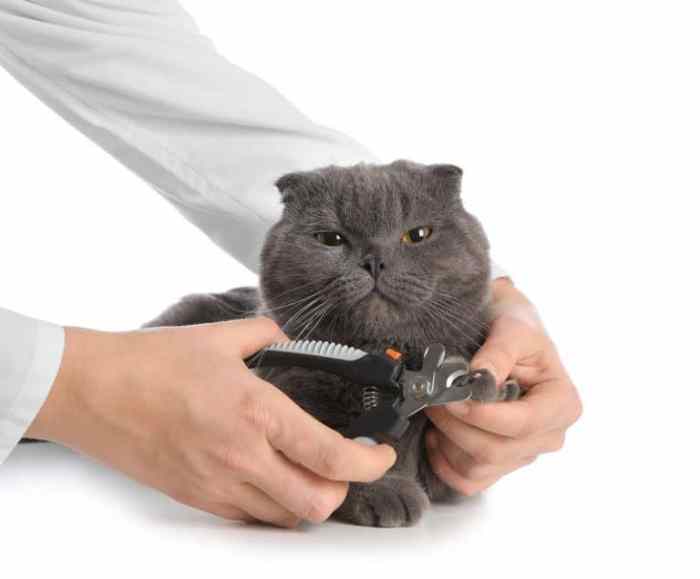
Regular nail trimming is the most effective way to prevent ingrown nails. Trim your cat’s nails every 2-3 weeks, or as needed. Use sharp, cat-specific nail clippers or a nail grinder. When trimming, only clip the tip of the nail, avoiding the “quick” (the pink part of the nail that contains blood vessels and nerves).A nail grinder can be a good alternative to clippers, as it allows for more precise trimming and reduces the risk of cutting the quick.
However, it’s important to introduce the grinder gradually to avoid stressing your cat.Addressing nail conformation issues is also important. If your cat has abnormally curved or thick nails, talk to your veterinarian about potential solutions, such as dietary changes or supplements that may improve nail health.
Preventative Paw Care Checklist:
- Trim nails every 2-3 weeks
- Inspect paws regularly for any signs of abnormalities
- Keep fur around paws trimmed short
- Provide a clean and dry environment
- Address any underlying medical conditions promptly
Complications and Potential Long-Term Issues
Even after successful treatment, complications can arise. Nail regrowth is a possibility after partial nail removal, particularly if the nail root wasn’t completely removed. Chronic pain or lameness can occur following surgery, although this is less common.Recurrence of infection is also possible, especially if the surgical site wasn’t properly cared for or if the cat has a weakened immune system.
Managing scar tissue formation can be challenging, and in some cases, may require additional treatment. Regular paw examinations and prompt attention to any signs of discomfort are essential for long-term management.
Illustrative Examples & Visual Descriptions
Imagine a cat with a mild ingrown nail. You might notice a slight limp, and when you examine the paw, you see a tiny bit of redness around the nail on the inside edge of the paw pad. The cat might flinch slightly when you touch that area. The paw posture might be subtly altered, with the cat favoring the other paw.Now picture a cat with a severely infected ingrown nail.
The paw is swollen and red, with pus oozing from the area. The cat is clearly in pain, crying out when you approach. The surrounding tissues are inflamed, and the cat is constantly licking and chewing at the paw. The nail itself is deeply embedded in the paw pad, and the area is warm to the touch.After a partial nail removal surgery, the paw will be bandaged.
The surgical site will appear as a small, clean incision. The bandage should be snug but not too tight. The cat will likely be wearing an Elizabethan collar to prevent licking. The paw may be slightly swollen, but the redness and inflammation should gradually decrease over time.
“My cat, Whiskers, started limping and wouldn’t let me touch his paw. It turned out he had a nasty ingrown nail. The vet had to remove part of it, and he was miserable for a few days, but with pain meds and lots of TLC, he’s back to his old self!”
Last Word
From home care and monitoring to veterinary interventions like nail reshaping or, in some cases, removal, there’s a range of approaches to address an ingrown nail. Proactive prevention through regular nail trims and understanding your cat’s individual nail conformation is key to keeping their paws healthy and happy. Ultimately, being informed and observant is your best defense against this painful condition, ensuring your cat can continue to explore and play with comfort and joy.
Don’t hesitate to reach out to your vet if you suspect anything is amiss – their expertise is invaluable in ensuring your cat’s well-being.
Question Bank
Why are cats prone to ingrown nails?
Cats’ nails grow continuously and don’t wear down as much as dogs’ do, making them more susceptible. Also, their claws are less flexible than human nails, and certain breeds have nail conformations that increase the risk.
Can I use human nail clippers on my cat?
No, it’s best to use cat-specific clippers or a nail grinder. Human clippers can crush the nail instead of cutting it cleanly, increasing the risk of splintering and injury.
How often should I trim my cat’s nails?
Generally, every 2-3 weeks is a good guideline, but it depends on your cat’s activity level and how quickly their nails grow. Regular trimming prevents them from getting too long and increasing the chance of ingrown nails.
My cat hates having their paws touched. How can I make nail trimming easier?
Start slowly! Get your cat used to having their paws handled by gently touching and massaging them daily. Pair paw handling with treats and praise to create a positive association. Consider having a groomer or vet tech trim their nails if you’re struggling.
What does it mean if my cat is constantly licking their paw?
Excessive licking can be a sign of discomfort, including an ingrown nail, but also allergies or other skin issues. It’s best to have a vet check it out to rule out any underlying problems.
Is it normal for a cat’s nail to bleed after trimming?
A tiny bit of bleeding is possible if you accidentally cut the quick (the pink part of the nail containing blood vessels and nerves). Have styptic powder on hand to stop the bleeding quickly.

