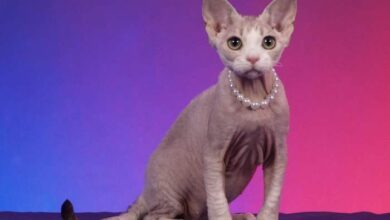
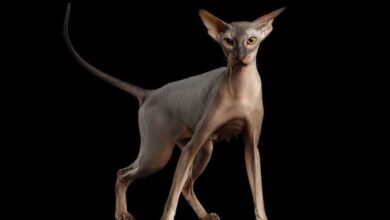
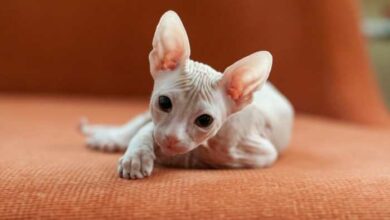
There’s something undeniably captivating about cats – their independence, their grace, and their quirky personalities. But have you ever considered just how diverse the feline world truly is? Beyond the familiar tabby and calico, a fascinating array of unusual cat breeds exist, each boasting unique appearances and behaviors that challenge our conventional notions of what a cat should be. These breeds aren’t just different looking; they often have fascinating histories and require specialized care, making them truly remarkable companions.
What defines a “weird” or unusual cat breed? It’s a combination of factors, really. It could be a striking physical anomaly – like the lack of fur in the Sphynx or the curly coat of the Cornish Rex. It could be a peculiar genetic mutation, a surprising behavioral trait, or even a relatively recent discovery. We’ll be diving into ten such breeds, from the hairless Sphynx to the werewolf-like Lykoi, exploring their origins, characteristics, and what makes them so special.

Unusual Felines: A Journey into the World of Rare Cat Breeds
There’s something undeniably captivating about a cat that defies the ordinary. Beyond the familiar fluff of Persians and the sleek elegance of Siamese, lies a world of feline breeds so unique, so wonderfully strange, that they challenge our very definition of “cat.” These aren’t just pets; they’re living works of art, each with a story woven into their unusual appearance and behavior.What makes a cat breed “weird” or unusual?
It’s a combination of factors. Often, it’s a striking physical anomaly – a lack of fur, a coat of curls, or ears that fold in unexpected ways. But it’s also about behavior; a breed’s personality, its quirks, and its history can all contribute to its unusual status. This article will explore some of the most fascinating and rare cat breeds on the planet, from the hairless Sphynx to the werewolf-like Lykoi, offering a glimpse into the extraordinary diversity of the feline world.
We’ll be featuring the Sphynx, Cornish Rex, Devon Rex, Lykoi, Scottish Fold, American Wirehair, Selkirk Rex, LaPerm, and the Ukrainian Levkoy.
The Sphynx: Hairless Wonders
The Sphynx cat, instantly recognizable for its lack of fur, boasts a surprisingly recent history. While hairless cats have been documented for centuries, the modern Sphynx breed traces its lineage back to a barn cat named Prune in Quebec, Canada, in the 1960s. Through selective breeding, Prune’s offspring were crossed with Devon Rex cats to solidify the breed’s unique characteristics.
The name “Sphynx” was chosen to reflect the breed’s striking, almost otherworldly appearance, reminiscent of the Egyptian Sphinx statues.A Sphynx cat’s most defining feature is, of course, its lack of fur. However, they aren’t entirely hairless. They possess a fine downy fuzz, often described as peach fuzz, which gives their skin a velvety texture. Their skin is warm to the touch and wrinkles, particularly around the shoulders and hips.
The absence of fur also means their skin is more visible, showcasing a wide range of patterns and colors, much like a dog. Their large, expressive eyes and prominent ears further enhance their unique appeal.Caring for a Sphynx cat requires a bit more attention than for a typical feline. Without fur to insulate them, they are highly sensitive to temperature changes and need to be kept warm, especially in colder climates.
Regular bathing (typically once a week) is essential to remove the buildup of oils on their skin. Their ears also require frequent cleaning to prevent wax buildup.
| Physical Feature | Description | Care Implications |
|---|---|---|
| Lack of Fur | Fine downy fuzz, velvety skin, visible skin patterns. | Temperature sensitivity, regular bathing required. |
| Skin | Warm, wrinkled, prone to oil buildup. | Frequent bathing, potential for skin infections. |
| Ears | Large and prominent. | Regular cleaning to prevent wax buildup. |
| Eyes | Large and expressive. | Monitor for any signs of irritation or infection. |
The Cornish Rex: Wavy-Coated Curiosities
Source: catster.com
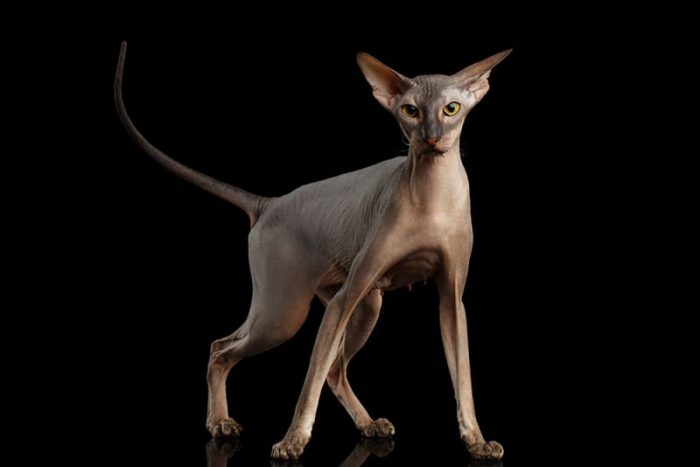
The Cornish Rex’s distinctive curly coat is the result of a spontaneous genetic mutation that occurred in Cornwall, England, in the 1950s. A barn cat gave birth to kittens, one of which possessed an unusual, wavy coat. This kitten, named Kallibunker, became the foundation of the Cornish Rex breed. The mutation affects the hair follicle, causing the hair to grow in a tight, wave-like pattern.Beyond their unique coat, Cornish Rex cats are known for their playful and energetic personalities.
They are incredibly active and love to climb, jump, and explore. They are also highly intelligent and can be trained to perform tricks. Their personalities are often described as being dog-like, as they enjoy interacting with their owners and participating in family activities.The Cornish Rex’s coat texture is unlike any other cat breed. It’s soft, wavy, and feels almost like velvet.
Unlike the long, flowing curls of a poodle, the Cornish Rex’s curls are tighter and more uniform. The coat is also very short, which contributes to its unique feel.Imagine a Cornish Rex in motion. Its lithe body moves with a fluid grace, each step accentuated by the way its curly fur ripples and flows. The curls catch the light, creating a shimmering effect as the cat leaps and bounds.
It’s a captivating display of feline agility and the beauty of its unusual coat.
The Devon Rex: Pixie-Like Charm
Similar to the Cornish Rex, the Devon Rex also possesses a curly coat, but the curl is different. The Devon Rex’s curls are looser and more waved, giving their coat a softer, more relaxed appearance. The Devon Rex breed originated in Devon, England, in the 1960s, independently of the Cornish Rex mutation.The Devon Rex’s “pixie” appearance is further enhanced by its large ears, wide-set eyes, and a slightly elfin face.
Their bodies are slender and muscular, and their tails are long and whip-like. These physical traits combine to create a truly unique and endearing look.Devon Rex cats are renowned for their intelligence and mischievous nature. They are incredibly curious and love to investigate everything around them. They are also known for their ability to open doors and cabinets, often leading to playful chaos.
Their playful antics and affectionate personalities make them beloved companions.
“My Devon Rex, Pip, is the most entertaining cat I’ve ever known. He’s constantly getting into trouble, but I can’t help but laugh at his antics. He’s also incredibly affectionate and loves to cuddle up on the couch with me.”
Emily Carter, Devon Rex Owner
The Lykoi: Werewolf Cats
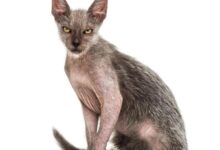
The Lykoi, often referred to as “werewolf cats,” is a relatively new breed resulting from a rare genetic anomaly. This anomaly causes patchy hair loss, particularly around the eyes, nose, and ears, giving the cat a distinctive, almost feral appearance. The breed was first discovered in 2011 when a litter of kittens was born with this unusual characteristic.The Lykoi’s history is one of accidental discovery.
Breeders initially believed the kittens had a disease, but genetic testing revealed that their appearance was due to a recessive gene. Further breeding efforts have established the Lykoi as a recognized breed.Despite their intimidating appearance, Lykoi cats are known for their gentle and affectionate personalities. They are playful and curious, but also enjoy cuddling with their owners. Their behavior differs from other breeds in that they often exhibit a heightened sense of awareness and a strong hunting instinct.The Lykoi’s facial features are what truly set it apart.
The sparse fur around the eyes and nose creates a mask-like effect, while the prominent whiskers and large ears contribute to its werewolf-like resemblance. Their eyes are typically a striking gold or green, further enhancing their unique appearance. The overall effect is both captivating and slightly unsettling.
The Scottish Fold: Folded Ears and Sweet Faces
The Scottish Fold’s defining characteristic, its folded ears, is the result of a dominant genetic mutation. This mutation affects cartilage throughout the body, causing the ears to fold forward and downward. The breed originated in Scotland in the 1960s when a farm cat named Susie was discovered with folded ears.The folded ear gene is associated with health concerns, particularly osteochondrodysplasia, a degenerative joint disease.
Responsible breeders carefully screen their cats for this condition to minimize the risk of passing it on to future generations.Scottish Folds exhibit a range of ear “sets,” from a single, gentle fold to a triple fold where the ears fold almost completely over. The prevalence of each ear set varies, with single and double folds being the most common.
| Ear Set | Description | Prevalence | Potential Health Concerns |
|---|---|---|---|
| Single Fold | Ears fold forward slightly. | Most common | Lower risk of joint problems. |
| Double Fold | Ears fold more prominently. | Common | Moderate risk of joint problems. |
| Triple Fold | Ears fold almost completely over. | Less common | Higher risk of joint problems. |
| Straight | Ears remain upright. | Occasional | No increased risk of joint problems. |
The American Wirehair: A Rustic Appearance
The American Wirehair’s unique, wiry coat is the result of a spontaneous mutation that occurred in New York in the 1960s. This mutation affects the hair shaft, causing it to curl and twist, creating a rough, wire-like texture.The American Wirehair’s coat is dense and coarse, with a distinct crimped appearance. It feels different from other cat coats, being rougher and more textured.
The coat’s appearance can vary, with some cats having a more pronounced wirehair texture than others.American Wirehairs are known for their gentle and affectionate temperaments. They are playful and enjoy interacting with their families, making them excellent companions. They are also generally good with children and other pets.The wirehair coat interacts with light and shadow in a unique way. The crimped texture catches the light, creating a shimmering effect, while the rough surface casts interesting shadows.
This interplay of light and shadow gives the American Wirehair a rustic and textured appearance.
The Selkirk Rex: Plush and Curly
The Selkirk Rex is distinguished by its unique, plush curly coat. The curls are looser and more relaxed than those of the Cornish or Devon Rex, giving the coat a soft, almost sheep-like appearance. The breed originated in Montana in 1987 when a kitten was born with a curly coat.The Selkirk Rex’s curl type is different from other curly-coated breeds.
While Cornish Rex curls are tight and uniform, and Devon Rex curls are looser and wavier, the Selkirk Rex’s curls are more relaxed and plush. The curls can vary in tightness, with some cats having tighter curls than others.Selkirk Rex cats are known for their sweet and affectionate personalities. They are playful and enjoy interacting with their owners, but also appreciate a good cuddle.
Their grooming needs are relatively low, as their curly coat tends to resist matting.Here’s a step-by-step guide on how to gently brush a Selkirk Rex:
- Start with a wide-toothed comb to gently detangle any knots or mats.
- Follow up with a soft-bristled brush to distribute natural oils and enhance the curls.
- Brush in the direction of hair growth, avoiding harsh pulling or tugging.
- Limit brushing to once or twice a week to prevent frizziness.
The LaPerm: Gentle Giants with a Fluff
The LaPerm’s curly coat originated from a spontaneous mutation in Oregon in 1984. A barn cat gave birth to a litter of kittens, one of which had a curly coat. This kitten, named Curly Sue, became the foundation of the LaPerm breed.LaPerms exhibit a variety of curl patterns, ranging from loose waves to tight ringlets. The curl pattern can vary depending on the cat’s age, coat length, and genetics.LaPerm cats are known for their affectionate and playful personalities.
They are gentle giants, enjoying cuddling with their owners and participating in family activities. They are also intelligent and can be trained to perform tricks.Imagine a LaPerm cat stretching. As it extends its body, the curls in its fur ripple and flow, creating a mesmerizing display of feline grace. The curls accentuate the cat’s movements, adding a touch of whimsy to its every gesture.
The Ukrainian Levkoy: Elf-Like Features
The Ukrainian Levkoy is a truly unique breed, combining folded ears with hairlessness. This distinctive combination creates an elf-like appearance that is both captivating and unusual. The breed was developed in Ukraine in the 2000s by crossing Scottish Folds with Donskoy hairless cats.The development of the Ukrainian Levkoy involved careful breeding to combine the desirable traits of both parent breeds.
The goal was to create a cat with the folded ears of the Scottish Fold and the hairlessness of the Donskoy.Levkoys are known for their affectionate and playful personalities. They are intelligent and enjoy interacting with their owners, often seeking out attention and cuddles. They are also known for their ability to learn tricks and adapt to new environments.The Levkoy’s facial expression is what truly sets it apart.
The folded ears frame a delicate face with large, expressive eyes. The lack of fur accentuates the cat’s bone structure, creating a refined and almost otherworldly appearance. The overall effect is one of gentle intelligence and elfin charm.
Final Thoughts
From the plush curls of the Selkirk Rex to the folded ears of the Scottish Fold, our journey through these unusual cat breeds has revealed a world of feline diversity we might never have imagined. Each breed represents a fascinating intersection of genetics, history, and personality, offering a glimpse into the endless possibilities of evolution. Whether you’re a seasoned cat lover or simply curious about the extraordinary, these “weird” breeds prove that the feline world is full of surprises and that beauty truly comes in all shapes, sizes, and fur textures.
Answers to Common Questions
Are weird cat breeds more prone to health problems?
Some are, yes. Many of these breeds have specific genetic mutations that can lead to health concerns. For example, Scottish Folds are prone to arthritis due to their folded ears, and Sphynx cats can be susceptible to skin issues. Responsible breeders prioritize health testing to minimize these risks.
Do hairless cats get cold easily?
Absolutely! Breeds like the Sphynx and Ukrainian Levkoy lack fur and are very sensitive to temperature changes. They need warm environments, sweaters in cooler weather, and plenty of cozy blankets.
What’s the difference between a Cornish Rex and a Devon Rex?
While both have curly coats, the Cornish Rex has tighter, more defined curls and a slender build. Devon Rexes have looser, softer waves and a distinctive “pixie” appearance with large ears and wide eyes.
Are Lykoi cats truly hypoallergenic?
While they produce less of the Fel d 1 protein (a common cat allergen) than many breeds, Lykoi cats aren’t completely hypoallergenic. Some people with allergies may still react to them.
How much grooming do curly-coated cats need?
It varies! While their curls might seem high-maintenance, many curly-coated breeds like the LaPerm and Selkirk Rex actually require less grooming than you might think. Regular brushing helps prevent mats and tangles, but excessive bathing can strip their coats of natural oils.
Can you breed two “weird” cat breeds together?
It’s possible, but often complex and unpredictable. The resulting kittens can inherit a mix of traits, and breeders need to be very careful to avoid exacerbating potential health problems.