Let’s be honest, the world of cat breeds is full of fluffy perfection – Persians with their luxurious coats, Maine Coons with their regal size. But what about the cats that defy those conventional standards of beauty? We’re diving into the fascinating world of “ugly cat breeds,” exploring why we perceive certain feline features as unconventional, and celebrating the unique charm these often-overlooked kitties possess.
It’s a journey through history, genetics, and a whole lot of personal preference!
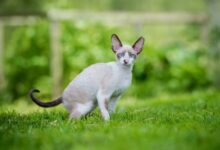
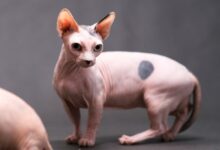

The idea of feline beauty has shifted dramatically over time, influenced by cultural trends and the ever-evolving standards set by breed registries. What was once considered desirable – a sleek, wild appearance – can now be deemed “unattractive” due to the rise of breeds emphasizing specific, often exaggerated, features. And let’s not forget our own human biases; we tend to project our own ideas of attractiveness onto animals, sometimes overlooking the inherent beauty in their natural forms.
Different cultures have vastly different preferences, too – a cat with a striking, almost wild appearance might be revered in one culture and considered unusual in another.
Embracing the Unusual: A Guide to “Ugly” Cat Breeds
Let’s be honest, the word “ugly” when applied to a cat feels a little harsh. But the truth is, beauty is subjective, and what one person finds endearing, another might find… unconventional. This article dives into the world of cat breeds often considered outside the mainstream of feline beauty, exploring the history, genetics, and cultural perceptions that shape our ideas of what a “beautiful” cat looks like.
We’ll celebrate the quirks and unique charms of these often-overlooked breeds, and hopefully, challenge your own definition of feline perfection.
For centuries, cats were valued primarily for their practical skills – pest control and companionship. The concept of a “breed standard” with specific aesthetic requirements is a relatively modern invention, largely driven by cat fancy and competitive showing. Before that, cats were appreciated for their individual personalities and usefulness, not their adherence to a particular look. The rise of organized cat shows in the 19th century led to the development of breed standards, which, while intended to preserve desirable traits, also inadvertently created a hierarchy of aesthetics, defining what was considered “desirable” and, by extension, what wasn’t.
Defining “Ugly” in Feline Aesthetics
The perception of beauty in cats has shifted dramatically over time. Ancient Egyptians revered cats as deities, valuing their grace and mystique. Medieval Europe, however, often associated cats with witchcraft and darkness, leading to widespread persecution and a negative perception of their appearance. Today, while we appreciate the elegance of breeds like Persians and Siamese, there’s a growing appreciation for the unique and sometimes startling looks of breeds that defy conventional beauty standards.
Human projection and anthropomorphism also play a significant role. We tend to project human emotions and values onto animals, judging their appearance based on how closely it resembles what we find appealing in ourselves or in other humans. A cat with a “sad” face might be perceived as less attractive, while a cat with a playful, expressive face might be considered more charming.
- Historical Shifts: From revered deities in ancient Egypt to persecuted figures in medieval Europe, the perception of cats has evolved significantly.
- Breed Standards’ Influence: The creation of breed standards has inadvertently shaped what is considered “attractive” or “unattractive” in cats.
- Human Projection: Our own human preferences and emotions influence how we perceive feline appearance.
- Cultural Differences: Different cultures have varying preferences for cat appearance. For example, in some Asian cultures, cats with flattened faces (brachycephalic breeds) are considered particularly desirable, while in Western cultures, they are often viewed with concern due to potential health issues.
The Sphynx: A Case Study in Unconventional Beauty
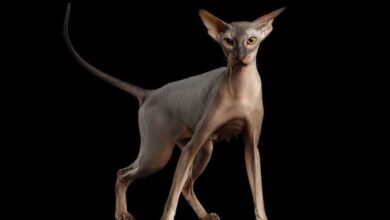
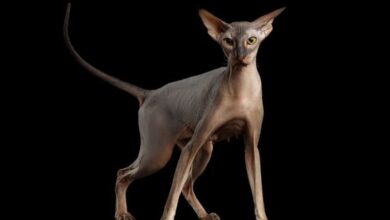
The Sphynx cat, arguably the most recognizable “ugly” breed, has captivated and repelled audiences in equal measure. Its history is surprisingly recent. The first Sphynx cats were born in Canada in the 1960s as a result of a spontaneous genetic mutation in a domestic shorthair. These early Sphynx cats were initially bred with other breeds, including Devon Rex and Siamese, to stabilize the hairless trait.
The breed was officially recognized by the Cat Fanciers’ Association (CFA) in 2002.
The Sphynx’s defining characteristic is, of course, its lack of fur. However, they aren’t entirely hairless. They possess a fine downy fuzz that feels like peach skin. Their skin is wrinkled, particularly around the face, shoulders, and paws. They have large, wedge-shaped ears and prominent, expressive eyes.
While hairless dogs like the Xoloitzcuintli also lack fur, Sphynx cats possess a unique feline elegance and a distinctly expressive face that sets them apart. Their skin is also more sensitive to temperature and sunlight than a furred cat’s, requiring special care.
| Feature | Sphynx | Persian |
|---|---|---|
| Fur | Sparse, downy fuzz | Long, thick, luxurious |
| Facial Structure | Wedge-shaped, wrinkled | Round, flat face |
| Body Shape | Muscular, lean | Cobby, stocky |
The Scottish Fold: Folded Ears and Unique Expressions
The Scottish Fold’s story began in 1961 with a barn cat named Susie in Scotland, who possessed a unique genetic mutation causing her ears to fold forward. This mutation, affecting cartilage throughout the body, was bred to create the Scottish Fold breed. The folded ears, ranging from a tight fold to a slight bend, are the breed’s most distinctive feature, giving them an owl-like appearance and a perpetually surprised expression.
The range of ear positions observed in Scottish Folds is quite varied. Some cats have tightly folded ears that lie flat against their head, while others have a more subtle fold, or even ears that stand upright. It’s important to note that the genetic mutation responsible for the folded ears is also linked to a serious health condition called osteochondrodysplasia, a form of arthritis that can cause pain and mobility issues.
Responsible breeders prioritize health testing and strive to minimize the severity of the mutation.
“Breeding Scottish Folds is a constant balancing act. We adore their unique charm and expressive faces, but we’re acutely aware of the potential health challenges. Our focus is always on health and temperament, and we’re committed to ethical breeding practices that prioritize the well-being of our cats.”
– A Responsible Scottish Fold Breeder
The Cornish Rex: Wavy Fur and Elongated Features
The Cornish Rex’s distinctive wavy coat is the result of a spontaneous genetic mutation that occurred in Cornwall, England, in the 1950s. This mutation affects the hair follicle, producing hair that lacks a guard hair layer, resulting in a soft, wavy texture. The Cornish Rex also possesses a slender, elegant body with long limbs, large ears, and a whippet-like appearance.
The Cornish Rex’s coat texture is unlike any other cat breed. It’s soft, rippled, and feels almost like velvet. While the Selkirk Rex also has a wavy coat, the Cornish Rex’s waves are tighter and more uniform. Caring for a Cornish Rex’s coat is surprisingly easy; they require minimal grooming due to their lack of undercoat. However, they do enjoy being wrapped in a towel, which helps to accentuate their wavy fur.
- Misconception 1: Cornish Rex cats need frequent brushing. Reality: Their coat requires minimal grooming.
- Misconception 2: They are hypoallergenic. Reality: While they produce less Fel d 1 (the primary cat allergen), they are not truly hypoallergenic.
- Misconception 3: They are always cold. Reality: Their lack of undercoat means they can get cold easily, but they are active and playful cats.
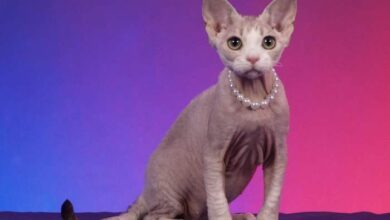
The Devon Rex: Pixie-Like Appearance and Large Eyes
The Devon Rex shares a genetic connection with the Cornish Rex, as both breeds originated from mutations affecting hair growth. However, the Devon Rex mutation is different, resulting in a looser, more waved coat and a distinct pixie-like appearance. The breed was discovered in Devon, England, in the 1950s.
The Devon Rex is instantly recognizable by its large, low-set eyes, prominent cheekbones, and oversized ears. Their coat is short, wavy, and sparse, often described as “velvety.” They have a slender, muscular body and a playful, energetic personality. Their mischievous nature and expressive faces contribute significantly to their appeal, despite their unconventional looks.
| Feature | Cornish Rex | Devon Rex |
|---|---|---|
| Coat Texture | Tight, uniform waves | Loose, wavy, sparse |
| Head Shape | Angular, refined | Wider, more prominent cheekbones |
| Ear Size | Large, upright | Very large, often drooping |
The Xoloitzcuintli (Hairless Mexican Dog) and Feline Parallels
The Xoloitzcuintli, also known as the Mexican Hairless Dog, boasts a rich history dating back to ancient Mesoamerica. Revered by the Aztecs and Mayans, these dogs were considered sacred and believed to be guardians of the underworld. They come in three sizes – toy, miniature, and standard – and can be either hairless or coated.
The hairlessness of the Xoloitzcuintli and the Sphynx cat shares a genetic basis, although the specific genes involved may differ. Both breeds lack a protective coat of fur, making them susceptible to sunburn and temperature fluctuations. Skin care is crucial for both, requiring regular moisturizing and protection from the sun. Anecdotes abound of the deep bond between humans and these hairless companions, highlighting their loyalty, affection, and unique charm.
The Lykoi: The “Werewolf Cat” and its Unique Coat
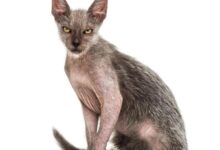
The Lykoi, often dubbed the “werewolf cat,” is a relatively new breed resulting from a spontaneous genetic mutation. This mutation affects the hair follicles, causing sparse, patchy fur growth, particularly around the eyes, nose, and ears. The result is a cat that resembles a miniature werewolf.
The Lykoi’s appearance is striking, with its patchy fur, large eyes, and distinctive facial markings. Despite their unusual looks, Lykoi cats are known for their affectionate and playful personalities. They are intelligent and curious, often exhibiting a mischievous streak. Their temperament differs from other cat breeds in that they are often described as being more dog-like in their loyalty and affection.
- Q: Are Lykoi cats hypoallergenic? A: While they produce less Fel d 1, they are not truly hypoallergenic.
- Q: What is the lifespan of a Lykoi cat? A: Their lifespan is expected to be similar to that of other domestic cats, typically 12-15 years.
- Q: Are Lykoi cats difficult to care for? A: They require regular skin care to prevent dryness and sunburn.
- Q: Are Lykoi cats rare? A: Yes, they are still a relatively rare breed.
The Minskin: A Miniature Sphynx with Patches of Fur
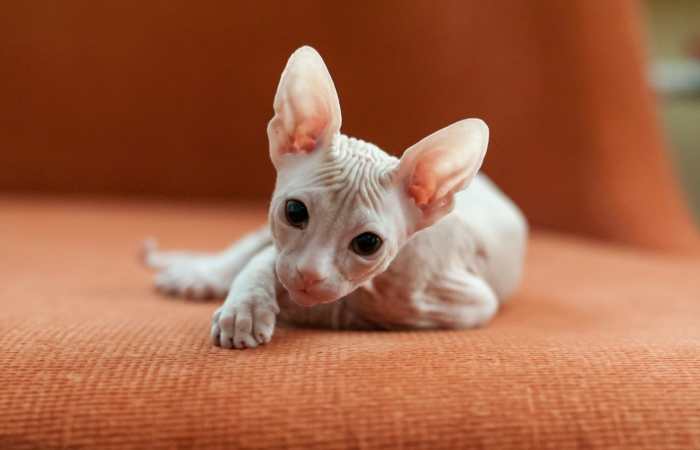
The Minskin is a relatively new crossbreed, created by crossing a Sphynx with a Munchkin cat. The goal was to create a miniature, hairless cat with short legs. The breed is still in development, and breeders are working to stabilize the traits.
The Minskin’s appearance is characterized by its small size and sparse fur patches. The amount of fur varies from cat to cat, with some having more extensive patches than others. Their short legs are a defining feature, inherited from the Munchkin parent. Care requirements are similar to those of the Sphynx, requiring regular moisturizing and protection from the sun.
| Feature | Minskin | Munchkin |
|---|---|---|
| Size | Small (typically 6-8 pounds) | Small to medium |
| Fur | Sparse patches of fur | Full coat |
| Leg Length | Short | Very short |
Breed Combinations and Unexpected Appearances
Source: com.au
Crossbreeding can often result in cats with unusual or “unconventional” looks. Combining different breeds can produce a wide range of appearances, from cats with unique coat patterns to those with unusual body shapes. For example, crossing a Persian with a Cornish Rex might result in a cat with a long, wavy coat and a flattened face. Responsible breeding practices are crucial to ensure the health and well-being of these mixed-breed cats.
- Potential Health Concerns: Mixed-breed cats may be more prone to certain genetic health problems due to the combination of genes from different breeds.
- Unpredictable Traits: The appearance and temperament of mixed-breed cats can be less predictable than those of purebred cats.
- Importance of Responsible Breeding: Ethical breeders prioritize health testing and strive to produce healthy, well-adjusted kittens.
The Subjectivity of Beauty: Embracing Individuality
Ultimately, beauty is in the eye of the beholder. Personal preferences play a significant role in determining what is considered “beautiful” in a cat. While breed standards provide guidelines, they shouldn’t dictate our appreciation for the unique qualities of each individual cat. Stories abound of cats initially considered “ugly” who later became beloved companions, proving that personality and behavior can outweigh physical appearance in forming a strong bond.
A cat’s personality and behavior can often overshadow any perceived physical imperfections. A playful, affectionate cat with a quirky appearance can easily win over even the most discerning cat lover. Embracing the individuality of each cat, regardless of breed standards, is key to appreciating the true beauty of the feline world.
Ending Remarks
From the hairless Sphynx to the uniquely folded ears of the Scottish Fold, we’ve seen how genetics can lead to some truly remarkable – and sometimes unexpected – appearances in the feline world. Ultimately, the concept of “ugly” is entirely subjective. These breeds challenge our preconceived notions of beauty and remind us that true companionship isn’t about adhering to a standard, but about appreciating the individual quirks and personalities that make each cat special.
So, let’s celebrate the unconventional, the unique, and the cats who prove that beauty truly is in the eye of the beholder!
Clarifying Questions
Why are some cats considered “ugly”?
It’s largely due to a combination of factors: historical shifts in beauty standards, breed-specific expectations, and our own human biases. What’s considered “ugly” is often simply different from what’s traditionally been valued.
Are “ugly” cat breeds unhealthy?
Not necessarily! Some breeds, like the Scottish Fold, have genetic mutations that can lead to health problems. However, many “unconventional” breeds are perfectly healthy, and responsible breeders prioritize health and temperament above all else.
Do hairless cats get cold easily?
Yes, hairless breeds like the Sphynx and Minskin are more susceptible to temperature changes. They need sweaters in cooler weather and protection from direct sunlight.
What’s the difference between a Cornish Rex and a Devon Rex?
Both have wavy fur, but Cornish Rexes have tighter waves and a more slender build, while Devon Rexes have looser waves, a “pixie-like” face, and are generally more energetic.
Is it ethical to breed cats with genetic mutations?
It’s a complex issue. Responsible breeders prioritize health and minimize the risk of genetic diseases. However, breeding for traits that can cause suffering is unethical.
What is a Lykoi cat?
The Lykoi, often called the “werewolf cat,” has a unique genetic mutation that causes sparse, patchy fur, giving it a distinctive appearance.