Ever wondered if cats could get any more unique? The feline world is full of surprises, and some breeds stand out from the crowd with their unusual appearances, quirky personalities, and fascinating histories. From hairless wonders to “werewolf” cats and swimming enthusiasts, we’re diving into a captivating exploration of the strangest cat breeds on Earth. Get ready to meet some truly extraordinary felines!
Defining “strange” itself is a bit tricky. Is it about a cat’s looks, its behavior, or perhaps a combination of both? What one person finds peculiar, another might find endearing. Cultural perceptions also play a role – a breed considered commonplace in one region might be a rarity and a source of fascination elsewhere. This article will showcase a diverse range of breeds, including the Sphynx, Cornish Rex, Devon Rex, Lykoi, Scottish Fold, American Wirehair, LaPerm, Turkish Van, Khao Manee, and more, each with its own compelling story.
The World’s Most Unusual Cat Breeds
What makes a cat breed “strange”? It’s a surprisingly subjective question. Is it a bizarre appearance, a quirky personality, a mysterious history, or a combination of all three? The concept of “strange” is deeply rooted in cultural perceptions and what we consider “normal” within the feline world. What might seem utterly peculiar in one part of the globe could be a cherished and familiar sight in another.
This article dives into the fascinating world of cat breeds that defy convention, exploring their unique traits and the stories behind them. We’ll be looking at breeds like the Sphynx, Cornish Rex, Devon Rex, Lykoi, Scottish Fold, American Wirehair, LaPerm, Turkish Van, Khao Manee, and a few others that truly stand out from the crowd.
The Sphynx: Hairless Wonders
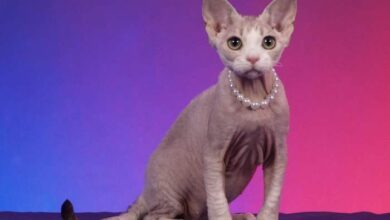
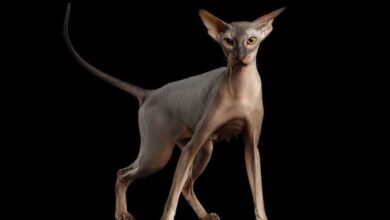
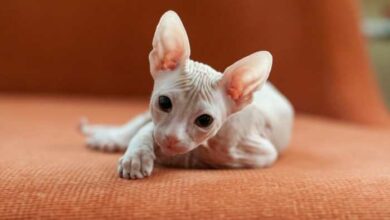
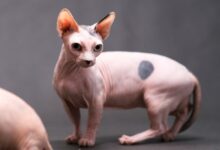
The Sphynx cat, instantly recognizable for its lack of fur, is a breed that consistently sparks curiosity and often, a bit of apprehension. But beneath that seemingly bare exterior lies a surprisingly affectionate and playful companion. The breed’s distinctive appearance is the result of a natural genetic mutation. A recessive gene, initially discovered in Canada in the 1970s, prevents the full development of hair follicles.
While often described as “hairless,” Sphynx cats aren’t entirely devoid of fuzz; they typically have a fine down covering their skin, similar to peach fuzz.
Caring for a Sphynx: More Than Meets the Eye
Owning a Sphynx cat requires a slightly different approach to care compared to standard-furred breeds. Without a coat to regulate their body temperature, Sphynx cats are highly sensitive to both heat and cold. They need to be kept indoors and protected from extreme weather conditions. Regular bathing is also essential, typically once or twice a week, to remove the buildup of oils on their skin.
Their ears also require frequent cleaning as they lack fur to wick away wax.
Sphynx Personality: Affectionate and Playful
Despite their unusual appearance, Sphynx cats are known for their incredibly affectionate and playful personalities. They are often described as being dog-like in their loyalty and enjoy being the center of attention. They crave human interaction and are known to follow their owners around the house. They are intelligent and can be trained to do tricks, and their playful nature makes them entertaining companions.
| Care Need | Sphynx | Standard-Furred Cat |
|---|---|---|
| Temperature Sensitivity | High – Requires protection from extreme temperatures | Moderate – Can tolerate a wider range of temperatures |
| Bathing Frequency | Weekly or bi-weekly | Rarely needed |
| Sun Exposure | Limited – Skin is prone to sunburn | Moderate – Can enjoy sunbathing in moderation |
The Cornish Rex: Wavy-Coated Curiosities
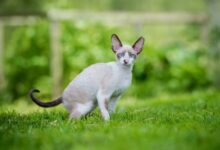
The Cornish Rex is a breed defined by its distinctive, wavy coat – a characteristic that sets it apart from almost every other cat breed. The story of the Cornish Rex begins in Cornwall, England, in the 1950s, when a barn cat gave birth to kittens, one of which possessed an unusual, curly coat. This unique trait was traced back to a recessive gene mutation.
The Texture and Feel of a Cornish Rex Coat
Unlike the dense, plush coats of many other breeds, the Cornish Rex’s fur is incredibly soft and fine, with a loose, wavy texture. It’s often described as feeling like crushed velvet or silk. The coat is short and sparse, lacking an undercoat, which contributes to their slightly cooler body temperature compared to other cats. This lack of undercoat also means they shed very little.
Energetic and Playful Cornish Rexes
Cornish Rex cats are known for their high energy levels and playful personalities. They are incredibly agile and enjoy climbing, jumping, and exploring. Their long, slender bodies and flexible spines contribute to their exceptional agility. They are also highly intelligent and can be easily trained to play games and perform tricks.
Body Structure and Agility
The Cornish Rex’s body structure is uniquely adapted for agility. Their long, thin legs, whip-like tail, and flexible spines allow them to move with remarkable grace and speed. Their large ears also contribute to their awareness of their surroundings, making them excellent hunters.
The Devon Rex: Elfin Appearance and Personality
The Devon Rex is a captivating breed known for its distinctive elfin appearance, characterized by large ears, wavy coat, and expressive eyes. Originating in Devon, England, in the 1950s, the breed’s unique traits are also the result of a spontaneous genetic mutation, separate from that of the Cornish Rex.
Comparing Coat Textures: Devon Rex vs. Cornish Rex
While both the Devon Rex and Cornish Rex boast wavy coats, the texture differs slightly. The Devon Rex’s coat is generally looser and more crimped than the Cornish Rex’s, often described as having a “ripple” effect. The Devon Rex also tends to have a slightly longer coat than the Cornish Rex. The Devon Rex’s coat is also softer and less dense than the Cornish Rex’s.
Mischievous and Intelligent Personalities
Devon Rex cats are renowned for their mischievous and intelligent personalities. They are often described as being “pixie-like” due to their playful antics and curious nature. They are highly interactive and enjoy being involved in everything their owners do. Their intelligence makes them easily trainable, and they often excel at learning tricks and games.
“My Devon Rex, Pip, is constantly getting into things! He’ll open cupboards, steal pens, and even try to ‘help’ me with my computer work. But his charm and playful nature make it impossible to stay mad at him.”
-Sarah M., Devon Rex Owner“We’ve had Devon Rexes for over 20 years, and they are truly the most entertaining cats we’ve ever owned. They’re always up to something, and their personalities are just so unique.”
-John B., Breeder of Devon Rexes
The Lykoi: The “Werewolf Cat”
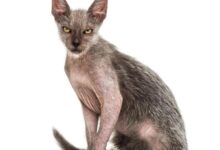
The Lykoi, often nicknamed the “werewolf cat,” is a relatively new breed that has captured the attention of cat enthusiasts worldwide. Its striking appearance, characterized by sparse, patchy fur and a unique facial structure, is the result of a natural genetic mutation. This mutation affects the hair follicles, causing them to produce less hair than normal.
Understanding the Lykoi’s Genetic Mutation
The genetic mutation responsible for the Lykoi’s appearance is a recessive gene that affects the keratin protein, which is a key component of hair. This mutation doesn’t appear to cause any significant health problems in the cats themselves. Genetic testing can confirm the presence of the Lykoi gene.
Temperament and Comparison to Other Breeds
Despite their somewhat intimidating appearance, Lykoi cats are known for their gentle and affectionate temperaments. They are intelligent, playful, and enjoy interacting with their human companions. Their hunting instincts are strong, and they are skilled at catching small prey. They share similarities with other breeds known for their intelligence and playful nature, such as the Siamese and Abyssinian.
Hunting Instincts and Physical Abilities
The Lykoi’s unique appearance isn’t just for show; it also enhances their hunting abilities. The sparse fur around their face allows for excellent visibility, while their large ears provide exceptional hearing. Their muscular build and agile movements make them efficient hunters, capable of stalking and catching prey with ease.
The Scottish Fold: Folded Ears and Unique Charm
The Scottish Fold is instantly recognizable by its distinctive folded ears, a trait that gives the breed a perpetually endearing expression. However, this unique characteristic is linked to a genetic condition called osteochondrodysplasia, which affects cartilage and bone development.
The Genetics and Health Concerns of Folded Ears
The folded ears are caused by a dominant gene mutation that affects cartilage. While the folded ear appearance is considered charming by many, it’s crucial to understand the associated health risks. Osteochondrodysplasia can lead to arthritis and other skeletal problems, impacting the cat’s quality of life. Responsible breeders prioritize health testing and ethical breeding practices to minimize these risks.
History and Ethical Considerations
The breed originated in Scotland in the 1960s. Due to the health concerns associated with the gene, ethical considerations surrounding the breeding of Scottish Folds are significant. Many animal welfare organizations discourage breeding practices that perpetuate genetic health problems.
Coat Colors and Patterns
Scottish Folds exhibit a wide range of coat colors and patterns, including solid colors, tabby patterns, tortoiseshell, and colorpoint. Their fur can be either longhaired or shorthaired, adding to the breed’s diversity.
| Potential Health Problem | Description | Severity |
|---|---|---|
| Osteochondrodysplasia | Abnormal cartilage and bone development | Moderate to Severe |
| Arthritis | Inflammation of the joints | Moderate |
| Skeletal Deformities | Abnormal bone structure | Moderate to Severe |
The American Wirehair: A Rustic Appearance

Source: thenatureofhome.com
The American Wirehair is a breed characterized by its unusual, wiry coat, a spontaneous mutation that emerged in the 1960s. This rustic appearance sets it apart from its close relative, the American Shorthair.
The Texture and Feel of the Wirehair’s Fur
The American Wirehair’s fur is dense and wiry, with a rough, crimped texture. It feels different from the soft, plush coats of many other breeds. The wirehair coat requires minimal grooming, but occasional hand-stripping can help maintain its texture.
Personality and Differences from the American Shorthair
While sharing many traits with the American Shorthair, the American Wirehair often exhibits a slightly more energetic and playful personality. They are affectionate and enjoy human interaction, but they also possess a strong independent streak.
History and Breed Development
The American Wirehair originated in New York in the 1960s. The initial wirehair cat was a barn cat named Dusty Miller, and breeders worked to establish the breed through selective breeding. The American Wirehair was officially recognized as a breed in 1977.
The LaPerm: Gentle Giants with Curly Fur
The LaPerm is a relatively new breed known for its distinctive curly fur, a trait that gives them a unique and charming appearance. The breed’s curly coat is the result of a spontaneous genetic mutation.
The Genetic Origin of the LaPerm’s Curly Fur
The LaPerm’s curly fur originated in a litter of barn cats in Oregon in the 1980s. The mutation is believed to be autosomal dominant, meaning that only one copy of the gene is needed for the cat to exhibit the curly coat trait.
Types of Curls in LaPerm Cats
LaPerm cats exhibit a variety of curl patterns, ranging from loose waves to tight ringlets. The curls can vary in density and distribution across the body. Some LaPerms have a more uniform curl, while others have a mix of curl types.
Affectionate and Gentle Temperament
LaPerm cats are known for their affectionate and gentle temperaments. They are often described as being “velcro cats” due to their tendency to stick close to their human companions. They are playful and enjoy interacting with their families.
Grooming Needs and Fur’s Impact
Despite their curly fur, LaPerm cats require minimal grooming. The curls help to prevent matting, and occasional brushing is usually sufficient to keep their coat healthy and looking its best.
The Turkish Van: The “Swimming Cat”
The Turkish Van is a breed renowned for its unusual affinity for water and its unique swimming abilities. This breed, originating from the Lake Van region of Turkey, is often referred to as the “swimming cat” due to its playful interactions with water.
Affinity for Water and Swimming Abilities
Unlike most cats, Turkish Vans actively seek out water and enjoy swimming. They are known to paddle in pools, bat at fountains, and even retrieve toys from water. This unusual behavior is thought to be linked to their origins in a region with abundant water sources.
Distinctive Markings: White Body with Colored Accents
The Turkish Van is characterized by its distinctive markings: a predominantly white body with colored markings on the head and tail. The color variations can include black, cream, chocolate, and red. The pattern is often described as resembling a “van pattern.”
Energetic and Playful Personality
Turkish Vans are energetic and playful cats that require plenty of exercise and mental stimulation. They are intelligent and can be trained to perform tricks. They enjoy interacting with their human companions and are known for their affectionate nature.
- Swimming in pools or tubs
- Playing with water toys
- Chasing fountains
- Retrieving objects from water
- Exploring water features in the garden
The Khao Manee: Diamond Eyes and Ancient Lineage
The Khao Manee, meaning “white jewel” in Thai, is an ancient breed with a rich history and a striking appearance. This breed was revered by Thai royalty for centuries and is known for its distinctive diamond-like eyes.
History and Association with Thai Royalty
The Khao Manee’s history dates back to Siam (now Thailand) over 700 years ago. They were prized by Thai royalty and were often depicted in ancient artwork. The breed nearly disappeared during World War II but was revived in the 1990s.
Distinctive Eye Colors, Including Odd-Eyed Individuals
The Khao Manee is known for its striking eye colors, which can range from blue to green to gold. A particularly unique characteristic is the prevalence of odd-eyed individuals, where one eye is blue and the other is another color. This trait is associated with the white coat color and is considered a desirable feature in the breed.
Personality: Intelligent and Independent
Khao Manee cats are known for their intelligence and independent nature. They are curious and enjoy exploring their surroundings. They are affectionate with their families but also appreciate their alone time. They are known to be vocal and communicative.
Physical Characteristics: Coat Color and Body Type
The Khao Manee is characterized by its pure white coat and muscular, athletic build. They have a wedge-shaped head, large, expressive eyes, and a long, elegant tail. Their coat is short and sleek, requiring minimal grooming.
Summary
Our journey through the world’s strangest cat breeds has revealed a stunning array of feline diversity. From the genetic quirks that create their unique appearances to the fascinating personalities that make them so special, these cats challenge our conventional notions of what a feline should be. Whether you’re a seasoned cat lover or simply curious about the animal kingdom, these breeds offer a glimpse into the incredible adaptability and beauty of nature’s creations.
Hopefully, you’ve discovered a new appreciation for the wonderfully weird and wonderful world of cats!
Questions Often Asked
Are Sphynx cats truly hairless?
While they appear hairless, Sphynx cats actually have a fine layer of downy fuzz, similar to peach fuzz. They require regular bathing to remove oils that accumulate on their skin.
What causes the curly coat of Cornish and Devon Rex cats?
Both breeds have a genetic mutation affecting the keratin protein in their hair, resulting in a unique curly coat. However, the curl pattern and texture differ slightly between the two breeds.
Is it ethical to breed Scottish Folds?
The folded ears of Scottish Folds are caused by a genetic mutation that can lead to osteochondrodysplasia, a painful degenerative joint disease. Many animal welfare organizations discourage breeding Scottish Folds due to these health concerns.
What is a Lykoi cat’s “werewolf” appearance due to?
The Lykoi’s distinctive look is caused by a natural genetic mutation that affects hair growth, resulting in sparse, patchy fur around the eyes, nose, and ears, resembling a werewolf.
Why are Turkish Vans known as “swimming cats”?
Unlike most cats, Turkish Vans have a natural affinity for water and actively enjoy swimming. They’re known for their playful splashing and diving abilities.
What makes the Khao Manee cat so special?
Khao Manee cats are known for their striking diamond-like eyes, which can be odd-eyed (one blue and one other color). They also have a rich history, having been cherished by Thai royalty for centuries.
Do American Wirehairs require special grooming?
While their wiry coat is unique, American Wirehairs don’t require extensive grooming. Regular brushing helps prevent mats and tangles, but their coat is generally low-maintenance.