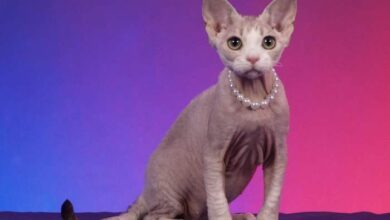
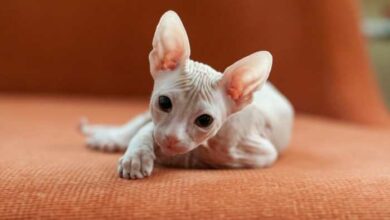
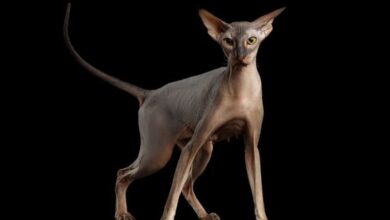
Ever wondered if cats could get
-really* unique? Beyond your average tabby or calico, there’s a whole universe of feline breeds sporting bizarre and beautiful traits. We’re diving deep into the world of “weird” cat breeds – those with unusual appearances, quirky personalities, and fascinating genetic stories. What exactly makes a cat “weird,” anyway? It’s often a blend of subjective perception, cultural influences, and, of course, some seriously interesting genetics! Get ready to meet some truly unforgettable felines.
From hairless wonders to curly-coated cuties and cats that resemble mythical creatures, the diversity within the feline world is astounding. We’ll be looking at breeds like the Lykoi, Sphynx, Cornish Rex, and many more, exploring the science behind their unique looks and the personalities that make them so special. It’s a journey into the unexpected, and you’re sure to be surprised by just how wonderfully strange cats can be.
Weird and Wonderful: Exploring Unusual Cat Breeds
Let’s be honest, “weird” is a pretty subjective term. What one person finds charmingly unique, another might consider a little… odd. This is especially true when we’re talking about animals. Our perception of what’s “normal” in appearance is heavily influenced by culture, personal preference, and even what we’re used to seeing. When it comes to cats, we’re generally accustomed to the sleek lines of a domestic shorthair or the fluffy elegance of a Persian.
But what happens when a cat breed deviates significantly from that norm? That’s what we’re diving into today – a look at some of the most unusual and fascinating cat breeds out there, exploring the genetics, history, and personalities that make them so special.
Several factors contribute to a cat breed being considered unusual. It could be a striking coat pattern – think swirls, spots, or even a lack of fur altogether. Body shape also plays a role; breeds with unusual proportions or skeletal structures often stand out. And, of course, temperament can be a factor. A cat with an exceptionally energetic or docile personality might be perceived as different from the average feline.
To get us started, here’s a quick list of breeds that often pop up in conversations about “weird” cats:
- Lykoi
- Sphynx
- Cornish Rex
- Selkirk Rex
- American Wirehair
- LaPerm
- Ukrainian Levkoy
- Minskin
The Lykoi Cat: The Wolverine of Cats
The Genetics Behind the Sparse Fur
The Lykoi, often nicknamed the “werewolf cat,” owes its distinctive appearance to a natural genetic mutation. This mutation affects the cat’s hair follicles, causing them to grow hair for a short period before shedding it, resulting in a sparse, patchy coat. It’s not alopecia (hair loss due to disease) but a genuine genetic trait. The gene responsible is a recessive one, meaning both parents must carry it for a Lykoi kitten to be born.
The mutation impacts the cat’s ability to produce keratin, the protein that makes up hair, leading to the unusual, almost skeletal look.
A Serendipitous Discovery
The Lykoi breed wasn’t intentionally created. It was discovered in 2011 when a veterinarian in New York noticed a litter of kittens with an unusual appearance. The breeder, Scott Schoeffel, was initially concerned about the kittens’ health but soon realized they were perfectly healthy and energetic. He partnered with a geneticist, Dr. Julie Bruskiewicz, to study the kittens and confirm the genetic basis of their unique coat.
A breeding program was then established to ensure the preservation and development of the breed.
Personality and Temperament
Despite their intimidating appearance, Lykoi cats are known for their friendly and playful personalities. They’re often described as being intelligent, curious, and affectionate. They enjoy interacting with their humans and are known to be quite vocal. While their looks might suggest a fierce predator, they’re generally gentle and good with children and other pets. They retain a hunting instinct, so toys that mimic prey are a great way to keep them entertained.
Lykoi Cat Characteristics
| Physical Characteristics | Temperament | Health Considerations |
|---|---|---|
| Sparse, patchy fur; black rosettes on a light background; large ears; prominent canines; often a “worried” expression. | Friendly, playful, intelligent, curious, affectionate, vocal. | Generally healthy; potential for sensitivity to sun and cold due to sparse fur; ongoing genetic testing to monitor for any breed-specific health issues. |
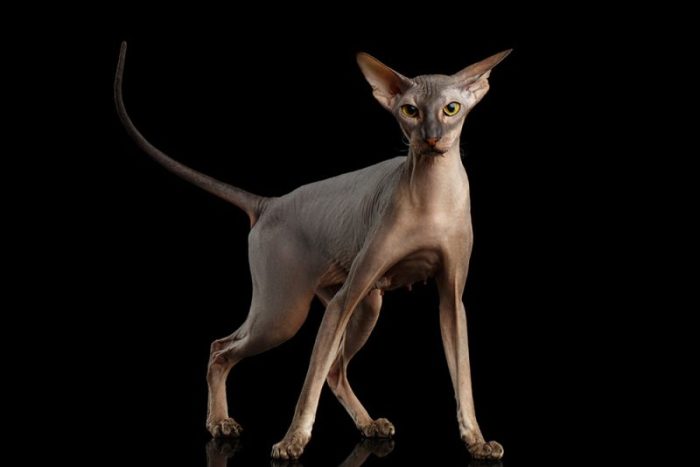
The Sphynx Cat: Hairless Wonders
The Genetics of Hairlessness
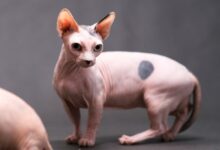
The Sphynx cat’s lack of fur is due to a recessive genetic mutation that affects the keratin gene. This gene is responsible for producing the protein that makes up hair. The mutation doesn’t entirely eliminate hair growth; Sphynx cats often have a fine downy fuzz covering their bodies, and they may have tufts of hair on their nose, ears, and paws.
The gene responsible is the hr gene, which stands for hairless. It’s important to note that the Sphynx isn’t truly “hairless” – it’s more accurately described as having very little hair.
Special Care Requirements
Because they lack a protective coat, Sphynx cats require specialized care. They are more sensitive to temperature fluctuations and need to be kept warm, especially in colder climates. Regular bathing is essential to remove the buildup of oils on their skin, as they don’t have fur to absorb them. Their skin also needs to be moisturized to prevent dryness and cracking.
Sunscreen is also necessary to protect their skin from sunburn.
Comparing to Other Hairless Animals
The Sphynx cat shares its hairlessness with other animals, such as hairless dogs (like the Xoloitzcuintli) and certain breeds of monkeys. However, the genetic mechanisms behind hairlessness can vary between species. The Sphynx’s hairlessness is a relatively recent mutation in domestic cats, while hairlessness in other animals may have deeper evolutionary roots.
Contrary to popular belief, Sphynx cats are not hypoallergenic. While they produce less Fel d 1 (the primary allergen in cats), they still produce it. They are also not always cold. Their body temperature is slightly higher than that of coated cats, and they often seek out warm spots to regulate their temperature.
The Cornish Rex: The Curly-Coated Cat
The Genetic Basis of Curly Fur
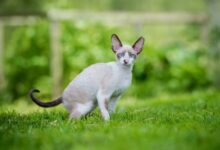
The Cornish Rex’s distinctive curly coat is the result of a spontaneous genetic mutation that occurred in Cornwall, England, in the 1950s. This mutation affects the structure of the hair shaft, causing it to grow in a tight, wave-like pattern. The gene responsible is a recessive gene, meaning both parents must carry it for a Cornish Rex kitten to be born.
The mutation affects the hair’s ability to bind together, resulting in the characteristic curl.
Texture and Feel of the Fur
The Cornish Rex’s fur is remarkably soft and silky to the touch, often described as feeling like velvet or rabbit fur. Unlike the dense, plush fur of a Persian, the Cornish Rex’s coat is very fine and sparse, with little to no undercoat. This makes them feel almost warm to the touch, as there’s less insulation.
Energetic and Playful Personality
Cornish Rex cats are known for their energetic and playful personalities. They are highly intelligent and enjoy interactive games and puzzles. They are also very affectionate and enjoy being around their humans. Their slender bodies and long legs make them agile and athletic, and they love to climb and explore.
Kitten vs. Adult Appearance
Cornish Rex kittens have a slightly different coat texture than adults. Kittens tend to have looser curls, which become tighter and more defined as they mature. Adult Cornish Rex cats have a very tight, almost crimped curl that covers their entire body, except for their face and paws. The coat also tends to become slightly thicker with age.
The Selkirk Rex: The Poodle of Cats
Distinctive, Plush, Curly Fur
The Selkirk Rex is instantly recognizable by its plush, curly fur, which bears a striking resemblance to a Poodle’s coat. The curls are loose and relaxed, giving the cat a soft, teddy-bear-like appearance. The curl is caused by a dominant gene, meaning only one parent needs to carry the gene for the kitten to inherit the curly coat.
History and Development
The Selkirk Rex breed originated in Montana in 1987 when a shelter worker found a litter of kittens with unusual curly fur. The mother cat was a calico, and the father was unknown. The kittens were named after Jeri Newman’s stepfather, Franklin Selkirk. A breeding program was established to develop the breed, and it was officially recognized by the Cat Fanciers’ Association (CFA) in 2000.
Curl Patterns
Within the Selkirk Rex breed, there are different curl patterns. Some cats have tight, ringlet-like curls, while others have looser, wavy curls. The degree of curl can vary depending on the cat’s age, coat length, and genetics. Some Selkirk Rex cats even have straight coats, although this is less common.
| Curl Type | Coat Density | Grooming Needs | Common Colors |
|---|---|---|---|
| Loose waves to tight ringlets | Medium to dense | Minimal; occasional brushing to prevent matting | Wide variety, including solid colors, tabby patterns, calico, and tortoiseshell |
The American Wirehair: The Scruffy Charm
The Genetic Mutation Behind the Wiry Coat
The American Wirehair’s unique coat texture is the result of a spontaneous genetic mutation that occurred in New York in the 1960s. This mutation affects the hair shaft, causing it to grow in a wiry, crimped pattern. The gene responsible is recessive, meaning both parents must carry it for a kitten to inherit the wirehair coat. The mutation alters the structure of the hair, making it stiff and coarse.
Personality Traits
American Wirehairs are known for their affectionate and playful personalities. They are generally good-natured and enjoy interacting with their humans. While they can be independent, they also crave attention and enjoy cuddling. They are intelligent and can be trained to perform tricks.
Comparing Coat Textures
The American Wirehair’s coat texture is distinct from that of other breeds with unusual fur. Compared to the tight curls of the Cornish Rex, the American Wirehair’s coat is more wiry and crimped. The Selkirk Rex has a softer, more plush curl, while the LaPerm has long, flowing curls. The American Wirehair’s coat is often described as having a “scruffy” appearance.
The wirehair coat changes with age and seasonal shedding. Kittens tend to have softer, less crimped fur, which becomes more wiry as they mature. During the shedding season, the wirehair coat can become even more pronounced, as the outer layer of hair is shed, revealing the crimped undercoat.
The LaPerm: Gentle Giants with a Fluff
The Genetic Mutation for Long, Curly Fur
The LaPerm’s long, curly fur is the result of a spontaneous genetic mutation that occurred in Oregon in 1984. This mutation affects the hair follicle, causing it to produce long, curly hair. The gene responsible is autosomal dominant, meaning only one parent needs to carry the gene for the kitten to inherit the curly coat. The mutation alters the hair’s growth pattern, resulting in the characteristic curl.
Temperament and Affection
LaPerm cats are renowned for their gentle and affectionate personalities. They are often described as being laid-back, friendly, and good with children and other pets. They enjoy being petted and cuddled and are known to follow their humans around the house. They are also intelligent and can be trained to perform tricks.
Different Curl Patterns
LaPerm cats exhibit a variety of curl patterns, ranging from loose waves to tight ringlets. The degree of curl can vary depending on the cat’s age, coat length, and genetics. Some LaPerms have a “q” curl, while others have a “s” curl. The curl pattern can also change with the seasons.
Visual Description
Imagine a LaPerm cat lounging gracefully on a windowsill, its long, curly fur cascading around its body like a luxurious shawl. Picture it playfully batting at a toy, its curls bouncing with each movement. Envision it curled up in a cozy bed, its fur forming a soft, fluffy halo around its head. The curl of its fur is the defining characteristic of this gentle and charming breed.
The Ukrainian Levkoy: Folded Ears and Sparse Fur
Combination of Genetic Mutations
The Ukrainian Levkoy is a truly unique breed, resulting from a deliberate cross between Scottish Fold and Donskoy cats. The Scottish Fold contributes the folded ears, a dominant genetic trait caused by a mutation affecting cartilage development. The Donskoy, known for its hairlessness, provides the sparse fur characteristic. The combination of these two mutations creates the Levkoy’s distinctive appearance.
Potential Health Concerns
The folded ears of the Scottish Fold are associated with a condition called osteochondrodysplasia, which can lead to cartilage and bone abnormalities, particularly in the joints. Responsible breeders of Ukrainian Levkoys are carefully monitoring for these health concerns and are working to minimize the risk of developing the condition. Ethical breeding practices are crucial to ensure the health and well-being of the breed.
Unique Appearance
The Ukrainian Levkoy’s appearance is striking – a combination of folded ears and sparse fur. The ears fold forward and downward, giving the cat a perpetually surprised expression. The sparse fur is soft and downy, similar to that of a Sphynx cat. The combination of these features creates a truly unforgettable look.
Distinct Physical Features
- Folded ears that fold forward and downward
- Sparse, downy fur
- Large, expressive eyes
- Slender, elegant body
- Long, delicate legs
The Minskin: Miniature and Sparse
Source: catster.com
Genetic Combination for Small Size and Sparse Fur
The Minskin is a relatively new breed, created by crossing a Munchkin (a dwarf cat breed) with a Sphynx. The Munchkin contributes the short legs, a dominant genetic mutation affecting bone development. The Sphynx provides the sparse fur. This combination results in a cat that is both small in stature and has very little hair.
Personality Traits
Minskin cats are known for their playful and affectionate personalities. They are energetic and enjoy interacting with their humans. They are also known to be quite vocal and enjoy “chatting” with their owners. Despite their unusual appearance, they are generally very friendly and good-natured.
Comparison to Other Dwarf Cat Breeds
The Minskin shares its dwarfism with other cat breeds, such as the Munchkin and the Kinkalow. However, the Minskin is unique in its combination of short legs and sparse fur. While other dwarf breeds may have full coats, the Minskin’s hairlessness sets it apart.
The Minskin’s body proportions are distinctive. Its short legs are disproportionately small compared to its body, giving it a somewhat comical appearance. The head is relatively large compared to the body, and the ears are large and prominent. The overall effect is a charming and endearing combination of features.
Emerging “Weird” Breeds & Future Possibilities
The world of cat breeds is constantly evolving. Several newly developing or experimental breeds are exhibiting unusual traits, such as the Camelot (a cross between a Sphynx and an American Curl) and the Genetta (a breed with a spotted coat pattern). These breeds are still in their early stages of development, and their future is uncertain.
Breeding for unusual appearances in cats raises ethical considerations. It’s important to prioritize the health and well-being of the cats above all else. Breeding practices should avoid exaggerating traits that could lead to health problems. Responsible breeders should conduct genetic testing and carefully screen breeding pairs to minimize the risk of passing on inherited diseases.
Future genetic mutations could create even more “weird” cat breeds. Advances in genetic engineering may one day allow breeders to intentionally introduce new traits into cats, although the ethical implications of such practices would need to be carefully considered. The possibilities are endless, but it’s crucial to proceed with caution and prioritize the welfare of the animals.
| Breed Name | Predicted Appearance | Predicted Temperament |
|---|---|---|
| Nebula | A cat with a shimmering, iridescent coat that changes color depending on the light. | Calm, gentle, and observant, with a tendency to gaze at the stars. |
| Aurum | A cat with a coat that appears to be made of solid gold, with large, amber eyes. | Playful, energetic, and fiercely loyal, with a love for shiny objects. |
| Umbra | A cat with a completely black coat and glowing, silver eyes, resembling a shadow. | Mysterious, independent, and intelligent, with a quiet and watchful demeanor. |
Concluding Remarks
We’ve journeyed through a landscape of extraordinary cats, each a testament to the power of genetics and the beauty of variation. From the werewolf-like Lykoi to the poodle-esque Selkirk Rex, these breeds challenge our conventional ideas of what a cat should look like. But beyond their unusual appearances, they often possess equally charming personalities. As breeders continue to explore new possibilities, the future of cat breeds promises even more surprises.
So, next time you think you’ve seen it all in the feline world, remember there’s always something wonderfully weird waiting to be discovered!
Ultimately, appreciating these “weird” breeds is about celebrating the diversity of life and recognizing the unique beauty in every creature, no matter how unconventional they may seem. It’s a reminder that different doesn’t mean less – it often means extraordinary.
General Inquiries
Are “weird” cat breeds always healthy?
Not necessarily. Some breeds, particularly those with folded ears or extreme physical traits, can be prone to specific health issues. Responsible breeders prioritize health and temperament over extreme appearances.
Do Sphynx cats really need sunscreen?
Yes! Their lack of fur makes them susceptible to sunburn, so they need sunscreen on exposed areas like their ears and nose.
Are Cornish Rex cats difficult to groom?
Surprisingly, no! Their curly fur doesn’t tangle easily and requires minimal grooming – a weekly brushing is usually sufficient.
What’s the difference between a Selkirk Rex and a Devon Rex?
Both have curly fur, but the Selkirk Rex’s curls are generally looser and plusher, while the Devon Rex has tighter, more wave-like curls.
Are Minskin cats good for people with allergies?
Like all cats, Minskins produce Fel d 1, the primary allergen. While their sparse fur might reduce allergen exposure slightly, they aren’t truly hypoallergenic.
What is the ethical concern with breeding “weird” cat breeds?
The main concern is prioritizing appearance over health and welfare. Breeding for extreme traits can lead to genetic health problems and suffering for the cats. Responsible breeding practices are crucial.