Ever wondered why cats come in such a dazzling array of colors and patterns? From the classic stripes of a tabby to the striking contrast of a tortoiseshell, feline coats are a fascinating blend of genetics, evolution, and even a little bit of environmental influence. This exploration dives deep into the science behind these beautiful variations, uncovering the genes at play and the historical factors that have shaped the coats we adore.
We’ll journey through the different types of tabby markings, unravel the mysteries of tortoiseshell and calico patterns, and examine how temperature and breeding practices impact the appearance of colorpoint cats. Beyond the common patterns, we’ll also touch on rarer variations and how coat length interacts with these genetic expressions, ultimately providing a comprehensive look at the incredible diversity found in feline fur.
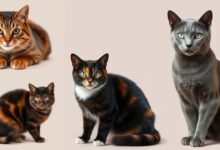

Introduction to Feline Coat Variation
The sheer variety of cat coat patterns is astonishing, isn’t it? From the classic tabby to the striking calico, it’s a testament to the power of genetics and evolution. Cats have evolved a remarkable range of coat colors and patterns, serving purposes from camouflage to thermoregulation. Humans have also played a significant role, selectively breeding cats for specific appearances over centuries.
Understanding these patterns requires a dive into genetics, evolutionary history, and the fascinating interplay between genes and environment.The evolutionary reasons behind diverse coat patterns are rooted in survival. In the wild, camouflage was crucial for both hunting and avoiding predators. Stripes and spots helped cats blend into grasslands and forests, while solid colors provided concealment in different environments. Even subtle variations in shade could offer an advantage.
As cats domesticated, the selective pressures shifted, but the genetic diversity remained, providing a foundation for the patterns we see today.Historically, human breeding practices have dramatically shaped cat coat patterns. Initially, cats were valued for their ability to control rodent populations, and appearance was secondary. However, as cats transitioned into companion animals, breeders began to focus on aesthetics. The Victorian era, in particular, saw a surge in selective breeding for specific colors and patterns, leading to the development of many of the breeds we recognize today.
Early breeders often unknowingly selected for specific genes, gradually amplifying certain traits within populations.The genetic basis of coat color and pattern inheritance in cats is complex but fascinating. Several primary genes control the fundamental aspects of coat color, while others modify these colors and create patterns. These genes interact in intricate ways, resulting in the wide range of phenotypes observed.
We’ll focus on a few key players here.
| Gene Name | Primary Effect | Example Pattern |
|---|---|---|
| B (Brown) | Determines black or brown pigment. ‘B’ is dominant, ‘b’ is recessive (resulting in brown/chocolate). | Black, Chocolate |
| D (Dilution) | Dilutes black pigment to blue/gray and chocolate to lilac. ‘D’ is dominant, ‘d’ is recessive. | Blue, Lilac |
| A (Agouti) | Controls the distribution of pigment within individual hairs, creating a banded or “ticked” appearance. ‘A’ is dominant, ‘a’ is recessive (resulting in solid color). | Tabby patterns (mackerel, classic, ticked, spotted) |
| T (Tabby) | Activates tabby patterns. Multiple alleles exist (Ta, Tb, Td, Ts) influencing the specific tabby type. | Mackerel, Classic, Ticked, Spotted |
| S (Spotting) | Controls the amount of white spotting. ‘S’ is dominant, ‘s’ is recessive (resulting in solid color). | Calico, Tortoiseshell, Van |
Tabby Patterns: A Detailed Exploration
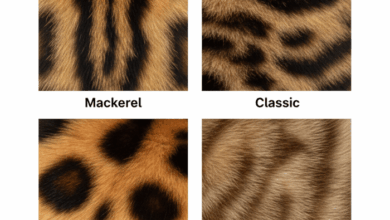
Tabby patterns are arguably the most common and recognizable coat patterns in cats. They’re characterized by distinctive markings, and come in several distinct variations. Understanding these variations requires looking at the underlying genetics and how they manifest visually.The different types of tabby patterns – mackerel, classic (blotched), ticked, and spotted – each have a unique appearance. Mackerel tabbies have narrow, parallel stripes resembling a fish skeleton.
Classic tabbies have swirling, blotched patterns. Ticked tabbies have a salt-and-pepper appearance with subtle banding on individual hairs. Spotted tabbies, as the name suggests, have spots of varying sizes.The agouti gene (A) plays a crucial role in tabby expression. When the agouti gene is expressed (A), it allows for the banding of pigment within individual hairs, which is essential for creating tabby patterns.
The recessive allele (a) results in a solid color, suppressing the tabby pattern.The “M” marking on the forehead is a hallmark of tabby cats. This marking is a direct result of the tabby gene (T) and is present in all tabby variations. It’s a reliable indicator of a cat’s tabby status, even if other tabby markings are faint or obscured.A mackerel tabby is typically characterized by dense, narrow stripes running vertically along the body.
The width of the stripes can vary, but they are generally consistent. The density of the stripes also influences the overall appearance; a higher density creates a more pronounced tabby pattern. Imagine a sleek, athletic cat with sharply defined, dark brown stripes on a lighter background – that’s a classic mackerel tabby.Environmental factors can subtly alter tabby patterns. For example, temperature variations can influence stripe width, with cooler temperatures sometimes leading to slightly wider stripes.
Sun exposure can also affect pigment intensity, resulting in fading or darkening of certain areas. Nutritional deficiencies can also impact coat health and appearance, potentially affecting the clarity of tabby markings.
Tortoiseshell and Calico Patterns: Genetics and Appearance
Tortoiseshell and calico patterns are visually striking and genetically fascinating. They are almost exclusively found in female cats due to the underlying genetics involving the X chromosome.The genetics behind tortoiseshell and calico patterns are linked to the X chromosome. The genes for orange and black coat colors are located on the X chromosome. Female cats have two X chromosomes (XX), while male cats have one X and one Y chromosome (XY).X-inactivation, also known as Lyonization, is a crucial phenomenon in female cats.
During early development, one of the X chromosomes in each cell is randomly inactivated. This means that in some cells, the X chromosome carrying the orange gene is inactive, while in others, the X chromosome carrying the black gene is inactive. This creates a mosaic pattern of orange and black patches.Tortoiseshell cats have a patchwork of orange and black fur, often with a mottled or brindled appearance.
Calico cats are tortoiseshell cats with the addition of white spotting. The white spotting is due to a separate gene (S) and masks the orange and black colors in those areas.Dilute tortoiseshell and calico variations occur when the D (dilution) gene is present. This gene dilutes the orange pigment to cream and the black pigment to blue/gray, resulting in a softer, pastel appearance.Here’s a flowchart illustrating the genetic pathway leading to a tortoiseshell pattern:
- Start: Female cat (XX)
- X Chromosomes: One X carries the orange (O) gene, the other carries the black (B) gene.
- X-Inactivation: Random inactivation of one X chromosome in each cell.
- Cellular Mosaic: Some cells express orange, others express black.
- Result: Tortoiseshell coat pattern (patches of orange and black).
Colorpoint Patterns: Himalayan and Siamese Variations
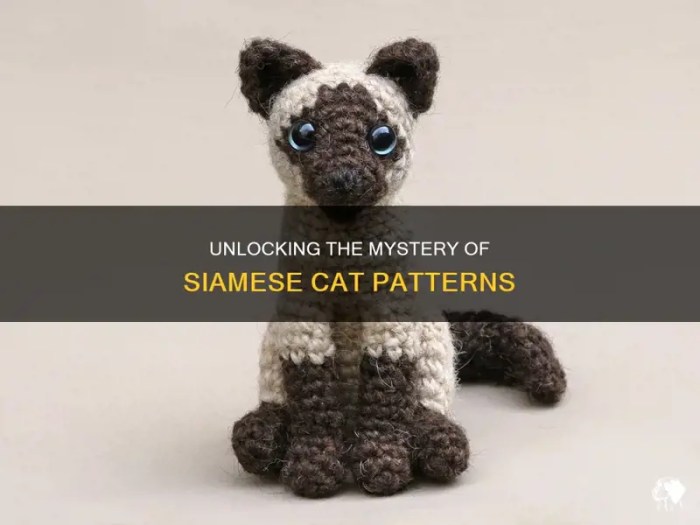
Colorpoint patterns, exemplified by the Himalayan and Siamese breeds, are characterized by darker coloration on the face, ears, paws, and tail, with a lighter body color. This striking pattern is linked to a temperature-sensitive enzyme.The Himalayan and Siamese patterns are a result of a temperature-sensitive tyrosinase enzyme. This enzyme is responsible for producing melanin, the pigment that gives cats their color.
At lower temperatures (found in the extremities), the enzyme is fully functional, producing darker pigment. At higher temperatures (in the body), the enzyme is less active, resulting in lighter coloration.Variations within colorpoint patterns include seal point (dark brown points), blue point (gray points), chocolate point (milk chocolate brown points), and lilac point (pale gray-pink points). These variations are determined by other genes that modify the base color.Breeding can influence the intensity of colorpoint markings.
Selective breeding for darker points has resulted in more intensely colored Siamese and Himalayans. Conversely, breeding for lighter points can produce softer, more subtle markings.Colorpoint breeds often share certain physical characteristics, including striking blue eyes, a slender build, and a refined head shape. They are generally known for their intelligence and vocal nature.
White Spotting and Piebald Patterns
White spotting in cats is a common phenomenon, ranging from small patches to a completely white coat. The genetics behind this trait are relatively well understood, primarily involving the S (spotting) locus.The genetics of white spotting in cats are primarily controlled by the S (spotting) locus. The ‘S’ allele is dominant and results in white spotting, while the ‘s’ allele is recessive and results in a solid color.
Multiple alleles exist within the S locus, influencing the degree of white spotting.The degrees of white spotting vary considerably. A cat with a small patch of white on its chest might have the ‘Ss’ genotype, while a cat with a predominantly white coat might have the ‘SS’ genotype. A completely white cat is often deaf.There’s a known relationship between white spotting and deafness in cats.
The inner ear contains sensory cells that are pigmented. When these cells fail to develop properly due to the S gene, it can result in deafness, particularly in cats with extensive white markings on their head and ears.
| Spotting Percentage | Pattern Description | Associated Breed Examples | Potential Health Concerns |
|---|---|---|---|
| <25% | Small patches of white, often on the chest, paws, or chin. | Domestic Shorthair, British Shorthair | Generally none |
| 25-50% | Moderate white spotting, creating a piebald pattern. | Calico, Tortoiseshell | Potential for mild hearing loss |
| 50-75% | Predominantly white with patches of color. | Van | Increased risk of hearing loss |
| >75% | Almost entirely white with minimal color. | Turkish Van, White Persian | High risk of deafness |
The Van pattern is characterized by a predominantly white coat with color restricted to the head and tail. This distinctive pattern is believed to be caused by a recessive gene and is particularly prominent in the Turkish Van breed.
Smoke and Shaded Patterns
Smoke and shaded patterns are visually similar but genetically distinct. Both involve a darker tip on each hair, but the distribution of color differs significantly.The difference between smoke and shaded patterns lies in the extent of the darker tipping. In smoke cats, the tips of the hairs are colored, while the base of the hair is white. This creates a “smoky” appearance, especially when the cat moves.
In shaded cats, the tipping extends further down the hair shaft, covering a larger portion of the hair.The undercoat color contributes significantly to the overall appearance of both smoke and shaded cats. The contrast between the colored tips and the white or colored undercoat creates the characteristic visual effect.Genetic factors influencing smoke and shaded patterns are complex and not fully understood.
They involve genes that control pigment distribution and hair shaft structure.Lighting dramatically affects the visibility of smoke and shaded markings. In bright light, the colored tips are clearly visible. In dim light, the markings may appear less distinct, giving the cat a more solid color appearance.A silver shaded Persian cat is a stunning example of this pattern. The tips of the fur are a rich silver color, while the base is a creamy white.
The contrast between the silver tips and the white base creates a luxurious, shimmering effect.
Ticked Patterns: Abyssinian and Somali Cats
The ticked pattern, famously found in breeds like the Abyssinian and Somali, is a unique and captivating coat pattern characterized by individual hairs having bands of different colors.Individual hairs in ticked cats have bands of different colors along their length, creating a “ticked” or “agouti” appearance. This banding is due to the agouti gene (A), which allows for the distribution of pigment within individual hairs.The genetic mechanisms underlying the ticked pattern involve the interaction of the agouti gene (A) with other genes that control pigment production.
The precise mechanisms are still being researched, but it’s believed to involve the regulation of melanin synthesis within the hair shaft.The “agouti ticking” process refers to the way the pigment bands are arranged along the hair shaft. Each hair has a dark band, followed by a lighter band, and so on, creating the characteristic ticked appearance.
The ticked coat possesses a mesmerizing texture, resembling finely woven silk with subtle shifts in color as light dances across the banded hairs. It’s a visual symphony of depth and dimension, far more complex than a simple solid color.
Rare and Unusual Coat Patterns
Beyond the more common patterns, several rare and unusual coat patterns add to the feline genetic diversity.The Chinchilla pattern is characterized by a silvery appearance due to a reduction in pigment production. This pattern is caused by a recessive gene that inhibits the production of black pigment, leaving only a pale, silvery color.The genetics of the Lavender (lilac) pattern involve a combination of the dilution gene (d) and the brown gene (b).
The dilution gene dilutes the black pigment to blue/gray, while the brown gene modifies the pigment to a reddish-brown hue, resulting in a lavender or lilac color.The Burmese pattern is distinct for its close-lying, satin-like coat. This is due to a recessive gene that affects the structure of the hair shaft, making it smoother and more reflective.Color-switching cats are a fascinating phenomenon where a cat’s coat color changes over time, often during kittenhood.
This can be caused by various genetic factors, including mutations in pigment-producing genes.Here’s a list of 5 rare coat patterns:
- Korat: Silver-blue coat with a distinctive glittery sheen.
- Chartreux: Dense, blue-gray coat with a woolly texture.
- Russian Blue: Short, dense, blue-gray coat with silver tipping.
- Egyptian Mau: Spotted pattern with a unique “mascara” marking around the eyes.
- LaPerm: Curly coat texture, often with tabby patterns.
Breed-Specific Coat Patterns
Different cat breeds are known for their characteristic coat patterns, reflecting centuries of selective breeding.Persian cats are renowned for their long, flowing coats, which can display a wide range of colors and patterns, including solid colors, tabby patterns, and calico patterns. The long fur often obscures the underlying pattern, creating a softer, more blended appearance.Maine Coon cats are known for their large size and shaggy, water-resistant coats.
They exhibit a variety of patterns, including tabby patterns, solid colors, and tortoiseshell patterns. Their long fur enhances the visibility of the patterns.British Shorthair cats typically have a dense, plush coat that comes in a variety of colors and patterns, including solid colors, tabby patterns, and colorpoint patterns. Their coat texture contributes to their distinctive appearance.The Bengal cat’s distinctive spotted pattern is a result of its hybridization with the Asian Leopard Cat.
The spots are randomly distributed and resemble those of a wild cat.
| Breed | Typical Pattern | Distinctive Features |
|---|---|---|
| Persian | Solid, Tabby, Calico | Long, flowing coat; round face |
| Maine Coon | Tabby, Solid, Tortoiseshell | Large size; shaggy, water-resistant coat |
| British Shorthair | Solid, Tabby, Colorpoint | Dense, plush coat; round face |
| Bengal | Spotted | Randomly distributed spots; wild cat appearance |
Coat Length and Pattern Interaction
The length of a cat’s coat significantly interacts with the visibility and expression of different patterns.Coat length (short, medium, long) interacts with different patterns in various ways. Short fur allows for a clear and crisp display of patterns like tabby and spotted markings. Medium-length fur can soften the appearance of patterns, while long fur can obscure or enhance them.Long fur can obscure certain patterns by blending the colors together, creating a softer, more muted appearance.
Conversely, long fur can enhance patterns by providing more surface area for the markings to be visible.Grooming practices can affect the appearance of coat patterns. Regular brushing can remove loose fur and debris, allowing the pattern to shine through. Neglecting grooming can lead to matting and tangling, which can obscure the pattern.A long-haired tabby looks different from a short-haired tabby.
The long fur creates a more flowing and luxurious appearance, while the short fur provides a sharper and more defined look.A long-haired tortoiseshell cat presents a visually striking appearance. The long fur amplifies the patchwork effect of the orange and black patches, creating a dramatic and luxurious look. The fur’s length adds depth and dimension to the pattern.
Final Summary
Source: petshun.com
Understanding cat fur patterns isn’t just about appreciating their beauty; it’s about gaining insight into the complex world of genetics and evolution. We’ve seen how a handful of key genes, combined with environmental factors and human intervention, can create an astonishing spectrum of coat variations. Whether you’re a curious cat lover or a budding geneticist, this exploration hopefully sheds light on the captivating science behind your feline friend’s unique appearance.
So, next time you admire a cat’s coat, remember the intricate genetic dance that brought it to life – a testament to the remarkable diversity within the domestic cat population.
FAQ Insights
Why are tortoiseshell and calico cats almost always female?
Tortoiseshell and calico patterns are linked to the X chromosome. Females have two X chromosomes (XX), allowing for the expression of both orange and black genes, resulting in the mottled pattern. Males have one X and one Y chromosome (XY), so they typically only express one of these colors.
Can a male cat be a tortoiseshell or calico?
It’s extremely rare, but possible! It usually occurs due to a genetic abnormality where a male cat has an extra X chromosome (XXY). These males are often sterile.
What does the “M” marking on a tabby cat’s forehead signify?
The “M” marking is a remnant of the cat’s ancestral markings and is believed to be a visual indicator of the cat’s tabby genetics. It’s a key characteristic of all tabby patterns.
Is there a link between white spotting and deafness in cats?
Yes, there is a correlation. White spotting, particularly around the ears, can be associated with deafness, especially in breeds like Persians and British Shorthairs. This is due to the disruption of melanin production, which is also responsible for pigment in the inner ear.
What’s the difference between smoke and shaded patterns?
Both involve a darker tip on each hair, but in smoke patterns, the tip extends almost to the root, creating a uniform dark appearance. In shaded patterns, the tip is shorter, revealing a lighter undercoat.
Why do some cats change color as they age?
Color-switching cats, often Siamese or Himalayan breeds, experience changes in pigment intensity due to temperature-sensitive tyrosinase. As they age, or if exposed to different temperatures, their coat color can shift.